

Strategic banner retargeting is a digital advertising method that reconnects online shoppers with previously viewed products or categories. Online shops use targeted display banners across websites, mobile applications, and digital platforms to increase cart intent, improve customer engagement, and encourage return shopping sessions effectively.
Banner retargeting focuses on users who already interacted with an online shop. These interactions include product page visits, category browsing, search activity, and wishlist engagement. Retargeting systems collect behavioral signals and use them to display relevant banner advertisements after the user leaves the website.
Cart intent refers to the likelihood that a visitor will add products to a shopping cart. Strategic retargeting increases this intent by reminding users about products they already explored. This process reconnects existing interest with additional product visibility.
Online shops use retargeting banners for several commercial goals. Fashion retailers retarget users with previously viewed jackets or footwear. Electronics stores retarget users who compared laptops or gaming accessories. Beauty retailers retarget skincare visitors with repeat product exposure.
Banner retargeting operates across desktop and mobile environments. A customer who browses trainers on a mobile shopping app often sees related display banners later while reading news websites or browsing entertainment platforms.
For readers exploring broader awareness-stage traffic generation strategies, read to understand:
How E-commerce Businesses Drive Flash Sale Traffic Using Banner Ads
How does banner retargeting increase cart intent?
Banner retargeting increases cart intent by maintaining product visibility after users leave an online shop. Repeated exposure strengthens product familiarity, reinforces purchase consideration, and encourages visitors to return and continue shopping activity through targeted promotional messaging and personalised product reminders.
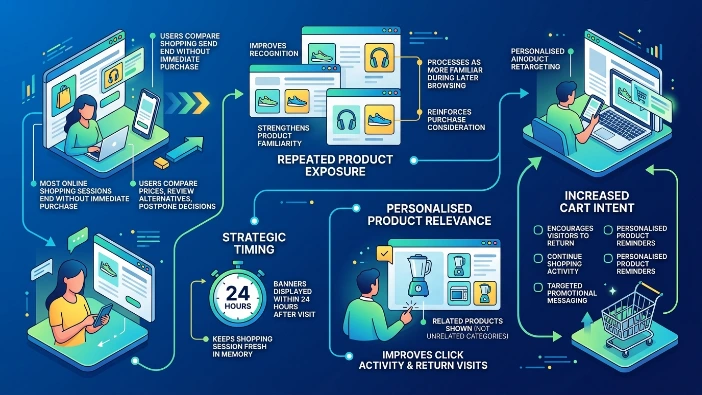
Most online shopping sessions do not end with immediate purchases. Users often compare prices, review alternatives, or postpone decisions. Retargeting banners reconnect these users with products they already evaluated.
Repeated product exposure improves recognition. Customers who view the same trainers, headphones, or furniture items multiple times process the product as more familiar during later browsing sessions.
Strategic timing also influences engagement. Retargeting systems often display banners within 24 hours after the original website visit. This timing keeps the shopping session fresh in the customer’s memory.
Personalised product relevance increases interaction rates. A user who explored kitchen appliances receives banners showing related appliances instead of unrelated product categories. Relevant messaging improves click activity and return visits.
Retargeting campaigns also support category-based engagement. Users browsing winter coats often receive banners promoting matching scarves, gloves, or boots. This broadens shopping consideration while maintaining contextual relevance.
Urgency messaging further increases cart intent. Examples include “Limited Weekend Discount” or “Free Delivery Ends Tonight.” These messages shorten decision timelines and encourage faster return activity.
Businesses studying advanced conversion strategies can explore [Insert Link to BOFU Article] to understand how high-intent banner campaigns guide add-to-cart users toward completed transactions.
Why do online shops target returning visitors with banner ads?
Online shops target returning visitors with banner ads because returning users show stronger purchase interest than first-time visitors. Retargeting campaigns focus advertising resources on users who already demonstrated product awareness, category engagement, or active shopping behaviour during earlier website interactions online.
Returning visitors represent higher commercial value in e-commerce environments. These users already know the product category, pricing range, or store structure. Businesses therefore prioritise them during retargeting campaigns.
Product familiarity reduces browsing friction. A customer who previously explored wireless headphones spends less time understanding product specifications during the second visit.
Returning users also interact more frequently with promotional content. Display banners featuring previously viewed products often receive higher click-through rates than general audience advertisements.
Online shops use visitor segmentation to improve targeting precision. Users who viewed one product page receive different banners than users who explored multiple categories or visited checkout pages.
Geographic targeting also supports campaign efficiency. United Kingdom retailers frequently align retargeting banners with local shopping trends, seasonal promotions, and national retail events such as Boxing Day sales or bank holiday campaigns.
Retargeting also improves marketing efficiency compared to broad untargeted advertising. Instead of targeting random users, businesses focus impressions on audiences with existing product awareness.
Cross-device tracking strengthens customer continuity. A shopper who browses products on a smartphone during commuting hours often receives desktop banner reminders later in the evening.
What types of banner retargeting strategies are commonly used?
Online shops use dynamic retargeting, category retargeting, cart abandonment retargeting, and promotional retargeting to increase cart intent. Each strategy targets different customer behaviours and supports specific stages of the online shopping process through personalised display advertising campaigns.
Dynamic retargeting displays the exact products previously viewed by the customer. For example, a visitor who explored black running shoes later receives banners featuring the same product image and price range.
Category retargeting focuses on broader shopping interests. Users browsing home office furniture receive banners promoting desks, chairs, storage units, and workspace accessories from the same category.
Cart abandonment retargeting targets users who added products to the shopping cart but exited before checkout completion. These campaigns often include reminders, delivery messaging, or short-duration discounts.
Promotional retargeting combines previous browsing behaviour with limited-time sales. Electronics retailers frequently use this method during gaming accessory promotions, smartphone launches, or seasonal clearance campaigns.
Search-based retargeting targets users according to keywords and browsing signals. Customers searching for “winter boots UK” often receive related footwear banners across external websites.
Sequential retargeting changes banner messaging over time. The first banner highlights product visibility. The second banner introduces urgency. The final banner reinforces checkout completion incentives.
Audience segmentation determines which retargeting method performs best. New visitors, repeat browsers, and checkout-stage users require different message structures and advertising frequency levels.
What elements make retargeting banners more effective?
Effective retargeting banners combine personalised products, concise messaging, clear pricing, mobile-responsive layouts, and strong visual hierarchy. Online shops optimise these elements carefully to improve customer attention, increase click activity, and encourage stronger cart-related engagement during repeat shopping sessions online.
Personalisation is the strongest performance factor in banner retargeting. Users engage more actively with advertisements that match previous browsing behaviour.
Product imagery must remain clear and relevant. Fashion banners display clothing items previously explored by the visitor. Electronics banners display recently viewed gaming consoles, monitors, or smart devices.
Pricing visibility improves decision clarity. Customers respond faster when banners communicate exact discounts or updated promotional pricing instead of vague savings language.
Message length also affects readability. Short headlines such as “Still Interested?” or “Your Selected Items Are Waiting” maintain strong visibility on mobile devices and smaller banner formats.
Mobile optimisation remains essential in United Kingdom e-commerce environments. Responsive banners adjust automatically to smartphone screens, tablet layouts, and application interfaces.
Visual hierarchy guides user attention. Primary information such as the product image or discount percentage appears first. Supporting information such as shipping details or deadlines appears second.
Frequency control prevents advertising fatigue. Businesses usually limit retargeting exposure to a defined number of impressions per day. Excessive repetition reduces engagement and weakens customer response rates.
Landing page consistency strengthens conversion flow. If the banner promotes trainers, the landing page immediately displays those trainers instead of redirecting users to unrelated categories.
Explore More Expert Insights:
How E-commerce Businesses Build Trust Using Social Proof Banner Ads
How Retailers Educate Customers Using Comparison Banner Advertising
How do online shops personalise banner retargeting campaigns?

Online shops personalise banner retargeting campaigns using behavioural data, browsing history, shopping patterns, and audience segmentation. These systems match advertising content with customer interests to improve relevance, strengthen shopping continuity, and increase cart-focused interactions during future browsing sessions online.
Behavioural targeting begins with website activity tracking. Online shops analyse viewed products, category engagement, session duration, and shopping frequency.
Customer segmentation divides visitors into defined behavioural groups. New visitors receive introductory product banners. Returning users receive personalised product reminders. Checkout-stage users receive urgency-focused messaging.
Product recommendation systems also support banner personalisation. Customers browsing fitness equipment often receive banners featuring resistance bands, exercise mats, or adjustable dumbbells.
Purchase history influences future retargeting campaigns. Customers who previously purchased skincare products often receive banners promoting complementary items such as cleansers, moisturisers, or facial serums.
Seasonal behaviour patterns improve campaign timing. United Kingdom retailers frequently increase personalised banner activity during Christmas shopping periods, back-to-school campaigns, and summer clearance events.
Device behaviour also influences banner design. Mobile users receive simplified layouts with shorter messaging, while desktop users often receive wider banners containing additional product detail.
Location-based personalisation supports regional relevance. Businesses align messaging with local weather conditions, regional shopping trends, or seasonal demand fluctuations.
Time-based personalisation strengthens engagement further. Evening shoppers frequently receive banners during high-engagement nighttime browsing periods, while daytime users receive work-hour promotional exposure.
How do businesses measure banner retargeting performance?
Businesses measure banner retargeting performance using click-through rates, return visitor activity, cart additions, conversion rates, and revenue attribution. These metrics identify how effectively retargeting campaigns increase shopping engagement, strengthen purchase consideration, and support customer movement toward checkout completion online.
Click-through rate measures how many users clicked after viewing the retargeting banner. High click activity often indicates strong audience relevance and effective message alignment.
Return traffic measures how many users revisit the website through banner campaigns. Businesses compare this traffic against non-retargeted visitor activity to evaluate campaign effectiveness.
Cart addition rate directly measures cart intent growth. This metric tracks how frequently users add products to the shopping cart after interacting with retargeted banners.
Bounce rate analysis identifies landing page quality. High bounce rates often signal weak message alignment between the banner advertisement and the destination page.
Conversion tracking measures completed purchases linked to banner interactions. Businesses analyse whether retargeted visitors purchase more frequently than first-time visitors.
Average order value also supports campaign evaluation. Some retargeting campaigns increase transaction size by promoting complementary products or category bundles.
Engagement duration measures how long returning visitors remain on the website after clicking a banner. Longer browsing sessions often indicate stronger purchase consideration.
Performance comparisons across audience segments help refine future campaigns. Businesses evaluate which visitor groups respond most actively to personalised product banners, urgency messaging, or cart reminder advertisements.
How Online Shops Convert Add-to-Cart Users Into Buyers Using High-Intent Banner Ads for conversion-focused banner methods targetingpurchase-ready shoppers.



