

Launching a tourism event generates immediate attention, but sustained visibility depends on how event content continues to appear across search engines after the launch period. Event syndication extends the reach of announcements by distributing them through multiple publishing platforms, news websites, industry publications, and regional media outlets. This process creates additional indexed pages that support long-tail search traffic over time.
For tourism organisations, destination marketers, attractions, and event organisers in the United Kingdom, post-launch visibility supports continued ticket sales, visitor enquiries, accommodation bookings, and local business engagement. Long-tail search traffic also captures audiences searching for detailed information weeks or months after an event announcement.
What is post-launch momentum in event syndication?
Post-launch momentum refers to the continued discovery of event content through syndicated publications, indexed articles, search results, and related media coverage. It extends audience visibility beyond launch week by supporting sustained search performance, referral traffic, and ongoing brand awareness through distributed digital content.
The launch period often lasts between three and seven days. During this time, press coverage, social sharing, and direct website traffic reach their highest levels.
Post-launch momentum begins after this initial attention slows. Instead of relying on one announcement, organisations benefit from multiple indexed versions of their news across authoritative websites.
What is event syndication?
Event syndication is the structured distribution of event announcements to multiple publishers, media outlets, tourism publications, local news organisations, and digital platforms.
Each published version creates another searchable resource that supports visibility within search engines.
For example, a regional food festival announcement published on:
- A regional newspaper
- A tourism news website
- A hospitality publication
- A local council news portal
creates four additional opportunities for search engines to discover relevant information.
What is long-tail search traffic?
Long-tail search traffic comes from highly specific search queries rather than broad keywords.
Examples include:
- “Family food festival in Cornwall October 2026”
- “Guided walking tours in the Lake District autumn”
- “York Christmas market weekend itinerary”
- “Outdoor music events near Bath August”
These searches attract visitors with defined intentions.
Why does event syndication improve long-tail search visibility?
Event syndication expands the number of indexed pages discussing an event. Search engines discover multiple trusted references, increasing topic relevance and improving opportunities to appear for detailed location, activity, seasonal, and destination-specific search queries over extended periods after launch.
Search engines evaluate content using relevance, authority, freshness, and topical consistency.
When multiple reputable websites publish information about the same event, search engines gain stronger evidence that the event represents a genuine topic of public interest.
Multiple indexed pages increase discovery
Every syndicated publication adds another indexed page.
For example, a coastal tourism campaign announcing a maritime festival gains visibility through:
- Regional newspapers
- Travel publications
- Local authority websites
- Tourism association news pages
Each indexed page expands search coverage.
Geographic relevance improves search coverage
Tourism searches often include locations.
Examples include:
- Brighton
- York
- Edinburgh
- Lake District
Syndicated publications frequently include these geographic entities naturally, strengthening local search relevance.
Supporting semantic search
Modern search engines recognise related entities rather than relying on repeated keywords.
An event announcement discussing:
- Heritage attractions
- Walking routes
- Local restaurants
- Accommodation
- Visitor centres
creates richer contextual relationships than a short promotional announcement.
How does search behaviour change after an event launches?
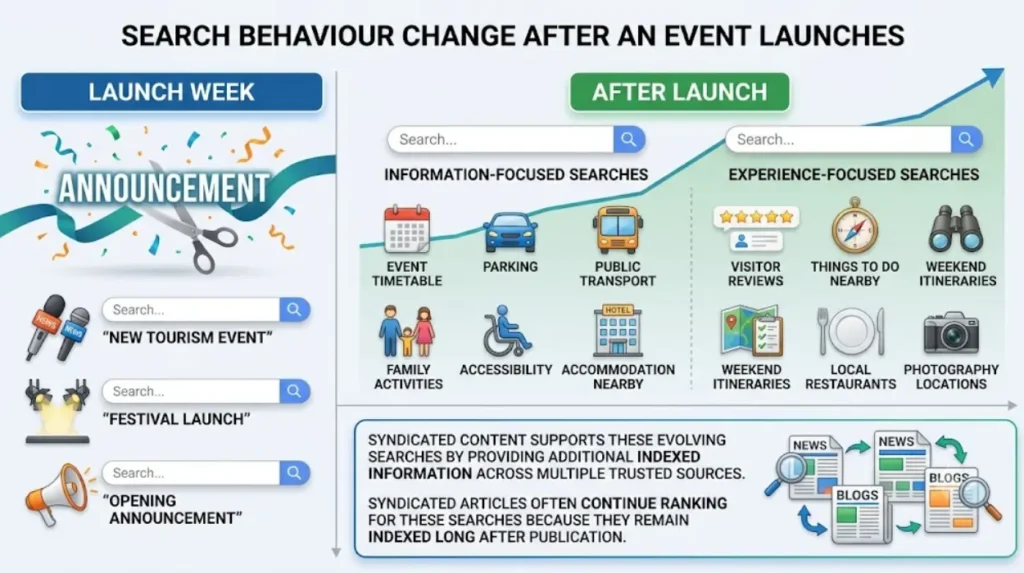
Search behaviour evolves from general awareness to detailed information requests. Users search for schedules, reviews, travel planning, accommodation, attractions, photographs, accessibility, and future event dates. Syndicated content supports these evolving searches by providing additional indexed information across multiple trusted sources.
Launch week attracts searches focused on announcements.
Examples include:
- New tourism event
- Festival launch
- Opening announcement
After launch, search behaviour becomes increasingly specific.
Information-focused searches
Visitors search for:
- Event timetable
- Parking
- Public transport
- Family activities
- Accessibility
- Accommodation nearby
Experience-focused searches
Potential visitors search for:
- Visitor reviews
- Things to do nearby
- Weekend itineraries
- Local restaurants
- Photography locations
Syndicated articles often continue ranking for these searches because they remain indexed long after publication.
Which content elements strengthen long-tail search performance?
Detailed factual information strengthens long-tail search performance by giving search engines structured entities, locations, dates, attractions, organisers, and visitor information. Complete event descriptions improve indexing and create stronger topical relevance across syndicated publications and search results over time.
Search engines understand complete information more effectively than short promotional copy.
Event entities
Define important entities clearly.
Examples include:
- Event name
- Organising organisation
- Venue
- Destination
- Activity type
- Event category
Geographic information
Include:
- Town
- County
- Region
- Landmark
- Transport connections
Specific locations improve regional relevance.
Visitor information
Useful details include:
- Opening dates
- Ticket information
- Accessibility
- Family suitability
- Parking
- Public transport
These details align with common search behaviour.
Related attractions
Connecting an event with nearby attractions strengthens topical coverage.
Examples include:
- Museums
- National parks
- Beaches
- Historic castles
- Walking trails
How can organisations extend momentum beyond the original announcement?
Organisations extend post-launch momentum by publishing additional news angles, updating event information, distributing milestone announcements, and supporting seasonal searches with refreshed content. Continuous publication creates fresh indexed pages while maintaining topical relevance throughout the campaign lifecycle.
One announcement rarely sustains visibility for several months.
Instead, organisations publish multiple factual updates.
Operational updates
Examples include:
- Additional ticket releases
- New exhibitors
- Guest speakers
- Performance schedules
Visitor milestones
Examples include:
- 10,000 visitors
- Additional weekend dates
- Community partnerships
- Sustainability achievements
These updates generate fresh indexing opportunities.
Seasonal relevance
Tourism campaigns often align with:
- Summer holidays
- School breaks
- Christmas markets
- Easter travel
- Bank holiday weekends
Publishing timely updates supports seasonal search demand.
Readers exploring broader tourism visibility strategies can also review:
Why Continuous Media Exposure to understand how ongoing publicity supports destinations during quieter travel periods.
What role does media distribution play after launch?
Media distribution broadens content availability by placing announcements across relevant publications, trade media, tourism websites, and regional news outlets. Broader publication creates additional search entry points while increasing opportunities for referral traffic and authoritative citations from trusted sources.
Distribution determines how widely event information appears online.
Different distribution options reach different audiences.
Regional publications
Regional publications target local visitors.
Examples include county newspapers and city news websites.
Tourism publications
Tourism publications reach travellers actively planning trips.
Examples include destination guides and visitor information websites.
Hospitality publications
Hospitality publications reach accommodation providers, restaurants, and tourism businesses.
This broader ecosystem increases overall digital visibility.
As organisations evaluate distribution options
Best Press Release Distribution Networks provides additional information about selecting suitable networks for specialist tourism campaigns.
How can organisations measure post-launch search performance?
Post-launch performance is measured through organic search traffic, indexed pages, keyword rankings, referral visits, engagement metrics, and conversions. Tracking these indicators demonstrates whether syndicated content continues attracting qualified visitors after the initial launch period ends.
Measurement supports continuous improvement.
Several indicators reveal long-term success.
Organic traffic
Monitor:
- Search sessions
- Landing pages
- Returning visitors
Steady traffic indicates continuing visibility.
Keyword rankings
Track searches such as:
- Destination plus event
- Activity plus location
- Festival plus month
- Attraction plus region
These detailed searches often deliver qualified visitors.
Referral traffic
Syndicated publications also generate referral visitors.
Examples include visitors arriving from:
- Regional newspapers
- Tourism websites
- Industry publications
Referral traffic complements search traffic.
Indexed pages
Monitoring indexed pages confirms that syndicated publications remain available within search engines.
A larger indexed footprint increases discovery opportunities.
Which organisations benefit most from long-tail event syndication?
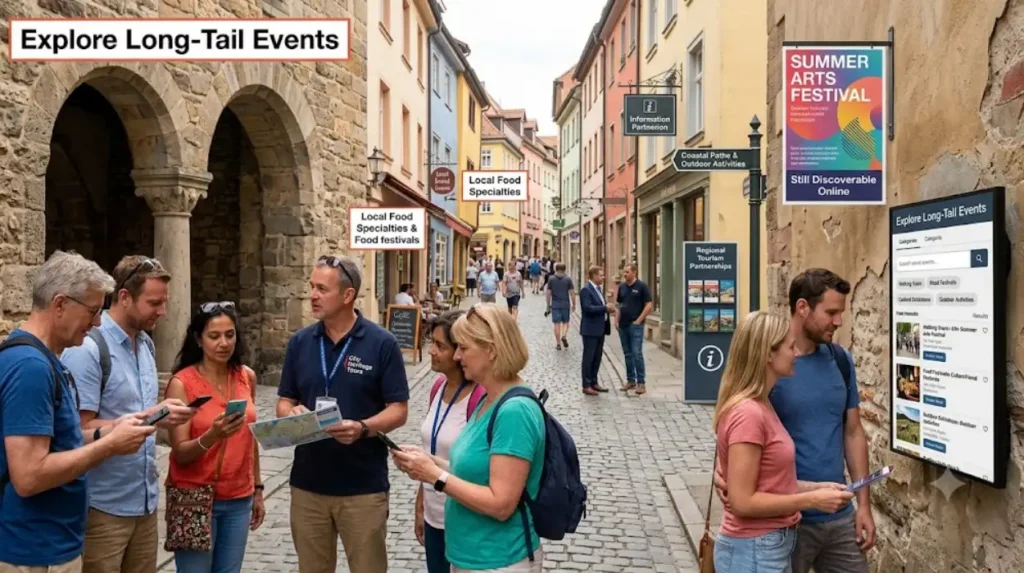
Tourism organisations, destination marketing bodies, attractions, cultural venues, festivals, local authorities, hospitality businesses, and tour operators benefit from sustained event syndication because long-tail search visibility supports continued visitor discovery long after launch activity declines.
Many tourism sectors rely on seasonal demand.
Maintaining search visibility supports consistent visitor acquisition.
Examples include:
- Heritage attractions
- Walking tour operators
- Coastal tourism campaigns
- Food festivals
- Cultural exhibitions
- Outdoor activity providers
- Visitor attractions
- Regional tourism partnerships
Each organisation benefits from content remaining searchable beyond launch week.
Explore More Expert Insights:
Designing a Press Distribution Strategy to Maximize Ticket Sales for Upcoming Festivals
Timing Your Campaign: How to Synchronize Press Releases with Seasonal Tourism and Event Calendars
Post-launch momentum transforms a single event announcement into an ongoing source of search visibility. Event syndication supports this process by distributing content across multiple trusted publications that remain indexed long after the initial campaign.
Long-tail search traffic develops through detailed visitor searches, geographic relevance, structured event information, and continuous publication. Organisations that extend their communication beyond launch week create broader search coverage, stronger topical authority, and additional opportunities for visitors to discover tourism experiences throughout the campaign lifecycle.



