

Tourism hotspots experience predictable changes in visitor numbers throughout the year. Coastal towns, mountain destinations, historic cities, and countryside attractions often attract large crowds during peak seasons but face significant declines during quieter months. Continuous media exposure helps maintain public awareness, supports local economies, and keeps destinations visible long after the busiest travel periods end.
Consistent communication through news coverage, destination updates, cultural announcements, and community stories strengthens public interest. It also supports search visibility because fresh, relevant content continues to appear across digital platforms. Understanding this process helps tourism organisations, local authorities, and businesses reduce the impact of seasonal demand.
Why do tourism hotspots experience off-season slumps?
Tourism hotspots experience off-season slumps because visitor demand follows seasonal weather, school holidays, public events, transport patterns, and consumer travel behaviour. Lower visitor numbers reduce accommodation occupancy, restaurant income, attraction attendance, and employment opportunities across local tourism economies during quieter periods every year.
Seasonality describes recurring fluctuations in tourism demand during different parts of the calendar year. Peak seasons often coincide with warmer weather, school holidays, festivals, or major sporting events. Off-season periods begin when these demand drivers disappear.
Popular tourism hotspots include seaside resorts, national parks, historic cities, and heritage villages. Examples include Cornwall’s coastal towns, the Lake District, the Cotswolds, and Scottish Highland destinations.
Lower visitor numbers affect several sectors simultaneously, including:
- Hotels
- Restaurants
- Museums
- Visitor attractions
- Tour operators
- Retail businesses
- Local transport providers
These reductions decrease tourism revenue and create temporary employment challenges.
Which factors create seasonal tourism demand?
Several measurable factors influence seasonal travel patterns.
These include:
- School holiday calendars
- Weather conditions
- Airline schedules
- Public transport frequency
- Annual festivals
- Sporting events
- Public holidays
- International travel trends
Together, these factors shape predictable cycles that repeat each year.
Why is continuous media exposure important for tourism destinations?
Continuous media exposure keeps destinations visible throughout the calendar year by sharing relevant stories, seasonal activities, cultural events, conservation projects, local developments, and visitor experiences. Regular public communication maintains awareness even when immediate travel demand declines during quieter tourism periods.
Media exposure refers to the repeated publication or broadcasting of destination-related information across newspapers, magazines, television, radio, websites, digital publications, and social media platforms.
Continuous visibility helps destinations remain familiar to future travellers.
When people begin planning holidays several months before travelling, destinations that regularly appear in media channels remain easier to recall.
Fresh information also supports search engines because regularly updated content reflects current events rather than outdated material.
What types of stories maintain destination visibility?
Tourism destinations publish different categories of news throughout the year.
Examples include:
- Winter festivals
- Wildlife conservation projects
- Heritage restoration programmes
- Food festivals
- New walking trails
- Museum exhibitions
- Community celebrations
- Environmental initiatives
Each story presents a different reason for public interest beyond peak holiday periods.
How does continuous media exposure support search visibility?
Regular publication of accurate destination information creates new searchable content, expands keyword coverage, strengthens topical authority, and improves content freshness. These factors increase opportunities for search engines to discover, index, and present destination information to future travellers researching holidays.
Search engines continuously discover new pages, articles, announcements, and local news.
Fresh content increases the number of indexed pages associated with a destination.
For example, a destination publishing monthly stories generates 12 new opportunities each year for search engines to identify relevant information.
Different articles also target different search intentions.
Which search topics benefit from regular destination updates?
Search behaviour changes throughout the year.
Travellers search for:
- Winter attractions
- Family activities
- Hiking routes
- Food experiences
- Local festivals
- Accessibility information
- Sustainable tourism
- Weekend breaks
Each published topic increases semantic relevance across tourism-related searches.
Readers seeking practical strategies for maintaining long-term visibility can continue with:
Maximizing Post-Launch Momentum.
What types of media content keep tourism hotspots relevant all year?
Year-round destination coverage combines seasonal events, educational content, local achievements, environmental updates, historical stories, visitor information, and community activities. Diverse content broadens audience interest while reducing dependence on a single tourism season for public attention and online visibility.
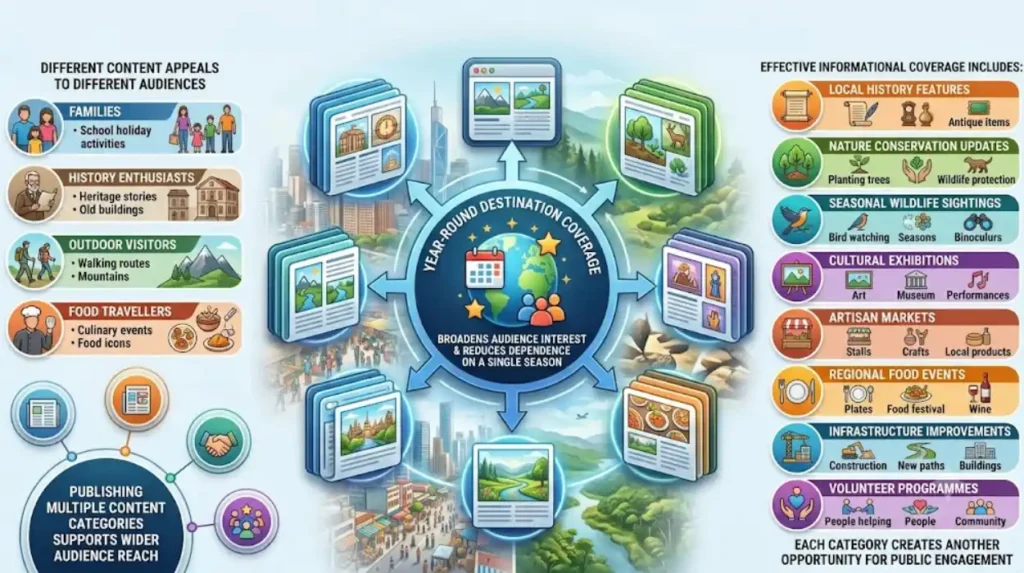
Different content categories appeal to different audiences.
Families often search for school holiday activities.
History enthusiasts seek heritage stories.
Outdoor visitors search for walking routes.
Food travellers look for culinary events.
Publishing multiple content categories supports wider audience reach.
Which content categories perform throughout the year?
Effective informational coverage includes:
- Local history features
- Nature conservation updates
- Seasonal wildlife sightings
- Cultural exhibitions
- Artisan markets
- Regional food events
- Infrastructure improvements
- Volunteer programmes
Each category creates another opportunity for public engagement.
How does media exposure benefit local tourism economies?
Consistent destination visibility supports local economic activity by encouraging future travel planning, increasing visitor confidence, promoting regional attractions, highlighting local businesses, and extending awareness beyond traditional holiday periods through ongoing public information and news coverage across multiple channels.
Tourism supports accommodation providers, attractions, restaurants, transport services, retail businesses, and cultural organisations.
When awareness remains active throughout the year, destinations remain part of future travel planning cycles.
Continuous communication also highlights attractions that operate beyond summer months.
Examples include museums, galleries, theatres, botanical gardens, heritage railways, and indoor activity centres.
Why do local businesses benefit from destination visibility?
Destination awareness often influences business discovery.
Visitors researching a location also discover:
- Independent cafés
- Local restaurants
- Guided tours
- Accommodation providers
- Artisan shops
- Visitor centres
Greater destination awareness expands opportunities across the wider visitor economy.
How do different media channels contribute to year-round awareness?
Different media channels serve different information needs by reaching diverse audiences through newspapers, magazines, broadcast media, websites, newsletters, podcasts, digital publications, and social platforms. Combining multiple channels increases message reach and information accessibility throughout the calendar year consistently.
Each communication channel fulfils a specific role.
Local newspapers highlight community developments.
Travel magazines feature destination experiences.
Broadcast media covers major events.
Digital publications provide searchable information.
Social platforms distribute timely updates.
Using multiple channels creates broader information coverage.
Which audiences use different information sources?
Audience preferences vary according to travel planning habits.
Examples include:
- Families reading local news
- International visitors using travel websites
- Outdoor enthusiasts following specialist publications
- Heritage visitors reading cultural magazines
- Food tourists exploring culinary publications
Multiple communication channels support these different information needs.
How can tourism hotspots build long-term public interest?
Long-term public interest develops through consistent storytelling, accurate destination information, recurring cultural updates, educational content, seasonal planning, and community participation. Regular communication establishes lasting awareness instead of relying exclusively on short periods of peak tourism activity each year.
Public interest grows through repeated exposure to useful information.
Destinations that publish throughout the year present ongoing reasons to visit.
Content remains relevant by covering different seasons rather than repeating identical promotional messages.
Educational material also answers common visitor questions before travel begins.
Which long-term topics strengthen destination awareness?
Examples include:
- Annual conservation programmes
- Historic anniversaries
- Seasonal walking guides
- Local food production
- Wildlife monitoring
- Heritage restoration
- Community festivals
- Accessibility improvements
Each topic contributes additional context that strengthens destination knowledge.
Readers exploring practical distribution approaches after understanding continuous visibility can continue with:
Best Press Release Distribution Networks.
What are the long-term benefits of continuous media exposure for tourism hotspots?

Continuous media exposure strengthens destination recognition, supports year-round search visibility, improves public awareness, encourages future travel planning, highlights seasonal diversity, and reduces dependence on short peak periods. Consistent communication creates lasting visibility that supports sustainable tourism development over time.
Tourism destinations benefit from remaining visible before, during, and after peak travel seasons.
Regular information publishing creates a larger collection of searchable content.
It also documents destination development, cultural activities, conservation efforts, and visitor experiences over many years.
Explore More Expert Insights:
How Under-the-Radar Hospitality Brands Build Credibility Against Massive International Chains
Why New Entertainment Startups Fail to Build Buzz Without a Structured Media Visibility Strategy
This cumulative information helps travellers make informed decisions based on current, relevant content rather than outdated material.
Continuous media exposure therefore functions as an important part of long-term tourism communication. It supports destination awareness, improves information availability, strengthens digital discoverability, and helps tourism hotspots remain relevant throughout every season rather than only during periods of maximum visitor demand.



