Seasonal tourism and event calendars shape media demand, audience behaviour, and public interest throughout the year. Synchronising press releases with these periods increases relevance, improves journalist engagement, and aligns announcements with moments when target audiences actively seek related information. A structured timing strategy combines editorial planning, regional events, seasonal travel trends, and distribution schedules to improve campaign performance.
Why does synchronising press releases with seasonal tourism and event calendars matter?
Synchronising press releases with seasonal tourism and event calendars improves relevance, increases editorial interest, reaches active audiences during peak demand periods, strengthens campaign planning, supports better publication timing, and creates stronger alignment between news announcements, public attention, regional events, and industry activity throughout the year.
Media outlets organise editorial schedules around recurring events. Tourism boards, entertainment venues, festivals, sporting competitions, school holidays, and seasonal shopping periods all influence news priorities.
A press release published during a relevant event receives stronger contextual value because journalists already cover that topic.
For example:
- A coastal hotel announcing refurbishment before the summer holiday season.
- A music festival announcing headline performers before ticket sales open.
- A Christmas market releasing visitor information in early autumn.
- A regional attraction promoting family activities before school holidays.
Each announcement matches existing audience demand.
Campaign timing also supports search visibility because online searches increase during seasonal interest periods.
What is a seasonal tourism calendar?
A seasonal tourism calendar records predictable periods of increased visitor activity.
Examples in the United Kingdom include:
- Spring travel season
- Summer holidays
- Easter
- Christmas tourism
- Half-term school holidays
- Bank holiday weekends
These periods influence both consumer behaviour and editorial planning.
What is an event calendar?
An event calendar lists scheduled public activities that generate news coverage.
Examples include:
- Music festivals
- Food festivals
- Sporting championships
- Cultural celebrations
- Business conferences
- Art exhibitions
These events create natural opportunities for timely media announcements.
How do you build a campaign timeline around seasonal opportunities?
Building a campaign timeline begins with identifying important tourism periods, mapping relevant industry events, setting announcement objectives, preparing content several weeks before publication, confirming distribution dates, and aligning every communication activity with planned editorial and audience schedules for consistent campaign delivery.
Planning begins long before publication.
Successful campaigns normally prepare press releases between four and twelve weeks before major seasonal events.
A structured campaign includes four stages:
Research seasonal demand
Identify:
- Peak visitor months
- Booking periods
- Consumer purchasing behaviour
- Regional travel patterns
- Historical attendance figures
For example, a countryside resort launching autumn walking packages benefits from announcing them before booking activity increases.
Map industry events
Every sector follows different annual events.
Examples include:
- Hospitality businesses following tourism seasons.
- Entertainment companies following festival calendars.
- Museums following school holidays.
- Retail destinations following Christmas shopping periods.
Mapping these events creates a predictable communications schedule.
Create production deadlines
Campaign planning includes fixed dates for:
- Draft approval
- Photography
- Media assets
- Press release writing
- Distribution booking
- Follow-up activity
Defined deadlines reduce delays.
Schedule publication
Publication timing depends on audience activity.
Morning distribution often supports business announcements.
Lifestyle campaigns frequently align with consumer planning periods before weekends or holidays.
Which seasonal events influence media planning across the United Kingdom?
Several national and regional events influence editorial priorities throughout the United Kingdom. Campaign planning that recognises these recurring occasions aligns announcements with active news cycles, increases topic relevance, supports stronger journalist engagement, and improves opportunities for wider media visibility across multiple sectors.
United Kingdom media planning follows predictable annual cycles.
Examples include:
Spring
- Easter holidays
- Garden shows
- Food festivals
- Tourism reopening campaigns
Travel businesses frequently launch seasonal offers during this period.
Summer
Summer includes:
- Music festivals
- Sporting tournaments
- Coastal tourism
- Family attractions
- Outdoor events
Media demand increases across entertainment and tourism sectors.
Autumn
Autumn focuses on:
- University returns
- Cultural festivals
- Business conferences
- Halloween attractions
Destination marketing often shifts towards short breaks and indoor experiences.
Winter
Winter includes:
- Christmas markets
- Seasonal concerts
- New Year celebrations
- Winter tourism
- Charity campaigns
Many organisations begin winter campaign planning during early autumn.
How do journalists use seasonal news cycles when selecting stories?
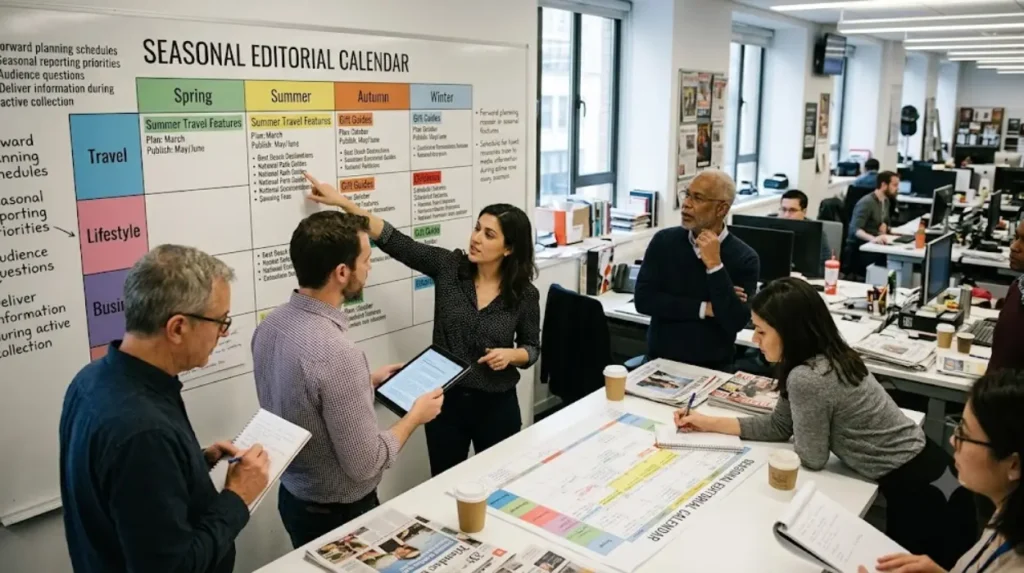
Journalists organise editorial coverage around predictable public interest periods. Relevant announcements receive greater attention because they support existing editorial themes, answer current audience questions, complement scheduled features, and strengthen the publication’s seasonal reporting priorities across multiple news categories consistently.
Editorial teams work with forward planning schedules.
Seasonal features often appear weeks before events occur.
For example:
Travel publications prepare summer destination articles during spring.
Lifestyle publications prepare Christmas gift features during autumn.
Entertainment editors schedule festival coverage before line-up announcements.
Businesses that understand these editorial calendars deliver information while journalists actively collect material.
Late announcements lose relevance because feature planning already concludes.
Why do editorial calendars matter?
Editorial calendars define publication schedules.
They identify:
- Feature topics
- Seasonal campaigns
- Industry reports
- Event coverage
- Consumer trends
Understanding these schedules improves campaign coordination.
What factors determine the best release date for a seasonal campaign?
The best release date depends on audience planning behaviour, journalist production schedules, event registration periods, booking windows, search demand, campaign objectives, and content preparation timelines. These factors create structured publication schedules that maximise relevance without relying on last-minute announcements.
Several timing factors influence campaign effectiveness.
Booking behaviour
Holiday bookings often occur weeks before travel.
Accommodation announcements perform better before booking peaks.
Ticket sales
Entertainment campaigns align with ticket launches.
Festival organisers often release performer announcements months before events.
Search demand
Online search activity rises before seasonal events.
Publishing during increasing search interest supports stronger visibility.
Competition
Large national events generate extensive media activity.
Smaller organisations benefit from publishing before major announcement periods become crowded.
How does seasonal timing improve campaign performance?
Seasonal timing strengthens campaign performance by matching announcements with active consumer interest, supporting higher media relevance, increasing search activity alignment, improving audience engagement, and creating consistent communication plans that reinforce campaign objectives across multiple promotional channels throughout the calendar year.
Timing affects every stage of campaign performance.
Benefits include:
- Better contextual relevance.
- Increased editorial value.
- Higher audience engagement.
- Improved campaign planning.
- Stronger search visibility.
- More consistent communication.
These improvements result from relevance rather than publication volume.
Campaign quality remains essential.
Relevant timing enhances quality instead of replacing it.
Which industries benefit most from seasonal campaign planning?
Industries with predictable annual demand gain substantial value from seasonal campaign planning. Tourism, hospitality, entertainment, retail, cultural organisations, visitor attractions, sporting venues, and local authorities all depend on recurring public interest periods to organise communication activities effectively.
Many industries operate around seasonal demand.
Examples include:
Tourism
Hotels, attractions, tour operators, and visitor destinations align campaigns with travel seasons.
Entertainment
Concert promoters, theatres, cinemas, festivals, and recording artists schedule announcements around event calendars.
Hospitality
Restaurants promote seasonal menus.
Wedding venues announce showcase events.
Luxury hotels launch holiday packages.
Retail
Retail campaigns align with:
- Christmas
- Mother’s Day
- Father’s Day
- Valentine’s Day
- Back-to-school shopping
Every campaign follows predictable consumer behaviour.
What tools and planning methods support seasonal campaign coordination?
Campaign coordination improves through structured planning tools, editorial calendars, event databases, content schedules, approval workflows, distribution planning, performance tracking, and regular timetable reviews. These systems organise communication activities across departments and maintain consistent publication timing throughout the campaign lifecycle effectively.
Campaign planning benefits from organised workflows.
Useful planning methods include:
- Annual content calendars.
- Quarterly campaign reviews.
- Event tracking spreadsheets.
- Editorial planning documents.
- Tourism calendars.
- Media scheduling software.
- Performance reporting dashboards.
These systems create visibility across the entire communications programme.
Teams coordinate creative production, approvals, distribution, and follow-up using shared schedules.
Organisations evaluating structured campaign planning approaches often compare different distribution and media support options before implementation. For additional guidance, see:
When campaign planning progresses to selecting an appropriate distribution approach for entertainment announcements,
Lifestyle Wire provides further decision-focused information.
How do you measure the success of a seasonal press release campaign?
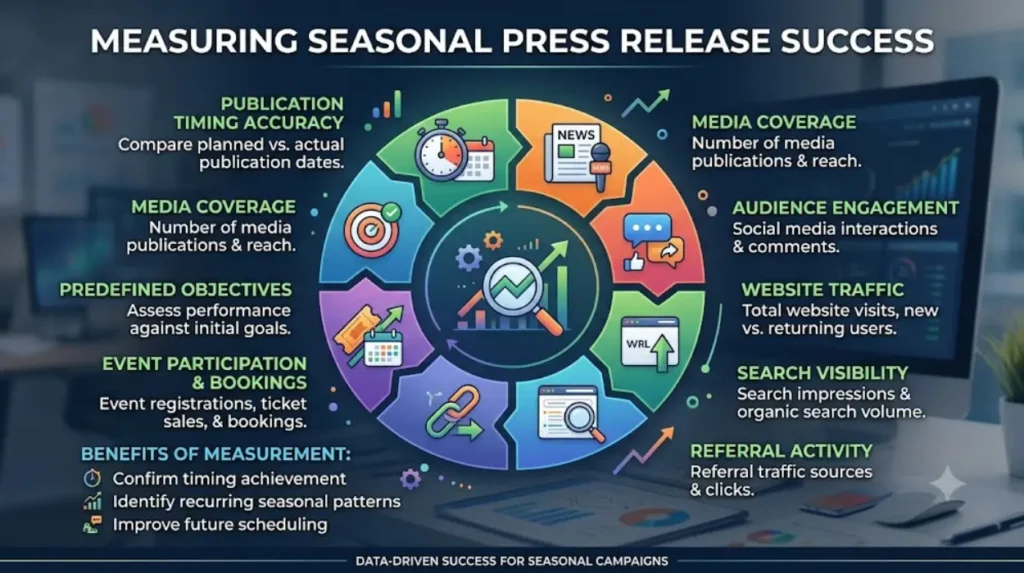
Seasonal press release success is measured through publication timing accuracy, media coverage, audience engagement, website traffic, search visibility, referral activity, event participation, booking growth, and campaign performance against predefined communication objectives established before launch planning begins.
Measurement confirms whether campaign timing achieved its objectives.
Common performance indicators include:
- Number of media publications.
- Referral traffic.
- Search impressions.
- Event registrations.
- Visitor enquiries.
- Ticket sales.
- Accommodation bookings.
- Social engagement.
- Brand mention volume.
Campaign reviews compare planned publication dates with actual results.
These findings improve future scheduling.
Historical performance data also identifies recurring seasonal patterns.
Annual reviews create stronger campaign planning for subsequent years.
Explore More Expert Insights:
How to Build a Digital Press Kit That Captures the Attention of Top Food and Travel Journalists
Step-by-Step Blueprint: Turning a Boutique Hotel Launch into a Major Regional Media Event
Synchronising press releases with seasonal tourism and event calendars creates structured, relevant, and timely communication. Campaign planning begins with understanding annual tourism cycles, industry events, editorial schedules, and audience behaviour. A documented timeline, supported by production deadlines and performance measurement, strengthens campaign consistency and improves media relevance. Organisations that integrate seasonal planning into their communication strategy build more organised campaigns, align announcements with established public interest, and support stronger long-term media visibility.