

Short-form video shifted event coverage from long-form reports to rapid, mobile-first visual updates under 60 seconds that prioritise immediacy, highlights, and audience engagement metrics such as view counts and shares.
Short-form video is video content of 60 seconds or less, designed for mobile screens and fast consumption. Platforms include social apps and publisher embeds. Event coverage means journalism, PR reporting, live updates, and post-event summaries produced for public audiences. Since 2020, short-form formats grew from social experiments to mainstream distribution channels. By 2026, UK newsrooms, event organisers, and independent creators restructured workflows to deliver minute-length clips for editorial feeds, social streams, and syndication.
Short-form video changed visual framing. Camera setups moved from static wide shots to close-up, vertical framing. Audio mixing focused on speech clarity and short soundbites. Editing priorities shifted to jump cuts, caption overlays, and branded visual identifiers. Production equipment changed: lightweight gimbals, mobile lenses, and on-camera LED panels replaced bulkier broadcast kits for many coverage tasks.
Short-form video changed timing. Coverage cycles shortened from hours-long broadcasts and next-day summaries to realtime snippets during events and multiple short recaps within 24 hours. Distribution calendars now include immediate clips, afternoon highlight reels, and evening summary rounds. Metrics such as first-hour views and completion rates determine editorial prioritisation. This timing change altered news values: “shareability” and “engagement” now rank with timeliness and impact.
Short-form video changed staffing roles. Reporters learned mobile filming and rapid editing. Producers became content schedulers across multiple social platforms. Event teams hired dedicated short-form editors and audience analysts. Universities integrated short-form production into journalism training by 2024, producing graduates ready for these roles. Newsrooms repurposed existing broadcast staff into mobile units, increasing the number of content drops per event by two to five times.
Why did audiences and platforms prefer short-form video for event updates?
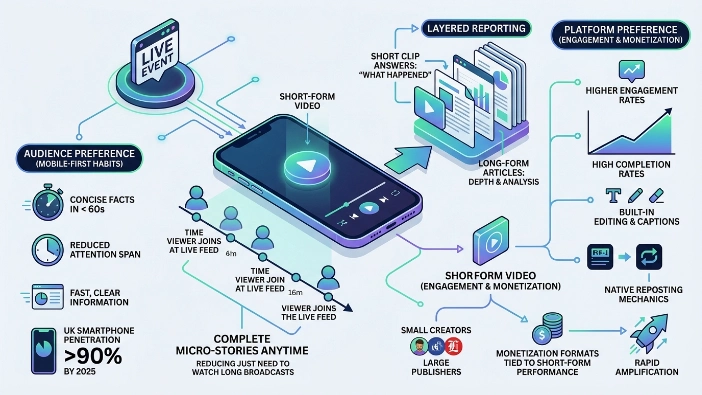
Audiences prefer short-form video because it delivers concise facts and highlights in less than 60 seconds on mobile devices; platforms prioritise it due to higher engagement rates and ad monetisation opportunities.
Mobile uptake drives preference. In the UK, average smartphone penetration exceeded 90% by 2025. Users spend more time on social apps that promote short videos in algorithmic feeds. Attention spans for news scrolling reduced; users expect fast, clear information in a single visual pass. Short-form video meets that requirement by condensing context into visual moments and a small number of key facts.
Platform algorithms reward watch-time and early engagement. Short clips generate higher completion rates, which boost distribution. Platforms provide built-in editing tools, captions, and native reposting mechanics. Publishers and independent creators use these tools to expand reach and achieve rapid amplification for event clips. Platforms also introduced monetisation formats tied to short-form performance, creating direct incentives for publishers to prioritise these clips.
Short-form video fits audience habits for live updates. Viewers join streams or feeds at arbitrary times and still receive complete micro-stories. This reduces the need to watch hour-long broadcasts to stay informed. The format supports layered reporting: a single clip answers “what happened,” while linked long-form articles supply context and analysis for readers who want depth.
How do UK newsrooms produce verified short-form content during live events?
Newsrooms follow a rapid verification workflow combining eyewitness sourcing, real-time cross-referencing, and concise editorial checks before publishing 30–60 second clips.
Verification begins with source triangulation. Reporters capture original footage and note time, location, and witness details. Editors cross-check phone footage with official statements, public feeds, and accredited photographer images. Fact-check teams use geolocation tools and metadata inspection to confirm authenticity. When verification is pending, clips are labelled as “unverified” and carry minimal factual claims.
Editorial checks compress into a 3–10 minute pipeline. Producers select the clearest 10–30 second moments. Editors add text overlays stating verified facts, timestamps, and location. Legal and accuracy staff perform a final read for defamation and public safety. In high-risk scenarios, outlets delay publication by 5–15 minutes to complete checks. This workflow balances speed with responsibility and aligns with UK regulatory expectations for accuracy.
Newsrooms use templates. Templates include headline overlay, 3–4 second intro card, two or three 5–15 second bite clips, and a 3–5 second source card. Standardisation accelerates editing and ensures consistent verification cues. Metadata tags capture verification status, witness names, and licence details for future audits.
What components define an effective short-form event clip in 2026?
An effective clip contains a clear 5–10 second lead, one confirmed fact, readable captions, auditable source metadata, and platform-optimised orientation and length.
Lead element: a single visual or statement that identifies the event and its significance. Confirmed fact: one sentence in text overlay that communicates who, what, where, and when. Captions and subtitles: word-for-word captions ensure accessibility and clarity for silent autoplay. Metadata: embedded timecode, geotag (where available), reporter ID, and verification status allow future referencing and citation.
Technical specs differ by platform but follow common bounds: vertical or square orientation for feeds, horizontal for publisher sites, and durations between 15 and 60 seconds. Audio mixes prioritise voice intelligibility and reduce background noise to below -10 dB relative to dialogue. Visual contrast and legibility meet accessibility standards with minimum font sizes and contrast ratios used by major UK outlets.
Example: At a central London protest in 2025, a 45-second verified clip included a 6-second headline card, three 10-second witness statements, and a 9-second official statement excerpt. The published file contained a metadata card with time, GPS coordinates, and reporter accreditation, enabling later citation in a longer analysis piece.
What benefits do short-form videos offer for public information during UK events?
Short-form videos increase reach, accelerate public awareness, improve accessibility, and provide auditable micro-evidence for future reporting.
Reach increases because social feeds show short clips to broader audiences and non-traditional news consumers. Acceleration occurs as verified facts spread within minutes, enabling the public to respond faster to unfolding situations, such as road closures or health advisories. Accessibility improves due to captions, concise language, and mobile optimisation, which help users with limited time or differing abilities.
Auditable micro-evidence matters for accountability. Short clips with embedded metadata serve as timestamped records for later reporting, regulatory inquiries, or legal proceedings. This evidentiary value enhances transparency in public events and allows journalists to substantiate claims in follow-up analyses.
These benefits affect different stakeholders: audiences receive rapid information; emergency services see reduced misinformation when verified clips circulate; event organisers gain a clear public record; and researchers find usable primary-source footage for later study.
Explore More Expert Insights:
Why 80% of UK Corporate Event Stories Never Reach a Single News Outlet
Events Are B2B’s Second-Highest Marketing Investment in 2026: Is Coverage Keeping Up?
How do publishers and independent creators use short-form video for post-event reporting and analysis?
Publishers repurpose verified clips as article leads, timeline anchors, and evidence for investigative pieces; creators compile highlight reels and thematic summaries across multiple events.
Publishers embed short clips at the top of online articles to provide immediate visual context for readers. Editors use a sequence of short clips to construct a chronological timeline within long-form pieces. Clips labelled with verification metadata support investigative work by linking primary-source material to analysis paragraphs.
Independent creators use short-form content to compile multi-clip summaries presented across several days. Creators aggregate clips from different vantage points to show a comprehensive narrative. For recurring event types, creators use templated recap structures to produce daily summaries across a 7–30 day window after a major event, increasing informational longevity and search relevance.
Internal linking supports follow-up content. Editorial teams link short clips to background explainers and timeline articles for readers who seek depth. For internal site structuring, teams place clips into searchable archives with tags for event type, location, and verification status.
Read More to Understand Better:
How to Turn a One-Day UK Conference Into 30 Days of Content Across News Sites
What future developments will shape short-form event coverage in the UK after 2026?
Developments include standardised verification metadata, regulatory guidance on social-first reporting, expanded accessibility mandates, and improved AI-assisted editing tools that preserve provenance.
Standardised metadata frameworks will allow cross-platform auditing of clip sources and verification status. Regulatory guidance from media authorities will define minimum verification steps for breaking event clips and set transparency requirements for labelled content. Accessibility mandates will require captions, audio descriptions, and alternative text for embedded clips on publisher sites.
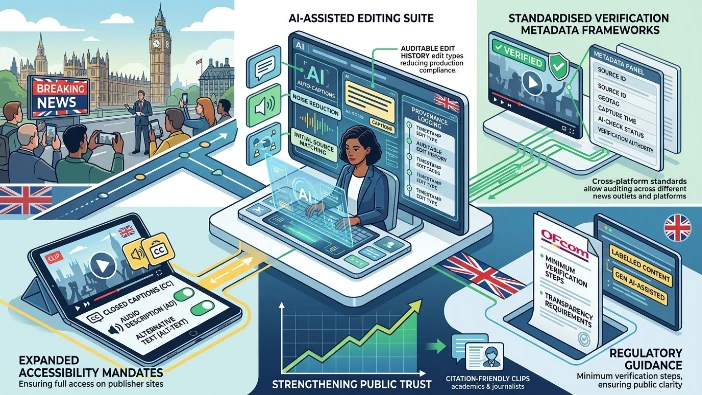
AI tools will automate routine editing tasks such as caption generation, noise reduction, and initial source matching while logging provenance and editorial edits. These tools will reduce production time for verified short clips and provide auditable edit histories for newsroom compliance.
Adoption of these developments will structure short-form workflows and strengthen public trust in visual micro-reporting. Industry-wide standards will make clips more citation-friendly for academics, regulators, and other journalists.
Short-form video transformed UK event coverage by 2026 through fast, mobile-first formats that demand new production workflows, verification standards, and editorial roles. The format delivers immediate, accessible updates with auditable metadata. Publishers and creators repurpose clips for timelines, evidence, and extended coverage. Emerging standards and AI tools will further professionalise short-form reporting and improve citation-quality outputs for future public events.
Get the Full Insights Here:
In-House Event PR vs Managed Media Coverage: A Real Cost Analysis for UK Teams



