
Published market research is the practice of conducting data gathering and releasing those statistical findings publicly. London brands use this methodology to establish sector authority, earn organic media placements, and provide verified data points to key commercial decision-makers.
Published market research transforms internal consumer insights into public-facing data assets. Unlike proprietary research reserved exclusively for internal strategy, published studies target external audiences including journalists, industry analysts, potential investors, and prospective business clients.
Core Characteristics of Public-Facing Research
Public data initiatives require strict methodological rigor to withstand external scrutiny. The data collection process must use representative sampling to ensure statistical validity across target demographics.
- Quantitative Surveys: Standardized questionnaires administered to targeted consumer or business panels to generate statistical metrics.
- Qualitative Focus Groups: Structured group discussions that surface context, sentiment, and nuanced opinions behind quantitative numbers.
- Secondary Data Synthesis: Analysis of existing public databases, government repositories, and industry registries to benchmark primary findings.
Organization leaders publish these studies through downloadable industry reports, interactive online dashboards, and press releases distributed to national communications channels.
Why Do London Brands Invest in Published Market Research?
London brands invest in published market research to secure non-paid media coverage, build brand trust, validate high-value sales propositions, and differentiate their market offerings. Verified data positions organizations as authoritative industry sources within competitive UK and international markets.
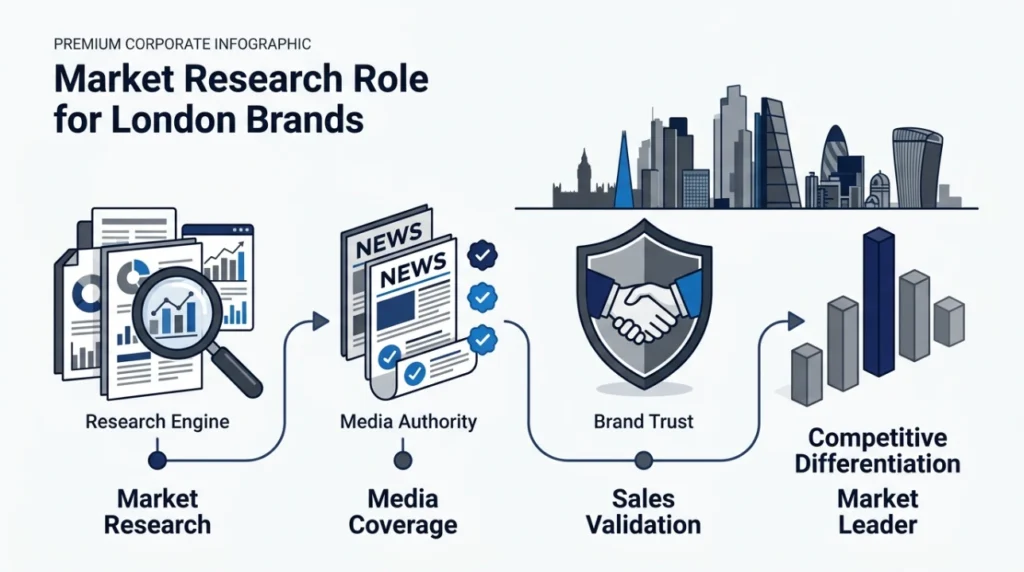
London operates as one of the most competitive commercial environments globally. Standard promotional messaging faces high consumer skepticism and saturated media markets. Published data provides an objective foundation that commands professional attention.
Key Drivers for Research Investment
Earning Organic Media Placements
Journalists and media outlets require verifiable facts, statistics, and trends to support their news stories. Brands that supply original, methodologically sound research earn editorial coverage and high-authority backlinks without paying for advertising space.
Accelerating B2B Sales Pipelines
Business buyers require evidence before committing to major financial investments. Published research acts as neutral proof, validating the specific problems a brand solves and demonstrating deep market expertise.
Establishing Thought Leadership
Publishing original data shifts a company’s market position from a vendor to an industry authority. Organizations that regularly release market benchmarks shape industry conversations and set standards for their sector.
How Does Published Market Research Influence UK Buying Decisions?
Published market research influences UK buying decisions by reducing perceived purchasing risk, validating product efficacy, and providing buyer rationale. Commercial decision-makers rely on third-party statistical evidence to justify major procurement choices to internal stakeholders and boards.
Modern buyers complete up to 70% of their research independently before contacting a vendor sales representative. Published market research satisfies this demand for self-directed evaluation by offering authoritative evidence during the consideration phase.
Impact on the Business Purchasing Process
- Problem Identification: Industry reports highlight emerging operational inefficiencies or market shifts, alerting buyers to challenges within their own organizations.
- Solution Validation: Comparative research demonstrates the measurable impact of specific methodologies or technologies.
- Internal Justification: Purchasing managers extract statistics from published reports to construct internal business cases for executive approval.
In consumer markets, statistical evidence published in national publications enhances brand credibility, directly influencing purchasing confidence at the point of sale.
Explore More Expert Insights:
How Financial Services Build Trust Using Educational Banner Advertising
How Agencies Increase Buyer Engagement Using Display Remarketing Ads
What Key Components Make a Market Research Report Successful?
A successful market research report requires clear methodological standards, representative sample sizes, actionable data insights, and strong narrative structuring. Reports must feature timely topics that address specific industry pain points while adhering to strict publication guidelines.
Creating an impactful research report involves rigorous planning and execution across three core phases: design, analysis, and presentation.
Structural Framework of High-Impact Reports
Essential Elements for Maximum Credibility
- Statistically Significant Sample Size: Research targeting general UK consumers typically requires a minimum of 1,000 to 2,000 vetted respondents to achieve a margin of error below 3%.
- Unbiased Question Design: Questions must avoid leading phrasing or biased choices to ensure data integrity and journalistic acceptance.
- Visual Data Presentation: Clean charts, infographics, and data tables allow journalists, executives, and readers to extract key statistics within seconds.
How Do Brands Integrate Published Data Into Marketing Campaigns?
Brands integrate published data into marketing campaigns by repurposing core statistical findings across earned media, digital content, corporate sales collateral, and social channels. Data assets provide consistent messaging points across every tier of the marketing funnel.
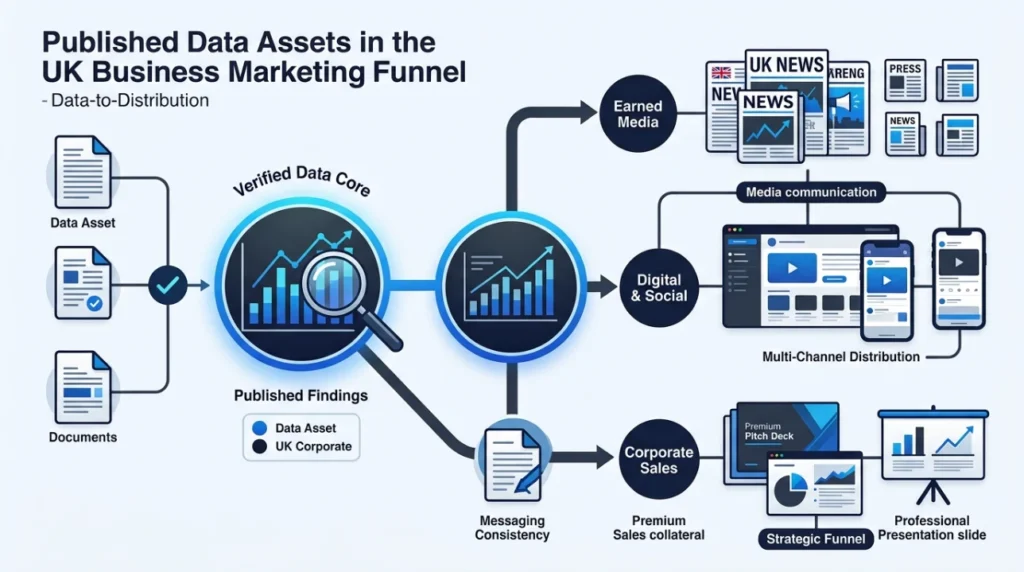
A single market research study serves as a long-term content platform that powers multiple marketing initiatives over a 6 to 12-month period.
Strategic Content Repurposing Plan
| Marketing Channel | Asset Type | Primary Objective |
| Earned Media | Press Releases & Data Summaries | Secure news coverage in national news publications |
| Owned Media | Comprehensive Whitepapers & Landing Pages | Capture inbound lead information |
| Digital Marketing | Industry Statistics & Data Graphics | Improve organic Search Engine Optimization rankings |
| Direct Sales | Sales Pitch Decks & One-Sheets | Provide third-party validation during client negotiations |
Brands looking to understand how research shifts into news stories can examine london brand research reaches uk national media to see how raw data transforms into national press coverage.
What Sectors Benefit Most from Published Market Research?
Technology, financial services, professional services, real estate, and consumer goods sectors benefit most from published market research. These industries rely heavily on trust, high transaction values, and rapid market evolution to maintain market share.
Industry-Specific Applications
Technology and Software (SaaS)
Technology companies use published studies to quantify the cost of outdated operational processes. Releasing research on cybersecurity risks or workplace productivity gaps creates immediate demand for modern software solutions.
Financial and Professional Services
Financial firms operate on trust and technical precision. Releasing quarterly economic indexes or wealth management trends establishes technical authority and attracts high-net-worth clients.
Real Estate and Property Development
Property firms publish demographic shift analyses, rental yield forecasts, and urban development statistics to inform institutional investors and secure capital allocations.
Organizations evaluating professional research options can explore london research reports for structured execution frameworks tailored to these commercial sectors.
What Is the Return on Investment for Published Market Research?
The return on investment for published market research is measured through earned media value, inbound organic search traffic, high-value lead generation, and shortened sales cycles. Research reports function as long-term digital assets that generate ongoing value over multiple years.
While direct advertising returns drop to zero the moment spending stops, published research continues to build brand equity and earn backlinks over time.
Measuring Research ROI Metrics
- Earned Media Value (EMV): Calculating the equivalent advertising cost of editorial coverage secured in national news and trade journals.
- Inbound Link Equity: Tracking high-authority editorial websites that link back to the original research report on the brand’s site.
- Pipeline Velocity: Measuring the speed at which prospective clients move through sales conversations when presented with third-party research data.
Published market research remains one of the most effective strategies for London brands seeking to establish category leadership, secure editorial coverage, and drive sustainable commercial growth across the United Kingdom.