
London brand research reaches UK national media through a structured process of data validation, editorial alignment, and newsroom distribution. Brands convert survey findings into newsworthy statistics, package them into press releases, and deliver them directly to national journalists.
The process relies on rigorous methodology to ensure national newsrooms accept the findings. Editors at publications such as The Times, The Guardian, and The Daily Telegraph require verified sample sizes, clear demographic breakdowns, and objective questioning before considering research for publication.
Editorial Alignment and Angle Development
To secure coverage, data must address current public interest topics, economic trends, or social shifts. Research teams analyze news agendas to identify gaps where proprietary data provides a novel perspective. A survey on consumer spending during inflation, for example, gives financial journalists quantifiable evidence to support broader economic reporting.
Media Packaging and Distribution
Once data collection completes, analysts extract key statistics into a structured media kit. This kit includes:
- An executive summary highlighting three to five core findings.
- Methodological notes specifying sample sizes, field dates, and demographics.
- Expert commentary from industry leaders to provide immediate context.
Distribution involves targeted pitching to beats-specific reporters, such as technology editors, retail correspondents, or business writers. Brands use dedicated news wires and direct media relationships to deliver these assets under embargo.
Why Do UK National Outlets Publish Research From London Brands?
UK national outlets publish research from London brands because proprietary data offers exclusive, factual storylines that lower newsroom production costs. National journalists use verified third-party statistics to validate broader economic, cultural, and industry trends efficiently.
National newsrooms operate under tight daily deadlines and reduced editorial budgets. High-quality corporate research provides ready-to-publish facts that support investigative stories, feature pieces, and opinion columns without requiring internal primary research.
Statistical Verifiability and Credibility
Journalists reject data that appears biased or statistically weak. National outlets demand a minimum sample size of 2,000 UK adults for general consumer surveys to guarantee national representation. Research from established agencies provides the credibility required by legal and editorial compliance teams.
Filling Data Gaps in Breaking News
When major economic or regulatory changes occur, national media outlets need rapid insight into how businesses and consumers react. Brand research provides immediate quantitative measurements. For example, when interest rates change, survey data detailing household budget adjustments allows outlets to quantify public impact immediately. Organizations building their initial market understanding often start with foundational research investments before pitching national desks, a concept explored further through Why London Brands Invest in Published Market Research.
What Is the Step-by-Step Process for Distributing Brand Research to UK Newsrooms?
The step-by-step process for distributing brand research involves campaign planning, survey design, data collection, press asset creation, targeted pitching, and news wire syndication. Each step ensures compliance with UK editorial standards and Market Research Society guidelines.
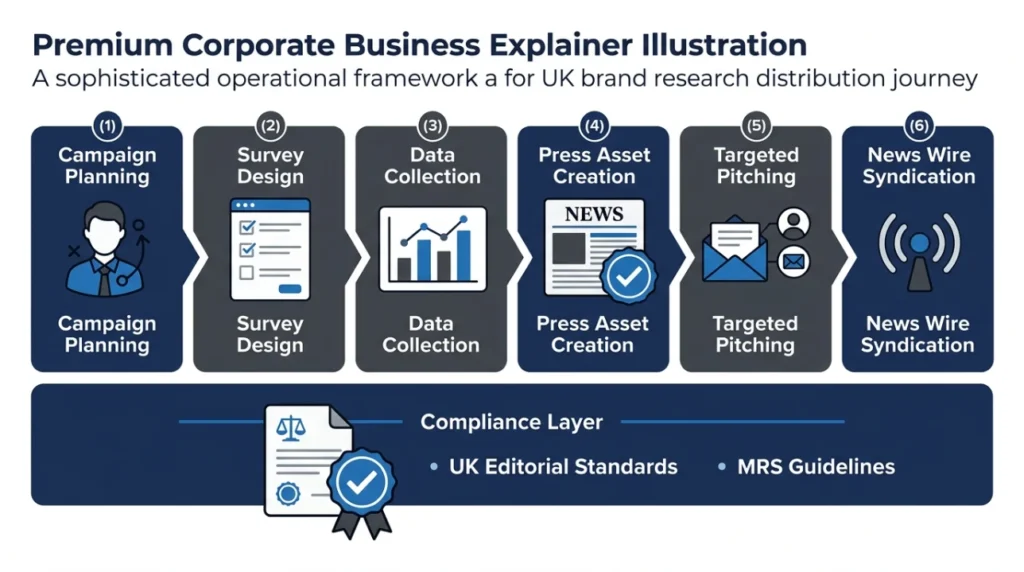
1.Campaign Definition and Hypothesis Creation:Establishing clear news objectives.
The strategy begins by formulating specific hypotheses that align with upcoming news cycles. Teams establish the target publications, required statistical confidence levels, and the core message of the study.
2.Survey Design and Fieldwork Execution:Gathering compliant data.
Researchers draft neutral, non-leading survey questions. A qualified panel provider executes fieldwork across a nationally representative sample of 2,000 UK respondents, stratified by age, gender, and region.
3.Data Extraction and Statistical Analysis:Identifying primary headlines.
Data analysts process raw responses, apply weighting to reflect UK demographics, and run cross-tabulations. They identify primary statistical anomalies, regional variations, and notable demographic contrasts.
4.Media Asset Drafting:Creating press-ready materials.
Writers transform raw statistics into news copy, including press releases, fact sheets, and data visualization assets. Statements from company spokespeople are integrated to provide expert context.
5.Targeted Outreach and Syndication:Securing coverage.
Communications teams issue the pitch to national news desks under an embargo. They follow up directly with key sector correspondents at national newspapers, digital news sites, and broadcast channels.
Following this execution sequence guarantees that the resulting research meets the formatting and verification standards demanded by national journalists.
Explore More Expert Insights:
How Investment Firms Build Awareness Using Market Insight Ads
How Finance Brands Improve Conversion Intent Using Retargeting Ads
What Components Make London Brand Research Newsworthy to National Journalists?
London brand research becomes newsworthy when it contains high sample sizes, nationally representative demographics, counter-intuitive findings, and neutral survey questions. National journalists select research that delivers objective, nationwide relevance rather than localized sales pitches.
High Sample Size and Demographic Representation
A survey of 100 London-based respondents does not qualify as national news. To secure coverage in publications such as BBC News, The Telegraph, or The Independent, the survey panel must mirror official UK census demographics provided by the Office for National Statistics (ONS).
Counter-Intuitive Findings and Trend Identification
Data that simply confirms well-known facts rarely makes the news. Journalists look for stats that reveal unexpected consumer behaviors, emerging industry disruptions, or shifts in public sentiment. Data showing an unexpected decline in smartphone usage among digital natives, for instance, offers a compelling headline for national technology pages.
Methodological Transparency
Every press release sent to UK journalists must include a methodology footer detailing:
- The exact dates fieldwork took place.
- The specific organization that conducted the survey.
- Clarification of sample weighting and margin of error.
How Do London Brands Leverage National Media Coverage for Commercial Growth?
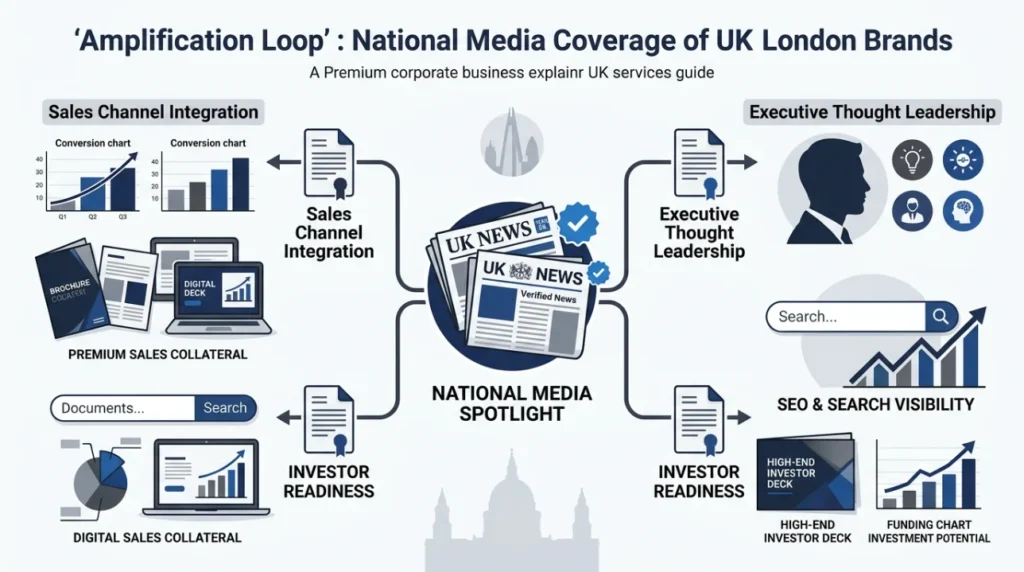
London brands leverage national media coverage by repurposing published coverage across sales channels, executive thought leadership, search engine visibility campaigns, and investor decks. National media coverage builds long-term authority and drives commercial inbound demand.
Amplification Across Digital Channels
National media coverage provides validation that brands reuse across marketing channels. Securing a feature in The Times or Reuters enables a company to display media badges on key landing pages, increasing user trust and website conversion rates.
Enhancing SEO and Domain Authority
National UK news sites hold high domain authority scores. When national publications cite a brand’s research and link back to the original report, it passes link equity to the brand’s domain. This raises search engine rankings for competitive commercial terms. Companies seeking structured execution to land these media placings often utilize specialized media intelligence services, including dedicated offerings like London Research Reports by Time Intelligence Media Group.
Supporting B2B Sales Cycles
B2B sales teams use national media citations to validate claims during prospective client negotiations. Sharing a national news article featuring proprietary brand research establishes enterprise-level credibility faster than self-published promotional collateral.
What Are the Most Effective Use Cases for Media-Driven Brand Research in the UK?
The most effective use cases for media-driven brand research in the UK include quarterly economic indexes, sector disruption reports, policy sentiment tracking, and consumer lifestyle audits. These formats consistently align with national editorial calendars.
Different research formats serve specific journalistic requirements across print, online, and broadcast platforms.
Quarterly Economic Barometers
Regular, recurring research reports establish a brand as a primary authority for specific metrics. By releasing quarterly data on topics like small business hiring or retail footfall, brands create predictable coverage opportunities as journalists anticipate each new release.
Industry Disruption Reports
When new technology or regulation alters a sector, media outlets need data explaining the extent of the shift. Research quantifying adoption rates, financial impact, or workforce adaptation provides business desks with actionable statistics.
Policy and Regulatory Sentiment Studies
During legislative updates or public consultations, national politics and policy journalists require data on how businesses view upcoming regulatory changes. Releasing sentiment data allows brands to enter national policy discussions.
Summary of London Brand Research and National Media Outreach
London brand research provides a reliable method for securing UK national media coverage when executed with statistical rigor. By aligning survey design with national news agendas, adhering to strict sampling methodologies, and packaging data into media-ready formats, brands earn consistent coverage across national newspapers, business publications, and broadcast channels. This coverage builds enterprise credibility, enhances search authority through high-quality citations, and drives long-term commercial growth across UK markets.