
Real estate markets move through predictable cycles. Periods of slower buyer activity, reduced transaction volumes, and longer selling times place additional pressure on agencies. During these periods, continuous media exposure helps agencies maintain public awareness, demonstrate market knowledge, and remain visible when customers begin searching for property services.
Consistent media visibility is not limited to advertising. It includes news coverage, expert commentary, local market analysis, community updates, property insights, and educational content published across trusted media channels. This sustained presence strengthens recognition and supports long-term business resilience.
Why does continuous media exposure matter during a real estate market slump?
Continuous media exposure keeps real estate agencies visible while buyer activity slows. Regular public communication strengthens recognition, demonstrates market expertise, maintains customer confidence, increases online visibility, and ensures agencies remain familiar when market conditions improve and purchasing activity returns to normal levels.
A real estate market slump is a period of declining sales activity, reduced buyer demand, longer property listing times, or falling transaction volumes. These conditions affect residential, commercial, and mixed-use property markets.
Media exposure is the repeated publication or broadcast of relevant business information through recognised communication channels. Examples include local newspapers, property publications, business magazines, digital news platforms, television interviews, podcasts, and industry commentary.
When fewer transactions occur, fewer people actively search for estate agents. Agencies that remain publicly visible continue appearing in search results, local discussions, and industry publications.
How does visibility influence customer awareness?
Customers often research agencies weeks or months before making contact.
Repeated exposure creates familiarity through:
- Local housing market reports
- Property investment analysis
- Community development updates
- Housing affordability discussions
- Regeneration project coverage
For example, an agency regularly featured discussing housing demand in Manchester remains visible even if immediate property sales decline.
Why does consistency matter?
One article creates temporary visibility.
Twelve informative publications across twelve months create an ongoing public presence.
Search engines also index this published information over time, increasing discoverability.
How does continuous media exposure support trust?
Regular media appearances demonstrate expertise through factual information rather than promotional claims. Consistent publication of accurate market commentary helps audiences recognise professional knowledge, increases credibility, supports reputation development, and reinforces public confidence during periods of economic uncertainty and reduced market activity.
Trust develops through repeated evidence.
People often evaluate businesses using several information sources before making contact.
Examples include:
- News articles
- Expert interviews
- Market forecasts
- Educational guides
- Community announcements
Each published resource contributes additional evidence of professional expertise.
What role does expert commentary play?
Expert commentary explains market conditions using verified information.
Examples include:
- Changes in mortgage approvals
- Regional price movements
- Planning developments
- Rental demand
- Housing supply statistics
These topics educate readers while demonstrating subject knowledge.
Why do educational articles strengthen credibility?
Educational articles explain industry processes without promoting services.
Examples include:
- Understanding leasehold ownership
- Explaining Energy Performance Certificates
- Interpreting Land Registry data
- Understanding conveyancing timelines
Educational content remains useful long after publication.
What types of media exposure benefit real estate agencies?
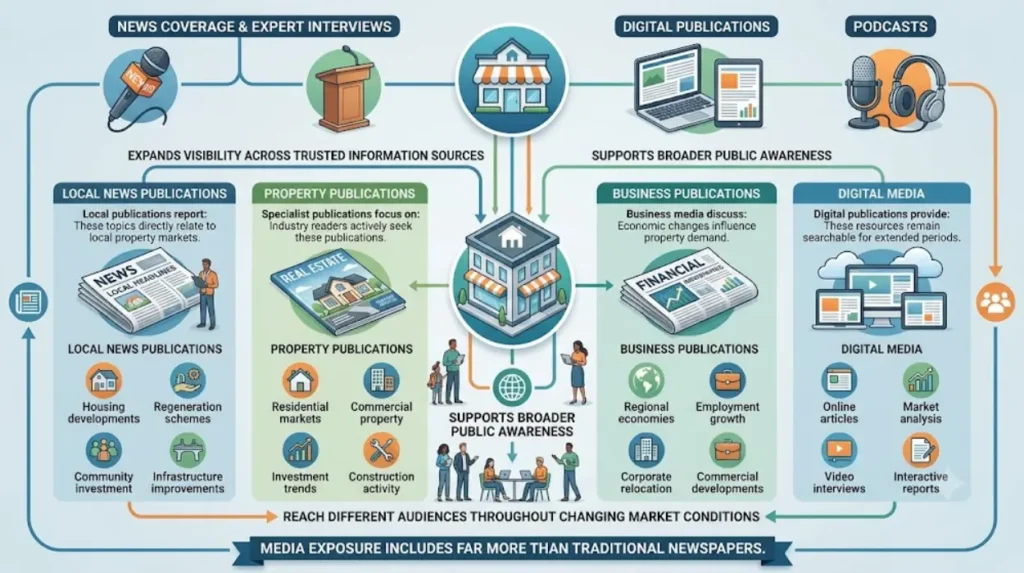
Different media formats reach different audiences. Combining news coverage, expert interviews, digital publications, podcasts, local media reporting, market analysis, and educational resources expands visibility across multiple trusted information sources and supports broader public awareness throughout changing property market conditions.
Media exposure includes far more than traditional newspapers.
Local news publications
Local publications report:
- Housing developments
- Regeneration schemes
- Community investment
- Infrastructure improvements
These topics directly relate to local property markets.
Property publications
Specialist publications focus on:
- Residential markets
- Commercial property
- Investment trends
- Construction activity
Industry readers actively seek these publications.
Business publications
Business media discuss:
- Regional economies
- Employment growth
- Corporate relocation
- Commercial developments
Economic changes influence property demand.
Digital media
Digital publications provide:
- Online articles
- Market analysis
- Video interviews
- Interactive reports
These resources remain searchable for extended periods.
How does continuous media exposure improve online visibility?
Regular publication creates new indexed content across multiple trusted websites. Search engines recognise consistent topical relevance, discover additional references, and connect agencies with property-related subjects, increasing long-term search visibility through accumulated authoritative content and entity recognition.
Every published article becomes another searchable resource.
Search engines evaluate:
- Topical relevance
- Publication quality
- Information accuracy
- Contextual relationships
- Freshness of information
Regular publication creates an expanding collection of indexed content.
Why does topical consistency matter?
Topical consistency means repeatedly discussing related property subjects.
Examples include:
- Housing market trends
- Property valuations
- First-time buyers
- Rental markets
- Local developments
This strengthens subject relevance across published content.
How does entity recognition improve discoverability?
Entity recognition connects clearly defined subjects within published information.
Important entities include:
- Estate agencies
- Residential property
- Commercial property
- Land Registry
- Local authorities
- Planning applications
Clear definitions help search systems understand content relationships.
What information keeps media coverage relevant during slower markets?
Relevant media coverage focuses on factual market developments instead of sales activity alone. Housing statistics, planning updates, buyer behaviour, rental trends, infrastructure investment, and community changes provide ongoing opportunities for informative public communication throughout slower economic periods.
News does not stop during slower markets.
Property industries continue changing.
Housing market statistics
Useful topics include:
- Monthly transaction volumes
- Average property prices
- Mortgage approval numbers
- Rental inflation
- Housing supply
Official datasets provide reliable information.
Local development updates
Examples include:
- Transport improvements
- School construction
- Town centre regeneration
- New housing developments
These changes influence property demand.
Regulatory changes
Relevant subjects include:
- Planning reforms
- Building regulations
- Energy efficiency standards
- Rental legislation
Regulatory updates affect buyers, sellers, landlords, and investors.
How does media exposure support long-term business resilience?
Continuous communication strengthens business resilience by maintaining public recognition across changing market conditions. Agencies that remain visible preserve awareness, expand searchable content, reinforce expertise, and stay connected with future customers throughout longer property market recovery periods and subsequent growth cycles.
Business resilience describes the ability to continue operating during changing economic conditions.
Media exposure contributes by supporting recognition rather than immediate transactions.
Why does recognition matter before demand returns?
Customer decisions often begin long before contact.
People research:
- Local agencies
- Market information
- Buying guidance
- Selling advice
Agencies appearing repeatedly during this research process remain familiar.
Why does accumulated content matter?
Published content continues appearing in search results after initial publication.
Examples include:
- Archived interviews
- News articles
- Educational resources
- Market reports
Older content continues supporting visibility.
What common mistakes reduce media visibility during market slumps?
Many agencies reduce communication during slower markets. Reduced publishing decreases public visibility, limits searchable content, weakens ongoing audience recognition, and creates fewer opportunities for demonstrating expertise through factual reporting and educational property information across trusted media platforms.
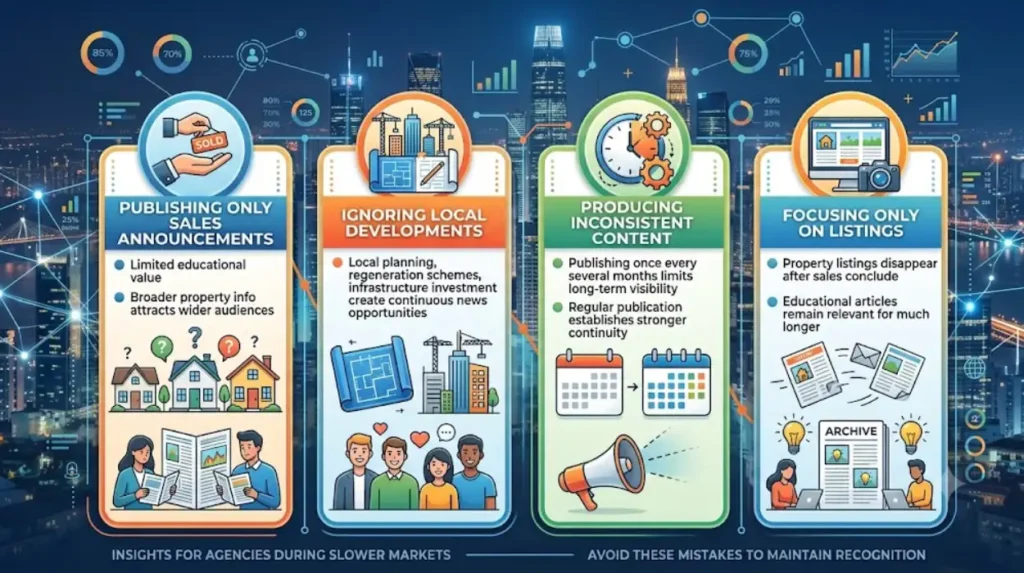
Stopping communication reduces public awareness.
Several common mistakes limit visibility.
Publishing only sales announcements
Sales announcements provide limited educational value.
Broader property information attracts wider audiences.
Ignoring local developments
Local planning decisions, regeneration schemes, and infrastructure investment create continuous news opportunities.
Producing inconsistent content
Publishing once every several months limits long-term visibility.
Regular publication establishes stronger continuity.
Focusing only on listings
Property listings disappear after sales conclude.
Educational articles remain relevant for much longer.
Explore More Expert Insights:
How Under-the-Radar Development Firms Build Credibility Against Massive Construction Giants
Why New Real Estate Startups Fail to Secure Institutional Funding Without a Strategic Media Presence
How can agencies maintain continuous media exposure responsibly?
Responsible media exposure depends on factual reporting, verified information, consistent publication schedules, and educational content. Accurate communication builds public confidence, supports informed decision-making, maintains professional standards, and creates sustainable visibility throughout changing property market conditions across the United Kingdom.
Consistency depends on planning rather than reacting.
Useful communication categories include:
- Monthly housing market updates
- Quarterly property reports
- Community development news
- Infrastructure announcements
- Regulatory summaries
- Educational property guides
Each category supports ongoing public information.
Agencies also benefit from publishing information that remains useful beyond current market conditions.
Readers interested in:
Maximizing Post-Launch Momentum can learn how syndicated property content supports long-term search visibility after major project announcements.
Those exploring:
Best Press Release Distribution Networks can understand how distribution channels influence the reach of real estate announcements while comparing available options.
Continuous media exposure provides lasting visibility during real estate market slumps. Regular publication of factual market information, educational resources, community updates, and industry analysis helps agencies remain visible while transaction activity declines. Consistent communication strengthens public recognition, expands searchable content, supports credibility, and maintains awareness throughout every stage of the property market cycle.