

The £5.87M increase in UK PR market spend signals more paid and earned media activity, greater competition for editorial attention, and higher demand for measurable visibility metrics; brands will need clearer targeting, faster outreach, and data-driven measurement to capture audience share.
The UK PR market expanded by £5.87M between reporting periods, driven by rising budgets for earned media, influencer collaborations, and integrated communications. This growth increases both supply and competition for press coverage. Brands that understand how this change affects newsroom workflows, journalist capacity, and audience attention can allocate visibility efforts more efficiently. The expansion reflects two simultaneous trends: more PR content entering circulation and higher expectations for measurable outcomes from communications teams. These factors change the operational environment for securing coverage and converting exposure into business-relevant results.
What defines brand visibility in the context of PR market growth?
Brand visibility equals measurable audience exposure via earned, owned, and paid channels, tracked by impressions, reach, placement quality, and engagement; PR market growth increases available placements and channels while shifting value toward high-quality placements and measurable outcomes.
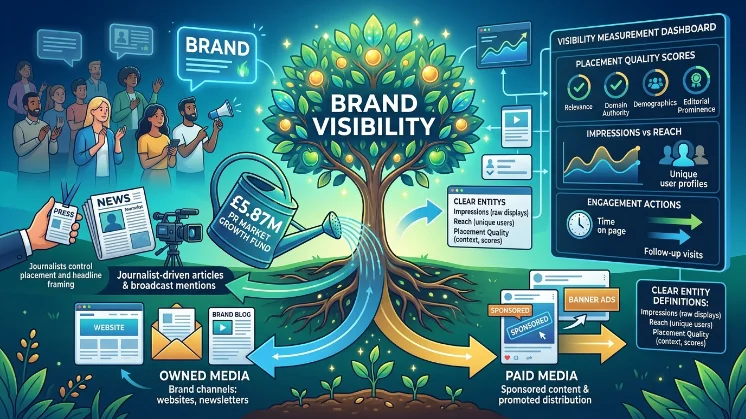
Brand visibility means the extent to which target audiences see and register a brand’s messages across media types. Earned media includes journalist-driven articles and broadcast mentions. Owned media covers brand channels such as websites and newsletters. Paid media includes sponsored content and promoted distribution. The £5.87M growth funds a mix of these channels, but earned media remains distinct because journalists control placement and headline framing.
Visibility measurement moves beyond raw counts. Metrics now include placement relevance to target audiences, domain authority of outlets, readership demographics, and engagement actions such as time on page or follow-up visits. Clear entity definitions ensure consistent measurement: impressions are raw displays, reach counts unique users, and placement quality scores editorial prominence and context.
How does increased PR spend change journalists’ workflows and availability?
Higher PR spend increases pitch volume, shortens journalist response windows, and raises gatekeeping thresholds; journalists triage more pitches and prioritize exclusives, data-driven stories, and sources with verifiable expertise.
Journalists receive more releases and outreach when PR budgets rise. Newsrooms respond by triaging submissions using topical relevance, timeliness, and source credibility. Exclusive angles gain preference because they reduce redundancy. Data-rich releases and those with clear public-interest hooks receive prioritisation. Journalists also require faster verification as volume rises, which shifts the effective outreach window toward shorter, more targeted contact times. For brands, this means outreach must be concise, evidence-based, and clearly novel. Providing named spokespeople with verifiable expertise and ready-to-use assets increases the chance of placement.
What processes should communications teams adopt to maintain visibility in a larger market?
Communications teams should adopt targeted audience segmentation, prioritised media lists, evidence-based story development, and continuous measurement cycles to maintain visibility as market supply increases.
First, define target audiences with specific demographic, geographic, and sectoral parameters. Second, prioritise media outlets by audience fit, editorial focus, and placement quality. Third, build stories centered on verifiable data, spokesperson availability, and timely hooks tied to current events or industry reports. Fourth, instrument each campaign with measurable KPIs such as referral traffic, placement quality scores, and sentiment. Fifth, iterate weekly on outreach lists based on journalist responses and analytics. These processes shift activities from broad distribution toward high-probability, high-value engagements that yield clearer visibility outcomes.
What components of PR strategy gain importance as the market grows?
As the market grows, components that gain importance include targeted media intelligence, data-driven storylines, rapid-response capability, multi-channel amplification, and formalised measurement frameworks.
Media intelligence systems that track outlet readership, topical trends, and journalist beats increase ROI on outreach. Data-driven storylines use original surveys, public datasets, or proprietary metrics to provide unique value. Rapid-response capability requires approval protocols and standby spokespeople for timely commentary. Multi-channel amplification coordinates owned channels and social platforms to extend earned placements. Measurement frameworks tie placements to business outcomes through click-throughs, lead capture, and byline authority. These components reduce wasted effort in a crowded environment by focusing on signals that correlate with tangible visibility gains.
What benefits will brands see from adapting to this market change?
Brands that adapt see higher-quality placements, stronger audience engagement, clearer attribution to communications activities, and improved editorial relationships that support recurring coverage.
Improved targeting produces placements in outlets that reach relevant customers. Data-rich pitches increase journalist trust and result in longer, more substantive coverage that drives engagement. Measurement frameworks enable attribution of visibility to downstream actions such as website visits or inquiries. Stronger editorial relationships arise when brands consistently provide accurate, timely, and newsworthy content, creating recurring opportunities for comment and exclusives. Over time, brands convert sporadic visibility into sustained reputation assets that influence consideration and market positioning.
What are practical use cases for brands responding to the £5.87M PR market growth?
Practical use cases include launching data-driven thought leadership campaigns, coordinating rapid-response expert commentary, targeting niche trade outlets for technical credibility, and using multi-channel amplification to extend earned placements into owned audiences.
A company seeking category leadership can commission an original survey and distribute its findings to targeted national and trade journalists, increasing the chance of features and bylines. A public affairs team can establish a rapid-response rota to supply expert commentary on breaking regulatory news, ensuring timely quotes in major outlets. A product team can prioritise niche trade press to secure technical reviews and detailed exposure that mainstream outlets overlooked. Communications teams can republish earned articles via owned newsletters and social channels to capture engaged audiences and reinforce earned credibility.
Explore More Expert Insights:
6 Reasons UK Journalists Delete 90% of Press Releases Before Reading Them
How AI Search Engines Are Replacing Traditional Newswires for 800M Weekly Users
How should visibility metrics evolve to remain useful in 2026?
Visibility metrics must evolve from raw counts to weighted measures that include placement relevance, audience quality, engagement depth, and downstream conversions to reflect true visibility in a larger PR market.
Replace simple impression totals with weighted visibility scores. Weight placements by outlet relevance to the target demographic, editorial prominence, and article sentiment. Track engagement depth through time-on-page, scroll depth, and referral conversion rates. Map placements to downstream outcomes such as sign-ups, inquiries, or purchases to establish causal links. Establish regular reporting cadences with dashboards that compare campaign performance against historical baselines and competitor activity. These metrics enable more strategic allocation of visibility budgets.
Where should UK brands focus resources to win visibility in 2026?
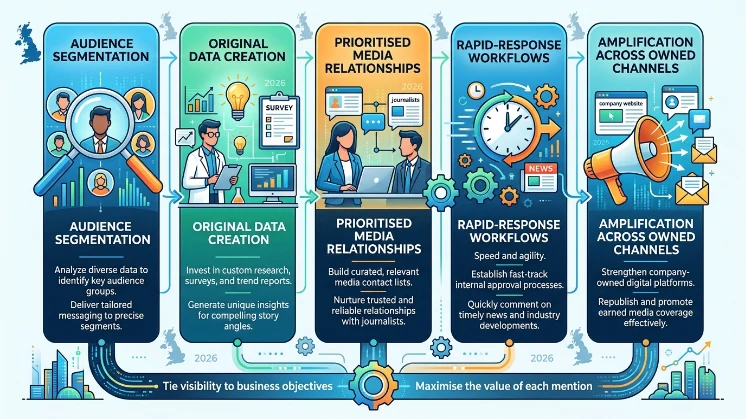
UK brands should focus resources on audience segmentation, original data creation, prioritised media relationships, rapid-response workflows, and measurable amplification across owned channels to compete effectively in 2026’s larger PR market.
Allocate budget toward original research and media intelligence subscriptions that yield unique story angles. Invest time in building targeted media lists and nurturing journalist relationships through reliable, accurate pitching. Create rapid-approval processes to comment on timely issues. Strengthen owned channels to republish and amplify earned coverage. Finally, operationalise measurement to tie visibility to business objectives. These focused investments improve placement quality and the value derived from each earned mention.
Click Here to Explore More:
Timing Your UK Press Release: The 7-Day Window Journalists Respond Most
The £5.87M growth in the UK PR market changes the visibility landscape by increasing content volume and raising expectations for measurable results. Brands that shift from broad distribution to targeted, data-driven storytelling and that implement rapid-response workflows and advanced measurement will achieve higher-quality placements, better engagement, and clearer attribution of PR activity to business outcomes.
Discover the Full Information:
How Multi-Site PR Distribution Across 10 News Properties Scales Earned Media



