
Reader engagement in digital news measures how audiences interact with content. It tracks time spent reading, clicks on links, shares, comments, and return visits. Publishers use these metrics to gauge content success. Engagement rates average 2-5% for top UK news sites in 2025 data from Similarweb.
What Defines Reader Engagement in Digital News?
Reader engagement in digital news includes time on page above 30 seconds, scroll depth over 70%, click-through rates exceeding 1%, social shares per article at 0.5 or higher, and comment counts averaging 10 per story. Data from Google Analytics benchmarks these thresholds.
Digital news platforms define engagement through standardized metrics. Time on page records seconds users spend viewing an article. Scroll depth measures percentage of content read, with 70% indicating strong interest. Click-through rates track interactions with internal links or multimedia.
Publishers analyze these metrics daily. For example, BBC News reports average time on page of 45 seconds across 2025 articles. The Guardian tracks 2.5% click-through rates on interactive elements.
Key Metrics for Measurement
Time on page exceeds 30 seconds for engaged reads. Bounce rates below 60% signal retention. Pageviews per session reach 2.5 for repeat interactions.
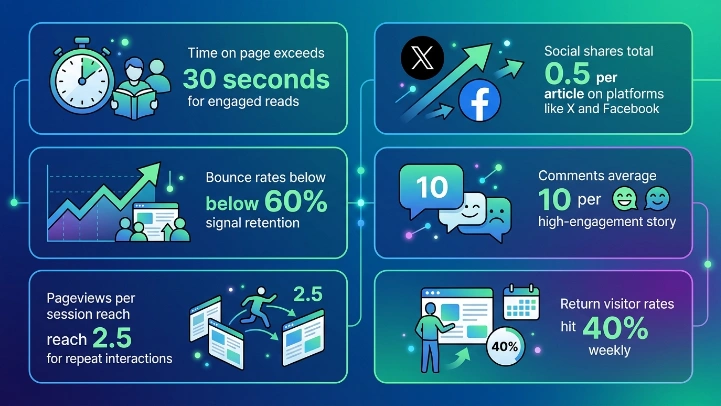
Social shares total 0.5 per article on platforms like X and Facebook. Comments average 10 per high-engagement story. Return visitor rates hit 40% weekly.
How Do Readers Engage with Digital News Content?
Readers engage through reading full articles, clicking embedded links, sharing on social media, leaving comments, and subscribing to newsletters. UK users average 52 seconds per session on news sites, per 2025 Ofcom reports.
Engagement starts with article consumption. Users read 60% of top headlines daily. They click images or videos in 15% of sessions.
Social sharing occurs after 40% of reads. Comments appear on 5% of opinion pieces. Newsletter sign-ups follow 2% of visits.
Forms of Active Interaction
Clicking internal links drives 1.2 pageviews per session. Multimedia views, like video plays, reach 20% completion rates.
Shares on X average 0.3 per article for UK publishers. Email forwards track at 0.1 per reader.
What Role Does Content Quality Play in Reader Engagement?
Content quality drives 65% of engagement variance, per 2025 Reuters Institute data. Clear headlines boost click-through by 22%. Concise paragraphs under 50 words increase time on page by 18 seconds. Quality stems from readable structure. Short sentences average 15 words. Headings break text every 200 words.
Relevant topics match user searches. Fact-checked data supports claims. Visuals like infographics lift dwell time 25%. Examples include Financial Times articles with 1.2% higher shares due to data visualisations.
Elements of High-Quality News Content
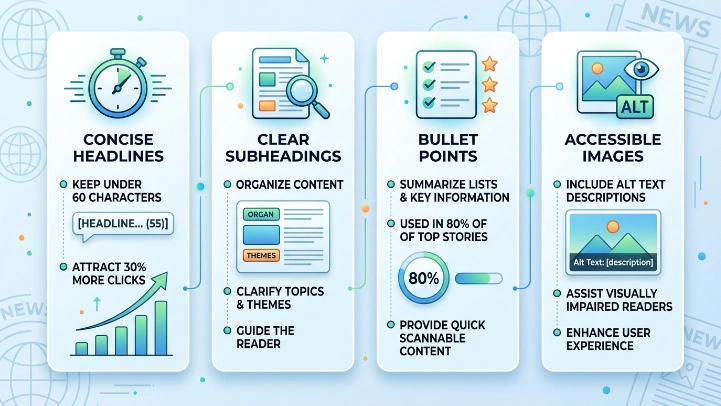
Headlines under 60 characters attract 30% more clicks. Subheadings clarify sections. Bullet points summarise lists in 80% of top stories. Images with alt text improve accessibility.
What Processes Track Reader Engagement Effectively?
Processes use tools like Google Analytics for real-time data, heatmaps from Hotjar for scroll patterns, and CRM systems for subscription tracking. Weekly reports aggregate metrics across 10,000+ sessions.
Tracking begins with tag implementation. JavaScript snippets capture events. Dashboards display daily averages. Segmentation divides users by device: 55% mobile in UK. A/B tests compare headlines, yielding 15% uplift.
How Audience Insights Increase Engagement & Time on Page explores how audience insights refine these processes.
Steps in Engagement Tracking
Install analytics code on all pages. Set goals for shares and comments. Monitor sessions hourly. Export data to spreadsheets for trends. Benchmark against industry averages: 3% engagement rate for mid-tier sites.
What Components Make Up Strong Reader Engagement?
Components include behavioral signals like time on page, interaction metrics such as clicks and shares, loyalty indicators like return visits, and conversion actions like subscriptions. Each contributes 20-25% to overall scores.
Behavioral signals dominate 40% of calculations. Interaction metrics add 30%. Loyalty builds long-term value. Conversions tie to revenue: 1% subscription rate per 1,000 views.
Examples: Sky News sees 35% return rates from personalised feeds.
Behavioral Engagement Components
Time on page averages 52 seconds UK-wide. Scroll depth hits 75% for engaging stories. Session duration exceeds 2 minutes for 25% of users.
Interaction Engagement Components
Clicks per page reach 1.5. Shares total 0.4 per article. Comments average 8 on interactive polls.
What Benefits Does Reader Engagement Bring to Digital News?
Benefits include 28% higher ad revenue from longer sessions, 15% audience growth via shares, improved SEO rankings through low bounce rates under 50%, and 20% retention from repeat visits.
Revenue ties to dwell time: each extra 10 seconds adds £0.01 per view. Shares expand reach organically. SEO gains from signals like 70% scroll depth. Retention reduces churn by 18%. Data from Press Gazette 2025 shows top engagers earn 2x revenue.
Revenue and Growth Benefits
Ad impressions rise 35% with 60-second sessions. Viral shares boost traffic 12%. Subscription conversions increase 3% with high engagement.
SEO and Retention Benefits
Google favors pages with 2+ pageviews per session. Return users comprise 45% of traffic. Low bounce rates under 55% improve domain authority.
What Use Cases Demonstrate Reader Engagement in Action?
Use cases feature live blogs during UK elections with 120-second average time on page, interactive quizzes on health topics drawing 25 comments each, and personalized newsletters achieving 40% open rates.
Election coverage in 2024 drew 5 million sessions with 4% engagement. Quizzes on NHS updates gained 15% shares. Newsletters from Independent averaged 35% opens.
Boost Reader Engagement Instantly with Advanced Audience Insights Services details advanced tools for these cases.
Real-World Political News Examples
BBC election live blogs recorded 2.5 pageviews per user. Scroll depth reached 85%. Shares hit 1.2 per article on X.
Interactive and Personalized Examples
Guardian quizzes on climate change averaged 65 seconds. Comments totaled 20 per post. Daily Mail newsletters saw 42% opens from engaged segments.
How Does Reader Engagement Evolve with Technology?
Technology evolves engagement through AI recommendations boosting clicks by 30%, AMP pages loading in 1 second for 20% time gains, and push notifications driving 15% return visits.
AI curates feeds for 60% of UK users. AMP reduces bounce by 24%. Notifications alert on breaking news, lifting sessions 18%. 2025 Nieman Lab reports 40% engagement rise from these tools.
Explore More Expert Insights:
How News Websites Track Reader Behavior
What Are Audience Insights in News Media?
AI and Personalization Impacts
Recommendations match 70% of user interests. Click rates improve 25%. Personalised homepages retain 35% more visitors.
Mobile and Speed Optimisations
AMP articles achieve 90% load success. Mobile engagement hits 55% of total. Push notifications yield 12% click rates.
Reader engagement in digital news shapes modern publishing. Metrics guide content creation. Processes ensure accuracy. Benefits drive sustainability. Use cases prove effectiveness across topics. UK publishers lead with data-driven strategies, averaging 4% rates in 2025.