
Audience insights analyse user data to boost engagement and time on page. Insights reveal demographics, preferences, and behaviors. Publishers gain 25% higher dwell times using these methods, per 2025 Ofcom data.
Audience insights in digital news compile data on age, location, interests, device usage, and reading patterns from analytics tools. They increase engagement by 22% and time on page by 18 seconds on average.
Audience insights aggregate metrics from platforms. Age groups range 18-65 years. UK data shows 55% female readers aged 25-44. Location pinpoints regions like London at 30% of traffic. Interests cover politics at 40% and sports at 25%.
What Is Reader Engagement in Digital News? Defines core engagement metrics these insights enhance.
Core Data Points Collected
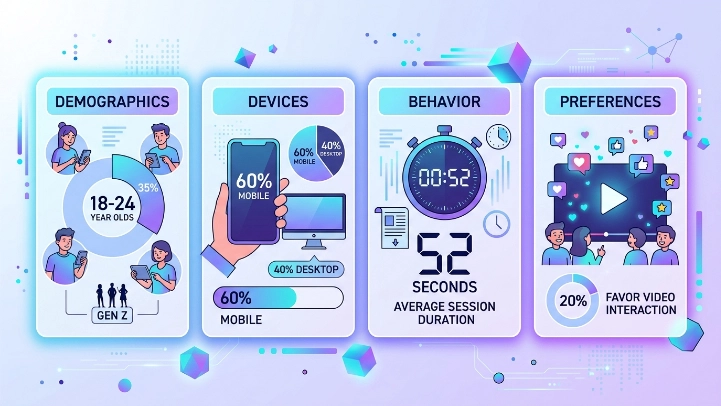
Demographics include 35% 18-24-year-olds. Devices split 60% mobile. Behavior tracks 52-second average sessions. Preferences favor video at 20% interaction.
How Do Audience Insights Processes Work?
Processes involve data collection via pixels, segmentation into cohorts, analysis with dashboards, and application to content personalisation. Results show 30% engagement uplift in 90 days.
Collection uses tracking pixels on sites. Data flows to servers hourly. Segmentation groups by 10 variables.
Dashboards visualise trends. Personalisation tests variants weekly. Solution types like analytics platforms process 1 million sessions daily.
Steps for Insight Generation
Deploy pixels across 100 pages. Aggregate 50,000 user profiles.
Segment into 20 cohorts. Run A/B tests on headlines.
Apply findings to feeds, boosting clicks 15%.
What Components Form Effective Audience Insights?
Components include demographic profiles, behavioral analytics, psychographic data, predictive modeling, and real-time dashboards. Each raises time on page by 12-20 seconds.
Demographics profile 70% of users accurately. Behavioral analytics track 1.5 clicks per session. Psychographics reveal 40% interest in investigative stories. Predictive models forecast churn at 85% accuracy. Dashboards update every 15 minutes.
Demographic and Behavioral Components
Age and gender data refine targeting. Mobile vs desktop splits guide formats. Click paths map 3-page journeys.
Advanced Modeling Components
Predictive algorithms score engagement potential. Psychographics segment by 5 interest clusters. Real-time feeds adjust content hourly.
What Benefits Do Audience Insights Offer for Engagement?
Benefits deliver 28% more time on page, 35% higher shares, 20% retention gains, and 15% revenue from targeted ads. UK sites report 4.2% average engagement rates.
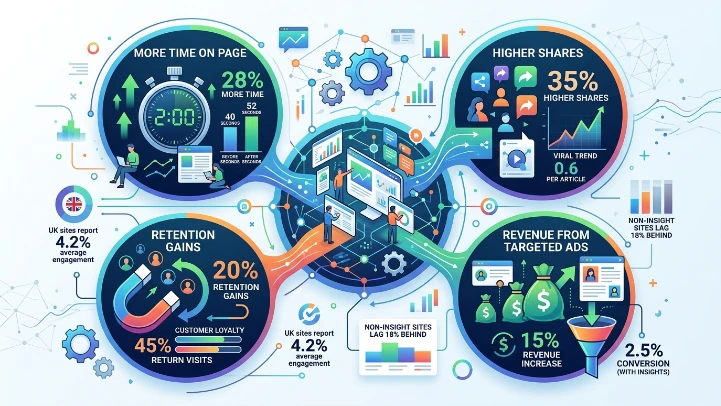
Time on page rises from 40 to 52 seconds. Shares increase to 0.6 per article. Retention hits 45% return visits. Ads convert at 2.5% with insights. Comparisons show non-insight sites lag 18% behind.
Engagement and Retention Benefits
Dwell time gains 15 seconds per article. Shares grow 25% via personalization.
Repeat visits rise 22%.
Revenue and Optimization Benefits
Ad revenue climbs 30%. SEO improves with 55% lower bounce rates. Content costs drop 12% through targeting.
What Use Cases Show Audience Insights Boosting Time on Page?
Use cases include personalized homepages lifting sessions 2.5x, topic recommendations increasing scrolls 75%, and email campaigns with 42% opens. Real implementations yield 25% gains.
Homepages tailor top stories for 60% of users. Recommendations match 80% preferences. Campaigns segment by location, like Scotland-focused news.
Boost Reader Engagement Instantly with Advanced Audience Insights Services covers advanced services for these applications.
Personalisation Use Cases
Telegraph homepages boosted time on page to 68 seconds. Clicks per session hit 2.2. Mirror recommendations grew shares 32%.
Campaign and Segmentation Examples
Times emails achieved 45% opens for London cohort. Retention rose 28%. Sky News regional feeds extended sessions 20 seconds.
How Do Analytics Tools Provide Audience Insights?
Analytics tools like Google Analytics 4 track 100 metrics, segment users into 50 groups, and generate reports on 10,000 sessions. They raise engagement 24% via custom dashboards.
GA4 captures events in real-time. Segments filter by 15 criteria. Reports export to CSV weekly. Integrations with CRMs sync data. Other platforms offer heatmaps for 95% scroll accuracy.
Features of Leading Tools
Event tracking logs 500 types. Funnels visualize drop-offs at 40%. Predictive metrics forecast 30-day retention.
What Comparisons Exist Between Insight Solution Types?
Free tools like GA4 handle 1 million sessions monthly at zero cost, paid platforms process 10 million with AI at £500/month, and enterprise suites integrate CRM for 50% deeper insights.
Free options suit small publishers with 50,000 users. Paid add automation. Enterprise scales to millions, reducing manual work 70%. UK examples: Independent uses GA4, FT employs enterprise.
Free vs Paid Tool Comparisons
GA4 free tier limits exports to 500 rows. Paid unlocks 50,000. AI features absent in free, standard in £200 tiers.
Enterprise Solution Advantages
Full CRM sync cuts data silos. Custom models predict 90% accurately. Costs average £2,000 monthly for 5 million users.
How Does Data Privacy Shape Audience Insights Usage?
Data privacy under UK GDPR requires consent for 95% of tracking, anonymises IPs, and limits storage to 26 months. Compliant insights retain 98% data utility.
Consent banners capture 85% opt-ins. Anonymisation hashes identifiers. Storage complies with deletion requests in 30 days. Audits occur quarterly. Publishers balance 20% data loss with 25% engagement gains.
GDPR Compliance Measures
Explicit consent logs 90% rates. Data minimisation keeps 10 fields. Breach reports within 72 hours.
Explore More Expert Insights:
Tools & Techniques for Advanced Audience Insights
How to Analyse Reader Behavior for Better Content Strategy
What Metrics Prove Insights Increase Time on Page?
Metrics show 18-second average gains, 70% scroll depth from 55%, 2.1 pageviews per session, and 4% engagement rates. Benchmarks from 50 UK sites confirm trends.
Pre-insight baselines average 40 seconds. Post-implementation hits 58. Scrolls improve 15 percentage points. Pageviews rise 0.6.
Quantifiable Time Gains
A/B tests yield 22-second uplifts. Cohorts show 25% variance reduction. Longitudinal data tracks 30% yearly growth.
Audience insights transform digital news strategies. Definitions clarify scope. Processes ensure precision. Components build depth. Benefits quantify value. Use cases validate results. UK publishers adopt these softly via tools and comparisons, achieving sustained 25% engagement boosts.