B2B creator partnerships shifted from one-off campaigns and influencer-adjacent deals in 2023 to multi-phase, data-driven collaborations with contractual IP, measurement gates, and ongoing content syndication in 2026.
In 2023, UK B2B creator partnerships commonly resembled adapted B2C influencer arrangements. Brands engaged individual creators for single campaigns, product demonstrations, or event support. Contracts focused on usage rights for a narrow window, and measurement relied on surface metrics such as impressions and clicks. Content formats emphasised short video and thought-leadership posts, often created with limited briefing and minimal integration into broader marketing operations.
By 2026, partnerships evolved into formalised collaborations embedded in marketing stacks. Brands structure agreements around phased deliverables, clear intellectual property ownership, and extended syndication rights for owned channels, paid channels, and partner networks. Measurement moved from surface metrics to outcome metrics tied to lead quality, pipeline influence, and pipeline-to-revenue attribution. Creators work as co-creators with brand teams, legal teams, and analytics functions to produce programs that run for six to 24 months rather than single-run posts.
How did measurement and KPIs evolve from 2023 to 2026?
KPIs shifted from vanity metrics in 2023 to conversion and attribution metrics in 2026, with standardised tracking, cohort-level analysis, and agreed measurement windows.
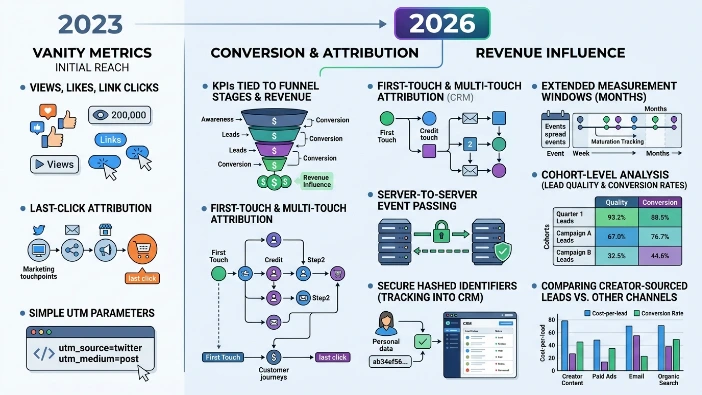
In 2023, UK B2B brands measured campaign success mainly with views, likes, and link clicks. Attribution often relied on last-click models or simple UTM parameters. In 2026, UK brands and creators agreed on KPIs tied to funnel stages and revenue influence. Standardised tracking methods include first-touch and multi-touch attribution, server-to-server event passing, and secure hashed identifiers to track leads from creator content into CRM systems. Measurement windows extend across months to capture lead maturation. Cohort analysis assesses lead quality and conversion rates, enabling brands to compare creator-sourced leads against other channels.
What contractual and legal changes emerged by 2026?
Contracts evolved from short usage clauses in 2023 to comprehensive agreements in 2026 that include IP ownership, data-sharing terms, exclusivity windows, and performance-based clauses.
Contracts in 2023 often contained basic content licensing and disclosure clauses. In 2026, legal frameworks are more detailed and standardised. Agreements specify who owns master content, derivative rights, and rights to edit for different channels. Data-sharing clauses define the scope of lead or event data creators can receive, data protection responsibilities under UK GDPR, and permitted analytics. Contracts include performance triggers—higher fees or extensions for agreed lead-generation thresholds—and non-compete or category-exclusivity periods where required. Payment schedules link to milestones and delivery quality, with clear remedy clauses for non-performance.
How did content strategy and creator roles change between 2023 and 2026?
Creator roles expanded from content producers in 2023 to strategic partners in 2026 who contribute to messaging, customer insights, and multi-format asset production.
In 2023, creators primarily produced discrete assets: product explainers, short videos, or event posts. In 2026, creators function as strategic contributors. They participate in messaging workshops, help define audience segments, and co-design campaigns that map to buyer journeys. Content outputs include long-form educational video, accredited webinars, downloadable guides, modular short-form clips, and syndicated articles that integrate with brand SEO. Creators also provide primary-market feedback from their audiences, informing product positioning and sales enablement materials.
What operational and procurement practices changed in the UK by 2026?
Procurement moved from ad hoc creator selection in 2023 to formal sourcing, vetting, and onboarding processes in 2026 that include compliance checks and performance baselines.
In 2023, marketing teams selected creators through networks, referrals, or platform discovery. By 2026, procurement practices mirror vendor management used for other marketing suppliers. Brands maintain a roster of approved creators, run procurement checks (background, compliance, and audience authenticity), and require proof of audience quality through platform analytics or third-party verification. Onboarding includes briefings, style guides, and technical integration instructions for tracking. Contracts align with supplier governance processes and budget planning cycles.
What technology and integration differences are visible in 2026 compared with 2023?
Technology integration progressed from basic CMS uploads and URL tracking in 2023 to end-to-end integrations in 2026 linking creator content to CRM, analytics, and CDP systems.
In 2023, brands used platform-native analytics and UTMs to measure creator content. In 2026, brands and creators implement deeper integrations. Creator content repositories connect to content management systems and digital asset management systems through APIs. Tracking methods include server-side tagging, event-level analytics, and conversion APIs that securely pass lead events to customer data platforms (CDPs) and CRMs. These integrations enable automated lead routing, nurturing sequences triggered by creator-sourced interest, and closed-loop reporting on revenue influence.
What became standard in budgeting and pricing models by 2026?
Pricing models moved from flat-fee or CPM models in 2023 to blended models in 2026 combining base fees, performance incentives, and rights-based premiums.
In 2023, UK B2B creator deals often used flat fees or CPM-style pricing. In 2026, budgets allocate base creative fees plus bonuses for lead milestones, sales outcomes, or sustained engagement thresholds. Contracts include premiums for expanded usage rights, exclusive categories, or extended syndication. Brands reserve budget lines for creator programme measurement and technology integration. Financial governance expects clear ROI modeling before committing to multi-phase programmes.
What benefits did brands and creators report in 2026 that differed from 2023?
Brands reported higher-quality leads, longer content lifespan, and clearer attribution in 2026; creators gained sustained revenue, clearer legal terms, and deeper collaboration.
In 2023, benefits were immediate visibility and short-term traffic. In 2026, brands report increased lead velocity and higher conversion rates from creator-driven cohorts due to more aligned messaging and better attribution. Content lifespan increased because of explicit syndication and repurposing rights. Creators benefited from multi-year engagements, clearer payment structures, and retained licensing fees. Both parties gained predictability through agreed measurement and legal clarity.
What use cases illustrate the 2026 model in the UK?
Common use cases in 2026 include co-produced educational series that feed the pipeline, certified webinar programmes that generate sales-qualified leads, and syndicated thought leadership that supports SEO and account-based marketing.
An example is a six-month educational series where a creator co-hosts a structured video curriculum for procurement directors. Content integrates gated assets that feed leads into a CRM and a nurture workflow. Another example is a certified webinar run with creator co-presenters; attendees who complete the certification trigger lead-scoring rules and direct sales outreach. A third example is a syndicated thought-leadership programme where creator-authored long-form articles are republished across partner channels under agreed rights and measurement, contributing to organic search improvements and target account engagement.
Explore More Expert Insights:
The Rise of Publisher-Brand Alliances: How UK Media Is Monetising Differently
69% of UK Marketers Think Their Strategy Works — Their Audiences Disagree
How should UK B2B teams approach creator partnerships in 2026?
UK B2B teams should treat creators as strategic vendors, define clear funnel-aligned KPIs, formalise contracts for IP and data, and invest in integration for measurement and lead flow.
Teams should establish vendor governance workflows that include creator selection criteria, compliance checks, and onboarding playbooks. Define KPIs that tie to funnel stages—awareness, consideration, and pipeline contribution—and agree on measurement windows. Draft contracts that cover IP ownership, royalty or syndication fees, data-sharing specifics, and performance-linked payments. Invest in technical integrations to ensure creator-sourced leads enter the CRM and are subject to the same scoring and nurturing as other channels. Maintain scheduled performance reviews to adjust scope and budget based on cohort-level results.
What risks and mitigations exist in 2026 that differed from 2023?
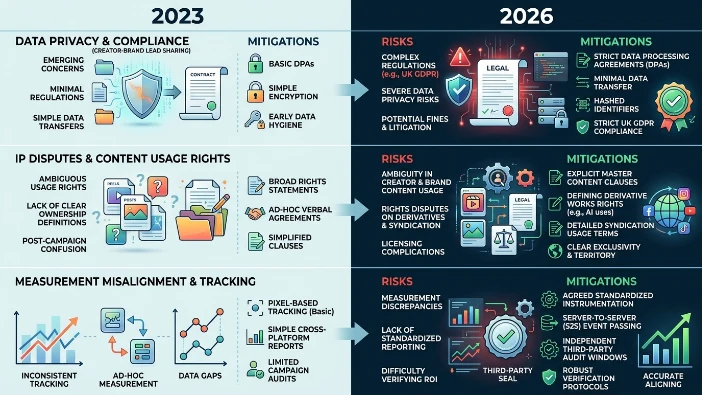
Risks include data privacy complications, IP disputes, and measurement misalignment; mitigations are explicit contract clauses, standardised tracking, and audit rights.
Data privacy risks increase when passing lead-level data between creators and brands. Mitigation requires clear data processing agreements, minimal data transfer, hashed identifiers, and compliance with UK GDPR. IP disputes appear when usage rights are ambiguous; mitigation requires explicit clauses for master content, derivative works, and syndication. Measurement misalignment arises from inconsistent tracking; mitigation uses agreed instrumentation, server-to-server event passing, and independent audit windows.
Complete Details Available Here:
How to Negotiate a UK Publisher Partnership That Protects Your Brand and Budget
In 2023, UK B2B creator partnerships focused on single-campaign visibility, basic licensing, and surface-level metrics. By 2026, partnerships matured into structured, contract-driven programmes with clear IP arrangements, outcome-oriented measurement, deep technical integration, and multi-phase content strategies that align creator activity with pipeline outcomes. For teams in the UK, the practical steps are formalising vendor processes, defining funnel-aligned KPIs, securing clear legal terms, and implementing the technical integrations required for accurate attribution.
Explore the Advanced Guide:
Agency vs Direct Publisher Partnership: A Cost-Benefit Analysis for UK Brands