
Property comparison ads present two or more properties side-by-side to highlight differences in price, size, features, and location, enabling buyers to evaluate options quickly and move toward a decision. Property comparison ads are digital adverts that place multiple listings into a single creative unit. They display standardised data points: price, bedrooms, floor area, tenure, travel times, and key features.
Platforms deliver these ads across display networks, social feeds, and programmatic placements. Comparison creatives use structured fields so consumers compare like-for-like metrics. Ads link directly to tailored landing pages or comparison tools that keep the selected properties visible. Real examples include comparing a two-bedroom flat in Zone 2 with a three-bedroom house in Zone 4, or contrasting a new-build with a period conversion in the same borough.
How do marketers design comparison ads that drive buyer intent?
Design for clarity, use consistent metrics, and prioritise direct calls to action that reflect lead-generation outcomes such as viewing booking or mortgage pre-approval. Design begins with a template that enforces consistent units and labels. Essential elements include headline, price, core metrics (bedrooms, bathrooms, square metres), unique selling points, and provenance (agent name or developer). Use a clear visual hierarchy so price and headline dominate, with secondary metrics below.
A/B test layouts using 2 creative variants per campaign, run for at least 14 days, and measure click-through rate (CTR), cost per lead (CPL), and onsite time.
Which data points must appear in property comparison ads?
Include price, tenure, size in square metres, number of bedrooms and bathrooms, travel time to a key hub, and one verified feature such as garden or parking.
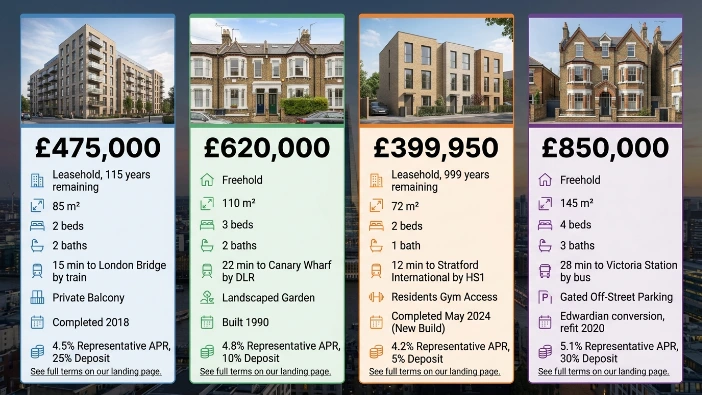
Price must be prominent and exact. Tenure requires either “Freehold” or “Leasehold” with lease length in years if applicable. Area must use square metres for UK audiences. Travel time should reference a named hub such as “10 min to King’s Cross by tube.” Include one verified feature, for example “Private garden” or “Allocated parking.”
Add property age or completion date for new builds. If using finance-related figures, present the representative mortgage rate and deposit percentage and link to full terms on the landing page. Real examples: “Leasehold, 98 years remaining; 74 m²; 2 beds; 1 bath; 18 min to Waterloo.”
What technical setups improve ad performance and reporting?
Use programmatic platforms, dynamic creative optimisation, and UTM-tagged landing pages while tracking conversions with a server-side pixel for accurate lead attribution. Programmatic buying enables audience targeting by intent signals and location. Dynamic creative optimisation lets systems swap images and headlines based on user signals. All ad URLs must carry UTM parameters for channel and creative ID.
Implement server-side conversion tracking to reduce signal loss from browser restrictions. Sync offline conversions from viewing bookings and completions back to ad platforms. Set up custom events: view property, start comparison, request viewing, and complete booking. Use 14-, 30-, and 90-day attribution windows to understand short and mid-term effects. Real examples: tag creative ID 1023 in UTM_campaign and map booked viewings back to creative 1023 in weekly reports.
What are the main benefits for realtors and developers?
Comparison ads increase qualified leads, reduce time-to-booking, and yield higher on-site engagement by presenting decision-ready information in a single impression.
Presenting several suitable options prevents immediate abandonment when a single listing misses a buyer’s constraints. Comparison ads increase lead quality because viewers already filter by top metrics. They shorten the discovery-to-viewing timeline by removing friction across listings. Reports show higher session duration and higher conversion rates for comparison landing pages versus single-listing pages when the audience targets active searchers.
Developers use comparison units at launch to demonstrate range across apartment types and speed up sales velocity across floors and blocks. Example results: campaigns that moved 10% more viewers to booked viewings within 21 days compared with single-listing creatives.
How do comparison ads support decision-stage buyer journeys?
Comparison ads match late-stage buyers’ need for direct comparisons, enabling immediate actions such as booking viewings, arranging finance checks, or confirming reservations. Late-stage buyers assess trade-offs. Ads that show side-by-side metrics answer common final questions quickly: which property fits budget, commute, and space needs. Include links to available viewing slots, mortgage calculators pre-filled with the property price, and downloadable specification sheets.
These features reduce back-and-forth and produce measurable intent signals, such as multiple viewed comparisons, time on comparison page, and viewing bookings. Real examples: a buyer compares two penthouses and immediately books the higher-floor viewing due to a clearer cost-per-square-metre comparison.
What legal and compliance elements must marketers follow in the UK?
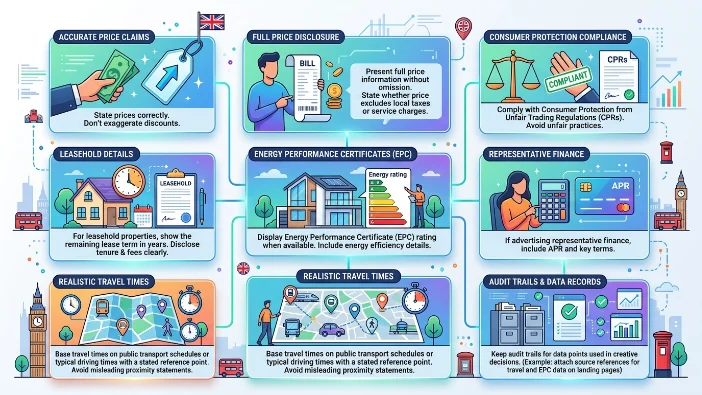
Ensure all price claims are accurate, state tenure and fees clearly, include EPC ratings where available, and comply with Consumer Protection from Unfair Trading Regulations. Present full price information without omission. State whether price excludes local taxes or service charges.
For leasehold properties, show the remaining lease term in years. Display Energy Performance Certificate (EPC) rating when available. If advertising representative finance, include APR and key terms. Avoid misleading statements about proximity and times; base travel times on public transport schedules or typical driving times with a stated reference point. Keep audit trails for data points used in creative decisions. Example compliance practice: attach source references for travel time and EPC data on the landing page.
Explore More Expert Insights:
Visual Property Ads That Convert Consideration Into Buyer Shortlists
Real Estate Advertising That Drives Qualified Site Visit Conversions
What creative and copy tests reveal the best performing elements?
Test headline focus (price-led vs feature-led), image composition (interior vs exterior), and call-to-action text; measure CTR, CPL, and downstream booking completion.
Run tests in parallel with equal budgets and rotate creatives every 7–14 days. Compare price-led headlines such as “£550,000 — 2 bed” against feature-led headlines like “Riverside views — 2 bed.” Test imagery ratios: 60% interior shots, 40% exterior shots for urban flats; reverse for suburban houses. CTAs to test include “Book viewing,” “Check availability,” and “Get mortgage estimate.” Evaluate via pre-defined KPIs: CTR target 1.5%+, CPL target based on local market benchmarks, and booking completion rate. Example outcome: price-led headlines drive higher CTR among budget-conscious buyers; feature-led headlines drive longer page engagement.
Where do comparison ads fit within a broader property marketing funnel?
Place comparison ads at the consideration and decision stages to convert comparison-ready audiences into viewing bookings and sales-qualified leads.
Explore:
How Real Estate Brands Promote Property Launches Using Banner Ads
For related mid-funnel education on comparison ad formats, see the following:
How Realtors Educate Buyers Using Property Comparison Banner Ads