
Trade press targets industry specialists with technical detail and distribution channels aligned to professional audiences; national media targets general public interest with broad narratives and mass reach.
Trade press focuses on delivering sector-specific information to professionals who make purchasing, specification, or procurement decisions. Trade editors require technical specifications, case studies, regulatory context, and supply-chain detail. Journalists in trade titles evaluate product relevance against industry standards, procurement cycles, and operational impact. National media focuses on broad appeal stories, human-interest angles, price and availability, and high-level benefits for consumers. National editors select launches based on novelty, scalability, and potential public interest. Distribution pathways differ: trade channels use newsletters, industry websites, and conference coverage; national outlets use broadcast, mainstream online news sites, and national print.
How do audience expectations differ between trade press readers and national media readers?
Trade readers expect depth, jargon-accurate language, and actionable specifications; national readers expect clarity, concise benefits, and immediate relevance.
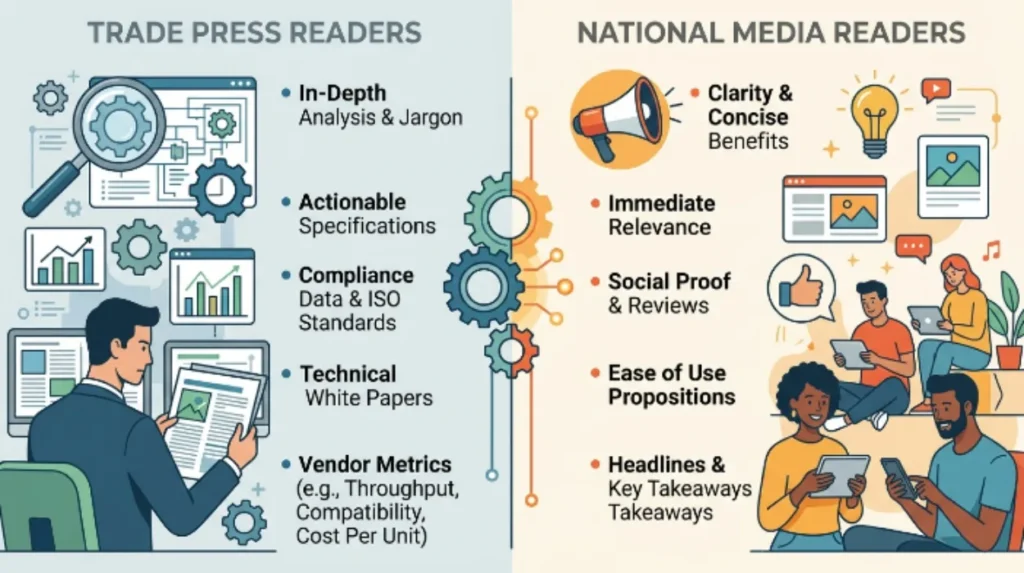
Trade audiences look for product fit, compliance data, technical comparisons, and long-term performance indicators. They evaluate vendors on metrics such as throughput, compatibility, cost per unit, and warranty terms. National audiences seek immediate value propositions, ease of use, and social proof such as reviews or endorsements. Trade content can reference standards like ISO numbers, regulatory clauses, and technical white papers. National content emphasizes headlines, visuals, and simple takeaways. Timing and cadence differ: trade readers follow sector news daily for procurement windows; national readers engage with standout stories as they trend.
How does content format vary between trade press and national media?
Trade content uses technical briefs, specification sheets, and in-depth feature articles; national content uses short news pieces, interviews, and visual-led summaries.
Trade press includes format types such as product datasheets, technical comparisons, benchmarking reports, and long-form reviews. Content often embeds tables, schematics, and performance metrics. National media uses short news reports, explainers, opinion columns, and broadcast segments. National formats prioritize attention-grabbing headlines, key quotes, and accessible visuals. Trade outlets accept dense, multi-thousand-word analyses when relevant. National pieces remain under strict word counts and focus on readability for a broad demographic. Publication placement differs: trade pages dedicate sections for product launches; national outlets use business, technology, or lifestyle sections depending on the product.
How do editorial evaluation criteria differ for product launches?
Trade editors assess technical fit, ROI, and regulatory compliance; national editors assess novelty, consumer impact, and newsworthiness.
Trade editors verify claims against industry benchmarks, request third-party validation, and seek direct performance data. They assess whether the product integrates with existing workflows and whether service levels meet sector expectations. National editors assess whether a product has a clear headline, affects a large audience, or ties to broader trends. Trade publications require evidence such as lab results, pilot project outcomes, or specification sheets. National outlets require accessible narratives, spokesperson availability, and visual assets. Both types of editors value clarity, but trade editors prioritize depth while national editors prioritize immediacy.
How should PR materials differ when targeting trade press versus national media?
For trade press, supply technical datasheets, case studies, and sector-specific statistics; for national media, supply succinct press releases, human stories, and clear consumer benefits.
For trade audiences, include detailed specifications, integration instructions, performance metrics, compliance documentation, and references to pilot installations. Provide subject-matter experts for technical interviews and arrange demonstrations with measurable outcomes. For national audiences, provide a concise headline, single-paragraph summary, one or two key consumer benefits, photographic assets, and spokespeople who can explain benefits in plain language. Tailor language: use sector terminology for trade materials and plain English for national materials. Ensure embargo details and exclusives align with each outlet’s lead times and editorial calendars.
How does distribution strategy differ between trade press and national outlets?
Trade distribution uses sector lists, newsletters, conferences, and association channels; national distribution uses wire services, press desks, and broadcast contacts.
Trade distribution channels include targeted mailing lists segmented by role (procurement, operations, R&D), membership newsletters, industry events, and association bulletin placements. Content scheduling aligns with buying cycles and trade show calendars. National distribution uses national wire services, pitch emails to business and features desks, broadcast booking for TV and radio segments, and social media amplification timed for peak readership. Measurement objectives differ: trade distribution tracks qualified leads and technical inquiries; national distribution tracks impressions, reach, and public sentiment.
How do measurement and success metrics differ for trade versus national media launches?
Trade success metrics focus on qualified inquiries, technical demo requests, and procurement outcomes; national success metrics focus on reach, engagement, and brand awareness.
Trade metrics include number of specification downloads, attendance at technical webinars, number of pilot project requests, and conversion into procurement processes. Track key accounts engaged and procurement timelines influenced. National metrics include impressions, unique page views, social shares, sentiment analysis, and increases in general brand searches. Attribution differs: trade outcomes are often directly traceable to sales cycles; national outcomes contribute to broader awareness and may indirectly increase consideration and traffic.
What are the timing and editorial calendar differences to consider?
Trade timelines align with procurement cycles and trade events; national timelines align with news cycles, seasonal trends, and major consumer moments.
Trade publications plan product coverage around trade shows, regulatory changes, and budget cycles. They accept technical lead times of several weeks to months for testing and review. National outlets operate on faster editorial rhythms and react to breaking news or trending topics. For trade launches, secure editorial previews at least 30 days in advance and provide technical reviewers. For national launches, prepare embargoed materials timed to news windows and ready-to-use visuals for immediate publication.
Explore More Expert Insights:
The Real Cost of PR Distribution in the UK: What Your Budget Buys
Do Images and Video Actually Increase Press Release Pickup in the UK?
What are the benefits of using trade press versus national media for product launches?
Trade press delivers targeted influence over decision-makers and higher conversion potential; national media delivers mass visibility and broad brand recognition.
Trade press influences procurement, specifications, and industry reputation. Coverage in trade titles can shorten sales cycles with decision-makers and validate technical claims. National media increases public awareness quickly and can create category momentum. Use trade press to build credibility within professional communities. Use national media to generate consumer demand and public conversation.
What are common use cases for targeting trade press vs national media?
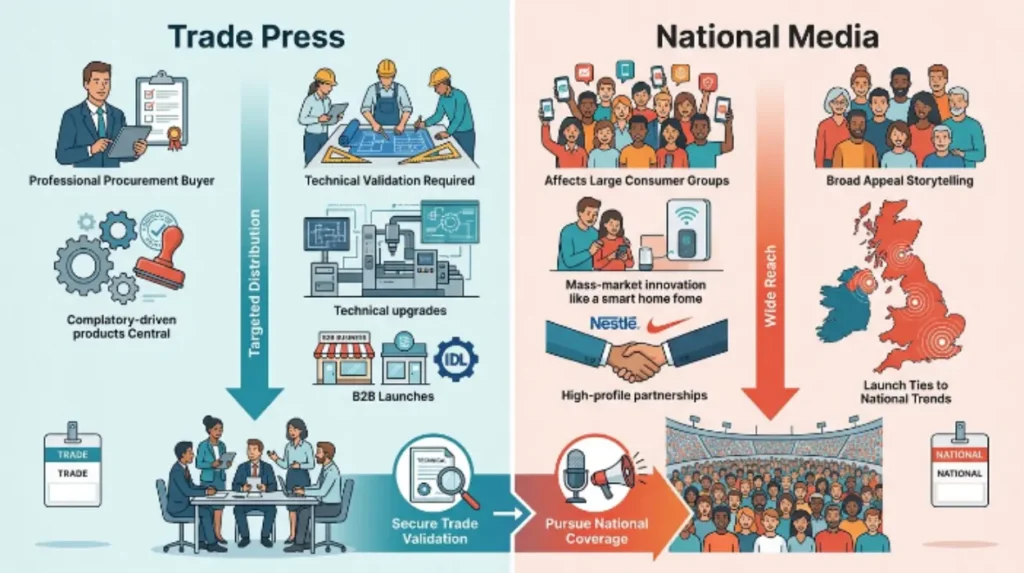
Use trade press for B2B launches, regulatory-driven products, and technical upgrades; use national media for consumer launches, mass-market innovations, or high-profile partnerships.
Target trade press when the product requires technical validation, when the customer is a procurement or professional buyer, or when compliance and integration are central. Target national media when the product affects large consumer groups, when storytelling has broad appeal, or when the launch ties to national trends. Use a phased approach: secure trade validation first for technical credibility, then pursue national coverage to scale awareness.
Get the Full Insights Here:
Which UK Media Databases Are Worth the Subscription in 2026
Trade press and national media serve distinct strategic roles for product launches in the United Kingdom. Trade press delivers technical depth, targeted distribution, and measurable procurement outcomes. National media delivers wide reach, rapid awareness, and public-facing narratives. Align content, distribution, and measurement with the chosen channel to match audience expectations and editorial norms.
For related guidance on selecting media databases and measuring PR distribution results, see:
How Time Intelligence Media Group Measures PR Distribution Results for UK Clients