
Images and video increase pickup rates; studies and publisher reports show 20–60% higher likelihood of coverage when visual assets accompany releases. Visuals provide immediate context, reduce editorial research time, and supply ready-to-publish materials for online and broadcast outlets.
Press release pickup means a journalist, editor, or publisher publishes a story based on the release or uses its assets. Pickup rates vary by sector, outlet type, and asset quality. In the UK, national broadsheets prioritize exclusives and data; regional and trade outlets prioritize local relevance and ready visuals. Visual assets shorten the content production cycle for online newsrooms. Video gives moving context and quotable soundbites; images supply thumbnails, hero art, and social-ready assets. Multiple UK-based press distribution analyses compare releases with and without visuals and find consistent positive lifts in pickup and engagement metrics.
How do images and video change editorial workflows in UK newsrooms?
Images and video reduce editorial workload and accelerate publication timelines by providing ready-to-use materials. Journalists spend less time sourcing visuals and verifying context when releases include high-resolution images and broadcast-standard video clips.
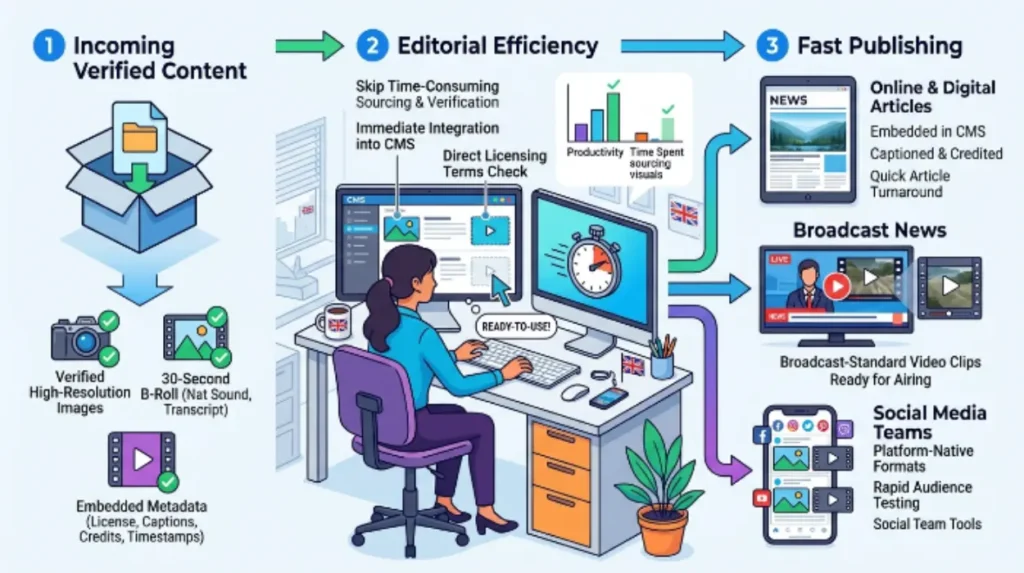
UK digital newsrooms operate under tight deadlines and with small teams. When a release supplies a captioned image or a short B-roll clip with metadata, staff can skip time-consuming outreach and licensing steps. Visuals with clear captions, photographer credits, licensing terms, and timestamps integrate directly into content management systems. For broadcast and online video desks, a sub-30-second clip with natural sound and a transcript increases the chance of airing. Visuals also improve social team efficiency; social editors use supplied images and clips for platform-native formats and faster audience testing.
What types of images and video perform best for press release pickup?
High-resolution photos, clear captions, varied formats, and short edited videos under 60 seconds deliver the highest pickup rates. Photos should be 3000 pixels on the long side or higher, and video should be at least 1080p with clear audio and an accompanying transcript.
Publishers prefer images that show people, products in use, or unique visuals tied to the story. Editorially valuable images include action shots, close-ups, and contextual wide shots. Video performs best when it contains a concise narrative, b-roll, natural sound, and a 20–40 second edited version plus a full-length file. Include clear filenames, embedded metadata, and explicit usage rights. For local stories, images showing local landmarks or participants increase relevance. For trade or B2B topics, charts or screen recordings that visualize data or product workflows improve clarity.
How should visual assets be labeled and licensed for UK press use?
Label images and video with descriptive filenames, captions, photographer credits, date, location, and explicit usage rights. Provide a short copyright statement and a clear license line such as “Editorial use only; credit photographer.”
UK publishers require clarity on rights to avoid legal risk. Include a line that states permitted uses (editorial, online, broadcast), any embargo details, and contact information for licensing queries. Embed IPTC metadata where possible and attach a plain-text caption list to the release. For video, supply a time-coded transcript and a rights statement covering broadcast and online use. If third-party music or stock footage appears, disclose licensing or provide music-free versions. Clear licensing reduces friction and increases the probability of pickup.
Do visual-rich releases perform differently across UK outlet types?
Visual-rich releases produce larger uptake gains at regional, trade, and lifestyle outlets than at national broadsheets, but they raise social and page view metrics across all outlet types. Regional outlets use images and short video to localize stories; trade outlets use product visuals and demos; lifestyle outlets favor polished imagery.
National broadsheets prioritize exclusivity, analysis, and sourcing; visuals help but rarely substitute for unique reporting. Regional newspapers and hyperlocal sites value identifiable local imagery and quotes. Trade publications publish product photos, charts, and demo clips that illustrate technical claims. Broadcast outlets require video with natural sound and interview bites. Online-only publishers show higher immediate clicks and sharing when releases include a hero image and social-optimized video clips.
How do images and video affect search visibility and social distribution in the UK?
Visuals improve search visibility through image search and increase social engagement by producing platform-native assets, which boost click-through rates by 30–90% depending on format. Alt text, captions, and descriptive filenames support SEO; short videos and thumbnails increase social reach.
Image search engines index properly tagged images, driving organic referral traffic. Use concise, keyword-rich alt text and captions that describe the image and link it to the release topic. Social platforms favor native uploads and short vertical or square videos; platforms deliver higher impressions for native video content. Video thumbnails influence click rates; clear, context-rich thumbnails increase engagement. Transcripts and captions make video content accessible and indexable by search engines, improving long-term discovery.
What quality standards should UK PR teams meet for visuals to be effective?

Provide high-resolution images, broadcast-ready video, accurate captions, IPTC metadata, and explicit usage rights to meet editorial standards. Deliver a minimum of three images (portrait, landscape, and close-up) plus a 20–40 second edited video clip and a full-length master file.
Editors expect technically clean files: sharp focus, correct exposure, natural color, and no visible watermarks. Video must have clear audio levels, neutral backgrounds when required, and sequential file naming. Supply both widescreen and square crops for social use. Include a plain-text caption sheet and a separate rights statement. Meeting these standards reduces editorial rejection and speeds publication.
Explore More Expert Insights:
What Time of Day Gets UK Press Releases the Most Coverage
How Press Release Embargoes Work in UK Media (and When to Break One)
What metrics should PR teams track to measure the impact of visual assets?
Track pickup rate, number of outlets using visuals, pageviews on published stories, social shares, and referral traffic from image search and video platforms. Record time-to-publish and whether editors used supplied assets directly.
Pickup rate equals the proportion of sent releases that become published stories. Count distinct outlets that published the story and note which used supplied visuals. Track pageviews and average time on page for stories with visuals versus those without. Monitor social engagement metrics—shares, likes, comments—and referral traffic from image search engines and video platforms. Time-to-publish measures newsroom friction; shorter times indicate effective asset provisioning.
What use cases in the UK specifically benefit most from images and video in press releases?
Local events, product launches, case studies, human-interest stories, and crisis updates show the largest pickup and engagement gains from visuals. Visuals provide proof, locality, and immediate context for these story types.
Local events gain traction when images show attendees, location signage, or local landmarks. Product launches benefit from detail shots, demos, and short video walkthroughs. Case studies use before-and-after images and testimonial clips. Human-interest pieces require strong portraits and candid clips to convey emotion. Crisis updates demand time stamped photos or video that verify conditions and support factual reporting.
Click Here to Explore More:
How to Compare UK PR Distribution Packages Without Overpaying
Visual assets increase press release pickup in the UK by reducing editorial friction and providing publishable materials. High-resolution images, concise videos under 60 seconds, clear captions, embedded metadata, and explicit licensing produce the strongest results. Benefits vary by outlet type: regional, trade, and lifestyle publishers show the largest relative gains, while nationals require exclusives but still use visuals for online and social formats. Track pickup rate, outlet usage, time-to-publish, page views, and social referrals to quantify impact.
Learn Everything About It Here:
Inside Time Intelligence Media Group’s UK Journalist Network