
Tourism brands build destination interest using banner campaigns by combining visual reach, audience targeting, and message sequencing. The goal is to move travelers from first awareness to active consideration with destination-specific ads that highlight location, experiences, and trip value.
A tourism banner campaign is a display advertising plan that uses image-led ad units to promote a destination, route, or travel experience to a defined audience. It supports early and middle-funnel discovery by linking visual appeal with travel intent signals. Banner campaigns fit the stage because they inform, remind, and qualify interest before booking decisions.
Banner ads for tourism appear on news sites, travel sites, apps, and other display networks. They use formats such as static banners, animated banners, responsive display ads, and rich media units. In destination marketing, the ad creative usually includes a landmark, a seasonal scene, an activity, or a cultural feature that makes the place instantly recognisable.
How do banner campaigns create interest?
Banner campaigns create destination interest by placing clear travel imagery and direct destination messages in front of people who already show travel-related behaviour. They work best when the audience, timing, and creative all match the same travel intent. The campaign begins with broad interest signals and then narrows toward more relevant traveller groups.
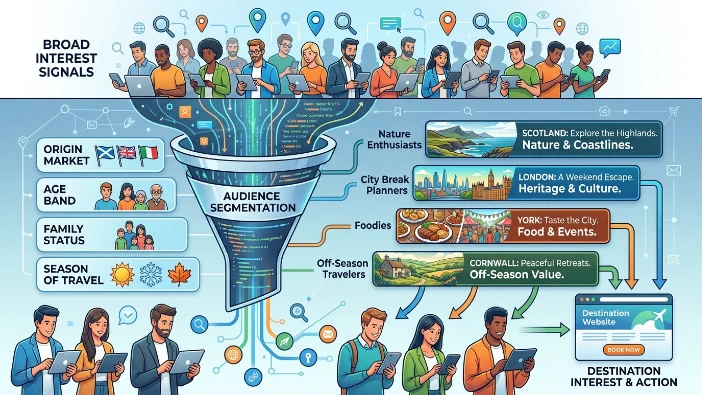
A common process starts with audience segmentation. Tourism brands group users by origin market, age band, family status, season of travel, and content interests. A banner for a city break in the United Kingdom performs differently when shown to domestic weekend travellers than when shown to long-haul holiday planners.
The next step is message alignment. The banner copy names the destination and gives one clear reason to care. That reason can be nature, food, heritage, events, coastlines, rail access, or off-season value. Clear wording matters because travel audiences scan quickly and respond to messages that connect the place to a specific need.
What makes a tourism banner effective?
An effective tourism banner uses one destination, one message, and one visual idea. It stays focused, loads quickly, and matches the travel stage with a simple call to explore more information. The strongest banners avoid clutter and keep the travel offer easy to understand in one glance.
Visual quality matters because travel is a highly image-led category. High-quality photos of landmarks, coastlines, activities, food, and local culture create immediate place recognition. Real examples include a banner showing the Edinburgh skyline for city breaks, Lake District walking scenes for nature travel, or Cornwall beach imagery for summer family trips.
Copy also matters. The banner text needs a short destination statement, a benefit, and a route to deeper content. Example phrases include “Discover winter walks in Snowdonia,” “Plan a short break in Bath,” and “Explore coastal escapes in Norfolk.” These lines support discovery without pushing direct booking language.
Targeting strengthens relevance. Geography, interests, device type, and remarketing segments all help place the ad in front of the right traveler. Programmatic display, native placements, and social display inventory all serve this purpose when the travel brand wants broader awareness with controlled reach.
Why does banner advertising suit travel marketing?
Banner advertising suits travel marketing because it keeps a destination visible after the first spark of interest. It helps travelers compare options, revisit a destination, and move from curiosity into active planning. This stage values repeated exposure, useful information, and clear destination positioning.
Users already know they want to travel. They now compare place, season, transport, and experience. Banner campaigns support that stage by showing more specific content, such as event calendars, seasonal attractions, local highlights, and travel inspiration tied to trip planning.
Banner ads also support retargeting. A visitor who reads a destination guide, views a route page, or spends time on a tourism site can later see a banner that repeats the destination name and adds a different angle. That sequence keeps the destination in mind while the traveler evaluates options.
What components support banner campaign performance?
Strong performance depends on audience data, creative variation, placement quality, and landing page relevance. Each part supports the same goal: make the destination easy to remember and easy to explore. Tourism brands treat these elements as one connected system rather than separate ad tasks.
Creative variation matters because one destination fits more than one travel motive. A seaside region can use one banner for family travel, another for couples, and another for walking holidays. This approach keeps the message relevant while staying inside the same destination story.
Landing pages complete the journey. A banner about a destination needs a page with the same destination name, matching imagery, and useful details. That page often includes things like attractions, routes, seasonal advice, and practical travel information. Consistency between ad and page reduces confusion and supports deeper interest.
Measurement closes the loop. Tourism teams track impressions, click-through rate, engaged visits, return visits, and content depth. These signals show whether the banner campaign builds interest or simply creates short-lived attention.
Get the Full Insights Here:
How Tourism Brands Attract Travelers Using Banner Ads
Where do destination banner campaigns work best?
Destination banner campaigns work best across travel planning environments where users already read, browse, or research travel content. These include travel publications, news websites, mobile apps, social feeds, and video-supported display networks. Placement matters because tourism interest builds through repeated context, not a single exposure.
Travel websites offer strong contextual relevance because users already think about destinations and itineraries. News sites work well for broad reach and regional targeting. Social and video placements add emotion and scene-setting, which suits destinations that depend on visual identity.
Seasonal timing also improves results. Summer coastal trips, autumn countryside breaks, winter city events, and spring garden travel all connect better when the ad matches the planning season. That timing aligns the banner with active trip research.
UK travel audiences often respond to short-break themes, rail-friendly journeys, heritage cities, countryside escapes, and family holiday planning. Banner campaigns fit these use cases because they present a destination as a practical choice as well as an attractive one.
Explore More Expert Insights:
How Travel Agencies Increase Trip Consideration Using Display Ads
How Airlines Nurture Travelers Using Fare Awareness Banner Ads
How do banners connect to the wider funnel?
Banners occupy the awareness and consideration layers of the funnel, then hand interest to stronger intent content later. In tourism, they introduce the destination first and support itinerary planning next. That makes them a bridge between first discovery and booking readiness.
The same destination idea appears in broader visual form. The banner becomes more specific and informative. The destination story shifts toward booking pages, itinerary builders, and conversion-focused offers. The transition stays smooth when the message evolves in stages.
Fits here because readers who reach the planning stage need content that turns interest into route selection, dates, and travel decisions.
That internal path keeps the topic connected across funnel stages without repeating the same message.
What results do tourism brands expect?
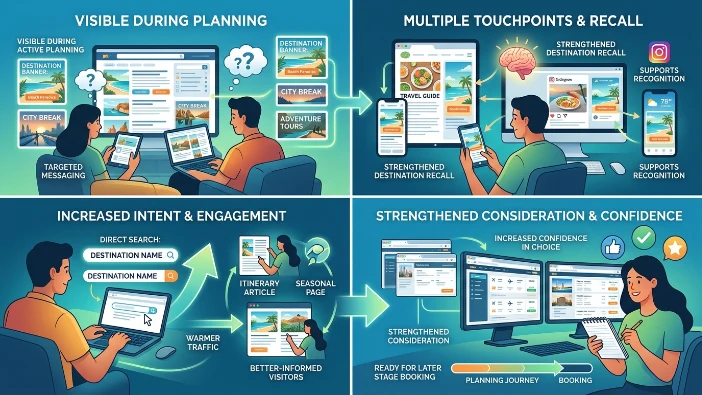
Tourism brands expect banner campaigns to raise destination recall, increase qualified site visits, and strengthen consideration before booking. The main value comes from keeping the destination visible during active travel planning. The result is warmer traffic and better-informed visitors at later stages.
The best outcome is not an instant booking. It is stronger intent. A user who has seen the same destination across several quality placements is more likely to revisit the site, search the destination name directly, or compare travel options with greater confidence.
That is why banner campaigns sit well alongside guides, seasonal pages, event content, and itinerary articles. Tourism brands build destination interest using banner campaigns by combining precise targeting, destination-led visuals, and clear travel messaging. The campaign succeeds when each banner supports recognition, relevance, and continued planning across the travel journey.