Solution-based banner ads educate prospects by connecting specific business problems with relevant software solutions through visual messaging. These ads focus on operational challenges, workflow inefficiencies, and digital improvements instead of direct product promotion, helping audiences understand available technology-based solution categories during research stages.
Solution-based banner ads are display advertisements designed to explain how a technology solution addresses a defined operational issue. Tech startups use these ads to educate prospects already aware of their challenges but still comparing approaches, systems, and software categories.
A startup is an early-stage company focused on scalable technology products or services. A prospect is a potential customer researching solutions before making purchasing decisions.
These ads differ from awareness-stage advertising. TOFU campaigns explain broader concepts and introduce software categories. MOFU campaigns focus on explaining solution relevance, operational fit, and workflow benefits.
For example, a cybersecurity startup explains how automated threat monitoring reduces manual security checks. A project management startup explains how shared dashboards improve remote collaboration tracking. An analytics startup explains how reporting automation reduces spreadsheet dependency.
Solution-based banner ads appear on technology websites, SaaS comparison platforms, business publications, and industry-focused digital channels. The objective is educational progression rather than immediate conversion.
How do tech startups use banner ads to educate prospects?
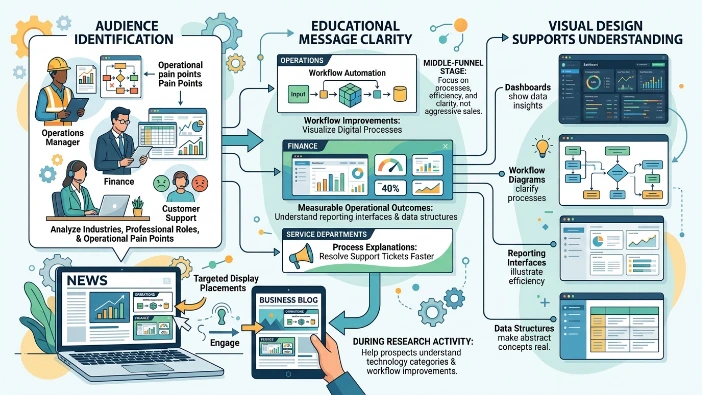
Tech startups educate prospects by combining operational problem statements, software-related explanations, and targeted display placements within banner advertising campaigns. This structure helps audiences understand technology categories, workflow improvements, and digital processes connected to specific operational or organisational challenges during research activity.
The process begins with audience identification. Startups analyse industries, professional roles, and operational pain points connected to their software category.
A workflow automation startup targets operations managers. A cloud accounting platform targets finance teams. A customer support software company targets service departments.
Banner messaging focuses on educational clarity. Headlines explain processes, efficiency improvements, or measurable operational outcomes. Educational creatives avoid aggressive sales messaging during the middle-funnel stage.
Visual design supports understanding. Dashboards, workflow diagrams, reporting interfaces, and data structures help prospects connect abstract software concepts with real operational activities.
Educational landing pages extend the learning experience after banner interactions. These pages explain workflows, implementation structures, and software use cases with factual detail.
Retargeting also supports education. Prospects researching operational topics later see banners connected to related solutions. This repeated exposure strengthens category understanding.
MOFU campaigns build informed interest instead of direct purchasing pressure. Prospects continue researching before evaluating vendors or requesting demonstrations.
Why do solution-based banner ads work in the middle funnel stage?
Solution-based banner ads work effectively in the middle funnel because prospects already recognise operational problems and actively research available solutions. Educational display messaging aligns with this behaviour by providing structured explanations, workflow context, and software-related information during active comparison and evaluation stages online.
MOFU audiences differ from awareness-stage audiences. They already understand the existence of a business challenge. Their focus shifts toward evaluating approaches, systems, and technology options.
Banner ads support this process through repeated educational exposure.
A logistics company researching inventory inefficiencies sees banners about automated stock management. A marketing team researching analytics limitations sees banners explaining real-time reporting systems.
This alignment increases contextual relevance.
Solution-based messaging also improves engagement quality. Prospects interact with content connected directly to existing operational concerns rather than broad software awareness topics.
Display frequency strengthens retention. Repeated exposure to workflow-focused educational messages improves recognition of software categories and operational terminology.
Targeted placement also improves efficiency. Tech startups place ads beside relevant editorial content, including cloud infrastructure articles, automation discussions, cybersecurity reports, and remote work publications.
Educational campaigns support longer research cycles common in SaaS and technology purchasing environments. Prospects consume multiple pieces of content before requesting consultations or evaluating pricing structures.
MOFU advertising creates continuity between awareness-stage education and conversion-stage engagement.
What types of educational messaging appear in solution-based banner ads?
Educational banner messaging explains operational problems, process inefficiencies, software workflows, and measurable business improvements through concise visual communication. Tech startups structure messaging around solution understanding, workflow simplification, and technology relevance instead of direct transactional promotion during prospect research stages.
Problem-focused messaging explains operational inefficiencies. Examples include delayed reporting, fragmented communication, manual data entry, or disconnected systems.
Workflow-focused messaging explains how software changes operational processes. A scheduling platform explains appointment automation. A CRM platform explains customer interaction tracking.
Outcome-focused messaging highlights measurable improvements. Examples include faster reporting times, reduced manual tasks, increased operational visibility, or centralised collaboration.
Comparison-focused messaging introduces alternative solution structures without direct competitor attacks. A startup explains the difference between spreadsheet tracking and automated dashboards. Another explains the difference between manual support management and ticket automation systems.
Educational creatives also use data-focused language. Metrics improve clarity and contextual understanding. Examples include “reduce reporting time by 40 percent” or “track 5,000 customer interactions from one dashboard.”
Visual consistency strengthens recognition across campaigns. Startups maintain similar colours, layouts, interface previews, and terminology throughout banner sequences.
Educational messaging remains concise because banner placements provide limited space. Headlines deliver direct context while supporting visuals reinforce workflow understanding.
How do tech startups target the right prospects with banner advertising?
Tech startups target prospects using behavioural signals, industry segmentation, contextual placements, and interest-based advertising systems. These targeting methods connect educational banner ads with professionals actively researching operational improvements, software categories, and technology-driven workflow solutions across digital business environments.
Behavioural targeting tracks online activity connected to technology research. Users visiting productivity websites, cloud computing articles, cybersecurity resources, or SaaS review platforms become part of relevant audience groups.
Contextual targeting places banner ads beside related editorial content. A customer support software banner appears beside service management articles. A workflow automation banner appears beside operational efficiency content.
Industry segmentation improves message accuracy. Healthcare technology ads target medical administration audiences. Financial software campaigns target accounting and compliance professionals.
Device-based targeting also influences campaign delivery. Desktop-focused campaigns support workplace browsing behaviour. Mobile campaigns maintain educational visibility across different research sessions.
Retargeting supports continued education. Prospects who previously visited educational landing pages later receive banners connected to related workflow solutions or software features.
Audience filtering improves campaign efficiency. Existing customers and unrelated demographic groups are excluded from prospecting campaigns.
Frequency controls maintain balanced visibility. Prospects see educational banners repeatedly without excessive repetition that reduces engagement quality.
These targeting systems support structured educational progression across multiple research interactions.
What role do landing pages play in solution-based banner campaigns?
Landing pages support banner education by expanding operational explanations, workflow structures, and software solution details after ad interactions. Effective landing pages maintain consistent messaging between banner creatives and educational content while guiding prospects toward deeper understanding of relevant technology solutions.
Banner ads introduce operational concepts quickly. Landing pages provide detailed educational expansion.
Consistency remains important. If a banner explains reporting automation, the landing page continues discussing reporting inefficiencies, workflow structures, and dashboard visibility.
Educational landing pages include structured sections explaining operational challenges, implementation processes, feature categories, and workflow improvements.
Technology startups use interface screenshots, process diagrams, and operational examples to strengthen contextual understanding.
Content organisation affects engagement quality. Clear headings, concise paragraphs, and focused explanations improve readability for research-driven audiences.
Landing pages also support soft qualification. Prospects spending extended time reading workflow explanations demonstrate higher educational interest than short-session visitors.
Interactive educational elements increase engagement depth. Examples include feature walkthroughs, process visualisations, and guided product explanations.
Analytics systems measure visitor behaviour after banner interactions. Marketers track bounce rates, session duration, content engagement, and return visits to improve future educational campaigns.
Explore More Expert Insights:
How SaaS Businesses Strengthen Consideration Using Retargeting Banner Ads
How Software Companies Increase Demo Engagement Using Banner Campaigns
How do tech startups measure the success of educational banner ads?
Tech startups measure educational banner campaign performance using engagement metrics, audience behaviour analysis, landing page activity, retargeting interaction, and conversion progression data. These measurements help marketers understand how effectively banner ads support solution awareness and prospect education within research-focused buying journeys.
Impressions track campaign visibility across websites, applications, and publishing networks.
Click-through rates measure how frequently prospects engage with educational creatives after viewing banner placements.
Session duration tracks how long visitors interact with educational landing page content after clicking advertisements.
Bounce rates identify whether landing pages align with banner messaging expectations.
Retargeting engagement measures repeated interaction among prospects exposed to follow-up educational campaigns.
Scroll depth tracking shows how much educational content visitors consume during research sessions.
Audience segmentation analysis compares engagement across industries, professional roles, geographic locations, and device categories.
Attribution systems track how educational campaigns contribute to later-stage conversion activity. Prospects often interact with multiple campaigns before requesting demonstrations or consultations.
Performance analysis also supports optimisation. Underperforming creatives are replaced with clearer workflow messaging. High-performing audience segments receive additional advertising investment.
MOFU campaign measurement focuses on engagement quality and educational progression instead of immediate purchases.
How do solution-based banner ads support future lead generation?
Solution-based banner ads support future lead generation by building informed interest, improving software category understanding, and strengthening trust during research stages. Educated prospects enter later conversion stages with clearer operational awareness, stronger workflow understanding, and higher readiness for product evaluation conversations.
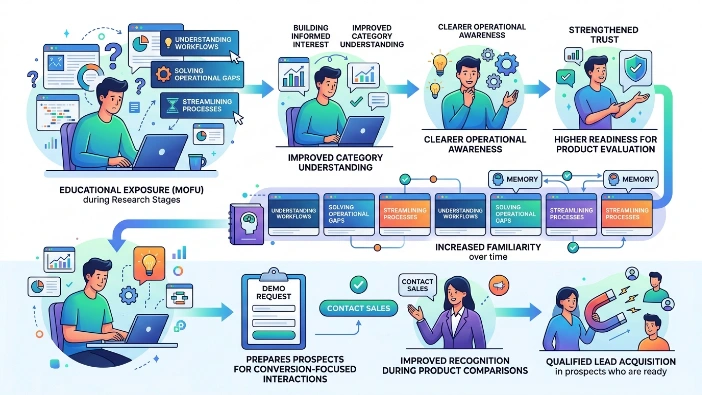
Middle-funnel advertising prepares prospects for conversion-focused interactions later in the buying process.
Educational exposure improves decision readiness. Prospects understand workflow structures, operational terminology, and software categories before entering vendor evaluation stages.
Repeated educational messaging also increases familiarity. Familiarity improves recognition during future product comparisons and lead-generation campaigns.
Banner education supports multi-stage marketing continuity. TOFU campaigns introduce software categories. MOFU campaigns explain solution relevance. BOFU campaigns focus on conversion actions and qualified lead acquisition.
This progression improves campaign efficiency across the entire customer acquisition process.
Educational advertising also reduces confusion during later-stage engagement. Prospects entering product demonstrations or consultation calls already understand key operational concepts and workflow structures.
Technology startups benefit from this informed engagement because sales discussions become more focused on implementation, integration, and operational fit.
Readers interested in broader awareness-stage education can revisit:
How SaaS Companies Drive User Acquisition with Display Advertising
Readers exploring conversion-focused acquisition strategies can continue with:
How Tech Startups Turn Solution Seekers Into Qualified Leads Using Conversion Banner Ads for deeper analysis of lead-generation banner campaigns.