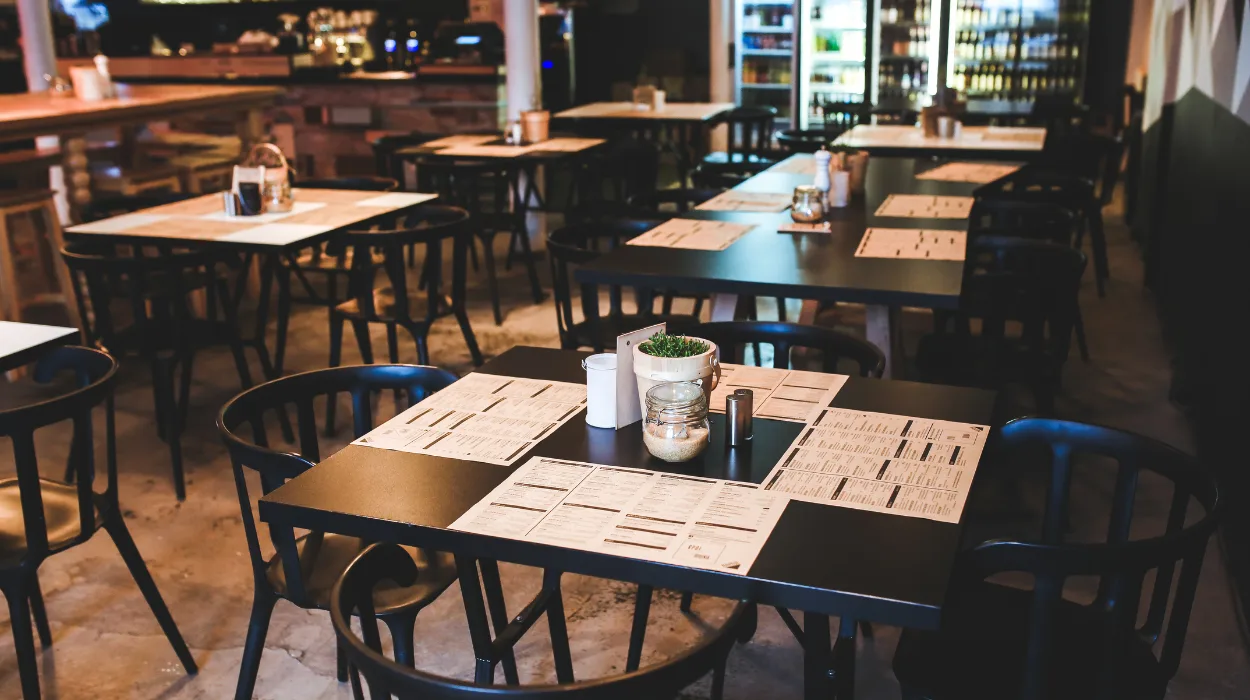
Targeted banner ads are digital image or HTML ads delivered to specific audience segments based on data such as location, behaviour, demographics, or interests.
Targeted banner ads for restaurants serve visual promotions on websites, apps, and ad networks. They use audience signals: geolocation, browsing history, search queries, time of day, device type, and first-party customer data. Ads include sizes such as 300×250, 728×90, and 320×50. Delivery channels include display networks, in-feed placements on publisher sites, and programmatic exchanges. Measurement metrics include impressions, click-through rate (CTR), view-through conversions, and cost per mille (CPM).
How do restaurants use audience data to target banner ads?
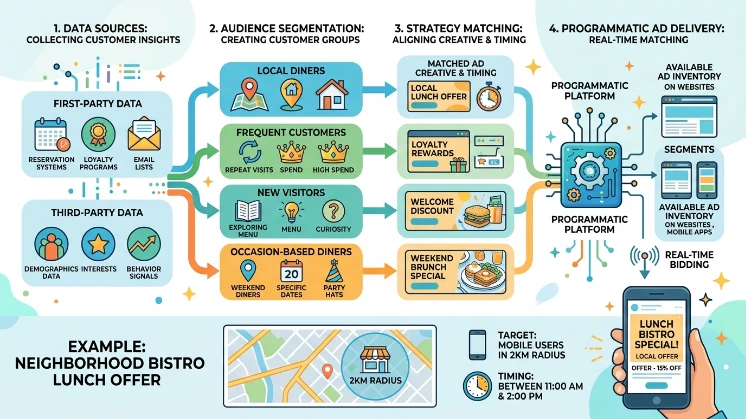
Restaurants use audience data by segmenting customers into groups based on purchase history, location, and online behaviour then matching creative and timing to each segment.
Restaurants create segments for local diners, frequent customers, new visitors, and occasion-based diners (for example, weekend diners). First-party data comes from reservation systems, loyalty programmes, and email lists. Third-party data adds supplementary demographic or interest signals. Programmatic platforms match segments to available ad inventory in real time. Example: a neighbourhood bistro uses postcode-based targeting to show lunch offers to mobile users within 2 kilometres between 11:00 and 14:00.
What creative elements increase banner ad effectiveness for dining venues?
Effective banner creatives use clear offers, high-quality food images, concise text, and a visible call-to-action aligned with the target segment.
Images should show food at 1200–2000 px source size for quality across placements. Headlines use 3–7 words. Offer statements use specific benefits, for example “2-course lunch £9.95” or “Free dessert with mains.” Colors follow brand contrast and legibility rules; text occupies no more than 20% of the ad space to maintain readability. Animated GIFs or short HTML5 animations run for 5–8 seconds and loop no more than twice. Creative variations test different headlines and images to increase CTR and engagement.
Explore the Advanced Guide:
Mid-Funnel Food Ads That Turn Engagement Into High-Intent Customers
How does programmatic buying deliver targeted banner ads to local customers?
Programmatic buying automates ad purchase and placement via real-time bidding, using data signals to match impressions to defined audience segments.
Programmatic systems include demand-side platforms (DSPs), supply-side platforms (SSPs), and ad exchanges. Restaurants or agencies upload audience segment definitions and creative assets to a DSP. The DSP bids on impressions that match segment signals. Geofencing limits impressions to users within selected coordinates. Time-of-day and device-type rules refine delivery. Reporting returns impression logs, viewability rates, and bidding costs. Example: a pizza chain sets rules to target mobile users within 1 mile during weekday evenings and bids higher for placements with viewability above 50%.
What performance metrics show revenue impact from banner ads?
Key metrics are CTR, conversion rate, average order value (AOV), return on ad spend (ROAS), and incremental sales measured against an attribution model.
CTR indicates initial engagement. Conversion rate measures actions: table bookings, online orders, voucher redemptions. AOV shows value per transaction. ROAS equals revenue generated divided by ad spend. Incremental sales require experiments such as geo-split tests or holdout groups to compare exposed and unexposed populations. View-through conversions capture users who saw an ad and converted later. Example metric values for a successful local campaign: CTR 0.25%–0.75%, conversion rate 1%–3%, ROAS 3:1 or higher for direct online order campaigns.
How do attribution models affect revenue measurement for restaurant ads?
Attribution models assign credit for conversions to touchpoints such as impressions, clicks, and post-view interactions to calculate campaign contribution accurately.
Common models include last-click, multi-touch, and data-driven attribution. Last-click credits the final click; multi-touch distributes credit across multiple ads; data-driven uses machine learning to weight touchpoints. For banner ads, view-through and assisted conversions matter because many users convert after exposure rather than direct click. Accurate measurement often requires combining ad logs, point-of-sale (POS) receipts, and reservation system data. Restaurants use conversion windows (for example, 7 days) to capture delayed ordering behaviour.
What legal and privacy requirements affect targeted banner ads in the UK?
UK rules require clear consent for cookies, transparency about data use, and compliance with data protection law when using personal data for targeting.
The UK GDPR and the Data Protection Act 2018 regulate processing of personal data. Consent frameworks require opt-in for non-essential tracking technologies. Publishers and advertisers must present cookie notices and provide means to opt out. Geolocation targeting that identifies individuals requires lawful basis and appropriate safeguards. First-party data usage requires privacy notices that explain processing purposes and retention periods. Record retention follows data minimisation principles; delete or anonymise data after the stated retention window.
What are common campaign structures for restaurant banner ad strategies?
Typical campaign structures separate objectives, awareness, consideration, and conversion with distinct audience segments, creatives, and KPIs for each objective.
Awareness uses broad local audiences, high-reach sites, and frequency caps. Consideration targets site visitors and subscribers; creatives highlight menu details and events. Conversion targets previous visitors, cart abandoners, and loyalty members; creatives include specific offers and booking prompts. Budgets allocate 40% to awareness, 35% to consideration, and 25% to conversion in a balanced local strategy. Measurement suites include analytics for web traffic, CRM integration for orders, and ad platform reporting for spend and reach.
Explore More Expert Insights:
How Food Businesses Improve Visibility Using Banner Ads
How Cloud Kitchens Boost Demand Using Display Campaigns
What benefits do restaurants achieve using targeted banner ads?
Targeted banner ads improve reach efficiency, increase visit intent, and raise measurable incremental revenue when campaigns use precise audience definitions and controlled experiments.
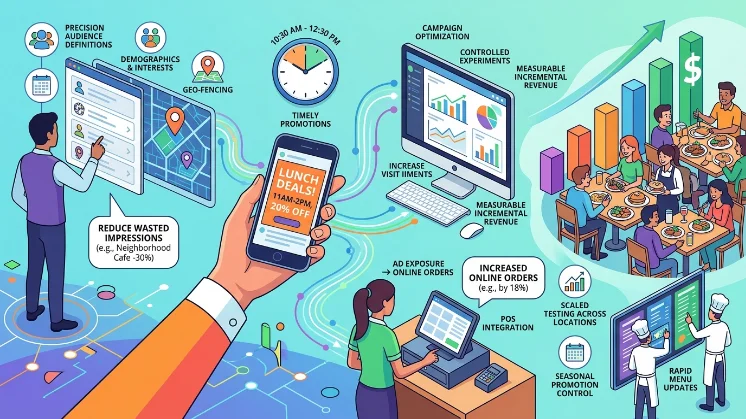
Efficiency arises from focusing spend on users most likely to engage. Visit intent increases through timely promotions, for example lunchtime deals shown at 10:30–12:30. Measurable revenue comes from linking ad exposure to bookings and orders via tracking and POS integration. Additional benefits include seasonal promotion control, rapid creative updates for menu changes, and scaled testing across multiple locations. Example outcomes: a neighbourhood café reduces wasted impressions by 30% and increases online orders by 18% after adopting geofenced banner ads.
What use cases demonstrate targeted banner ads for food businesses?
Use cases include local lunch promotions, new-branch launches, event-driven offers, and loyalty reactivation campaigns.
For a lunch promotion, target nearby mobile users with a timed offer between 10:30 and 13:30. For a new branch, use postcode targeting across a 3-mile radius and run awareness creatives for 21 days. For events, target users who visited event pages or engaged with social posts and show event-specific banners. For loyalty reactivation, upload a list of inactive members and deliver a personalised voucher banner. Each use case requires tailored creative, precise timing, and linked measurement to transactions.
Check the Complete Explanation:
How Food Businesses Improve Engagement Using Mid-Funnel Advertising
Targeted banner ads for restaurants use audience signals, creative optimisation, programmatic delivery, and clear measurement to drive local awareness and measurable sales. Implement segment definitions, align creatives to user intent, set campaign objectives by funnel stage, and use robust attribution to quantify revenue impact.