Banner ads or animated image placements on web pages that display a visual offer and link to a destination; resorts use them to generate awareness, drive traffic, and initiate booking journeys.
Banner ads are digital display placements measured by impressions and clicks. Common formats include leaderboard (728×90), medium rectangle (300×250), and wide skyscraper (160×600). Rich media formats add animation, video snippets, or interactive elements. Ad networks and programmatic platforms deliver banners to audiences based on targeting criteria such as location, demographics, interests, browsing history, and contextual content. Performance metrics include impressions, click-through rate (CTR), view-through conversions, and cost per thousand impressions (CPM). Resorts evaluate banner campaigns using conversion tracking tied to booking engines, phone calls, and newsletter sign-ups.
How do resorts define objectives for banner-ad campaigns?
Resorts set measurable objectives such as increasing direct bookings by 15%, raising site traffic by 30%, or improving brand awareness within a 30-mile radius.
Objective selection guides creative, targeting, and measurement. Awareness goals prioritise reach and CPM metrics. Traffic goals prioritise CTR and landing-page relevance. Conversion goals prioritise CPA, return on ad spend (ROAS), and integration with booking systems. Resorts segment objectives by travel window, immediate stays (next 7–30 days), mid-term planning (1–6 months), and long-term planning (6–18 months). Each segment requires different creative messaging and call mechanisms on landing pages. Measurement uses first-party booking data, UTM parameters, and server-to-server conversion pixels to attribute outcomes to specific banner placements.
What targeting strategies increase banner-ad relevance?
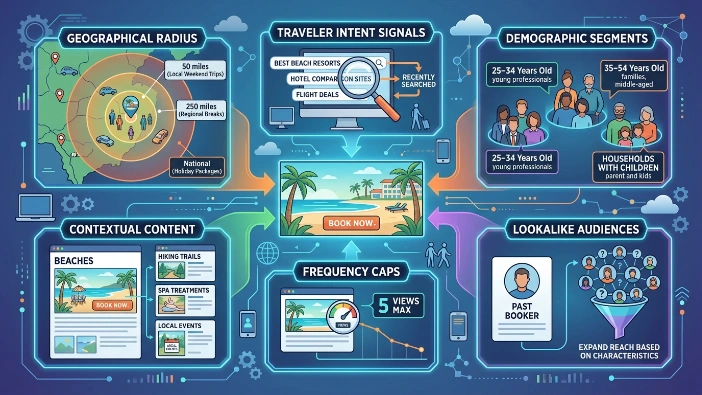
Resorts target by geographical radius, traveler intent signals, demographic segments, and contextual content to place ads where likely bookers view them.
Geographical targeting restricts delivery to users within predefined radii, 50 miles for local weekend trips, 250 miles for regional breaks, and national for holiday packages. Intent targeting uses recent travel searches, hotel comparison sites visited, or related content consumption. Demographic targeting filters by age ranges such as 25–34, 35–54, or households with children. Contextual targeting places ads on pages about beaches, hiking, spa treatments, or local events. Frequency caps limit how often the same user sees a banner to reduce ad fatigue. Lookalike audiences expand reach based on characteristics of past bookers.
What creative elements do effective resort banner ads include?
Effective banners use clear photographic property images, concise value statements, specific offers, and a visible link to a relevant landing page.
High-resolution images show rooms, pools, beachfront, or dining areas with color contrast optimised for legibility. Value statements include explicit information such as “Free breakfast for 2,” “Save 20% for stays Monday, Thursday”, or “Family room from £129/night.” Use of dates or booking windows increases urgency for time-limited offers. Animation duration should not exceed 15 seconds to avoid viewer drop-off. Text overlays follow legibility rules: minimum font size, high contrast, and short phrases under 6–8 words. Creative variations include single-image, carousel where supported, and short-looping video (3–15 seconds) to increase engagement.
How do resorts measure banner-ad performance accurately?
Resorts track impressions, CTR, view-through conversions, booking conversion rate, CPA, and ROAS using tracking pixels and server data to validate outcomes.
Impressions capture reach; CTR quantifies initial engagement. View-through conversions measure bookings after exposure without immediate clicks and require cookie- or server-based attribution windows, commonly 7–30 days. Booking conversion rate equals bookings divided by clicks on the landing page tied to the banner. CPA equals ad spend divided by number of bookings attributed to the campaign. ROAS equals booking revenue divided by ad spend. Resorts use multi-touch attribution to account for touchpoints across channels. Data reconciliation compares ad platform reports with internal booking records to correct discrepancies and reduce over-attribution.
What landing-page elements convert banner traffic into bookings?
Landing pages must match the banner creative, show clear pricing or offer details, display availability calendars, and provide one-click booking paths.
Landing-page alignment reduces friction: the hero image should mirror the banner image and the headline should repeat the banner value statement. Real-time availability calendars prevent false expectations and reduce bounce rates. Visible pricing or example rates give the visitor context before the booking flow. Simple forms require minimal fields, Check-in, check-out, number of guests, and a proceed button. Trust signals include guest-review scores, secure booking indicators, and clear cancellation policies. Mobile-optimised pages ensure fast load times under 3 seconds and single-tap booking options.
What budget and bidding models suit resort banner campaigns?
Resorts allocate budgets across CPM for awareness, CPC for traffic, and CPA or vCPM for performance; programmatic bidding can optimise delivery toward the selected KPI.
Awareness campaigns use CPM buying to maximise impressions within target audiences. Traffic campaigns use CPC to control cost per click when landing-page experience is prioritised. Performance campaigns use CPA bidding to pay for completed bookings or lead submissions. Programmatic platforms offer automated bidding strategies that optimise for conversions using historical data and real-time signals. Bid adjustments focus on high-value inventory such as travel-related sites or time-of-day windows like evenings and weekends. Seasonal budgets increase by specific percentages. Add 40% budget for summer months (June–August) and 25% for winter holiday periods (December).
What are common compliance and privacy requirements for banner advertising?
Advertisers must follow data-protection laws such as the UK GDPR, obtain consent for cookies, and honor opt-outs for personalised targeting.
Consent banners collect explicit opt-in for advertising cookies and processing of personal data. First-party data use requires secure storage and lawful basis documentation. If third-party tracking is used, vendor lists must be disclosed in privacy notices. Users can opt out of personalised ads via browser settings or industry tools; campaigns should have fallbacks for contextual targeting when consent is absent. Recordkeeping must retain consent logs for a minimum of 12 months for audit purposes. Special categories of personal data are not processed for targeting under advertising programs.
Explore More Expert Insights:
How Booking Platforms Increase Conversions Using Banner Campaigns
How Tourism Brands Attract Travelers Using Banner Ads
What benefits do resorts achieve from banner-ad campaigns?
Banner ads increase brand visibility, drive targeted traffic, lower reliance on third-party travel platforms, and create measurable funnels that convert interest into bookings.
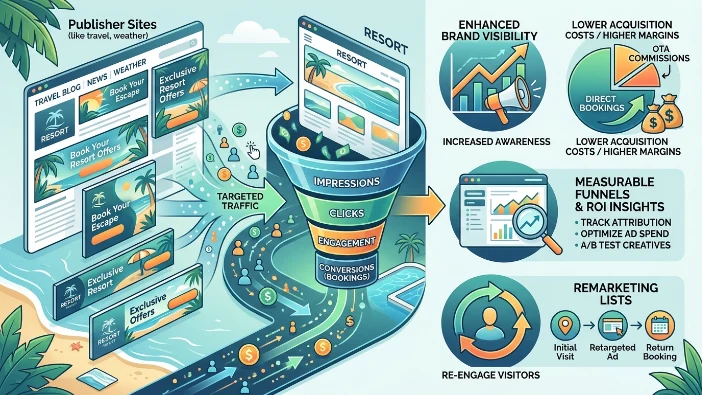
Visibility gains stem from reach across publisher networks and travel-related sites. Targeted traffic brings users with demonstrated travel intent to property pages. Direct bookings reduce commission costs and improve margin compared with third-party online travel agencies. Measurable funnels provide insights into which creative, placements, and audience segments yield the highest lifetime value. Data from banner campaigns feeds remarketing lists that support follow-up campaigns aimed at abandoned visitors and previous guests.
What use cases show banner ads working for resorts?
Use cases include promoting off-peak packages, targeting local weekend-break audiences, remarketing abandoned booking sessions, and driving event-specific bookings.
Off-peak campaigns highlight discounts or added amenities during lower-occupancy months, promoting autumn spa packages for stays in October and November. Local weekend-break campaigns target users within 100 miles with short-stay messages and dynamic date suggestions. Remarketing targets users who viewed room availability but did not complete booking, offering price guarantees or limited-time incentives. Event campaigns promote wedding packages or conference facilities to attendees of nearby events and industries, linking to dedicated event landing pages that list capacities and pricing.
Find Out More:
How Resorts Nurture Guests Using Visual Experience Banner Ads
Banner ads are a measurable, visual channel that resorts use to increase visibility, attract targeted web traffic, and convert interest into bookings through aligned creative, precise targeting, and rigorous performance measurement. Proper audience segmentation, matching landing-page experiences, and adherence to privacy rules produce quantifiable outcomes in occupancy and direct booking revenue.
Read the Full Blog Here:
Resort Experience Ads That Convert Visual Interest Into Paid Stays