An experience-focused campaign highlights specific guest activities, amenities, and emotional outcomes to increase interest in stays. An experience-focused campaign defines the stay as a sequence of guest interactions arrival, room use, on-site dining, wellness, and local discovery. Entities: guest persona, touchpoints, creative assets, distribution channels, measurement metrics. Campaigns use images, short video, copy, and metadata to present concrete experiences such as rooftop dinners, spa packages, or guided city walks.
Understanding these elements clarifies how experience messaging differs from price-based ads. Experience campaigns present experiential outcomes. They target intent signals like search queries for “boutique hotel with spa London” and behavioural signals like site pages visited and time on amenity sections.
How do hotels design a campaign that converts stay interest into bookings?
Hotels map guest journeys, select 3–5 signature experiences, create aligned creative, and run tests across channels. Design starts with a guest-journey map covering discovery, consideration, booking, arrival, and post-stay. Hotels choose 3–5 signature experiences that fit guest personas and seasonality. Each experience gets a short message, a primary asset (30–60 second video or 3 images), and a clarifying value statement (for example: complimentary breakfast worth £15 per person).
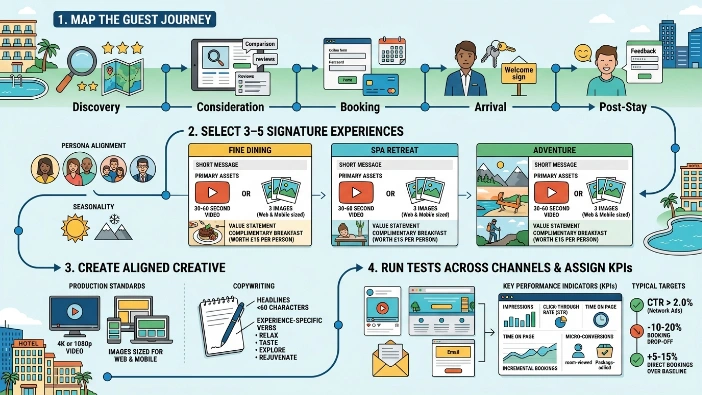
Creative production standards include 4K or 1080p video, images sized for web and mobile, and headlines under 60 characters. Copy uses experience-specific verbs: relax, taste, explore, rejuvenate. Campaigns assign KPIs: impressions, click-through rate (CTR), time on page, micro-conversions (room-viewed, package-added), and incremental bookings. Typical KPI targets: CTR > 2.0% on network ads, reduction in booking drop-off by 10–20%, and an increase in direct bookings by 5–15% over the campaign baseline.
Which channels best showcase hotel experiences?
Channels that combine visual format and high-intent placement work best: paid social, programmatic display with rich media, and direct-site placements. Paid social platforms deliver short-form video and carousel ads for audience segmentation by interest. Programmatic display supports dynamic creative that swaps imagery based on persona. Search-ad extensions and hotel metasearch display experience snippets when users search for local stays. Direct-site placements, including homepage banners and dedicated experience landing pages, retain control over messaging and reduce booking friction.
Instagram reels and Facebook video for lifestyle messaging; programmatic rich media for retargeting; Google Display for broad awareness; site homepage banners for active shoppers. All channels use consistent creative and a single experience descriptor to avoid message mismatch.
What creative elements drive interest in experience-focused ads?
High-resolution imagery, 20–60 second experience videos, concise headlines, and clear experience descriptors drive interest. Imagery must show the experience in context: people using the amenity, daylight and night scenes, and local points of interest within 1–5 miles. Videos should open with the experience within the first 3 seconds and include captions. Headlines must state the experience and the benefit within 8–12 words. Descriptors include duration, inclusions, and price or value (for example: “90-minute couples massage, includes herbal wrap, £85”).
Metadata and alt text use semantic phrases: “hotel spa London couples treatment,” “rooftop dinner with Thames view,” “family suite with modular beds.” Structured data on landing pages uses schema types such as Offer, Event, and LocalBusiness to help search engines identify the experience. Each asset links to a single experience landing page to reduce friction.
How do hotels personalise experience ads for audience segments?
Hotels segment by travel intent, stay purpose, and demographic signals, and then assign tailored creative and offers to each segment. Segmentation examples: leisure couples, business travellers, families with children, and domestic staycation seekers. Signals come from first-party data (past bookings, email engagement), onsite behaviour (amenity pages viewed), and contextual data (search queries, time of year). Tailored content includes different hero images, benefit lines, and micro-offers such as late checkout or complimentary breakfast.
For families, show connecting rooms and children’s activities; for business guests, show workspaces and express check-in. Use frequency caps and recency windows: show experience ads to users who visited an experience page within 7 days and retarget them for up to 30 days with decreasing ad weight. Measure lift by segment: track segment-specific CTR, micro-conversion rate, and booking conversion rate.
How do hotels measure the impact of experience-focused campaigns?
Hotels use multi-touch attribution, incrementality tests, and a mix of micro- and macro-KPIs to measure impact. Measurement includes on-ad metrics (impressions, CTR), site metrics (time on experience page, add-to-cart or package added), and booking metrics (conversion rate, average daily rate (ADR), revenue per available room (RevPAR)). Use A/B or holdout tests to measure incremental bookings. Run lift tests where a control group sees price-only messaging and a test group sees experience messaging. Compare booking lift over a 30–60 day window.
Attribution models include time-decay and data-driven models for channel contribution. KPI targets differ by hotel size: small properties track 5–10 incremental bookings per month, larger properties track 100+ bookings or a 5–15% increase in direct booking rate. Tag UTM parameters and conversion events consistently to ensure clean reporting.
What components form an experience landing page that converts?
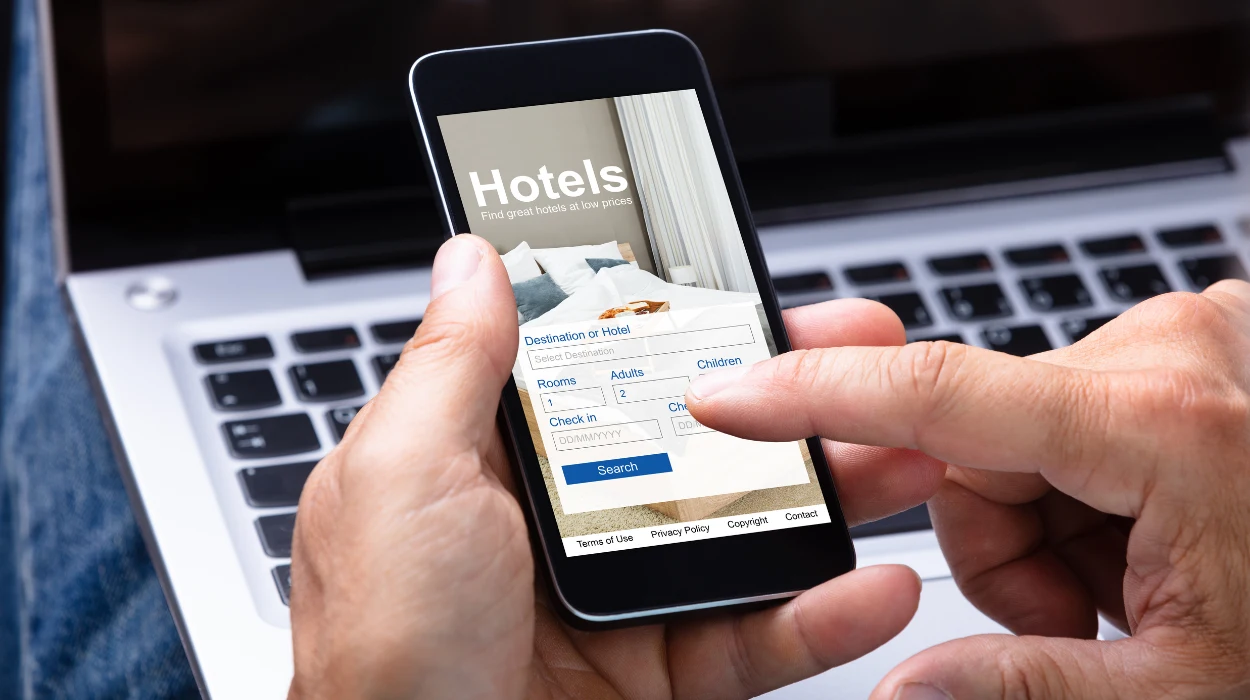
A single-purpose landing page with one hero experience, clear inclusions, pricing, and a direct booking module converts best. Landing pages include: hero media (video or 3 images), 40–80 word value statement, bullet list of inclusions (duration, number of guests, food/drink details), transparent pricing, trust signals (reviews count, awards), FAQ section, and a booking widget pre-filled with the experience code. Use schema for Offer and Product to expose price and availability to search engines. Load time under 2.5 seconds and mobile-first layout improve conversion rates.
Keep navigation minimal to prevent distraction. Present add-on options as checkboxes that update price in real time. Display availability calendars and cancellation terms clearly. Show sample itinerary to set expectations: check-in 15:00, rooftop dinner 19:00–21:00, express checkout 11:00.
How do hotels align pricing and packaging for experience campaigns?
Hotels price by perceived value and cost structure, bundle amenities to increase perceived savings, and test price points in market. Direct cost per experience, desired margin, and competitor price checks within 3–10 miles. Create base, plus, and premium packages that scale inclusion: base includes experience only; plus adds meal or drink; premium includes extras such as transfers. Use percentage savings messaging when bundling (for example: “Save 18% vs a la carte”).
A/B test price points for 7–14 days. Track conversion elasticity by price band and adjust inventory allocation to packages with 10–20% higher conversion. Implement limited-time availability to manage occupancy during peak dates.
Explore More Expert Insights:
How Hotels Increase Reservations Using Banner Ads
What legal and operational considerations affect experience ads?
Hotels must disclose terms, ensure capacity alignment, and confirm regulatory compliance for services such as alcohol and spa treatments. Include clear booking terms: cancellation policy, age restrictions, refund windows, and service disclaimers. Confirm staff capacity and vendor availability before promoting time-limited experiences. Ensure licensing for alcohol and health treatments is current and shown where required. Store booking and consent records for amenities subject to health or legal rules, such as medical spa services.
Collect minimal personal data required for booking and follow UK data-protection rules for storing contact and payment details. Use HTTPS and PCI-compliant booking systems for any payment interactions.
Explore More Expert Insights:
How Travel Brands Inspire Bookings Using Destination Banner Ads
How Financial Institutions Guide Users Using Educational Campaign Ads
What benefits do experience-focused campaigns deliver to hotels?
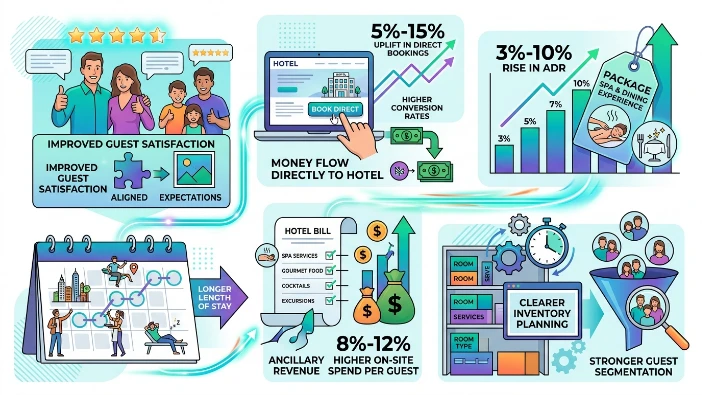
Experience campaigns increase direct bookings, raise ADR, and improve guest satisfaction scores by aligning expectations with delivered services. Direct benefits include higher conversion rates for packaged stays, increased ancillary revenue from add-ons, and longer length of stay where experiences extend guest activities. Financial outcomes: 5–15% uplift in direct bookings, 3–10% rise in ADR for package buyers, and 8–12% higher onsite spend per guest in cases where experiences include dining or activities. Operational benefits include clearer inventory planning and stronger guest segmentation for future campaigns.
What real-world use cases show success with experience campaigns?
Use case examples: rooftop dining packages for city hotels, spa staycations for suburban hotels, and family adventure bundles for coastal properties. Rooftop dining packages bundle room, two-course dinner, and late checkout. Spa staycations package an overnight stay with a 60-minute treatment and breakfast for two. Family bundles include connecting rooms, breakfast credits, and a local attraction voucher. These packages convert higher than room-only offers when promoted with targeted creative and clear inclusions.
Experience-focused campaigns present concrete guest activities and clear inclusions across tailored channels, creative assets, and landing pages. Hotels that map guest journeys, segment audiences, and measure incrementality obtain measurable uplifts in direct bookings and ancillary revenue.
For decision-stage implementations like:
Hotel Experience Ads That Turn Stay Interest Into Direct Reservations