

Remarketing campaigns convert returning visitors into paying customers by reconnecting users with previously viewed products, reinforcing purchase intent, and delivering personalized advertising messages across digital channels. These campaigns target high-intent audiences and guide them toward completed transactions through structured conversion-focused engagement strategies.
Remarketing campaigns are digital advertising systems designed to re-engage users after an earlier website interaction. These users already demonstrated measurable interest through actions such as viewing products, searching categories, or abandoning checkout sessions.
E-commerce platforms use tracking technologies including audience pixels, browser cookies, and session identifiers to collect behavioral data. This information allows platforms to deliver personalized advertisements after users leave the website.
Returning visitors represent higher-value audiences because they already recognize the platform, products, or pricing structure. Their conversion probability exceeds first-time visitors due to existing familiarity with the shopping environment.
For readers exploring foundational awareness-stage advertising strategies, read:
How E-commerce Businesses Improve ROAS Using Display Banner Campaigns.
For readers researching customer decision influence and behavioral targeting, explore:
How E-commerce Platforms Influence Buying Decisions Using Remarketing Ads
Why do returning visitors have higher conversion potential in e-commerce?
Returning visitors have higher conversion potential because they already completed product research, interacted with the platform, and demonstrated commercial intent through prior browsing behavior. Their familiarity with products, pricing, and website navigation reduces decision friction during the final purchase stage.
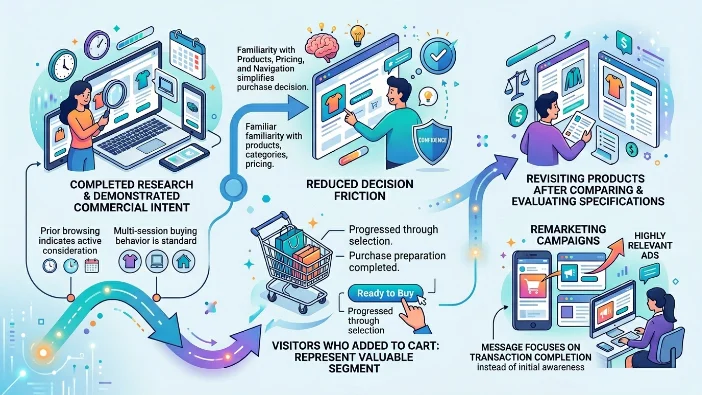
Most e-commerce customers do not purchase during their first session. UK online retail data consistently shows multi-session buying behavior across fashion, electronics, furniture, and home improvement sectors.
Returning users often revisit products after comparing alternatives, reviewing pricing, or evaluating product specifications. This repeated interaction indicates active consideration rather than casual browsing.
Visitors who previously added items to carts represent particularly valuable segments. These users already progressed through product selection and purchase preparation stages.
Remarketing campaigns target these audiences with highly relevant advertisements. The messaging focuses on transaction completion instead of initial awareness generation.
Higher familiarity improves user confidence during the purchasing process. Customers already understand product categories, delivery options, and pricing structures before returning to finalize purchases.
How do remarketing campaigns guide users toward completed purchases?
Remarketing campaigns guide users toward completed purchases by using behavior-based targeting, personalized product visibility, and repeated advertising exposure. These campaigns reduce purchase interruption and maintain product relevance throughout the customer’s decision-making journey across digital platforms and devices.
The conversion process begins when a visitor leaves an e-commerce platform without purchasing. Remarketing systems then activate audience tracking workflows connected to advertising networks.
Users receive advertisements related to products they previously viewed or interacted with. These ads appear across websites, mobile applications, video platforms, and search engines.
Dynamic remarketing strengthens this process by displaying exact products users viewed during previous sessions. A customer browsing leather handbags later sees advertisements featuring the same handbags with updated pricing or stock information.
Remarketing campaigns also support urgency-focused messaging. Advertisements frequently include limited inventory notifications, promotional deadlines, or delivery incentives designed to encourage transaction completion.
Cross-device targeting improves continuity. A visitor browsing products on mobile devices later encounters remarketing ads on desktop browsers or connected applications. This continuous exposure maintains purchase intent across fragmented browsing sessions.
How do cart abandonment campaigns recover lost sales?
Cart abandonment campaigns recover lost sales by reconnecting with users who placed products into carts but exited before completing payment. These campaigns remind customers about unfinished purchases and encourage checkout completion through highly targeted advertising messages.
Cart abandonment is a major challenge in e-commerce conversion systems. Many users leave checkout pages due to price comparisons, delivery concerns, or interrupted browsing sessions.
Remarketing campaigns reactivate these users through personalized ads showing abandoned products. The advertisements commonly highlight product availability, pricing consistency, or limited-time purchase incentives.
In UK e-commerce sectors such as electronics and fashion retail, cart abandonment campaigns frequently generate stronger conversion rates than standard display advertising because they target highly engaged audiences.
How does dynamic remarketing improve conversion efficiency?
Dynamic remarketing improves conversion efficiency by automatically displaying personalized advertisements featuring products users previously viewed. This increases advertising relevance and strengthens the connection between browsing behavior and final purchase action.
Dynamic systems integrate directly with e-commerce inventory databases. Product information updates automatically inside advertisements.
A customer viewing black trainers receives ads featuring the same trainers rather than unrelated footwear products. This direct alignment improves engagement quality and reduces advertising waste.
Dynamic remarketing is widely used in furniture retail, consumer electronics, beauty products, and travel booking sectors where users compare multiple products before purchasing.
How does audience segmentation support purchase completion?
Audience segmentation supports purchase completion by grouping users according to browsing activity, transaction intent, and engagement depth. Segmented campaigns deliver more relevant advertising experiences and improve communication precision during the conversion process.
Segmentation allows platforms to customize campaigns for different behavioral groups.
A returning visitor who abandoned checkout receives different messaging than a visitor who only viewed category pages. High-intent users typically receive stronger purchase-focused messaging and higher ad frequency.
Time-based segmentation also improves performance. Users inactive for 48 hours receive different remarketing sequences compared to users inactive for 30 days.
This behavioral precision improves click-through rates and strengthens transaction completion efficiency.
How do personalisation and urgency influence buying decisions?
Personalization and urgency influence buying decisions by increasing advertising relevance and reducing purchase delays. Personalized messaging aligns with customer interests, while urgency-focused campaigns encourage faster decision-making through time-sensitive promotional triggers and inventory visibility strategies.
Personalization uses browsing data to adapt advertising content. Ads display products, categories, and pricing connected to previous user behavior.
A customer researching gaming laptops receives laptop-related ads instead of unrelated electronics promotions. This relevance improves engagement consistency and purchase intent retention.
Urgency-based messaging accelerates decision-making. Common strategies include countdown offers, low-stock notifications, and limited delivery windows.
In UK retail campaigns, urgency messaging is frequently combined with seasonal promotions such as holiday sales, end-of-season clearances, and delivery deadline campaigns.
The combination of personalization and urgency increases conversion efficiency because users receive highly relevant advertisements during active decision periods.
Why do multi-channel remarketing campaigns perform better in modern e-commerce?
Multi-channel remarketing campaigns perform better because they maintain customer visibility across websites, search engines, mobile applications, and social platforms. This continuous exposure improves conversion continuity and strengthens customer engagement throughout fragmented digital shopping journeys.
Modern customers interact with multiple digital platforms before purchasing. A shopper often begins browsing on mobile devices, compares products through search engines, and finalizes purchases later on desktop browsers.
Multi-channel remarketing ensures visibility throughout this process. Products remain visible regardless of platform or browsing location.
Search remarketing targets users during active product searches. Display remarketing reinforces visibility across external websites. Social remarketing integrates advertisements into social platform browsing sessions.
This coordinated exposure increases conversion probability because customers repeatedly encounter relevant products during active research stages.
UK e-commerce platforms frequently combine display advertising, search campaigns, and social remarketing to maintain customer engagement across all major digital touch points.
Explore More Expert Insights:
How Retailers Convert Cart Abandoners Into Completed Sales Using Urgency-Based Banner Ads
How E-commerce Businesses Drive Instant Purchase Decisions Using High-Intent Display Retargeting
How do e-commerce platforms measure success in remarketing conversion campaigns?
E-commerce platforms measure remarketing campaign success through conversion rates, return on ad spend, cart recovery metrics, and customer acquisition efficiency. These performance indicators connect advertising activity directly to completed transactions and measurable commercial outcomes.
Conversion rate measures the percentage of users who complete purchases after interacting with remarketing ads. Higher conversion rates indicate stronger campaign effectiveness.
Return on ad spend evaluates revenue generated compared to advertising cost. This metric determines profitability and campaign efficiency.
Cart recovery rate tracks the number of abandoned checkout sessions converted into completed purchases through remarketing activities.
Customer acquisition cost measures spending required to convert visitors into customers. Efficient remarketing campaigns reduce this cost because they focus on previously engaged audiences.
Advanced analytics systems also monitor engagement frequency, cross-device interactions, and attribution pathways. These insights help platforms optimize advertising delivery and improve conversion precision.
Why are remarketing campaigns essential for competitive UK e-commerce growth?
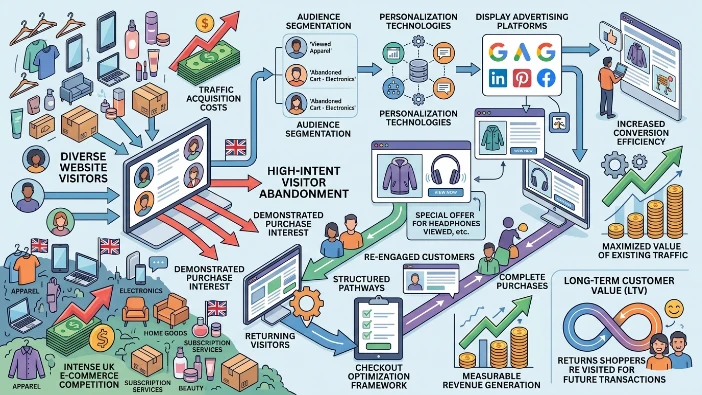
Remarketing campaigns are essential for competitive UK e-commerce growth because they improve customer retention, increase conversion efficiency, and maximize the value of existing website traffic. These campaigns create structured pathways that transform high-intent visitors into measurable revenue-generating customers.
The UK e-commerce market contains intense competition across retail categories including apparel, electronics, home goods, beauty products, and subscription services.
Traffic acquisition costs continue increasing across digital advertising platforms. Converting existing visitors therefore becomes a critical performance priority.
Remarketing campaigns improve revenue efficiency by targeting audiences with demonstrated purchase interest instead of relying only on new customer acquisition.
These campaigns also support long-term customer value. Returning visitors who complete purchases are more likely to revisit platforms for future transactions.
Modern e-commerce growth strategies integrate remarketing into broader conversion systems that include display advertising, audience segmentation, personalization technologies, and checkout optimisation frameworks.



