

Seasonal shopping periods increase online traffic, product searches, and purchase intent across the United Kingdom. Banner advertising helps e-commerce companies capture this demand by promoting timely offers, highlighting seasonal products, and guiding visitors toward product pages during high-conversion shopping periods.
Seasonal banner ads are digital display advertisements designed for specific shopping periods, holidays, weather changes, or annual events. These ads promote relevant products, limited-time offers, and seasonal collections to increase visibility, website traffic, and online purchases during peak consumer demand cycles.
E-commerce companies use seasonal banner ads to match customer buying behaviour during key retail periods. Seasonal demand increases at predictable times of the year. Examples include Christmas shopping in December, back-to-school campaigns in August, and summer product promotions between June and July.
A banner ad contains visual content, promotional messaging, and a clickable destination. These ads appear on websites, mobile applications, search partner platforms, and social media networks. Seasonal banner campaigns focus on timing, relevance, and product visibility.
In the United Kingdom, seasonal campaigns often align with Black Friday, Boxing Day, Valentine’s Day, Easter, and summer clearance periods. Consumer purchasing activity rises significantly during these events because shoppers actively search for discounts, gifts, and event-related products.
Seasonal banners also support awareness for new product categories. Winter clothing promotions, garden furniture campaigns, and holiday decoration launches are common examples of seasonal merchandising supported by banner advertising.
Readers exploring product visibility strategies can also read:
How Online Stores Improve Product Awareness Using Targeted Banner Campaigns
How do banner ads increase seasonal e-commerce sales?
Banner ads increase seasonal e-commerce sales by attracting targeted shoppers, improving product visibility, reinforcing promotional messaging, and driving users toward high-conversion landing pages. Consistent seasonal exposure increases purchase frequency and improves campaign-driven revenue during limited shopping periods.
Seasonal campaigns work because customer demand already exists. Banner ads place products in front of shoppers during active buying periods. This timing improves engagement rates and purchase intent.
Banner ads also increase repeated visibility. A customer who views a winter jacket on one website often sees the same promotion again on another platform. Repetition improves product recall and strengthens purchase consideration.
Seasonal promotions frequently include urgency-based messaging. Examples include “48-Hour Sale,” “Christmas Delivery Ends Friday,” or “Summer Clearance Ends Tonight.” These messages encourage faster decision-making during short campaign windows.
How does timing affect seasonal banner performance?
Timing directly impacts campaign effectiveness. E-commerce companies launch seasonal campaigns before demand peaks. Christmas campaigns often begin in October. Back-to-school promotions typically start in July.
Early campaign launches help advertisers capture users during the research phase. Customers compare prices, review products, and create shopping lists before making purchases. Banner exposure during this phase increases future conversion probability.
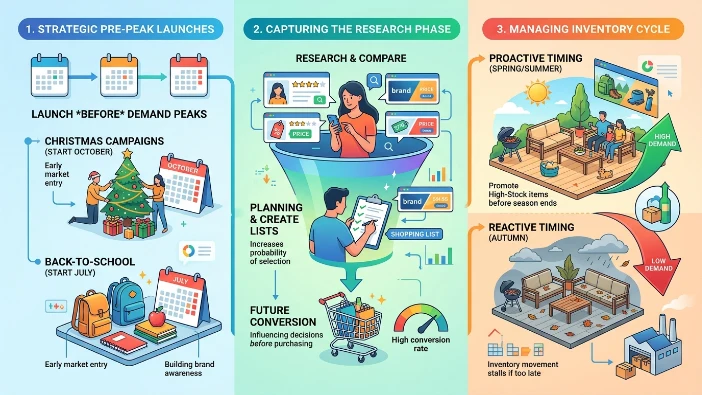
Campaign timing also supports inventory movement. Retailers promote high-stock seasonal products before demand declines. For example, outdoor furniture ads appear heavily during spring and early summer rather than autumn.
How does audience targeting improve seasonal results?
Targeting allows advertisers to show banners to users with relevant shopping behaviour. Platforms use browsing activity, purchase history, location data, and product interests to improve ad relevance.
A customer searching for travel luggage often receives summer holiday advertisements. A visitor browsing toy categories frequently receives Christmas gift banners during November and December.
Targeted advertising improves click-through rates because the messaging matches user intent.
What types of seasonal banner ads do e-commerce companies use?
E-commerce companies use promotional banners, product-focused banners, retargeting banners, holiday campaign banners, countdown banners, and category-specific display ads. Each format supports different seasonal marketing objectives, including awareness, engagement, product discovery, and purchase conversion during high-demand periods.
Promotional banners focus on discounts and limited-time sales. These ads highlight percentage reductions, shipping offers, or bundle deals.
Product-focused banners display seasonal inventory. Examples include winter boots, school supplies, barbecue equipment, and holiday decorations. These banners prioritize product imagery and seasonal relevance.
Retargeting banners reconnect with previous visitors. A user who viewed seasonal products without purchasing later sees related banner advertisements across other websites.
Holiday campaign banners use event-specific visuals and messaging. Valentine’s Day campaigns often include red colour themes and gift-focused messaging. Halloween campaigns frequently use dark visuals and themed product collections.
Countdown banners emphasize urgency. These ads include time-sensitive messaging such as delivery deadlines or expiring promotions.
Category-specific banners promote broader shopping sections instead of individual products. Examples include “Summer Essentials,” “Festive Home Décor,” or “Winter Fashion Collection.”
Businesses interested in conversion-focused advertising strategies can continue reading here:
How Online Stores Maximize Checkout Completion Using Conversion-Focused Banner Retargeting Ads
What elements make seasonal banner ads effective?
Effective seasonal banner ads combine clear messaging, relevant visuals, strong timing, mobile-friendly design, consistent branding, and direct calls to action. High-performing banners communicate the offer immediately and guide users toward a specific shopping action within seconds of viewing.
Visual relevance is essential in seasonal campaigns. Winter campaigns often use darker colours, snow imagery, or holiday themes. Summer campaigns typically use brighter visuals and outdoor settings.
Headline clarity also affects performance. Short messages perform better because users process banner content quickly. Clear examples include “Winter Sale 40% Off” or “Free Christmas Delivery.”
Landing page consistency improves user experience. When a user clicks a seasonal banner, the destination page must match the advertised offer. Consistent visuals and messaging reduce confusion and improve conversion rates.
Why does mobile optimization matter?
More than half of UK e-commerce traffic comes from mobile devices. Seasonal shoppers frequently browse products using smartphones during travel, work breaks, or evening browsing sessions.
Mobile-optimized banners use readable fonts, compressed images, and fast-loading designs. Poor mobile performance reduces engagement and increases bounce rates.
Responsive design also ensures banners display correctly across screen sizes. A banner designed for desktop users alone loses visibility on smaller devices.
Why do visuals influence seasonal engagement?
Visuals create immediate emotional association with seasonal events. Holiday imagery, weather-related scenes, and event-specific colours help users recognize campaign relevance instantly.
Product imagery also affects click behaviour. Lifestyle-focused visuals showing products in use often perform better than isolated catalogue-style images during seasonal campaigns.
For example, outdoor dining furniture displayed in a summer garden setting creates stronger contextual relevance than plain product photography.
How do seasonal banner campaigns support customer behaviour?
Seasonal banner campaigns support customer behaviour by aligning promotions with active shopping intent, event-based purchasing patterns, and recurring annual buying habits. Timely advertising reinforces product relevance and helps shoppers discover offers during high-demand retail periods across digital platforms.
Consumers follow predictable seasonal purchasing cycles. Families purchase school products before September. Gift shopping increases before Christmas. Fitness product interest rises in January.
Banner advertising aligns with these behavioural patterns. Seasonal campaigns appear when consumers actively search for related products.
Repeated banner exposure also supports decision-making. Customers rarely purchase after one interaction. Multiple ad impressions increase familiarity and trust with the advertised product category.
How do banner ads influence repeat visitors?
Repeat visitors represent high-value traffic because they already recognize the website or product category. Seasonal banners remind these users about pending purchases, updated promotions, or expiring discounts.
A shopper researching winter coats across several days often returns after seeing additional promotional banners. This repeated exposure increases conversion probability.
Retargeting campaigns also personalize product recommendations based on browsing behaviour. A user viewing Christmas decorations receives banners featuring similar products during later browsing sessions.
How do seasonal campaigns affect impulse purchases?
Seasonal promotions create urgency through limited availability and time-sensitive messaging. Short campaign windows encourage faster purchasing behaviour.
Examples include flash sales, same-day discounts, and event-ending reminders. These tactics reduce delayed purchasing decisions and increase checkout activity during promotional periods.
Explore More Expert Insights:
How E-commerce Businesses Improve ROAS Using Display Banner Campaigns
How E-commerce Brands Drive Product Page Traffic with Banner Ads
What industries benefit most from seasonal banner advertising?
Fashion, electronics, beauty, home décor, toys, sports equipment, food delivery, and travel-related e-commerce sectors benefit strongly from seasonal banner advertising. These industries experience predictable seasonal demand increases that align directly with consumer shopping patterns and event-driven purchasing behaviour.
Fashion retailers increase advertising activity during winter collection launches, summer sales, and holiday shopping periods. Electronics campaigns rise during Black Friday and Boxing Day events.
Toy retailers rely heavily on Christmas advertising because demand peaks during November and December. Home décor companies promote seasonal decoration categories linked to holidays and weather changes.
Beauty brands increase banner campaigns before Valentine’s Day, Mother’s Day, and wedding seasons. Sports and fitness categories expand advertising activity during January fitness periods and summer outdoor activity seasons.
Travel-related e-commerce platforms also use seasonal display campaigns for holiday bookings, summer travel packages, and school vacation periods.
Each industry adjusts visuals, messaging, and timing according to customer purchasing behaviour.
Why are seasonal banner ads important for long-term e-commerce growth?
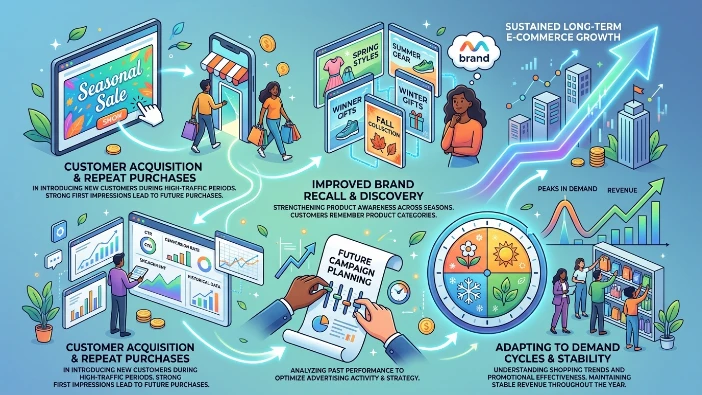
Seasonal banner ads support long-term e-commerce growth by increasing customer acquisition, improving brand recall, expanding product discovery, and strengthening recurring purchase behaviour. Consistent seasonal advertising also helps businesses adapt to annual demand cycles and maintain stable revenue throughout the year.
Seasonal campaigns introduce new customers to product categories during high-traffic periods. Strong first impressions increase the likelihood of repeat purchases after the seasonal event ends.
Banner advertising also strengthens product awareness across broader audiences. Customers repeatedly exposed to seasonal campaigns remember product categories more effectively during future shopping periods.
Historical campaign data improves future strategy planning. E-commerce companies analyze click-through rates, conversion performance, and audience engagement from previous seasonal campaigns to optimize future advertising activity.
Long-term growth also depends on adapting to changing customer behaviour. Seasonal banner campaigns provide measurable insights into product demand, shopping trends, and promotional effectiveness across different times of the year.
Educational research into targeted display advertising continues in: [Insert Link to MOFU Article]
Conversion-focused strategies connected to seasonal retargeting are explained in: [Insert Link to BOFU Article]



