

Dynamic display ads are automated banner advertisements that change content based on user behavior, product interactions, and browsing history. They use structured data feeds to deliver personalized visuals that match user intent and gradually move prospects toward purchase readiness.
Dynamic display ads operate within programmatic advertising systems. These systems connect user data with product catalogs. Each ad impression is generated using real-time inputs such as viewed products, categories, and session activity.
In e-commerce environments, dynamic ads differ from static banners. Static ads show the same message to all users. Dynamic ads adjust content per individual session history.
For example, a user viewing running shoes sees banners featuring the same or related footwear. Another user browsing jackets sees apparel-based creatives. This behavior-based rendering increases relevance and maintains continuity across sessions.
Dynamic display ads function at the consideration stage of the funnel. They reinforce product awareness and strengthen intent before direct purchase actions.
Read & Explore:
How Online Retailers Recover Abandoned Carts Using Banner Advertising
Why is lead warming important in e-commerce conversion funnels?
Lead warming is the process of increasing user readiness to purchase by delivering repeated, relevant interactions. It strengthens intent signals between initial product discovery and final conversion, reducing hesitation and improving conversion probability in structured e-commerce funnel systems.
Lead warming exists between awareness and decision stages. Users at this stage have interacted with products but have not committed to purchase.
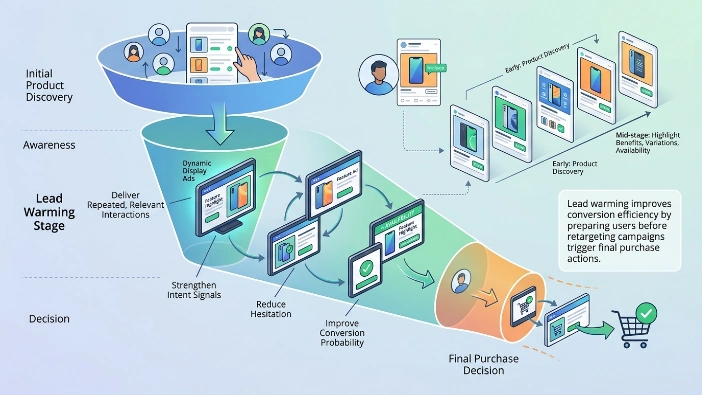
Without structured engagement, these users lose interest or shift to competitors. Dynamic display ads maintain consistent exposure, keeping products visible across multiple sessions.
Lead warming also aligns messaging with user intent progression. Early interactions focus on product discovery. Mid-stage interactions highlight benefits, variations, or availability.
For example, a user exploring smartphones receives ads showing different models, features, and pricing tiers over time. This structured exposure builds familiarity and reduces uncertainty.
Lead warming improves conversion efficiency by preparing users before retargeting campaigns trigger final purchase actions.
How do dynamic display ads warm up leads effectively?
Dynamic display ads warm up leads by delivering sequential, personalized messages based on user interaction depth. They reinforce product familiarity, highlight relevant alternatives, and maintain visibility across multiple touchpoints, gradually increasing engagement levels and preparing users for conversion-focused interactions.
Dynamic ad systems use sequential messaging logic. This means ads change over time based on user behavior progression.
Initial ads focus on products viewed. Mid-stage ads introduce related categories or variations. Later-stage ads emphasize urgency signals such as limited availability or price consistency.
For example, a user viewing a laptop first sees ads showing the same product. Later, ads display similar laptops with different specifications. Final-stage ads may highlight stock levels or pricing stability.
This step-by-step exposure increases cognitive familiarity. Users recognize products faster and process information with reduced effort.
Dynamic display ads also maintain cross-platform visibility. Users encounter ads while browsing news sites, blogs, or mobile applications, extending engagement beyond the original website session.
What data components power dynamic display advertising systems?
Dynamic display advertising systems rely on structured data components including product feeds, user behavior logs, device identifiers, session timestamps, and audience segmentation rules. These components work together to generate personalized ad creatives aligned with individual user interaction patterns.
Product feeds form the core data source. These feeds include product titles, images, pricing, and availability. They update regularly to ensure accuracy.
User behavior logs track actions such as page views, clicks, and time spent. These logs define interaction depth and intent strength.
Device identifiers link user sessions across devices. This allows consistent ad delivery on mobile, desktop, and tablet platforms.
Audience segmentation rules classify users into groups. Examples include repeat visitors, category explorers, and high-intent viewers.
For instance, a repeat visitor browsing electronics multiple times is segmented differently from a first-time visitor viewing a single product.
These components integrate to create real-time, behavior-driven ad experiences.
How does audience segmentation improve lead warming outcomes?
Audience segmentation improves lead warming outcomes by grouping users based on behavior, intent level, and interaction frequency. It ensures that each user receives relevant ad content, increasing engagement accuracy and reducing wasted impressions in dynamic display advertising systems.
Segmentation divides users into structured categories. These categories reflect behavioral patterns rather than demographic assumptions.
High-intent users include those who view multiple products or revisit pages. Mid-intent users explore categories without deep engagement. Low-intent users show brief interactions.
Dynamic ads adjust messaging per segment. High-intent users see detailed product-focused creatives. Mid-intent users receive broader category-based ads. Low-intent users are shown awareness-level visuals.
For example, a user comparing multiple televisions receives ads showing specifications and price ranges. Another user browsing casually sees general electronics banners.
Segmentation increases efficiency by matching content to user readiness levels. This alignment improves engagement rates and reduces irrelevant impressions.
What role does creative variation play in dynamic ads?
Creative variation in dynamic ads ensures that users see multiple ad formats, visuals, and messages over time. It prevents repetition fatigue, maintains engagement levels, and supports progressive lead warming by aligning creatives with evolving user intent signals.
Creative variation includes changes in layout, image selection, messaging, and call-to-action elements. These variations are generated automatically using predefined templates.
Repetition of identical ads reduces engagement. Users ignore repeated visuals after multiple exposures. Variation maintains attention and increases interaction probability.
Dynamic systems rotate creatives based on performance data. High-performing visuals are prioritized, while low-performing ones are replaced.
For example, one ad may highlight product imagery. Another focuses on pricing. A third emphasizes product features.
This rotation ensures continuous engagement without overwhelming users with identical messages.
How do frequency and timing impact lead warming performance?
Frequency and timing control how often and when dynamic ads are shown to users. Balanced exposure ensures consistent engagement without causing fatigue, while time-based delivery aligns ads with user activity patterns, improving visibility and interaction rates.
Frequency defines the number of times a user sees an ad within a specific period. Excessive frequency reduces effectiveness due to saturation. Limited frequency reduces visibility.
Optimal frequency maintains repeated exposure across different sessions. This reinforces memory without creating negative perception.
Timing aligns ad delivery with user activity cycles. Ads shown during active browsing periods achieve higher engagement.
For example, evening hours often show increased browsing activity in the United Kingdom. Delivering ads during these periods increases visibility.
Time decay strategies reduce ad intensity over time. This ensures resources focus on recent interactions with higher intent probability.
What benefits do dynamic display ads provide for e-commerce businesses?
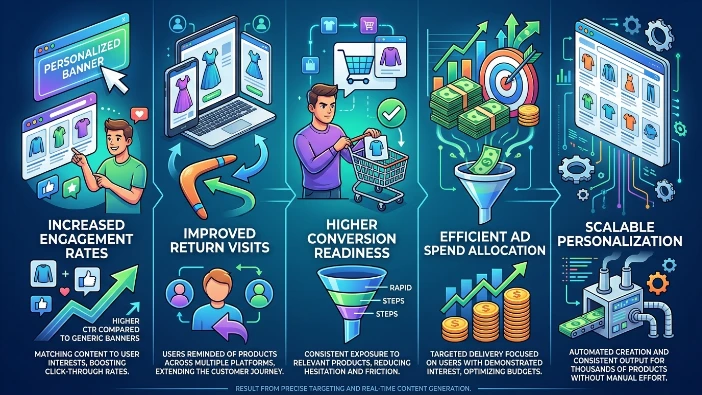
Dynamic display ads provide measurable benefits including increased engagement rates, improved return visits, higher conversion readiness, efficient ad spend allocation, and scalable personalization. These outcomes result from precise targeting, real-time content generation, and structured behavioral data utilization.
Dynamic ads improve engagement by matching content to user interests. This increases click-through rates compared to generic banners.
Return visits increase because users are reminded of products across multiple platforms. This extends the customer journey beyond a single session.
Conversion readiness improves as users receive consistent exposure to relevant products. This reduces hesitation at later funnel stages.
Ad spend efficiency increases due to targeted delivery. Resources focus on users with demonstrated interest rather than broad audiences.
Scalability allows businesses to manage thousands of products without manual ad creation. Automation ensures consistent output across large catalogs.
Explore More Expert Insights:
How E-commerce Brands Build Purchase Intent Using Banner Retargeting Ads
How Online Stores Nurture Shoppers Using Product-Focused Banner Campaigns
How are dynamic display ads used across different e-commerce scenarios?
Dynamic display ads are used across multiple e-commerce scenarios including product discovery reinforcement, category exploration, seasonal campaigns, and multi-session engagement. Each use case applies personalized ad delivery to maintain relevance and guide users toward higher intent levels.
In product discovery reinforcement, users see ads featuring items they previously viewed. This maintains product awareness.
In category exploration, users receive ads showcasing related products within the same category. This expands consideration.
In seasonal campaigns, dynamic ads highlight relevant products during specific periods such as winter apparel or holiday items.
In multi-session engagement, ads reconnect users across different browsing sessions, maintaining continuity in the customer journey.
For example, a user browsing home furniture receives ads showing sofas, tables, and related decor items over multiple days. This structured exposure builds familiarity and increases purchase readiness.
How do dynamic ads connect TOFU and BOFU strategies in e-commerce?
Dynamic ads act as a bridge between awareness-stage engagement and conversion-stage retargeting. They transform initial interest into structured intent signals, preparing users for high-intent campaigns that focus on immediate purchase decisions and transaction completion.
At the top of the funnel, users interact with products without strong purchase intent. Dynamic ads reinforce these interactions through repeated exposure.
At the bottom of the funnel, retargeting campaigns focus on users ready to purchase. These campaigns rely on strong intent signals built during the warming stage.
Dynamic display ads ensure continuity between these stages. They maintain engagement, refine intent, and prepare users for conversion-focused messaging.
This connection improves overall funnel efficiency. Users enter retargeting campaigns with higher readiness, increasing conversion rates.
Read & Explore:
How E-commerce Businesses Drive Instant Purchase Decisions Using High-Intent Display Retargeting



