
Purchase intent in e-commerce retargeting banner ads represents the measurable likelihood that a user will complete a purchase after repeated exposure to targeted banner advertisements based on previous browsing behaviour, product interaction, and engagement signals collected across digital shopping environments.
Purchase intent defines how close a user is to making a buying decision. In e-commerce retargeting systems, this intent forms through repeated exposure to relevant products across different websites and platforms.
Banner retargeting ads do not create demand instantly. They reinforce existing behavioural signals that indicate interest. These signals include product views, add-to-cart actions, and category browsing.
How purchase intent develops in digital environments
Purchase intent develops in stages. The first stage involves awareness of a product. The second stage involves repeated exposure. The third stage involves decision readiness.
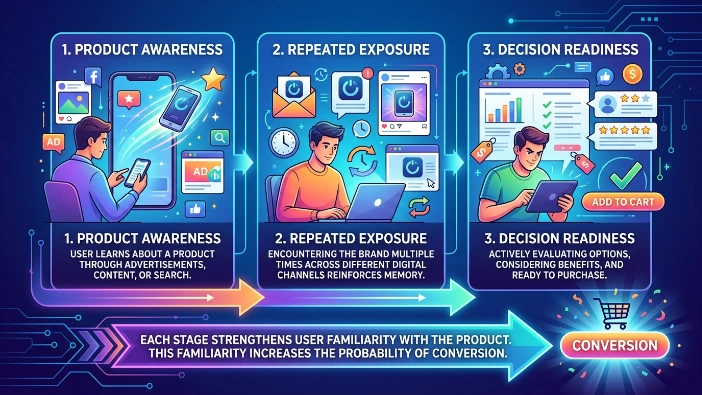
Each stage strengthens user familiarity with the product. This familiarity increases the probability of conversion.
Role of behavioural signals in intent formation
Behavioural signals determine intent strength. High-intent users view product pages multiple times. Medium-intent users explore categories. Low-intent users interact briefly without returning.
Retargeting systems classify these behaviours into structured intent levels for advertising delivery.
How do banner retargeting ads collect and use user behavior data?
Banner retargeting ads collect user behaviour data through website interactions, product views, click events, and session duration, then process this data into audience segments that determine ad placement, relevance scoring, and personalised ad delivery across display networks systems in real-time.
Data collection occurs through embedded tracking technologies. These technologies record user interactions across e-commerce platforms and external websites.
The collected data forms structured user profiles. These profiles guide retargeting decisions in advertising systems.
Types of behavioural data collected
User behaviour data includes page visits, product clicks, cart activity, and scroll depth. Each interaction signals interest level.
For example, repeated visits to a product page indicate higher purchase intent than a single visit.
How data is processed into ad delivery decisions
Retargeting systems convert raw behavioural data into actionable segments. These segments define ad frequency, creative type, and product relevance.
High-engagement users receive more specific product banners. Low-engagement users receive broader category-based banners.
What role do cookies and tracking pixels play in retargeting systems?
Cookies and tracking pixels enable retargeting systems to identify returning users, record browsing behaviour, and connect interactions across multiple websites, allowing banner ads to display relevant products based on previous engagement and interest signals stored in digital profiles secure environments.
Cookies store user identifiers in browsers. Tracking pixels send interaction data to advertising platforms. Together, they build continuous user profiles.
These systems ensure consistency across devices and websites.
How cookies track user journeys
Cookies record visited pages, clicked products, and session duration. This creates a timeline of user activity.
For example, a user browsing sports shoes will later see related banner ads on unrelated websites.
Function of tracking pixels in retargeting
Tracking pixels capture real-time events. These include page loads, add-to-cart actions, and checkout initiation.
Pixels ensure that ad systems receive accurate behavioural updates instantly.
How do e-commerce brands segment audiences for purchase intent building?
E-commerce brands segment audiences by analysing behavioural data, purchase history, product engagement levels, and browsing frequency, grouping users into intent-based categories that determine ad messaging, timing, and relevance across banner retargeting campaigns in structured marketing funnels with defined intent tiers.
Segmentation divides users into structured groups. Each group reflects a different level of purchase readiness. This classification improves ad precision and reduces irrelevant exposure.
Types of audience segments
Common segments include:
- High-intent users: repeated product views and cart activity
- Medium-intent users: category exploration and comparison behaviour
- Low-intent users: single visit or brief interaction
Each segment receives different banner messaging.
How segmentation improves purchase intent
Segmentation aligns messaging with user behaviour. High-intent users receive product-specific ads. Low-intent users receive awareness-level ads.
This alignment increases engagement efficiency across retargeting systems.
How Banner Ads Increase E-commerce Sales and Conversions Fast
How does ad frequency and exposure influence purchase intent development?
Ad frequency and exposure increase purchase intent by reinforcing product awareness through repeated banner impressions, improving recognition, reducing decision time, and strengthening user familiarity with products displayed across multiple websites within retargeting campaign sequences over defined marketing exposure intervals periods.
Frequency determines how often users see ads. Exposure determines how long users remain influenced by them.
Together, they shape familiarity and decision speed.
Role of repetition in intent strengthening
Repeated exposure increases product recall. Users become more familiar with product features and pricing.
For example, repeated banner impressions of a laptop increase recognition across multiple browsing sessions.
Optimal exposure patterns in retargeting
Exposure patterns follow structured intervals. High-intent users receive higher frequency ads. Low-intent users receive lower frequency ads.
This structured exposure prevents ad fatigue while maintaining relevance.
What types of banner retargeting strategies increase conversion readiness?
Banner retargeting strategies increase conversion readiness through sequential messaging, product-based targeting, cart abandonment reminders, and behavioural segmentation, each delivering structured banner variations that align with user interaction depth and prior engagement signals across digital shopping journeys within retargeting ecosystems frameworks.
Retargeting strategies adjust based on user behaviour. Each strategy targets a specific stage of intent development.
These strategies guide users toward purchase readiness.
Sequential messaging strategy
Sequential messaging delivers ads in a structured order. Initial ads introduce products. Later ads highlight benefits and features.
This progression increases engagement depth over time.
Cart abandonment reminders
Cart abandonment strategies target users who leave items in carts. These banners display selected products again.
This reinforcement increases return visits and purchase completion rates.
Behaviour-based targeting strategy
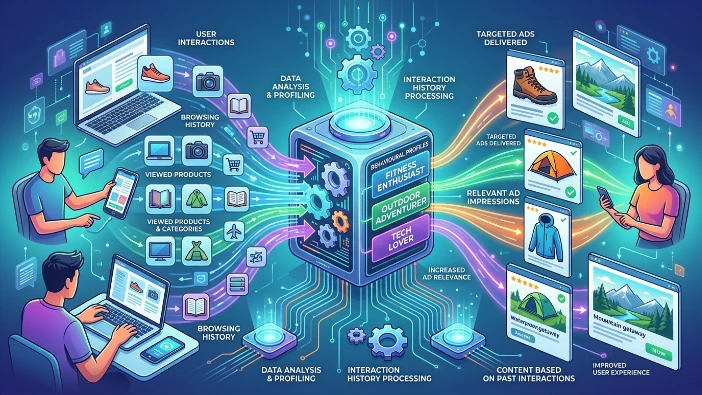
Behaviour-based targeting uses interaction history. Users receive ads based on viewed categories or products. This ensures relevance across all ad impressions.
How do dynamic product banners reinforce purchase intent?
Dynamic product banners reinforce purchase intent by displaying personalised product recommendations based on real-time browsing behaviour, showing previously viewed items, price updates, and related alternatives that maintain relevance and strengthen conversion probability across retargeting environments at scale delivery systems networks.
Dynamic banners update automatically based on user activity. These ads display content that matches recent interactions.
This real-time adaptation increases relevance and engagement.
How product recommendations are generated
Recommendations use browsing history and product interactions. Systems match users with similar or related items.
For example, a user viewing jackets will see similar jackets or accessories in banners.
Role of real-time updates in intent reinforcement
Real-time updates reflect price changes and availability. This ensures users receive accurate product information.
Updated banners maintain attention and encourage faster decisions.
Read:
How E-commerce Brands Convert High-Intent Shoppers Into Immediate Buyers Using Retargeting Ads
How is purchase intent measured in retargeting campaigns?
Purchase intent in retargeting campaigns is measured through click-through rates, return visits, conversion tracking, product engagement depth, and time spent on site after ad exposure, providing structured performance signals that indicate user readiness to complete transactions within analytical systems frameworks.
Measurement tracks how users interact with retargeting ads and subsequent website behaviour.
These metrics define intent strength across campaigns.
Click-through rate and engagement depth
Click-through rate measures ad interaction. Higher rates indicate stronger interest.
Engagement depth measures how users interact after clicking, including page views and product exploration.
Conversion tracking and return visits
Conversion tracking measures completed purchases. Return visits indicate ongoing interest in products.
Users who return multiple times show higher purchase intent levels.
Explore More Expert Insights:
How Animated Ads Increase Engagement on UK News Platforms
How to Use Banner Ads on Local UK News Platforms Effectively
Time-based behavioural signals
Time spent on site after ad exposure reflects engagement quality. Longer durations indicate deeper product consideration.
Short durations indicate low engagement or early-stage interest.
How do banner retargeting ads support structured e-commerce decision journeys?
Banner retargeting ads support structured decision journeys by guiding users through awareness, consideration, and purchase readiness stages using repeated exposure, behavioural segmentation, and dynamic messaging aligned with intent progression across digital shopping environments.
These systems ensure users receive relevant messaging at each stage. Early-stage users receive awareness-focused ads. Mid-stage users receive comparison-based ads. Late-stage users receive product-specific reinforcement.
Retargeting systems integrate behavioural data and segmentation logic. This ensures consistent progression from interest to intent.
Over time, repeated exposure and structured messaging create measurable increases in purchase readiness across e-commerce environments.