

Banner ads are visual digital advertisements displayed across websites, apps, and platforms to attract attention, drive clicks, and guide users toward online stores. They work by targeting users based on behavior, interests, and browsing patterns to increase engagement and conversions.
Banner ads are a core component of digital advertising within e-commerce. They appear in predefined spaces on websites, including headers, sidebars, and in-content placements. These ads typically include images, short text, and a call-to-action button.
In e-commerce, banner ads function through ad networks and programmatic systems. These systems use data signals such as browsing history, location, and device type. When a user visits a website, an automated auction determines which banner ad appears.
How targeting improves banner ad performance
Targeting ensures ads reach users with relevant interests. Behavioral targeting uses browsing history. Contextual targeting matches ads with webpage content. Demographic targeting uses age, gender, and location data.
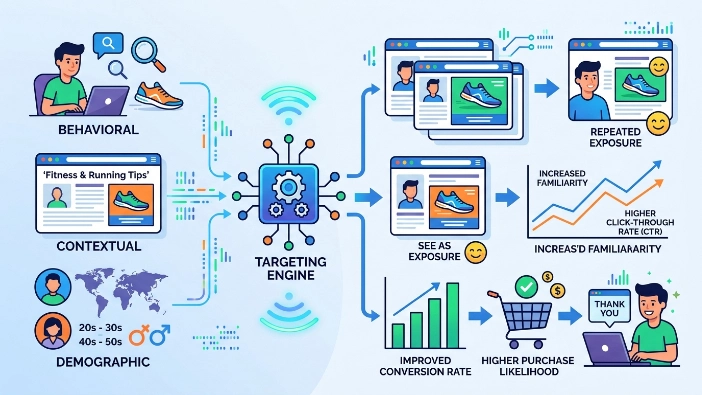
For example, a user who views running shoes on multiple websites will later see banner ads featuring similar products. This repeated exposure increases familiarity and purchase likelihood.
How banner ads drive traffic to e-commerce stores
Banner ads include clickable elements that redirect users to product pages or landing pages. These pages are optimized for conversions with product details, pricing, and checkout options.
High-performing banner ads use clear visuals and concise messaging. They guide users directly from awareness to action without friction.
How do banner ads increase e-commerce sales quickly?
Banner ads increase e-commerce sales by generating immediate visibility, targeting relevant audiences, and driving high-intent traffic directly to product pages. This process reduces discovery time and accelerates purchase decisions within short user interaction cycles.
Banner ads operate at scale. They reach thousands of users within minutes of campaign activation. This instant visibility allows e-commerce stores to attract potential buyers without delay.
Speed comes from automation. Programmatic systems serve ads instantly across multiple platforms. Users interact with ads during browsing sessions, leading to immediate visits to e-commerce sites.
How immediate visibility impacts sales
Visibility increases brand recall. When users see ads multiple times, recognition improves. This leads to faster decision-making when users revisit products.
For example, a user browsing electronics sees repeated banner ads for headphones. Within hours, the user clicks the ad and completes a purchase.
How high-intent traffic improves conversions
Banner ads target users based on prior interest. These users already demonstrate purchase intent. When redirected to product pages, they require less persuasion.
High-intent traffic results in higher conversion rates compared to untargeted traffic. This directly impacts revenue within short timeframes.
What components make banner ads effective for conversions?
Effective banner ads include clear visuals, concise messaging, strong calls-to-action, optimized design formats, and precise targeting parameters. These components work together to capture attention, communicate value quickly, and guide users toward completing a purchase action.
Each component serves a specific function in the conversion process. When combined correctly, they create a seamless user experience from impression to click.
Visual design and layout
Banner ads use high-resolution images and contrasting colors. These elements ensure visibility across different devices. Standard sizes such as 300×250 and 728×90 are widely used for compatibility.
Clean layouts reduce cognitive load. Users understand the message within seconds.
Messaging clarity
Text in banner ads remains short and direct. It highlights key benefits such as price, discount, or product features. Messages typically contain fewer than 10 words.
For example, phrases like “50% Off Running Shoes” or “Free Delivery Today” communicate value instantly.
Call-to-action structure
A call-to-action (CTA) directs user behavior. Common CTAs include “Shop Now,” “Buy Today,” and “View Deals.” These phrases create urgency and guide clicks.
CTAs are visually distinct through buttons or contrasting colors.
Targeting accuracy
Accurate targeting ensures ads reach users most likely to convert. Data sources include browsing behavior, search history, and past purchases.
This precision reduces wasted impressions and increases return on investment.
Why do banner ads improve conversion rates in e-commerce?
Banner ads improve conversion rates by reinforcing product awareness, re-engaging interested users, and delivering consistent messaging across multiple touchpoints. This repetition builds trust and reduces hesitation, leading to faster purchase decisions and higher conversion efficiency.
Conversion rates increase when users encounter consistent messaging. Banner ads maintain this consistency across platforms.
Repeated exposure creates familiarity. Users become more comfortable with products they see multiple times.
How repetition influences user decisions
Users require multiple interactions before making a purchase. Banner ads provide these interactions through repeated impressions.
For example, a user sees a product banner five times across different websites. On the sixth interaction, the user clicks and buys.
How trust develops through visibility
Visibility signals credibility. When users see ads across multiple trusted websites, confidence increases.
This trust reduces barriers to purchase, especially for first-time buyers.
How banner ads reduce cart abandonment
Banner ads re-engage users who leave without purchasing. These ads remind users of products viewed earlier. This reminder triggers return visits, increasing the likelihood of completed transactions.
How are banner ads used across different stages of the buyer journey?
Banner ads support the entire buyer journey by creating awareness, nurturing interest, and reinforcing purchase intent. They deliver tailored messages at each stage, ensuring users receive relevant information that aligns with their current level of engagement.
Banner ads adapt based on user behavior. This adaptability allows them to function across all funnel stages.
Awareness stage usage
At the awareness stage, banner ads introduce products or categories. They focus on visibility rather than immediate conversion.
For example, ads display new product launches or seasonal collections.
Consideration stage usage
During consideration, banner ads highlight features, pricing, and benefits. They target users who already interacted with similar products.
This stage often includes retargeting strategies. Users see ads related to previously viewed items.
For deeper understanding of this stage, refer to:
How E-commerce Brands Build Purchase Intent Using Banner Retargeting Ads
Decision stage usage
At the decision stage, banner ads emphasize urgency. They include limited-time offers, discounts, or stock alerts.
These ads push users toward immediate action. They reduce hesitation and encourage final purchase steps.
For advanced conversion strategies, refer to:
How E-commerce Brands Convert High-Intent Shoppers Into Immediate Buyers Using Retargeting Ads
What are common use cases of banner ads in e-commerce?
Banner ads are used in product promotion, seasonal campaigns, retargeting strategies, and new customer acquisition. Each use case focuses on specific business goals, including increasing visibility, recovering lost sales, and driving repeat purchases efficiently.
Banner ads serve multiple functions depending on campaign objectives.
Product promotion campaigns
E-commerce stores use banner ads to highlight specific products. These campaigns focus on high-demand or trending items.
For example, electronics stores promote new smartphone releases through homepage banners.
Seasonal and event-based campaigns
Banner ads play a key role during sales events. These include Black Friday, holiday sales, and clearance events.
Ads emphasize discounts and limited-time offers. This drives high traffic within short periods.
Retargeting campaigns
Retargeting uses banner ads to reach users who previously visited a store. These users already show interest.
For example, a user who views a jacket sees banner ads for the same jacket later. This increases the chance of purchase.
Customer acquisition campaigns
Banner ads attract new users by targeting broader audiences. These campaigns focus on awareness and initial engagement.
They introduce products to users who have not interacted with the brand before.
How do banner ads compare with other digital advertising formats?
Banner ads differ from other digital formats by focusing on visual engagement, wide reach, and continuous exposure. Unlike search ads or email marketing, they operate passively across browsing environments, ensuring consistent visibility without requiring active user intent at the start.
Banner ads complement other marketing channels. Each format serves a distinct purpose.
Comparison with search advertising
Search ads appear when users actively look for products. Banner ads appear during browsing sessions.
Search ads capture existing demand. Banner ads create and reinforce demand.
Comparison with social media ads
Social media ads target users within platform ecosystems. Banner ads operate across multiple websites.
This broader reach increases exposure beyond single platforms.
Comparison with email marketing
Email marketing targets existing subscribers. Banner ads reach both new and returning users.
Banner ads provide continuous visibility, while email depends on user interaction with messages.
What measurable results do banner ads deliver in e-commerce?
Banner ads deliver measurable results such as increased click-through rates, higher conversion rates, improved return on ad spend, and reduced customer acquisition costs. These metrics provide clear insights into campaign effectiveness and revenue impact.
Performance tracking is essential in digital advertising. Banner ads provide detailed analytics through ad platforms.
Click-through rate (CTR)
CTR measures the percentage of users who click on ads. Higher CTR indicates strong engagement.
For example, a CTR of 2% means 2 out of 100 users clicked the ad.
Conversion rate
Conversion rate tracks completed purchases after clicks. This metric directly reflects sales performance.
Higher conversion rates indicate effective targeting and messaging.
Return on ad spend (ROAS)
ROAS measures revenue generated per advertising cost. For example, a ROAS of 4:1 means $4 earned for every $1 spent.
Customer acquisition cost (CAC)
CAC calculates the cost of acquiring a new customer. Lower CAC indicates efficient advertising.
Banner ads reduce CAC by targeting users with higher purchase intent.
How do banner ads fit into a long-term e-commerce growth strategy?
Banner ads support long-term growth by maintaining consistent visibility, reinforcing brand recognition, and continuously engaging users across multiple touchpoints. This sustained presence builds customer familiarity and drives repeat purchases over time.
Long-term success in e-commerce requires consistent engagement. Banner ads provide this consistency. They operate continuously across different platforms. This ensures ongoing interaction with users.
Building brand recognition over time
Repeated exposure strengthens brand memory. Users recognize products faster during future interactions.
This recognition reduces decision time in subsequent purchases.
Explore More Expert Insights:
What Are Animated Banner Ads in News Media?
Why Local News Site Advertising Works in the UK
Supporting repeat purchases
Banner ads re-engage existing customers. They promote new products or related items.
For example, a customer who buys shoes later sees ads for accessories. This encourages additional purchases.
Integrating with multi-channel strategies
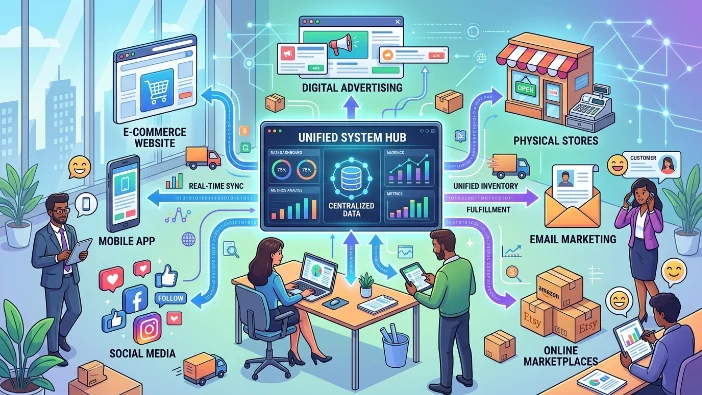
Banner ads work alongside search, social, and email marketing. This integration creates a unified marketing approach.
Consistent messaging across channels improves overall performance and revenue growth.



