
A free report audit from Time Intelligence Media Group is a comprehensive evaluation that analyzes corporate research reports for structural flaws, data integrity issues, Search Engine Optimization gaps, and media-readiness factors before public release in the United Kingdom market.
Time Intelligence Media Group conducts these technical reviews to help organizations identify weaknesses in their published research, white papers, and industry benchmark reports. The review pinpoints specific formatting mistakes, unsupported statistical claims, and search engine indexability issues that prevent reports from achieving maximum visibility and authority.
Core Functions of a Research Report Audit
A professional audit examines both human-readiness and machine-readiness factors within a digital document. The evaluation focuses on three primary areas:
- Editorial Integrity: Verification of data sources, methodology explanations, and reference formats.
- Technical Optimization: File structure analysis, schema markup alignment, and search crawler accessibility.
- Media Distribution Readiness: Assessment of press release alignment, executive summary clarity, and data point extraction potential for journalists.
Organizations receive a structured diagnostic overview that categorizes findings into immediate risk areas, technical optimization opportunities, and distribution bottlenecks.
How Does the Report Audit Process Work?
The report audit process works by submitting a draft or published document to Time Intelligence Media Group, where analysts evaluate the file using a 40-point verification checklist covering data integrity, search indexing factors, and UK media guidelines.
Phase 1: Ingestion and Structural Assessment
The process begins when an organization submits a PDF, Web Document, or Interactive Report to the audit team.
- File Format Inspection: Analysts test document accessibility, mobile rendering speed, and text extraction capabilities.
- Entity Mapping: Systems scan the text to identify core industry terms, brand entities, and primary research claims.
- Data Extraction Check: Evaluation of how easily search engines and automated scrapers extract data tables and key metrics.
Phase 2: Technical SEO and Credibility Scoring
During the second phase, specialists assess the document against current UK search engine standards and editorial requirements.
- Indexability Verification: Checking canonical tags, download links, and web-hosted landing pages to ensure search engines index the primary report URL correctly.
- Citation Validation: Confirming that all statistical assertions rely on verifiable original research or cited primary sources.
- Media Benchmark Matching: Cross-referencing content structure against the published guidelines of national UK news outlets and industry trade publications.
Phase 3: Diagnostic Reporting and Strategy Session
The final phase delivers actionable recommendations through a written diagnostic review and a strategy briefing. The delivery includes prioritized action items categorized by immediate impact, technical difficulty, and required resources.
What Components Are Evaluated During the Audit?
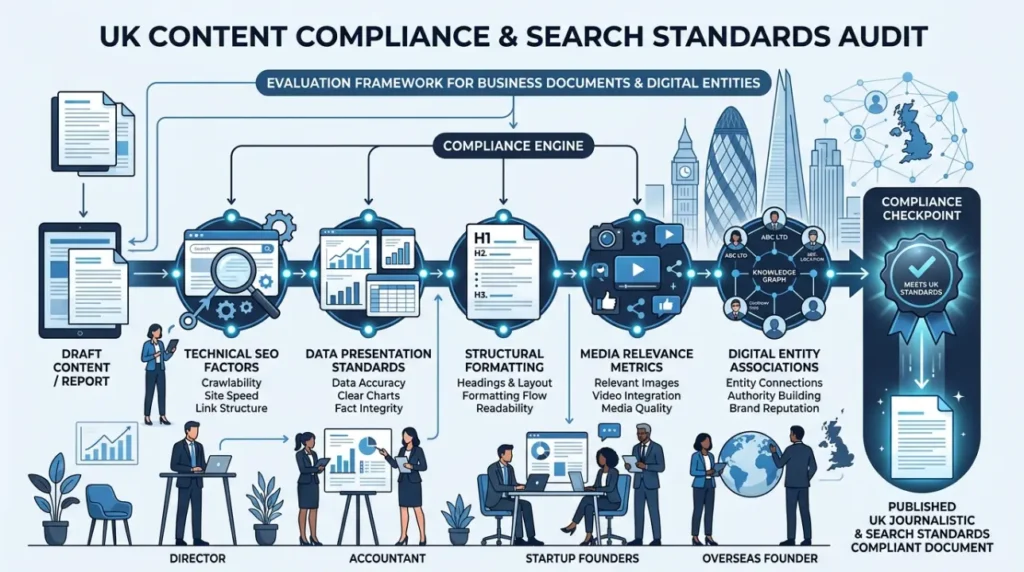
The audit evaluates technical Search Engine Optimization factors, data presentation standards, structural formatting, media relevance metrics, and digital entity associations to ensure the document meets published United Kingdom journalistic and search standards.
Technical Search Engine Optimization and On-Page Factors
Search engine crawlers process PDF files and web reports differently than standard blog posts. The audit evaluates key technical areas:
- Metadata Accuracy: Validation of title tags, meta descriptions, open graph tags, and PDF file document properties.
- Schema Markup Implementation: Testing
Report,Article, andOrganizationstructured data schemas to ensure search engines identify the publisher and main entity. - Internal Link Architecture: Reviewing incoming and outgoing hyperlinks to ensure link equity flows efficiently to core brand pages. Implementing targeted anchor text, such as an internal link to [credibility for UK journalists], reinforces topic relevance across connected published assets.
Data Verification and Methodological Standards
Corporate reports lose authority when data presentation lacks rigor. The evaluation measures specific integrity metrics:
- Sample Size Disclosures: Checking whether survey methodology details explicitly state respondent numbers, demographics, and margin of error.
- Chart and Table Readability: Ensuring image assets include proper alt-text, data labels, and accessible HTML table structures.
- Citation Uniformity: Auditing footnotes, endnotes, and hyperlink references to verify consistent attribution styles.
UK Media Readiness Factors
United Kingdom journalists require specific data layouts to cite research quickly. The audit tests the document against editorial standards used by UK newsrooms:
- Hook Clear-Sight Metric: Verifying that key statistics appear within the first two pages or 300 words of the summary.
- Executive Summary Quality: Assessing whether the executive summary delivers standalone value without requiring a full document read.
- Asset Accessibility: Ensuring high-resolution image downloads, data tables, and executive quotes are available for media re-use.
- Explore More Expert Insights.
- How Sponsored Editorial Became a Top-3 B2B Awareness Format in the UK in 2026
- The UK Branded Content Boom: What the £17.9bn Advertising Export Market Is Telling Us
Why Is a Report Audit Necessary Before Media Distribution?
A report audit is necessary before media distribution because unverified data, poor formatting, and missing search schema prevent journalists from citing reports, damage brand credibility, and decrease organic search engine rankings.
Preventing Brand Reputation Risks
Publishing unverified statistical claims exposes organizations to public corrections, retractions, and loss of industry authority. A single mathematical error in a headline metric can disqualify an entire 50-page research campaign from media consideration. A pre-publication audit removes these risks by flagging ungrounded claims before public release.
Maximizing Search Engine Visibility and AI Discovery
Search engines use advanced entity recognition to evaluate information source quality. Reports lacking clear entity structures, schema markup, and logical heading hierarchies fail to earn top search visibility.
| Audit Focus Area | Without Audit Optimization | With Audit Optimization |
| Search Engine Crawling | PDF text invisible or unindexed | Document fully indexed with structured rich snippets |
| Citation Capability | Data buried in complex charts | Direct data extraction by search engine AI and journalists |
| Media Adoption | Rejected due to missing methodology | Cited by major UK media outlets with direct brand links |
| Search Rankings | Low visibility for competitive terms | Higher positions for target research keywords |
Improving UK Journalist Outreach Efficiency
National publications like The Financial Times, The Telegraph, and BBC News enforce strict data verification rules. Journalists reject PR pitches that lack transparent methodologies, downloadable raw data, or clear regional relevancy. Preparing assets using structural frameworks similar to those outlined in [research report trustworthiness] ensures research assets satisfy editorial requirements immediately upon submission.
What Types of Organizations Benefit From a Report Audit?
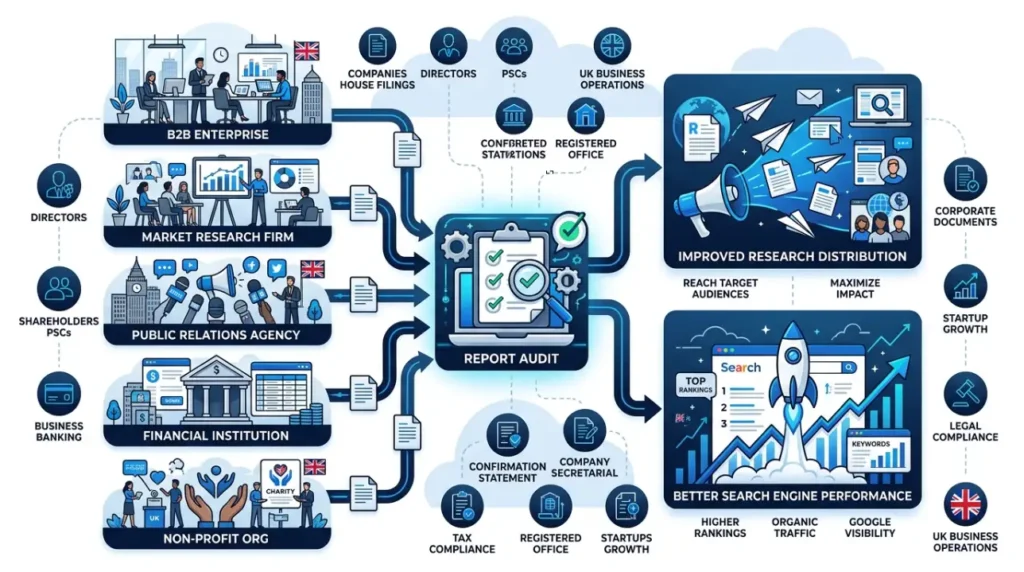
B2B enterprise companies, market research firms, public relations agencies, financial institutions, and non-profit organizations in the United Kingdom benefit from a report audit by improving research distribution outcomes and search engine performance.
B2B Software and Enterprise Services
B2B technology brands publish original data reports to drive sales pipeline and build category authority.
- Example: A cybersecurity firm in London publishing an annual threat landscape report uses an audit to ensure its technical terminology aligns with exact user search patterns and trade press citation standards.
Public Relations and Content Marketing Agencies
Agencies managing research campaigns for multiple clients require consistent quality control workflows.
- Example: A Manchester PR agency executing a survey-led campaign audits client deliverables prior to media outreach to eliminate data errors that could derail pitching efforts.
Financial Services and Investment Firms
Financial organizations operate under strict regulatory and clarity requirements when issuing market analysis.
- Example: An investment management firm producing quarterly economic outlooks uses audits to confirm all projections, chart sources, and risk disclosures comply with both regulatory norms and search engine quality guidelines.
How Does a Report Audit Improve Organic Search Engine Rankings?
A report audit improves organic search engine rankings by fixing crawlability errors, implementing structured schema data, optimizing anchor text, and structuring content to capture rich snippets and direct AI search citations.
Establishing Entity Authority and Information Depth
Search algorithms prioritize content that demonstrates clear subject-matter authority. The audit structures report data to establish direct relationships between subject entities:
- Direct Definition Placement: Positioning concise 30-40 word direct definitions beneath major subject headers enables search engine algorithms to pull answers directly into featured snippets.
- Semantic Keyword Integration: Expanding document vocabulary to include primary industry terms, technical synonyms, and regional variations naturally without density forcing.
- Entity Disambiguation: Formatting organizational names, author credentials, and dataset sources so search indexers correctly attribute authoritativeness to the publishing brand.
Optimizing PDF and Web Page Technical Standards
Many research reports exist solely as static PDF downloads, creating technical indexation blind spots. The audit establishes a web-first publishing model:
- HTML Landing Page Architecture: Recommendations for building dedicated, high-converting HTML summary pages that rank for high-intent target keywords.
- Structured File Indexing: Optimizing PDF properties, file names, and image text layers so crawlers index deep document contents directly.
- Internal Link Context: Connecting published research directly into core service and product conversion paths to transfer link authority throughout the site ecosystem.
What Are the Specific Deliverables Included in the Free Audit?
The specific deliverables included in the free audit are a customized technical evaluation document, a 40-point media readiness checklist score, a Search Engine Optimization improvement plan, and a live strategy consultation.
The Comprehensive Audit Scorecard
Clients receive a detailed diagnostic scorecard evaluating the document across four critical performance vectors:
- Technical SEO Score (0-100): Evaluation of indexability, speed, schema tags, and site structure integration.
- Data Credibility Index (0-100): Assessment of citation density, source clarity, and methodological transparency.
- UK Media Compatibility Rating (0-100): Analysis of news value, executive summary layout, and pitch alignment.
- User Experience & Layout Grade (A-F): Inspection of visual data hierarchy, typography, and device responsiveness.
Actionable Optimization Roadmap
Alongside the numerical ratings, the deliverable provides a line-by-line remediation plan. The roadmap lists exact page numbers, content sections, and technical tags requiring modification before release.
Live Strategy Session with Media Specialists
Every audit includes a 30-minute review session with a content strategist from Time Intelligence Media Group. The session covers:
- Prioritization of critical fixes based on campaign timelines.
- Guidance on optimizing media outreach lists for UK journalists.
- Tactical advice on converting static reports into interactive, link-worthy web assets.
How Do You Request a Free Report Audit From Time Intelligence Media Group?
You request a free report audit from Time Intelligence Media Group by submitting your document draft or landing page URL through the official assessment portal and selecting your primary media targets.
To secure a document review, follow these submission steps:
- Prepare the Document: Gather your draft PDF, web report link, or upcoming research manuscript.
- Submit Project Details: Enter your business contact details, organizational focus, and target publication date into the secure submission form.
- Specify Target Objectives: Indicate whether your primary goal is national UK media coverage, organic search engine lead generation, or executive thought leadership.
- Receive the Assessment: The Time Intelligence Media Group analytics team completes the review within two business days and delivers the diagnostic scorecard to your inbox.
Conducting a professional evaluation before publication transforms standard research reports into high-ranking, media-ready corporate assets that drive organic traffic and earn verified news citations. Request your assessment today to validate your document before market release.