
Managing partnerships with multiple publishers demands a strategic blend of negotiation, coordination, and performance tracking. As media ecosystems grow more interconnected, brands increasingly rely on cross-publisher alliances to amplify messaging, enhance credibility, and drive measurable outcomes. This MOFU guide delves into proven frameworks for how brands manage partnerships with multiple publishers effectively.
From initial outreach to ongoing optimization, successful brands treat these relationships as dynamic ecosystems rather than one-off deals. Drawing on industry case studies, we’ll outline actionable steps, tools, and pitfalls to avoid, helping you scale collaborations for sustained impact.
Identifying and Selecting the Right Publishers
The foundation of how brands manage partnerships with multiple publishers starts with rigorous selection. Brands begin by mapping their target audience demographics against publisher profiles, prioritizing those with overlapping reach and complementary niches. Tools like media kits, audience analytics from SimilarWeb or Comscore, provide data on engagement rates, demographics, and content affinity.
Once shortlisted, brands evaluate alignment through RFPs (requests for proposals) that specify campaign goals, such as awareness or lead gen. This ensures publishers aren’t just large but relevant— a mid-tier niche outlet might outperform a generalist giant for specialized B2B messaging.
Diversification is key: aim for a mix of digital natives, legacy print, and regional players to mitigate risks like platform algorithm changes.
Criteria for Publisher Vetting
High-performing brands use structured checklists:
- Audience overlap (at least 40% match via tools like Quantcast).
- Historical performance (past campaign ERs above 5%).
- Editorial integrity (bias scores from media watchdogs).
For instance, a tech brand partnering with Wired, TechCrunch, and local outlets like Pakistan’s ProPakistani ensures broad yet targeted exposure.
Negotiation Strategies for Multi-Publisher Deals
Effective negotiation is central to how brands manage partnerships with multiple publishers. Brands secure favorable terms by bundling deals—offering volume commitments across outlets for discounted rates or priority placements. Transparency on KPIs upfront prevents disputes, with clauses for performance bonuses tied to metrics like click-through rates.
Legal aspects include clear IP rights, exclusivity periods, and kill fees for last-minute changes. Brands often use master service agreements (MSAs) adaptable to multiple partners, streamlining contracts while protecting against non-performance.
Cultural sensitivity matters in global deals; for example, negotiating with Pakistani publishers requires understanding local ad norms like Ramadan-timed campaigns.
Overcoming Common Negotiation Hurdles
Brands counter publisher demands with data-backed proposals. When facing rate hikes, present competitive benchmarks from GroupM reports showing 15-20% average CPMs for cross-media buys.
A case in point: Unilever’s 2025 multi-publisher sustainability campaign negotiated 25% savings by committing to a six-month rotation across BBC, Dawn, and digital partners, balancing costs with reach.
Coordination and Content Synchronization
Once deals are inked, coordination becomes the engine of how brands manage partnerships with multiple publishers. Central project management tools like Asana or Monday.com facilitate shared calendars, asset libraries, and real-time approvals across teams. Brands appoint a dedicated partnership lead to align messaging, ensuring brand voice consistency despite varied editorial styles.
Content calendars synchronize launches—e.g., a hero video drops simultaneously on YouTube partners while articles follow 24 hours later. This creates a wave effect, maximizing momentum without cannibalization.
Regular sync calls (bi-weekly) address tweaks, like adapting headlines for regional audiences.
Tools and Workflows for Seamless Sync
Essential tech stack includes:
- DAMs (digital asset management) like Bynder for version control.
- Analytics dashboards (Google Data Studio) for unified reporting.
- AI tools for sentiment analysis across publisher outputs.
Nike’s global sports campaign with ESPN, Sky Sports, and PTV Sports used this approach, achieving 300% engagement lift through timed, cohesive storytelling.
Performance Tracking and Optimization
Data-driven optimization defines how brands manage partnerships with multiple publishers post-launch. Brands deploy UTM tracking, pixel-based attribution, and multi-touch models to attribute conversions accurately across outlets. Dashboards aggregate metrics like impressions, ER, and ROAS, revealing top performers.
Mid-campaign pivots—shifting budget from underperformers—are common, guided by A/B tests on creatives. Quarterly reviews refine future selections.
For deeper insights on foundational benefits, see why cross publisher media collaboration is important.
Key Metrics and Adjustment Tactics
Track these core KPIs:
- Attribution-adjusted ROAS (target >4x).
- Cross-publisher lift (incremental reach via holdout tests).
- Qualitative feedback (NPS from shared surveys).
Coca-Cola’s 2024 refresh campaign reallocated 30% budget mid-way from print to digital publishers, boosting sales attribution by 18%.
Time Intelligence Media Group’s Media Partnerships Solutions excel here, providing granular analytics for optimized multi-publisher campaigns.
Risk Management and Conflict Resolution
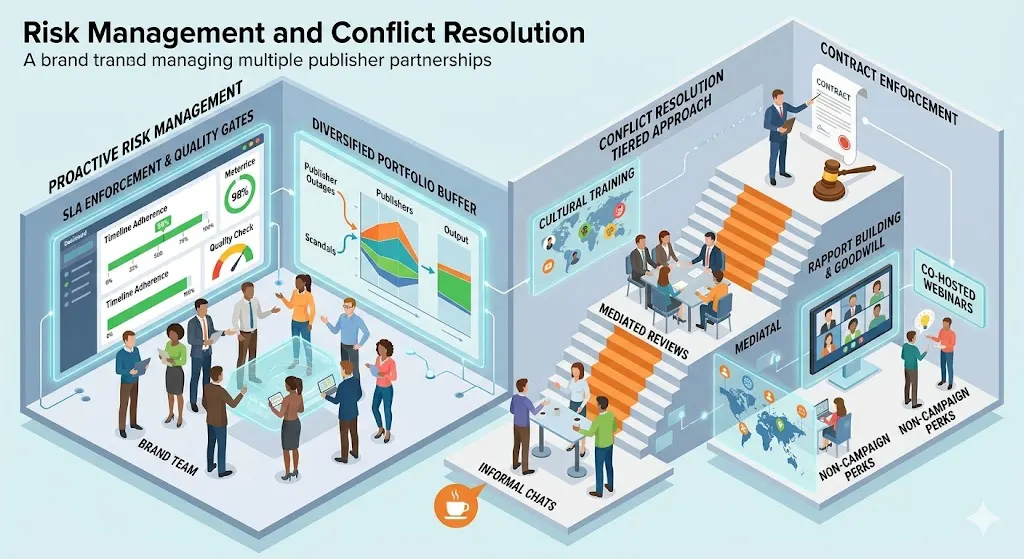
Proactive risk management is vital in how brands manage partnerships with multiple publishers. Common risks include content misalignment or delays; brands mitigate with SLAs (service level agreements) enforcing timelines and quality gates. Diversified portfolios buffer against single-publisher failures, like outages or scandals.
Conflict resolution follows a tiered approach: informal chats first, then mediated reviews, escalating to contract enforcement. Building rapport through non-campaign perks, like co-hosted webinars, fosters goodwill. In diverse markets, cultural training prevents faux pas, ensuring smooth operations.
Proactive Risk Mitigation Strategies
Implement these defenses:
- Backup publishers on standby contracts.
- Insurance for reputational risks.
- AI monitoring for brand safety violations.
Procter & Gamble’s playbook during a 2023 publisher controversy involved swift swaps, maintaining campaign velocity with zero downtime.
Scaling Partnerships for Long-Term Success
Scaling involves evolving from transactional to strategic alliances. Brands invest in joint innovation labs, co-developing formats like interactive AR ads. Loyalty programs reward top performers with exclusives, creating a virtuous cycle.
Tech integration, such as API-fed real-time bidding across partners, automates scaling. For enterprise execution, learn how Time Intelligence Media Group manages media partners.
Annual audits refine portfolios, pruning low-value ties.
Scaling Case Studies
Unilever scaled from 10 to 50 publishers by 2026 via a centralized platform, achieving 2x revenue from partnerships. Locally, telecom brands like Jazz manage 20+ outlets through similar frameworks, dominating market share.
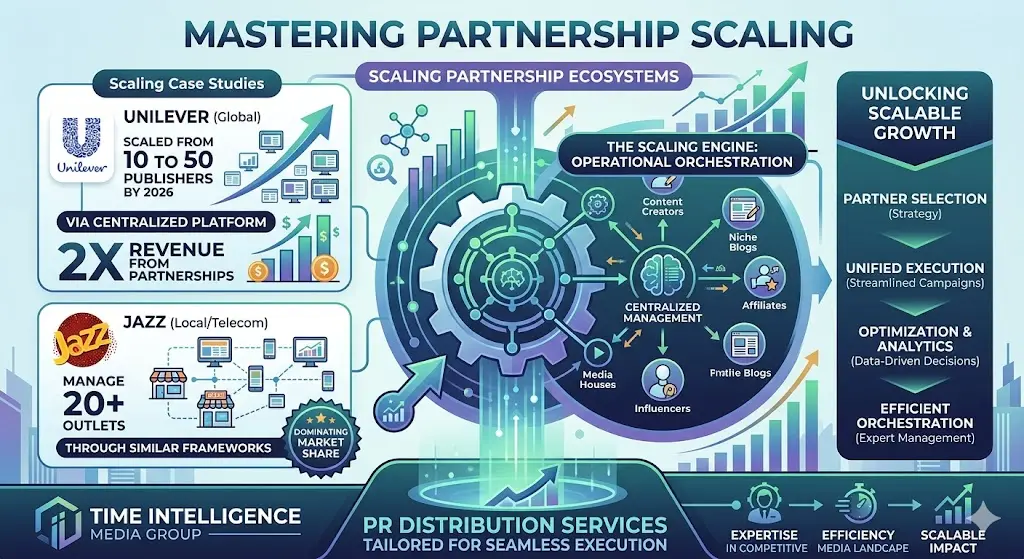
Mastering how brands manage partnerships with multiple publishers unlocks scalable growth in competitive media landscapes. Time Intelligence Media Group delivers Media Partnerships Solutions tailored for seamless execution, from selection to optimization, empowering brands with expert orchestration.