
Publishing through a 10-site UK media group means distributing the same research across ten editorially managed sites that together deliver combined audience reach, topical coverage, and aggregated credibility metrics.
A media group is an organisation that owns multiple sites with discrete editorial focuses such as technology, finance, manufacturing, public sector, and procurement. Distributing one report across ten sites uses central editorial workflows and syndication tools to place identical or adapted content on each domain. Key entities are domain authority (search metric), unique monthly visitors (audience metric), topical relevance (content alignment), and editorial endorsement. This model delivers simultaneous exposure across sector-specific and general-interest audiences.
Why compare reach and credibility when selecting a media group?
Compare reach and credibility because reach determines audience scale and credibility determines audience trust and long-term impact for research-driven outcomes.
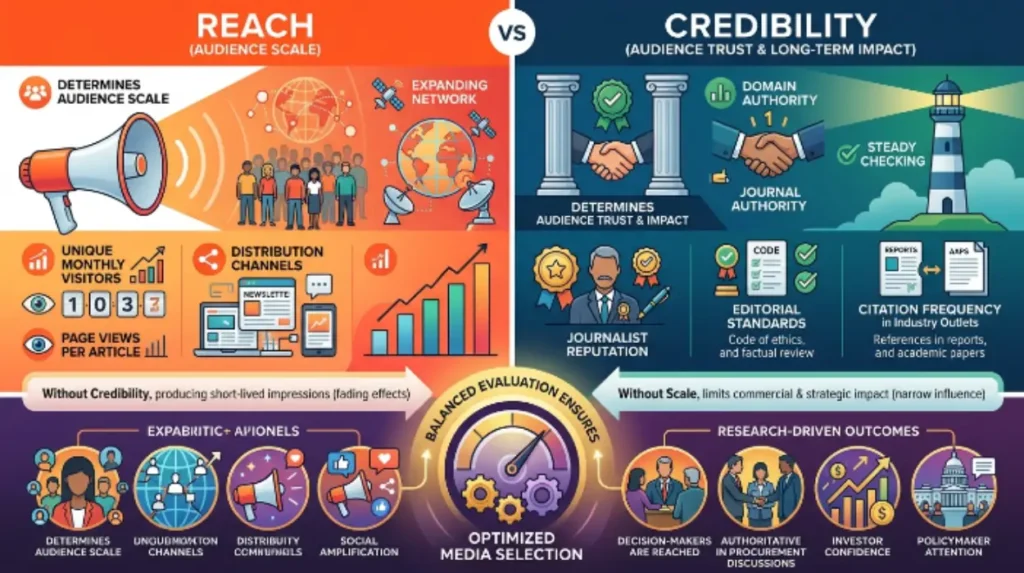
Reach measures include unique monthly visitors, page views per article, distribution channels, and social amplification. Credibility metrics include domain authority, journalist reputation, editorial standards, and citation frequency in industry outlets. For B2B research, scale without credibility produces short-lived impressions. Credibility without scale limits commercial and strategic impact. Balanced evaluation ensures research reaches decision-makers and registers as authoritative in procurement, investor, and policy discussions.
How do you measure combined reach across ten sites?
Measure combined reach by summing unique monthly visitors, averaging page views per article, and analysing cross-site audience overlap with third-party analytics.
Collect verified traffic figures such as unique monthly visitors (UMV) for each site from audited sources or publisher-supplied reports. Sum UMV to estimate gross reach, then measure unique reach by analysing audience overlap using third-party tools or publisher-supplied de-duplicated audience metrics. Calculate average page views per published article across sites to estimate expected impressions. Track referral traffic from email newsletters and social accounts tied to each site. Use viewability and dwell time metrics to assess attention quality beyond raw counts.
What credibility indicators should brands review?
Review editorial process transparency, journalist expertise, citation practices, correction policies, and domain authority for each site to assess credibility.
Verify whether each site lists editorial guidelines and corrections procedures. Check author bylines and bios for journalist experience in relevant sectors, for example named reporters with ten or more published sector pieces. Inspect citation practices: whether articles link to original research, include data tables, and name methodologies. Review domain authority scores and historical citation frequency in trade publications and policy reports. Higher credibility aligns with frequent external citations and visible editorial standards.
How does syndication affect SEO and search visibility?
Syndication across ten domains affects SEO through canonicalisation, duplicate-content management, and combined backlink profiles that influence search rankings and referral traffic.
Manage duplicate content by using canonical tags that point to the primary report URL or by publishing unique summaries on each site with links to the canonical report. Ensure structured data markup for articles and research pages to enable rich search results. Leverage combined backlink profiles: each domain can link back to the hosted report, increasing referring domains and citation signals. Monitor search visibility metrics such as impressions, clicks, and ranking for target keywords across domains. Track indexation rates for each site’s version of the content.
What are the production steps for multi-site publication?
Production steps include content adaptation for each site, editorial approvals, canonicalisation strategy, publishing schedule, and measurement plan with agreed KPIs.
Start with a primary research asset that includes a summary, full report PDF, data appendix, and key charts. Create site-specific abstracts that align with each domain’s audience and tone. Secure editorial approvals and assign bylines. Implement canonical tags or publish unique landing pages that centralise the full report while allowing adapted articles on each site to summarise findings. Define a publishing schedule across ten sites to optimise reach and avoid internal competition. Agree KPIs such as combined unique views, average read time, number of backlinks, leads generated, and media citations.
What are expected benefits for UK B2B brands that publish through a 10-site group?
Expected benefits include amplified reach to sector audiences, improved SEO through multiple authoritative backlinks, and elevated perceived credibility from editorial placements.
Sector amplification arises from distribution across sites focused on procurement, IT, finance, HR, and operations, enabling targeted exposure to decision-making roles. SEO benefits accrue when multiple editorial domains provide authoritative backlinks to the hosted report, increasing referring domains and organic visibility for branded and topical keywords. Editorial placements with journalist bylines and contextual framing increase perceived credibility among buyers and analysts, improving the likelihood of citation in trade reports and policy briefs.
How should brands measure ROI and attribution for multi-site publications?
Measure ROI by tracking traffic to the central report, lead conversions tied to report downloads, referral sources per site, and downstream media citations and backlinks.
Use UTM parameters and dedicated landing pages to attribute visits and downloads to each publishing site. Track conversion events such as report downloads, demo requests, or newsletter signups triggered by the report. Analyse time-to-conversion for users arriving via each domain. Measure earned media outcomes: count inbound citations and backlinks from external outlets, and track social shares and engagement. Attribute downstream sales or pipeline movement by mapping leads that reference the report in communications or use gated access with lead capture forms.
Explore More Expert Insights:
Research Report ROI: How One UK Brand Generated 340 Qualified Leads From One Study
How Media-Hosted Research Reports Reach a Larger UK Audience Than Owned PDFs
What risks and controls apply to multi-site publishing?
Key risks include inconsistent messaging, duplicate-content penalties, audience overlap dilution, and insufficient measurement; controls include editorial templates, canonical tags, and predefined analytics audits.
Implement editorial templates to ensure consistent headline frameworks and methodology disclosures across sites. Use canonical tagging or unique landing pages to manage duplicate-content risks and protect search rankings. Analyse audience overlap to avoid redundant audience spamming and to refine site selection for future campaigns. Establish analytics audits before and after publishing to validate traffic and conversion metrics. Require legal and data-protection sign-off for any gated content that collects personal data.
When is a multi-site media group the right choice for B2B research publication?
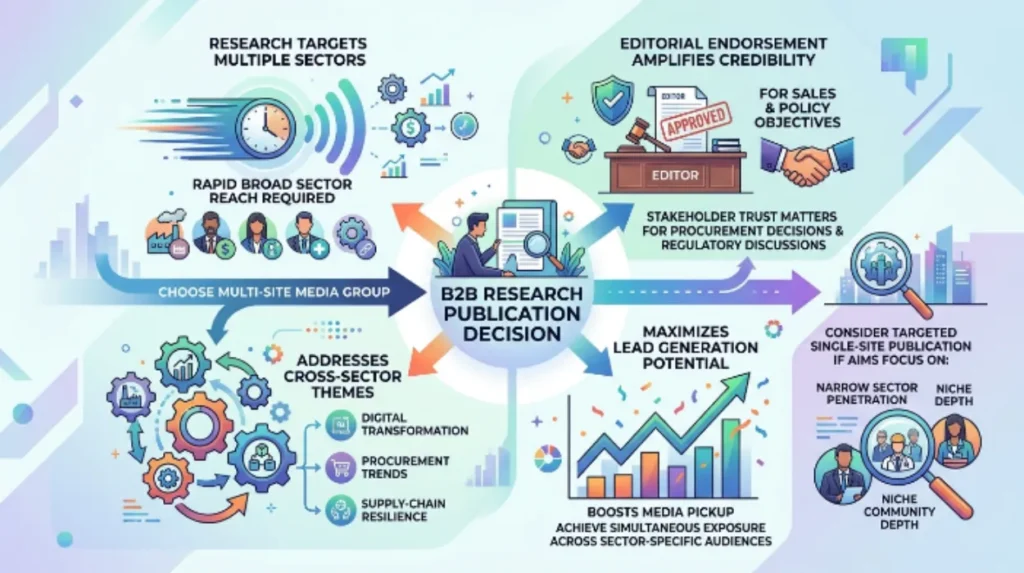
Choose a multi-site media group when research targets multiple sectors, when rapid broad sector reach is required, and when editorial endorsement amplifies credibility for sales and policy objectives.
Select multi-site distribution when the research addresses cross-sector themes such as digital transformation, procurement trends, or supply-chain resilience. Use multi-site groups when achieving simultaneous exposure across sector-specific audiences maximises lead generation potential and media pickup. Require editorial placements when stakeholder trust matters for procurement decisions or regulatory discussions. If aims focus on narrow sector penetration or niche community depth, consider targeted single-site publication instead.
Get Detailed Information Here:
Why 96% of UK Marketers Now Use AI Tools and Why Research Still Beats Them
Publishing research through a 10-site UK media group combines audience scale with editorial authority. Brands achieve broad sector reach, improved backlink profiles, and enhanced credibility when they apply canonicalisation strategies, site-specific adaptations, and robust measurement frameworks. Implement editorial controls, analytics tracking, and legal checks to mitigate risks and to maximise attribution for leads and media outcomes.
Check Out the Full Article:
The 8-Step Research Report Production Process for UK B2B Brands