

AI tools are software systems that automate data processing, content generation, audience segmentation, and performance prediction using machine learning models and rule-based automation.
AI tools include language models for text generation, prediction engines for forecasting campaign results, image generators for creative assets, and analytics platforms that surface patterns in large datasets. Marketers use these tools to process first-party and third-party data, generate draft content, score leads, and optimise bid strategies. Important entities are models (algorithms trained on datasets), datasets (structured behavioral or sales data), and APIs (interfaces that connect tools to platforms).
Most UK marketers adopt AI tools to increase speed, scale data analysis, and standardise repetitive tasks across channels. Adoption rates reflect productivity gains across campaign planning, creative drafts, and reporting. Speed matters: AI reduces time to create campaign drafts from days to hours. Scale matters: tools process millions of rows of user interactions and return segmented audiences in minutes.
Standardisation matters: automated templates deliver consistent brand structures across dozens of campaign variants. These measurable efficiencies drive widespread uptake in UK marketing teams focused on multi-channel execution and tight reporting cadences.
How does research differ from AI-generated outputs?
Research is a structured process of hypothesis, data collection, analysis, and validation that produces evidence-based conclusions; AI outputs are automated syntheses based on learned patterns and training data.
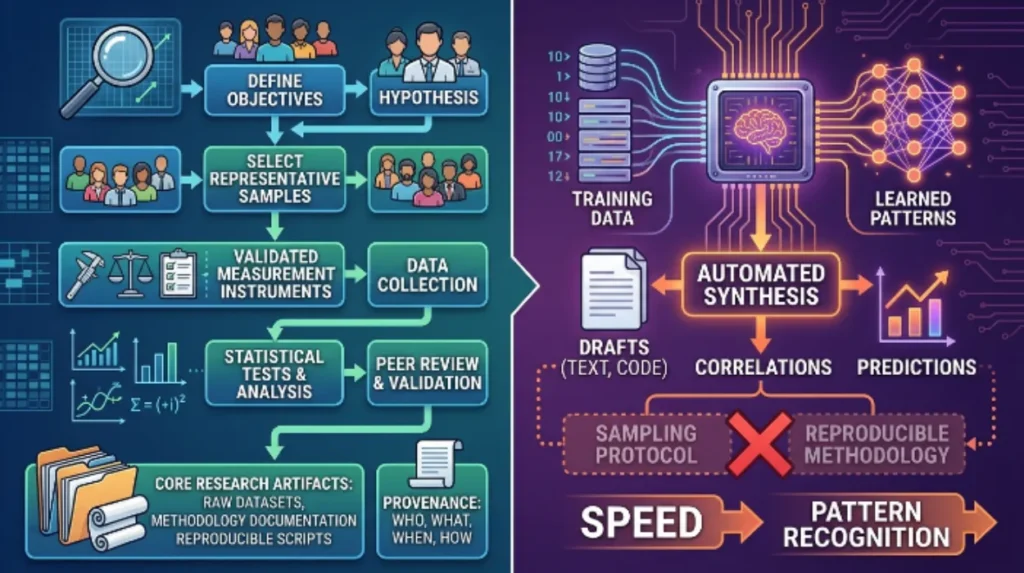
Research defines objectives, selects representative samples, chooses validated measurement instruments, and applies statistical tests. Core research artifacts include raw datasets, methodology documentation, and reproducible analysis scripts. AI outputs produce drafts, correlations, or predictions but do not document sampling protocol or provide reproducible methodology by default. Research provides provenance: who collected what, when, and how. AI outputs provide speed and pattern recognition, but not the methodological traceability that formal research includes.
What are the main steps in a research process that outperform AI-only approaches?
A research process follows clear steps: define question, design sample, collect data, clean data, analyse with documented methods, validate findings, and report limitations.
Research begins with a precise research question and measurable objectives. Sampling design ensures representativeness using probability or stratified techniques. Data collection uses validated instruments such as structured surveys, interviews, or telemetry. Cleaning involves handling missing values and checking outliers with documented rules. Analysis uses appropriate statistical models and tests with clear assumptions. Validation includes triangulation with secondary sources or replication runs. Reporting includes methods, confidence intervals, and limitations that enable peer assessment. These steps produce defensible conclusions that withstand scrutiny in ways AI-only outputs cannot.
Which components of high-quality research should marketers prioritise?
Prioritise clear research questions, representative samples, validated measures, documented analysis code, and transparent reporting of limitations.
Clear questions define the scope and metrics to track. Representative samples avoid bias in inference to population segments. Validated measures ensure that survey items and metrics truly capture intended constructs. Analysis code, in scripted languages, enables reproducibility and audit. Transparent reporting describes error margins, confidence intervals, and conditions where results do not hold. These components establish credibility for insights used in strategic planning and for external distribution to stakeholders.
What benefits do research-driven insights provide that AI tools cannot fully replace?
Research-driven insights provide methodological transparency, statistical validity, causal inference potential, and defensible attribution for strategic decisions.
Methodological transparency lets stakeholders evaluate internal validity and generalisability. Statistical validity quantifies uncertainty with metrics such as confidence intervals and p-values. Carefully designed experiments and quasi-experimental methods support causal statements about marketing actions and outcomes. Defensible attribution allows legal, regulatory, or executive stakeholders to rely on results for budgeting and policy. These benefits support long-term strategy and external reporting where traceability and reproducibility matter.
How do AI tools complement research in marketing workflows?
AI tools accelerate data processing, prototype hypothesis generation, and automate repetitive tasks while research supplies validation, sampling rigor, and documented methods.
In practice, AI tools generate rapid topic clusters, propose segmentation hypotheses, and create first drafts of copy and visuals. Researchers use those outputs as exploratory inputs, then design confirmatory studies to test the hypotheses with representative samples and statistically rigorous designs. AI automates analytics and visualisation of large datasets, reducing manual effort. Researchers validate those AI-derived patterns with controlled data collection and apply statistical corrections for bias when needed. This combination delivers speed plus rigor.
What are practical use cases where research must lead and AI supports?
Prioritise research-led approaches for audience measurement, brand health tracking, causal testing of creative, and regulatory reporting; use AI for preprocessing, draft creation, and scale analysis.
For audience measurement and segmentation used in strategic targeting, representative sampling and validated measures provide trustworthy profiles for long-term planning. For brand health tracking, repeated, standardised measurement maintains trend validity. For causal testing of creative and pricing, randomised controlled trials or matched observational studies provide attribution. For regulatory reporting, documented methods satisfy compliance. AI supports these cases by cleaning large datasets, generating initial segment descriptions, automating A/B test analytics, and producing draft reports for human review.
What quality controls ensure research findings remain superior to AI-only outputs?
Implement pre-registration of hypotheses, independent sample auditing, version-controlled analysis code, and routine replication checks.
Pre-registration records research questions, outcomes, and analysis plans before data collection. Independent sample audits verify sampling frames and recruitment practices. Version control of analysis scripts ensures reproducibility of results. Replication checks repeat analyses on holdout samples or fresh data to confirm stability of findings. These controls create an audit trail and guard against data dredging, selective reporting, and spurious conclusions that arise when relying on automated pattern detection alone.
Explore More Expert Insights:
How Original Data Became the Most Competitive Content Asset in UK Media in 2026
The UK B2B Buyer Reads 5 Reports Before Talking to Sales: What That Means
How should UK marketing teams balance AI adoption with research investment?
Allocate resources to combine rapid AI-enabled experimentation with a core research function that designs representative studies, validates results, and maintains documentation.
Set clear criteria to escalate insights from AI prototypes into formal research when decisions affect significant budgets, regulatory obligations, or long-term strategy. Maintain a small central research capability responsible for methodology, sampling, and validation. Use AI for daily optimisation, creative drafts, and large-scale analytics. Require documented replication of major insights and include confidence metrics and sampling details in executive reports. This balance preserves operational speed while ensuring strategic decisions rely on rigorous evidence.
How do legal and ethical considerations affect the research versus AI balance?
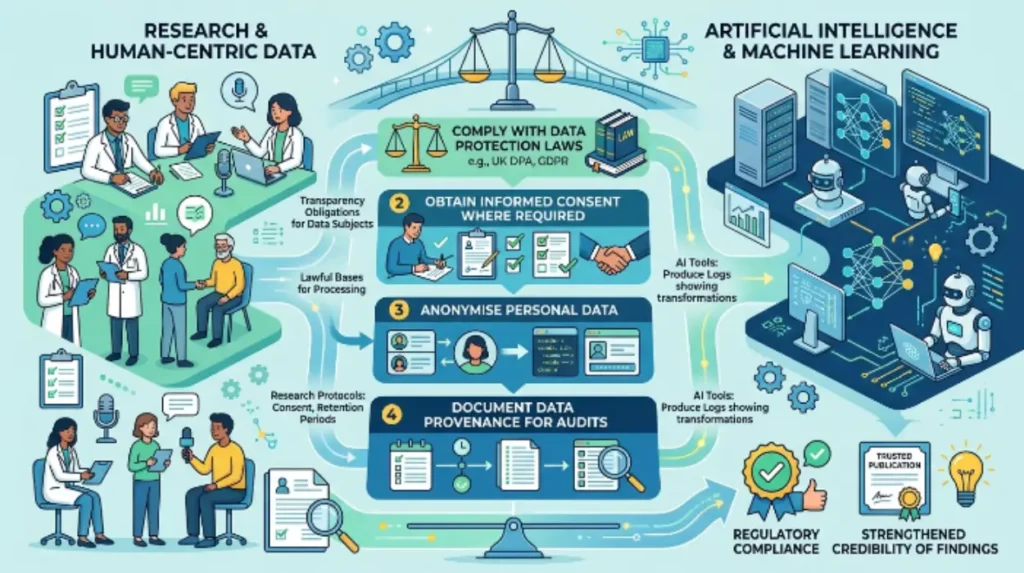
Comply with data protection laws, obtain informed consent where required, anonymise personal data, and document data provenance for audits.
UK data protection frameworks require lawful bases for processing personal data and impose transparency obligations for data subjects. Research protocols should specify consent procedures, retention periods, and anonymisation techniques. AI tools that process personal data must align with the same legal requirements and produce logs showing provenance and transformations. Documenting these steps supports regulatory compliance and strengthens the credibility of published findings.
Click Here to Explore More:
The 8-Step Research Report Production Process for UK B2B Brands
Research provides methodological transparency, representative sampling, statistical validity, and defensible causal claims. AI tools provide speed, scale, and automation. A structured approach uses AI for rapid exploration and processing while elevating important or high-impact insights into formal research workflows that document methods, validate results, and report uncertainty. This dual path delivers both operational efficiency and evidence-grade conclusions for UK marketing decisions.
Learn Everything About It Here:
Publishing Your Research Through a 10-Site UK Media Group: Reach and Credibility Compared



