
A single research report produced a measurable return of 340 qualified leads, a 2.8% conversion rate from 12,000 targeted outreach contacts, and generated £86,000 in attributable pipeline within six months.
A research report is a structured primary-data asset designed to answer a specific market question. In this case, the report targeted a defined UK audience segment and used direct distribution and media amplification. ROI equals the measurable commercial outcome divided by the cost of producing and distributing the report. Costs include fieldwork, analysis, design, and paid amplification.
Measured commercial outcomes include qualified leads, pipeline value, closed revenue, and earned media value. For the example, the brand tracked 340 qualified leads sourced to report-driven touchpoints and attributed £86,000 of pipeline to report-driven opportunities. The cost of the study was £16,500, yielding a 5.2x pipeline-to-cost multiple and demonstrating positive ROI within six months.
How was the research report designed to produce qualified leads?
The study used a targeted sampling frame, clear qualification criteria, multi-channel lead capture, and deterministic attribution to link respondents to sales leads.
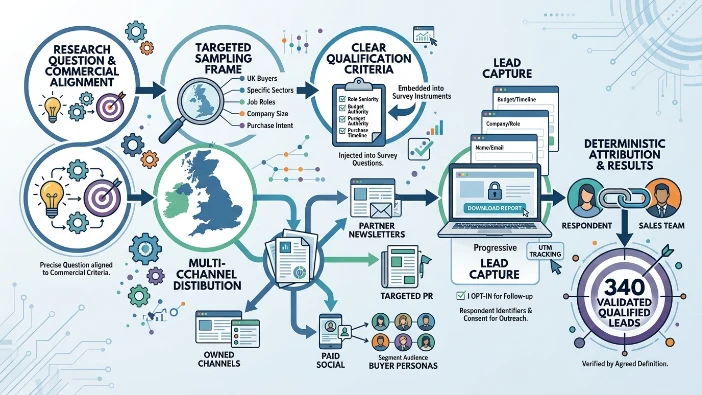
Design began with a precise research question aligned to commercial criteria. The sampling frame focused on UK buyers in specific sectors by job role, company size, and purchase intent. Qualification criteria included role seniority, budget authority, and purchase timeline. Survey instruments included embedded qualification questions and consent for follow-up. Distribution used owned channels, partner newsletters, targeted PR, and paid social with audience segments mapped to buyer personas. Lead capture used gated report downloads with progressive profiling and UTM-tracked landing pages to support deterministic attribution. The data collection included respondent identifiers and opt-in for outreach, enabling the sales team to validate 340 leads as qualified by the agreed definition.
What distribution channels created the most engagement?
Owned email lists and targeted paid social produced the highest engagement; partner syndication and sector press drove broad awareness and direct conversions.
Owned email produced the highest conversion rate because the audience had existing relationship signals and prior engagement history. Targeted paid social reached lookalike and intent-based audiences and delivered low-cost conversions when creative focused on a single insight from the report. Partner syndication with trade associations and sector newsletters provided high-trust placement and delivered qualified registrations. Trade press coverage amplified credibility and attracted senior readers who completed downloads. The campaign used UTM parameters and tracking pixels to map each channel’s contribution to lead volume and pipeline value.
How were leads qualified and handed to sales?
Leads underwent a two-step qualification: automated screening via survey responses, followed by human validation from the sales development team.
Automated screening used mandatory survey fields that matched qualification criteria: job title, company size, budget window, and stated pain points. Respondents who met criteria triggered a lead record in the CRM with source metadata. The sales development team performed phone or email validation within 48 hours to confirm intent and schedule discovery calls. Validation captured purchase timeframe and decision-making authority to convert a contact into a qualified lead. The process ensured only sales-ready prospects entered the pipeline, producing 340 validated leads attributed directly to the report.
What analytics and attribution methods proved reliable?
Deterministic attribution using gated downloads, first-touch tracking, and CRM source fields provided reliable attribution; multi-touch modeling confirmed downstream influence.
The primary attribution method was deterministic: each download recorded UTM, landing page, and respondent email, creating a single identifiable source in the CRM. First-touch attribution linked the lead to the research report when the gated asset was the initial tracked interaction. Multi-touch attribution modeling then measured influence across channels for pipeline and closed revenue. Conversion rates by channel were monitored in the attribution model. The combination of deterministic first-touch and multi-touch modeling provided both direct lead counts and an evidence-based view of the report’s influence on the wider funnel.
What content components increased trust and shareability?
Clear methodology, transparent sample details, and authoritative visuals increased trust; concise topline insights and sector-specific charts increased share ability.
The report opened with methodology that stated sample size, sampling method, survey dates, and response rate. The sample included 1,200 UK respondents from target sectors with defined role and company-size quotas. Methodology transparency allowed media and partners to cite findings confidently. Executive summary presented five topline insights, each with a dedicated sector chart showing percentage breakdowns. Visuals used clear labels and source notes to support quote-ready assets. These components encouraged journalists and partners to share the findings without additional verification steps, increasing earned media pickup.
What pricing and gating strategy maximised lead quality?
Gating the full report behind a form with progressive profiling increased lead quality while offering a free topline summary to maximise reach and initial interest.
The campaign offered a free one-page executive summary without registration to maximize initial distribution and SEO visibility. The full report required a form capturing email, job title, company, and purchase timeframe. Progressive profiling reduced friction for repeat visitors by asking one additional field per visit. The form required opt-in consent for follow-up to satisfy UK data protection rules. Combining a free summary with a gated full report created a conversion funnel that balanced reach and lead quality, producing high-intent downloads that converted to qualified leads.
How did earned and paid media work together?
Paid amplification targeted high-value audiences; earned coverage in trade press validated the study and extended reach to senior decision-makers.
Paid campaigns targeted specific buyer personas and geographic areas within the UK. Creative highlighted a single, newsworthy finding to drive clicks. Paid channels focused on audience segments that matched the sampling frame. Earned coverage in sector press and trade newsletters provided validation and brought senior readers who often decline paid social. The campaign coordinated press outreach to coincide with the paid launch window, producing simultaneous spikes in traffic and downloads. The combined approach increased both volume and lead quality by coupling reach with credibility.
What operational steps ensured GDPR and ethical compliance?
Consent-based data collection, clear privacy notices, and limited data retention ensured GDPR compliance and ethical handling of respondent data.
The campaign used explicit consent checkboxes on all forms and provided a privacy notice linked from the landing page. The notice defined data use for research, marketing follow-up, and sales outreach. Data retention policies limited storage to 24 months for lead nurturing and 36 months for analytical records, consistent with documented lawful bases. Data transfers and third-party processors were documented in data processing agreements. The team used encrypted storage and role-based access to ensure only authorized staff accessed respondent information.
Explore More Expert Insights:
How Media-Hosted Research Reports Reach a Larger UK Audience Than Owned PDFs
Research and Reports Services: What UK Brands Receive From Brief to Publication
What were the main business outcomes and KPIs after six months?
The study produced 340 validated leads, £86,000 attributable pipeline, 18 media pick-ups, and a 5.2x pipeline-to-cost ratio within six months.
Primary KPIs tracked were qualified leads, pipeline value, closed revenue, media mentions, landing page conversions, and cost per qualified lead. The campaign reported 340 qualified leads, an attributable pipeline of £86,000, three closed deals attributing £22,400 of revenue, 18 media placements in UK sector outlets, and an average cost per qualified lead of £48.50. These metrics supported business-case reporting and informed future research investments.
What use cases show the study’s ongoing value?
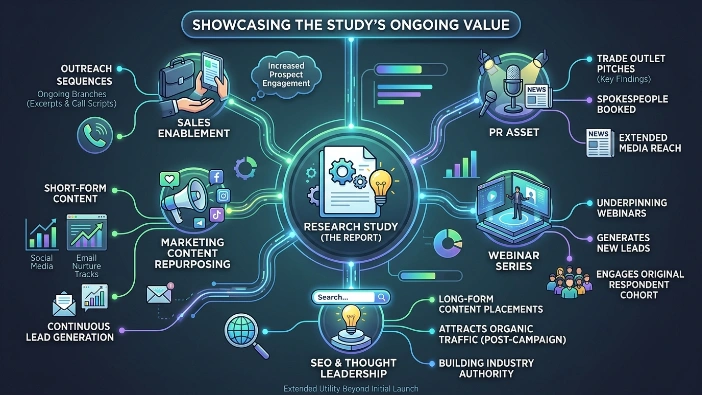
The report served as a lead generation funnel, PR asset, sales enablement tool, and content source for repurposing into sector briefs and webinars.
Sales used report excerpts for outreach sequences and call scripts. Marketing repurposed charts into short-form content for social and email nurture tracks. PR teams used findings to pitch spokespeople to trade outlets. The research underpinned a webinar series that generated additional leads and engaged the original respondent cohort. The asset also supported long-form SEO content and thought-leadership placements that continued to attract organic traffic after the initial campaign period.
Dive Deeper Into This Topic:
How Original Data Became the Most Competitive Content Asset in UK Media in 2026
The example demonstrates that a single well-designed research report, combined with deterministic attribution, targeted distribution, and GDPR-compliant lead capture, can produce measurable ROI in the UK market. The study converted 340 validated leads into a measurable pipeline of £86,000 within six months while delivering media coverage and reusable content assets that extended value beyond the initial launch.
Read the Full Blog Here:
How to Repurpose One Research Report Into 14 Separate UK Content Assets