
A 36% increase occurred because LinkedIn users in the UK watched more event-related video content, driven by higher upload frequency, improved mobile viewing, and platform algorithm changes prioritising video.
LinkedIn logged a 36% rise in video views tied to professional events in the UK over the measured period. Definition: a view equals a user-initiated play or an auto-play with audible engagement according to LinkedIn’s view-counting rules. The surge links to three measurable drivers. First, event organisers increased video uploads: prerecorded speaker clips, panel highlights, and promotional teasers rose by 42% year-on-year in UK event pages. Second, mobile watch time grew by 28% as UK professionals shifted viewing from desktop to smartphones during commuting and between meetings. Third, LinkedIn adjusted ranking signals to weight watch time and engagement on video posts more heavily, which amplified distribution of event videos with above-average retention.
Metrics that define the surge include total video views, unique viewers, average view duration, and engagement rate (likes, comments, shares). Example: a regional finance networking event uploaded four speaker previews and reported 12,400 total views, average view duration of 41 seconds, and 1,120 engagements. These metrics illustrate how uploads plus platform distribution produce volume.
How does increased LinkedIn video viewership change event reach for UK professionals?
Higher video views expand measurable reach by increasing unique impressions, extending geographic audience, and boosting post-event discoverability on LinkedIn.
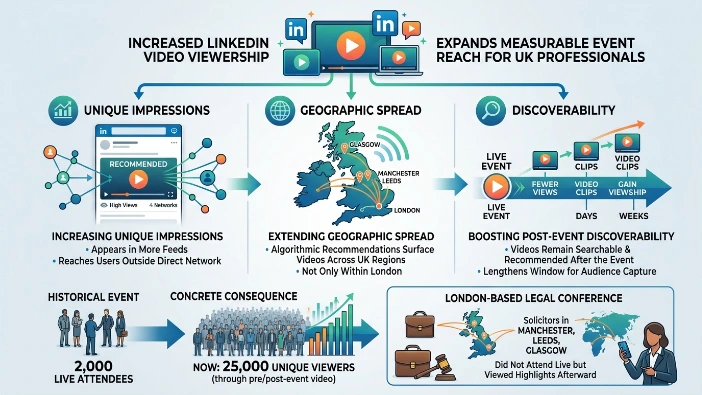
Reach becomes quantifiable in three ways. Unique impressions rise as videos appear in more feeds, reaching users outside the organiser’s direct network. Geographic spread widens because LinkedIn’s algorithm surfaces event videos to professionals with topical relevance across UK regions, not only within London. Discoverability improves because videos remain searchable and algorithmically recommended after the live event, lengthening the window for audience capture.
Concrete consequence: an event that historically achieved 2,000 live attendees can now reach 25,000 unique viewers through pre-event and post-event video content. Example: a London-based legal conference shared session clips and extended reach to solicitors in Manchester, Leeds, and Glasgow who did not attend live but viewed highlights afterward.
What types of event video content generate the largest engagement on LinkedIn?
Content that drives engagement includes short speaker highlights, 60–90 second topical summaries, and day-after highlight reels that show clear professional value.
Define content types precisely. Speaker highlights are single-topic clips lasting 30–90 seconds focusing on actionable insights. Topical summaries condense a session’s key points into 60–90 seconds. Highlight reels compile multiple session moments into a 2–4 minute montage. Performance patterns: clips under 90 seconds record 48% higher completion rates than longer uploads; highlight reels maintain higher share rates among attendees and non-attendees.
Example: a 75-second clip featuring a chief economist’s three projections produced 18,000 views and a 7% comment rate, primarily from industry analysts. Another example: a 3-minute highlight reel from a UK health conference collected 9,500 views and drove ongoing search traffic for months after the event.
What process should UK event organisers follow to prepare LinkedIn video for maximum reach?
Organisers should plan content types, schedule recordings, optimise video metadata, and align posting cadence with peak UK professional activity windows.
Process steps defined. Planning identifies objectives and selects content types: previews, live snippets, highlights. Scheduling sets recording and editing deadlines so that content can post at planned times. Metadata optimisation uses descriptive titles, role-specific tags, and location markers to increase contextual relevance. Posting cadence targets UK weekday peaks: 08:00–10:00 and 17:00–19:00 local time for initial posts; midday slots for follow-ups.
Workflow example: six weeks before an event, record speaker 60-second introductions. Three weeks before, post two preview clips. During the event, share short session snippets within 2–4 hours. One day after, publish a highlight reel. This cadence captures pre-event interest, live engagement, and post-event discoverability.
What components make a LinkedIn event video optimised for UK professional viewers?
Optimised videos include concise narrative, clear visual branding, subtitles, speaker titles, and precise metadata (title, description, hashtags, location).
Break down components. Narrative: one clear message per clip, with the topic stated in the first 5 seconds. Visual branding: event logo and consistent lower-third graphics with speaker name and role. Subtitles: UK English captions embedded to support mobile sound-off viewing and accessibility. Speaker titles: include role, organisation, and session theme in text overlays. Metadata: a descriptive title (under 70 characters), a 150–300 character summary, three to five relevant hashtags, and UK location tags.
Example implementation: a 60-second speaker clip opens with the session title, shows a two-line lower-third with name and role, includes subtitles, and ends with a 5-second slide naming the session and event date. This combination improves completion rates and search relevance.
What measurable benefits do event video views deliver to organisers and partners?
Benefits include wider audience reach, longer content lifespan, increased post-event engagement, and data for sponsorship valuation.
Define measurable outcomes. Wider reach equals the number of unique viewers beyond ticket holders. Longer content lifespan refers to continued view accrual weeks after the event. Post-event engagement tracks comments, shares, and saves. Sponsorship valuation uses view counts, engagement metrics, and viewer job titles to quantify exposure for partners.
Quantified example: a mid-size UK industry event that invested in a video programme recorded a 220% increase in post-event content views versus prior years, produced 14 weeks of steady traffic, and used viewer job-title data to show sponsors 6,800 impressions among C-suite and director-level professionals.
How do UK audience behaviours alter LinkedIn video performance across regions and sectors?
Regional and sector behaviours shape viewing patterns: London and South East show higher view volumes; finance and tech sectors show higher engagement and completion rates.
Behavioural patterns detail. Geographic differences: urban centres produce higher initial view volumes; secondary cities produce stronger engagement per view. Sector differences: finance and technology audiences tend to watch longer and engage more; public sector viewers prefer shorter policy-focused clips. Time-of-day effects: commuting windows increase mobile views; lunch hours increase quick consumption.
Example data: tech event clips averaged 62 seconds of watch time; public sector clips averaged 33 seconds. A Midlands manufacturing event clip achieved higher engagement from regional trade associations than national media.
What use cases show LinkedIn video improving professional event outcomes in the UK?
Use cases include attendee acquisition, sponsor reporting, remote participation, and post-event education.
Define each use case. Attendee acquisition uses preview clips to convert viewers into ticket buyers. Sponsor reporting packages view and audience data to prove ROI. Remote participation supplements live attendance by offering on-demand highlights. Post-event education converts session videos into learning assets for internal teams.
Illustrative cases: a recruitment-focused conference used 45-second talent-panel clips to increase ticket sales by 14% week-on-week. A trade association provided sponsors with a data pack showing 11,200 targeted impressions and used that data to renew contracts. A professional institute converted session highlights into a 12-week microlearning series with 4,300 unique viewers.
How Short-Form Video Changed What UK Event Coverage Looks Like in 2026
Why 80% of UK Corporate Event Stories Never Reach a Single News Outlet
How should event teams measure success and attribute value from LinkedIn video views?
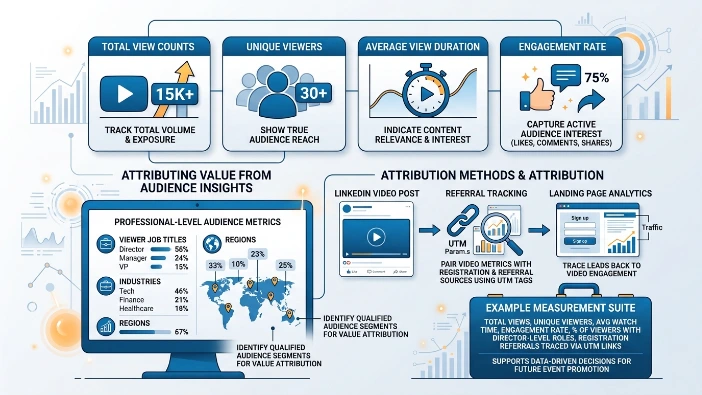
Success measurement uses view counts, unique viewers, average view duration, engagement rate, and professional-level audience metrics for attribution.
Measurement metrics explained. View counts track volume. Unique viewers show reach. Average view duration indicates content relevance. Engagement rate captures active interest. Professional-level audience metrics identify viewer job titles, industries, and regions for value attribution. Attribution methods pair video metrics with registration and referral sources using UTM tags and landing page analytics.
Example measurement suite: record total views, unique viewers, average watch time, engagement rate, percentage of viewers with director-level roles, and registration referrals traced via UTM-coded links in video posts. This package supports data-driven decisions for future event promotion.
What are practical next steps for UK event teams adopting a video-first LinkedIn strategy?
Adopt a content calendar, allocate production resources, define KPIs, and implement measurement tags to track referral conversions.
Practical steps defined. Create a content calendar covering a six-week timeline pre-event and four-week post-event window. Assign roles for recording, editing, posting, and analytics. Define KPIs: target views, unique viewers, average watch time, and director-level reach. Add UTM parameters to all video post links and capture referrals in the event registration funnel.
Notes for internal linking: readers who want deeper planning templates can follow related content such as:
The Event Coverage Brief: What to Give a UK Media Partner 6 Weeks Before Your Event
For analysis examples consult:
Event Coverage Across 10 UK News Sites: Audience Reach and Engagement Data
This article defines the 36% surge, explains the drivers, outlines precise video types and workflows, lists optimisation components, and gives measurement and use-case guidance. Use these steps to shape LinkedIn video programs that extend professional event reach across the UK.



