

Overtly promotional content is text or media whose main purpose is to sell a product or service using direct persuasion, clear brand emphasis, and calls to action. Overtly promotional content prioritises conversion language, brand mentions, and transactional framing over information. Product, brand, campaign, call-to-action, sponsored placement. Example: a webpage that repeatedly states “buy now” and lists product features with price and immediate discount codes.
Overtly promotional content uses persuasive triggers such as urgency, heavy discounts, or repeated brand repetition. It often lacks independent evidence, third-party context, or neutral explanation. In the UK context, readers expect transparency about sponsorship and prefer factual framing when content relates to news, public policy, or health.
Why do UK audiences distrust promotional content?
UK audiences distrust promotional content because they expect impartiality, factual verification, and relevant context; overt persuasion reduces perceived trustworthiness by clear margins. Trust in content depends on perceived impartiality, source reputation, and evidence. Research surveys show trust declines when content contains overt sales language, exaggerated claims, and unclear sponsorship. UK readers apply source evaluation: they check author credentials, corroborating sources, and regulatory signals such as advertising disclosure. When those signals are missing, engagement drops and bounce rates rise.
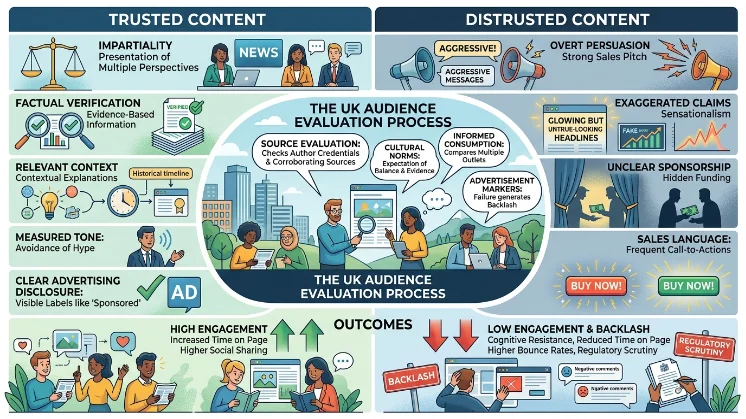
Cultural norms in the UK favor measured tone and evidence. Readers living in urban and regional markets compare multiple outlets and behave as informed consumers. Promotional framing that conflicts with an audience’s information needs produces cognitive resistance. This resistance reduces time on page and social sharing. News consumers also use advertisement markers; failure to mark content clearly as sponsored generates backlash and regulatory scrutiny.
What content formats do UK audiences prefer instead of overt promotion?
UK audiences prefer informative, utility-focused content formats: explainers, how-to guides, independent reviews, and evidence-backed analysis. Formats prioritise user benefit and neutral language. Explainers define terms, list steps, and cite data. How-to guides present a process with clear stages and measurable outcomes. Independent reviews compare specifications and include verifiable tests or third-party citations. Long-form backgrounders situate offerings within policy, regulation, or scientific context. These formats provide utility and reduce perceived persuasion.
A step-by-step guide that explains a regulatory process; an independent product comparison that lists measured performance numbers; a data-backed explainer on health implications referencing peer-reviewed sources.
How should writers structure content to avoid a promotional tone?
Structure content around clear user questions, verifiable facts, and neutral subsections that separate evidence from interpretation. Start with a concise definition of the topic. Follow with factual background, then methods or process descriptions. Present data in numbered figures or dated sources. Use subheadings for discrete topics: evidence, practical steps, limitations, and examples. Keep sentences short and declarative. Avoid imperative sales verbs and discount-oriented language. Disclose sponsorship or commercial relationships in a single factual sentence when relevant. This layout supports transparency and reader control.
Which signals increase credibility in non-promotional content?
Credibility signals include transparent authorship, dated sources, citations to public records or research, and clear disclosure of any commercial relationships. Authorship displays name, role, and relevant credentials. Sources include government publications, peer-reviewed journals, industry reports, and named experts. Dated citations provide temporal context. Disclosure statements use neutral phrasing and exact terms such as “sponsored by” or “funded through.” Inline references or footnotes enhance verifiability. Visual signals such as inspectable data tables or screenshots of source documents add trust. These signals lower perceived bias and raise engagement metrics.
What language choices remove promotional cues?
Language that focuses on facts, measurable outcomes, and neutral verbs removes promotional cues and signals informational intent. Use verbs such as describe, explain, report, and define. Use numbers for quantities and dates for events. Replace superlatives with specific comparisons and measured metrics. Avoid comparative adjectives without data. Present pros and cons with balanced evidence. When including user testimonials, label them clearly and provide context such as sample size and date. These choices produce clarity and permit citation-based evaluation.
How does content format influence search and discovery?
Search engines rank informative content higher when it answers clear user queries, includes structured entities, and cites authoritative sources. Content that matches query intent and uses defined entities—people, organisations, dates, reports achieves better relevance signals. Use explicit definitions and labeled data to improve snippet eligibility. Structured lists of steps, numbered processes, and named sources support indexing. Content that avoids sales language aligns with informational search intent such as “how,” “what,” and “why” queries. This alignment increases organic visibility and reduces bounce.
What measurement metrics show success for non-promotional content?
Success metrics include time on page, scroll depth, repeat visits, backlink growth from credible domains, and engagement via shares and comments. Track session duration and percentage of users who consume full content. Monitor backlinks from news outlets, academic sites, or government pages. Measure social shares and reader comments that reference facts rather than promotional claims. Observe organic keyword rank improvements for informational queries. Use A/B testing to compare neutral language against promotional variants and record differences in engagement and conversion funnels. These metrics confirm whether factual content meets user needs.
Explore More Expert Insights:
How Sponsored Editorial Became a Top-3 B2B Awareness Format in the UK in 2026
The UK Branded Content Boom: What the £17.9bn Advertising Export Market Is Telling Us
When is sponsored content acceptable for UK audiences?
Sponsored content is acceptable when the sponsorship is clearly disclosed, the content provides independent value, and editorial control remains transparent. Disclosure must use explicit phrasing near the content headline. The content should include independent evidence and avoid sales-only framing. Editorial independence requires that authorship and sourcing remain visible. Regulatory codes in the UK require clear labeling of paid placements. Readers respond positively when sponsored content educates and separates commercial intent from informational claims.
What topics work best for informational, non-promotional content?
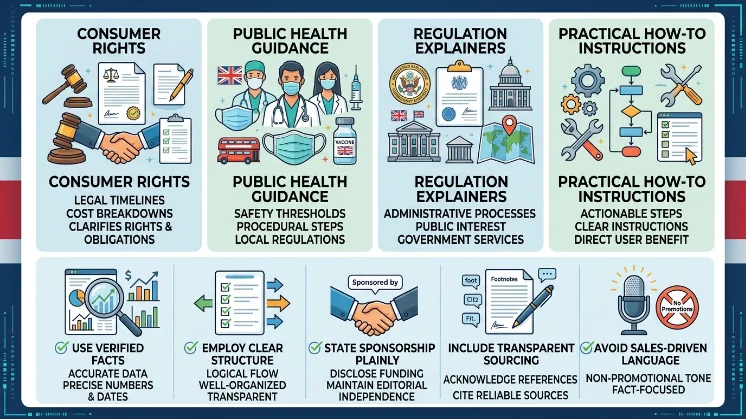
Topics with public interest, policy impact, or clear user benefit perform best: consumer rights, public health guidance, regulation explainers, and practical how-to instructions. These topics provide measurable value: legal timelines, cost breakdowns, procedural steps, and safety thresholds. Content that clarifies rights and obligations or explains an administrative process addresses clear user needs. In the UK, subjects tied to government services, local regulations, and health guidance attract search intent and generate citations.
Find Out More:
How to Repurpose a Sponsored Article Into 6 UK Distribution Assets
Non-promotional, informational content succeeds with UK audiences when it focuses on verified facts, clear structure, and transparent sourcing. Writers must define entities, use precise numbers and dates, and avoid sales-driven language. When sponsorship exists, state it plainly and ensure editorial independence. This approach improves trust, engagement, and discoverability while aligning with UK reader expectations for factual clarity.
Dive Deeper Into This Topic:
Buying Sponsored Content in the UK: A Step-by-Step Procurement Guide for Marketers



