
Visual experience banner ads are rich-media display ads that combine high-resolution imagery, short video, and interactive elements to showcase resort facilities and experiences in a single creative unit. These ads deliver visual storytelling through formats such as animated HTML5 banners, short autoplay video loops, and light interaction (hover effects, simple carousels). Define entities: rich-media ads are digital display units with embedded multimedia; HTML5 banners are cross-device creatives using HTML, CSS, and JavaScript; interactive elements are user-triggered micro-interactions that do not require navigation away from the page.
Visual experience banner ads load within standard display placements on publishers and DSPs. They present curated scenes: room interiors, pools, dining, and activities. They measure engagement with metrics beyond clicks: viewability, hover time, interaction rate, and completed video percentage. Publishers report viewability targets at 70% for branding effectiveness and 50% for impact on consideration.
How do resorts use these ads to guide potential guests through the booking funnel?
Resorts map ad creative to funnel stages by using immersive visuals for awareness, comparative experiences for consideration, and urgency cues for conversion. At the middle of the funnel, resorts focus on experience differentiation and preference building. Creative variants highlight amenities, local experiences, and guest testimonials in short visual sequences. Audience segments include prior site visitors (retargeting), lookalike audiences from past bookers, and affinity segments (wellness, golf, family travel). Frequency caps set at 3–7 impressions per week prevent oversaturation.
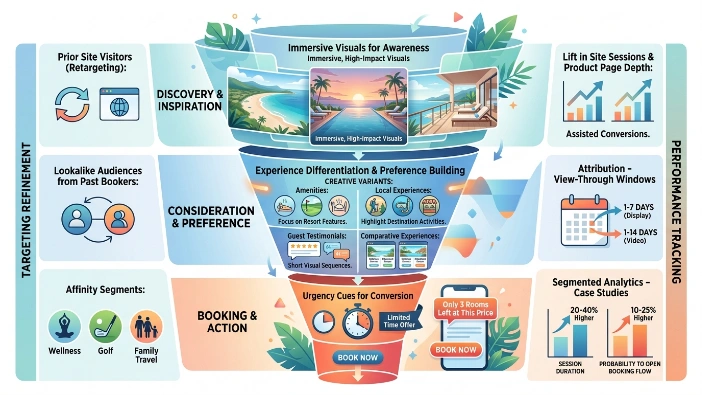
Measurement aligns with goals: lift in site sessions, product page depth, and assisted conversions are tracked. Attribution uses view-through windows of 1–7 days for display and 1–14 days for video, depending on campaign length. Segmented analytics compare behaviour: users exposed to experience banners show 20–40% higher session duration on resort pages in industry case studies, and a 10–25% higher probability to open booking flow.
What creative components make these banner ads effective for resorts?
Effective creatives use a hero visual, short video loop (5–12 seconds), concise benefit text, and a subtle interactive element that encourages exploration without leaving the page. A single high-resolution image of a signature resort scene sized for typical ad aspect ratios (300×250, 728×90, 300×600, 320×50). Video loop: 5–12-second clip encoded for web (H.264 or VP9) with bitrate controls to keep load under 150 KB when possible. Benefit tex, 8–12 words emphasizing unique experience (for example, “Clifftop spa with private seawater pools”). Interactive micro-experiences: image carousels, small hover-activated maps, or expandable overlays limited to one additional frame.
Design constraints: creatives must load within 2 seconds on average mobile networks. File weight targets, static banners under 150 KB; animated or HTML5 rich media under 300 KB, with progressive asset loading. Include readable alt text and ensure 3:1 contrast ratio for key copy. Include viewability tracking and custom dataLayer events for interactions.
How do resorts choose audiences and place these ads for maximum impact?
Resorts select audiences using first-party site data, CRM segments, and programmatic affinity Placements prioritise travel, lifestyle, and luxury inventory with high viewability. Recent site visitors (30–90 days), cart abandoners and booking starters, high-lifetime-value past guests, CRM lookalikes, and contextual affinity groups (beach travel, wellness). Programmatic targeting pairs these segments with premium travel and regional publisher placements in the UK and EU markets for cross-border demand.
Placement strategy: use reserved premium inventory for brand-safe environments and open exchange for scaled prospecting. Run supply-path optimisation to reduce unnecessary intermediaries and use private marketplace deals for guaranteed viewability. Timing: schedule ads during high-consideration windows—weekday evenings and weekends for leisure planners, and holiday booking peaks such as early December for UK travellers booking summer stays.
What measurement metrics show that visual experience banners nurture guests effectively?
Key metrics include viewability, interaction rate, engagement time, assisted conversion value, and lift in qualified site sessions. Measure using the MRC standard of 50% in-view for at least 1 second for display and 50% for 2 seconds for video. Interaction rate: proportion of impressions with hover, expand, or click-to-expand events. Average seconds of interaction per engaged impression. Revenue or bookings attributed to banner exposure via multi-touch models. Sessions that reach the resort’s accommodation pages or booking widget.
Benchmark values from industry implementations: viewability targets of 60–80%, interaction rates of 1–6% for rich-media, average engagement time of 6–22 seconds, and a 15–30% increase in session depth among exposed users. Use cohort analysis to separate first-time exposure from repeated exposures and to evaluate booking lead times.
How do resorts structure campaigns and budgets for visual experience ads?
Campaigns set separate budgets for prospecting and retargeting, allocate 40–60% to retargeting and run A/B tests on creative variants and frequency caps. Budget allocation: prospecting funds drive reach to new segments, retargeting funds focus on users who visited property or packages. Assign 40–60% of spend to retargeting to capture warmed audiences. Run 4–8 week waves with 2–3 creative rotations per wave. Run multivariate tests on the hero image, headline copy, and interactive element. Frequency management: set weekly caps between 3–7 impressions to balance memory with consideration.
Optimisation cadence: review results weekly for viewability and interaction, and every 14 days for conversion-related signals. Stop underperforming placements and reallocate to high-viewability sources. Tagging: implement UTM parameters and event tags for booking funnel steps to tie exposure to downstream behaviour.
What are common technical and compliance considerations for resort banner ads in the UK?
Technical considerations include load times, responsive creatives, and cross-device compatibility compliance covers data privacy under UK GDPR and advertising standards for claims. Deliver responsive HTML5 that adapts to desktop, tablet, and mobile. Test creatives on common browsers and ad servers. Use lazy-loading for non-critical assets. Ensure media files follow publisher file-size caps and implement fallback static images for unsupported environments.
Follow UK GDPR for audience targeting obtain consent for cookies where required and respect signal-based opt-outs. Keep transactional and booking communications within consented channels. Follow Advertising Standards Authority (ASA) rules: state factual claims with clear substantiation, avoid misleading pricing or availability statements, and disclose sponsored content when required.
Explore More Expert Insights:
How Booking Platforms Improve Travel Intent Using Retargeting Ads
How Tourism Brands Build Destination Interest Using Banner Campaigns
What specific use cases show impact for resorts using visual experience banners?
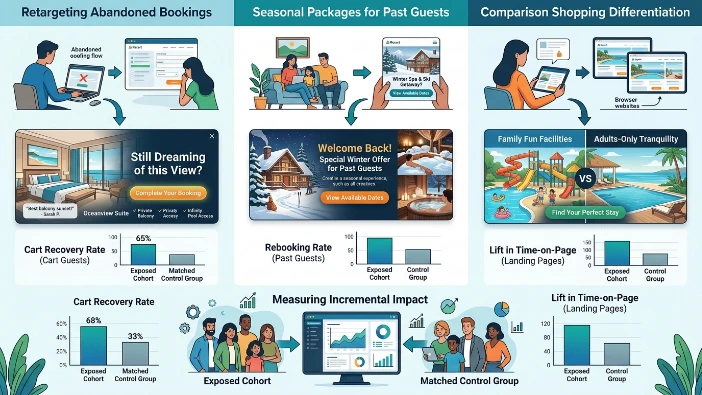
Use cases include retargeting abandoned booking flows, promoting seasonal packages to past guests, and highlighting experience differentials to comparison shoppers. Show banners that replay the room or package the user viewed, with short testimonials or amenity highlights. Seasonal packages: target past guests with creative showcasing seasonal experiences (for example, winter spa offers) and a quick interaction to view available dates. Comparison shoppers: serve creative sets that contrast core experiences family facilities vs adults-only options using short visual sequences to guide preference.
Cart recovery rate, rebooking rate among past guests, and lift in time-on-page for comparison landing pages. Compare exposed cohorts to matched control groups for attribution of incremental impact.
Click Here to Explore More:
How Resorts Boost Occupancy Using Banner Ads
What are practical next steps resorts use to implement a visual experience banner campaign?
Set objectives (site engagement and assisted conversions), assemble creative assets with defined weights, segment audiences by intent, choose premium placements, and run 4–8 week test waves with clear KPIs. Define KPIs—viewability at 70%, interaction rate of 2% or higher, and a 15% lift in qualified site sessions. Prepare hero images (minimum 1920×1080 master), 5–12 second video loops, and compressed versions for mobile. Audience segments: last 90-day site visitors, booking starters, and CRM lookalikes. Rserve high-viewability inventory and use private marketplaces for premium travel content. Schedule weekly and biweekly reviews, use cohort lift studies, and export tag-level data for attribution.
Dive Deeper Into This Topic:
Resort Experience Ads That Convert Visual Interest Into Paid Stays