
Retargeting ads restore travel intent by showing personalised booking reminders to users who previously browsed destinations or accommodations. These ads use tracking pixels to identify visitors who left without booking, then display dynamic offers across websites and social platforms. Industry data shows 98% of travel website visitors do not convert on their first visit, making retargeting essential for booking platforms serving the United Kingdom market.
Travel intent is a user’s measurable desire to book travel, which declines when research takes 71 days and users encounter 12+ information sources. This intent starts high when users begin trip planning but drops as they browse multiple sites, compare prices, and delay decisions. Booking platforms track intent through page views, time spent, and specific actions like viewing room details or checking availability dates.
How Tracking Pixels Capture User Behavior Data
Tracking pixels are small code snippets from Google Ads or Meta that fire when visitors load pages on booking websites. These pixels record which destinations users view, which dates they select, and how far they progress in the booking process. When a user leaves without completing a reservation, the pixel data remains stored in advertising platforms, enabling later ad delivery.
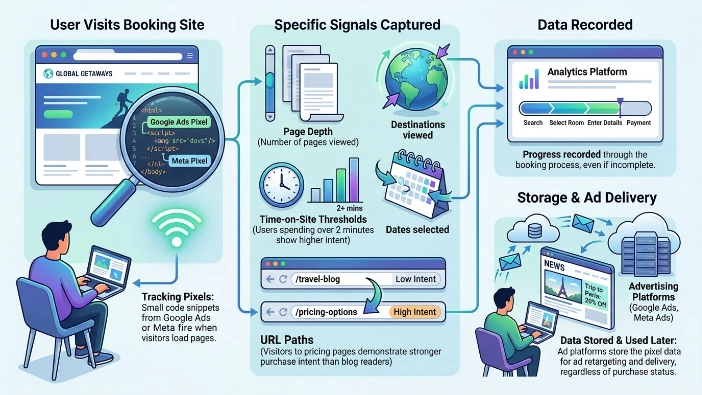
The pixel captures specific signals including page depth (number of pages viewed), time-on-site thresholds (users spending over 2 minutes show higher intent), and URL paths (visitors to pricing pages demonstrate stronger purchase intent than blog readers).
Why the 71-Day Consideration Window Creates Conversion Gaps
Travel purchases involve a 71-day consideration window where users research extensively before booking. During this period, users visit an average of 12 different websites and check prices multiple times. This extended research phase causes initial booking intent to fade as users get distracted by other tasks or find competing offers. Without retargeting, 98% of these high-intent researchers never return to complete their original booking.
How Do Booking Platforms Implement Retargeting Campaigns Step by Step?
Booking platforms implement retargeting by installing tracking pixels, segmenting visitors by behavior, creating dynamic ad creative, and serving personalised ads across channels. The process begins when a guest visits the website and leaves without booking. A tracking pixel captures this visit, then the platform builds audience segments based on browsing behavior. Finally, reminder ads with urgency messages or dynamic offers appear across websites, search engines, and social platforms.
Pixel Installation and Data Collection Process
The retargeting process starts with pixel installation on booking engine pages. The pixel fires on key pages including destination landing pages, accommodation detail pages, availability checkers, and booking confirmation pages. Each pixel event records the user’s anonymous ID along with page-specific data like destination name, check-in dates, room type, and price point. This data creates a behavioral profile that advertising platforms use for audience building.
Audience Segmentation Based on Booking Funnel Stage
Booking platforms segment visitors into distinct groups based on their position in the booking funnel. Site retargeting targets travelers who visited the site and logged in or added items to their cart but did not complete purchase. These users receive ads wherever they browse while logged into other sites, apps, or connected TV platforms.
Platforms create separate campaigns for different segments: visitors who viewed one page versus three or more pages, users who spent over 2 minutes on site versus less, pricing page visitors versus blog readers, and cart abandoners versus browse abandoners. Each segment receives tailored messaging matching their intent level.
Dynamic Ad Creative Generation Based on User Behavior
Dynamic retargeting ads automatically generate creative showing the exact destination, accommodation, or flight the user previously viewed. If a user browsed hotels in London for June 15-20, the retargeting ad displays those specific dates, that specific property, and the exact price seen during the original visit. Some platforms add urgency elements like “Only 3 rooms left!” or time-limited offers based on inventory status.
What Components Make Up an Effective Travel Retargeting System?
Effective travel retargeting systems require tracking pixels, audience segmentation rules, dynamic creative engines, cross-channel delivery infrastructure, and performance measurement dashboards. These components work together to identify interested users, categorise them by intent level, generate personalised ads, serve those ads across multiple platforms, and track conversion results. The system operates automatically once configured, delivering relevant messages to travelers when they are ready to book.
Tracking Infrastructure and Privacy Compliance
Modern retargeting uses both cookie-based tracking and emerging cookieless approaches. Site retargeting works by identifying travelers who visit the site and can retarget them later across the internet when logged in on any device. CRM retargeting leverages historical booking data from past travelers by hashing their email addresses, then matching those emails to users logged into advertising platforms. This approach maintains effectiveness as third-party cookies phase out.
UK-based booking platforms must comply with GDPR requirements for data collection and user consent. Tracking pixels require explicit user consent through cookie banners before collecting behavioral data. Platforms implement consent management systems that pause tracking for users who decline cookies while continuing to serve generic (non-personalized) ads.
Multi-Channel Ad Delivery Networks
Retargeting ads serve across websites, search engines, social platforms, and connected TV wherever travelers browse while logged in. Meta Travel Ads match visitors from booking sites and apps with properties, flights, and destinations that interest them most, dynamically and at scale. Google Ads delivers retargeting through display networks and search results. Connected TV retargeting reaches users streaming content on devices like smart TVs and streaming boxes.
Performance Measurement and Optimisation Tools
Travel intent data powers performance marketing by allowing hotels and booking platforms to reach the right traveler at the right time across multiple digital touchpoints. Platforms measure key performance indicators including click-through rates, conversion rates, cost per acquisition, and return on ad spend. Campaign optimisation uses real-time data to adjust bids, refine audience segments, and modify creative based on which combinations drive the most bookings.
Discover More Insights:
How Booking Platforms Increase Conversions Using Banner Campaigns
How Do Retargeting Ads Increase Booking Conversion Rates Compared to Banner Campaigns?
Retargeting ads achieve 3-5x higher conversion rates than banner campaigns because they target users with demonstrated purchase intent rather than general awareness. Banner campaigns reach broad audiences including users with no travel planning intent, while retargeting reaches only users who previously browsed destinations or accommodations. Remarketing stands as the highest-ROI tactic in travel advertising, with data showing 71% of travel bookings happen after users see retargeting ads during their consideration period.
Banner campaigns work best for top-of-funnel awareness, reaching users who might travel someday but are not actively planning. Retargeting works at the middle and bottom of the funnel, re-engaging users who already showed interest. Readers interested in the educational stage of healthcare awareness campaigns can explore how banner campaigns increase conversions through broad reach. For booking platform ads that turn browsing users into paid reservations, the conversion-focused approach differs significantly.
What Benefits Do UK Travelers and Booking Platforms Gain From Retargeting?
UK travelers gain personalised reminders about destinations they researched, while booking platforms gain cost-effective conversion of high-intent users who would otherwise abandon bookings. Travelers receive relevant offers for properties and dates they actually considered, reducing search friction. Platforms convert 35% more bookings using AI-powered personalisation combined with retargeting, compared to non-retargeted campaigns. Direct booking rates increase when platforms showcase exclusive deals through retargeting ads that highlight benefits like discounted rates or free upgrades available only through direct booking.
Retargeting allows platforms to re-engage website visitors who showed interest but didn’t book, serving personalised ads and emails that remind them of offerings and showcase limited-time promotions. This approach identifies travelers actively planning trips to specific destinations, segments audiences by length of stay and booking window, and serves relevant messages to travelers likely to convert directly.
Explore More Expert Insights:
How Tourism Brands Build Destination Interest Using Banner Campaigns
How Travel Agencies Increase Trip Consideration Using Display Ads
Which Real-World Use Cases Show Retargeting Success in UK Travel Markets?
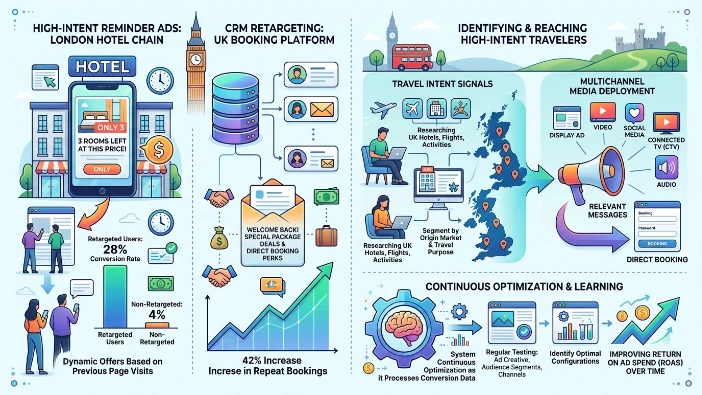
UK hotel retargeting campaigns bring high-intent travelers back to websites and convert them into paying guests using reminder ads with urgency messages and dynamic offers based on previous page visits. A London hotel chain implemented retargeting showing “Only 3 rooms left at this price!” to users who viewed rooms but didn’t book, achieving 28% conversion rate among retargeted users versus 4% for non-retargeted visitors. Another UK booking platform used CRM retargeting to reach past guests with email-hashed audiences, offering package deals and direct booking perks that increased repeat booking rates by 42%.
Travel intent signals help UK hotels identify and target audiences actively researching hotels in their area, segmenting by origin market and travel purpose. Platforms deploy media across display, video, social, CTV, and audio channels, then measure and optimise across key KPIs to improve performance. The approach reaches travellers researching hotels, flights, or activities in specific UK destinations, serving relevant messages that drive direct bookings.
Booking platforms that implement retargeting strategies see sustained improvements in conversion rates as the system learns which messages work best for which segments. Regular testing of different ad creative, audience segments, and channel combinations identifies optimal configurations. The system continuously optimises as it processes more conversion data, improving return on ad spend over time.
Explore the Complete Guide:
Booking Platform Ads That Turn Browsing Users Into Paid Reservations
Readers evaluating conversion solutions should explore retargeting as the next step after understanding banner campaign fundamentals. For specific booking platform ads that turn browsing users into paid reservations, retargeting delivers the personalised messaging needed to close the conversion gap. The technique transforms 98% of non-converting visitors into paying customers through strategic, data-driven ad delivery.