High-intent display campaigns in hospital marketing are targeted digital advertising systems that deliver treatment-focused visual messages to users showing strong readiness for healthcare decisions, using behavioral signals, search activity patterns, and repeated exposure indicators across digital platforms to influence final treatment selection.
High-intent display campaigns operate within programmatic advertising networks. These networks distribute visual healthcare content across websites and mobile applications based on user behavior signals.
High-intent signals include repeated healthcare searches, frequent visits to medical information pages, and engagement with treatment comparison content. These signals indicate readiness for decision-making.
Hospitals structure these campaigns to focus on treatment clarity. Messaging shifts from general awareness to specific service pathways such as diagnostic confirmation, specialist consultation, and procedure scheduling.
In the UK healthcare digital ecosystem, these campaigns align with structured patient information flows where users actively evaluate healthcare providers before selecting treatment options.
How do high-intent display campaigns influence treatment decisions?
High-intent display campaigns influence treatment decisions by reinforcing treatment clarity, reducing uncertainty in healthcare choices, presenting structured service comparisons, and delivering repeated exposure to decision-ready medical information across digital platforms during final evaluation stages of patient journeys.
Treatment clarity increases when users receive consistent messaging about specific healthcare services. This reduces ambiguity during decision-making.
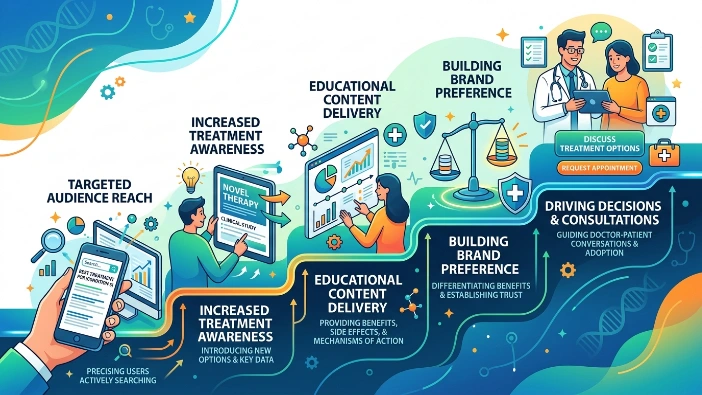
Uncertainty reduction occurs through structured presentation of treatment categories. Users understand what each medical service includes and how it relates to their condition.
Structured comparison is achieved when campaigns present multiple treatment pathways. For example, diagnostic imaging versus specialist consultation pathways appear in organised formats.
Repeated exposure strengthens decision confidence. Users encountering consistent healthcare messaging across multiple platforms develop familiarity with service options.
Decision influence occurs when users transition from information gathering to selecting a healthcare provider based on repeated digital exposure.
What defines a high-intent patient in display advertising systems?
A high-intent patient in display advertising systems is a user who demonstrates repeated healthcare-related digital behavior, including multiple treatment searches, extended engagement with medical content, and frequent interaction with healthcare comparison pages indicating readiness to make a treatment decision.
Repeated healthcare behavior includes multiple visits to medical information websites within a short timeframe. This indicates active research.
Treatment search repetition includes queries related to specific symptoms, procedures, or diagnostic services. This shows focused healthcare interest.
Extended engagement occurs when users spend longer durations on healthcare content pages. This reflects deeper evaluation activity.
Healthcare comparison interactions include viewing multiple treatment options across different digital platforms. This creates structured decision pathways.
High-intent classification is based on aggregated behavioral signals across devices and browsing sessions.
How do hospitals structure decision-focused display advertising in the UK?
Hospitals structure decision-focused display advertising in the UK by using geotargeted programmatic systems, treatment-specific messaging frameworks, behavioral intent segmentation, and regulated healthcare communication standards to deliver precise, decision-ready information to users actively evaluating treatment options.
Geotargeted systems ensure that users receive healthcare messages relevant to their geographic location. This connects digital exposure with real-world hospital access.
Treatment-specific messaging focuses on clearly defined healthcare services. Examples include imaging diagnostics, specialist outpatient care, and surgical consultation pathways.
Behavioral intent segmentation organizes users based on their digital activity. This includes repeated healthcare searches and comparison behavior.
Regulated healthcare communication standards ensure that information remains consistent with UK healthcare guidelines and public information systems.
Decision-focused advertising integrates these components to deliver structured treatment information at the final stage of healthcare evaluation.
What role does display advertising play in final treatment selection?
Display advertising plays a final-stage role in treatment selection by reinforcing service clarity, providing structured comparison signals, increasing familiarity with healthcare providers, and supporting confirmation of healthcare decisions through repeated exposure across high-intent digital environments during final patient decision cycles.
Service clarity improves when users repeatedly encounter specific treatment information. This reduces confusion at the decision stage.
Structured comparison signals allow users to evaluate multiple healthcare pathways. This includes diagnostic options, treatment methods, and consultation types.
Familiarity with healthcare providers increases through repeated exposure across digital platforms. Users recognize service names and categories.
Decision confirmation occurs when users repeatedly see consistent healthcare messaging aligned with their treatment needs.
Read:
How Hospitals Increase Treatment Consideration Using Display Advertising
This stage connects structured evaluation with final healthcare selection behavior in digital environments.
How do behavioral signals determine high-intent targeting?
Behavioral signals determine high-intent targeting through tracking repeated healthcare searches, monitoring engagement with treatment-related content, analyzing visit frequency to medical information pages, and identifying comparison behavior across healthcare platforms within structured digital advertising systems.
Repeated healthcare searches indicate focused user interest in specific medical conditions or treatments. This is a primary intent signal.
Engagement tracking measures time spent on healthcare content pages. Longer engagement indicates deeper evaluation.
Visit frequency analysis identifies how often users return to healthcare-related websites. Increased frequency signals decision readiness.
Comparison behavior includes viewing multiple treatment options across different platforms. This shows structured decision activity.
These behavioral signals are processed by advertising systems to identify users closest to making treatment decisions.
What components make high-intent display campaigns effective for hospitals?
High-intent display campaigns become effective through precise audience segmentation, structured treatment messaging, advanced programmatic delivery systems, behavioral data integration, and consistent visual hierarchy that delivers clear healthcare decision information across multiple digital platforms.
Audience segmentation isolates users based on healthcare behavior patterns. This ensures targeting precision.
Structured treatment messaging organizes healthcare services into clear decision categories. This improves understanding.
Programmatic delivery systems automate placement across digital platforms. This ensures consistent exposure.
Behavioral data integration connects user activity with healthcare intent classification systems.
Visual hierarchy ensures that treatment information remains readable during short exposure periods.
Explore More Expert Insights:
How Clinics Turn Service Awareness Into Confirmed Patient Visits Using Retargeting Ads
How Healthcare Providers Convert Patient Interest Into Appointment Bookings Using Banner Ads
How do users respond to decision-stage healthcare display ads?
Users respond to decision-stage healthcare display ads by evaluating treatment clarity, comparing healthcare service options, recognising repeated provider exposure, and using structured digital information to finalize healthcare decisions during active treatment selection processes across multiple online platforms.
Treatment clarity evaluation occurs when users assess specific healthcare services. This includes diagnostic and treatment options. Service comparison happens when users view multiple healthcare pathways across different digital environments.
Provider recognition increases through repeated exposure to consistent healthcare messaging. Final decision formation occurs when users align healthcare information with personal treatment needs. This response pattern defines how display advertising influences final healthcare decision-making.
What outcomes are measured in high-intent display advertising campaigns?
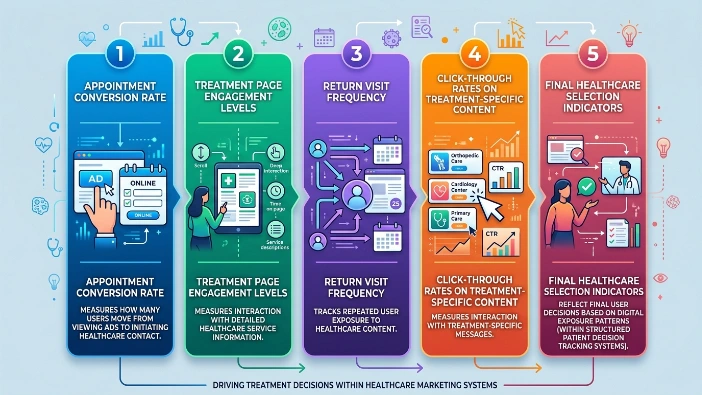
Outcomes measured in high-intent display advertising campaigns include conversion rate to appointment requests, treatment page engagement levels, return visit frequency, click-through rates on treatment-specific content, and final healthcare selection indicators within structured patient decision tracking systems.
Appointment conversion rate measures how many users move from viewing ads to initiating healthcare contact.
Treatment page engagement measures interaction with detailed healthcare service information.
Return visit frequency tracks repeated user exposure to healthcare content.
Click-through rates measure interaction with treatment-specific messages.
Healthcare selection indicators reflect final user decisions based on digital exposure patterns.
These outcomes define the effectiveness of high-intent display campaigns in driving treatment decisions within structured healthcare marketing systems.
Explore: