Retargeting banner ads are digital display advertisements shown to users who previously visited an e-commerce website or interacted with its products. They appear across websites, apps, and ad networks to reintroduce items and encourage users to return and complete a purchase.
Retargeting banner ads operate using behavioral tracking data collected during a user’s browsing session. When a visitor views a product page, adds an item to a cart, or spends time on specific categories, that activity is recorded through cookies or tracking pixels. This data creates an anonymous profile used for ad delivery.
These ads are part of display advertising systems that distribute visual banners across partner websites and mobile applications. Their main purpose is repetition of exposure, ensuring that potential buyers do not forget products they previously considered.
Unlike general display ads, retargeting ads focus only on users who already showed intent. This makes them highly targeted and more relevant to user interests. In e-commerce systems, this method increases visibility of specific products instead of broad brand messaging.
How do retargeting banner ads work across websites and apps?
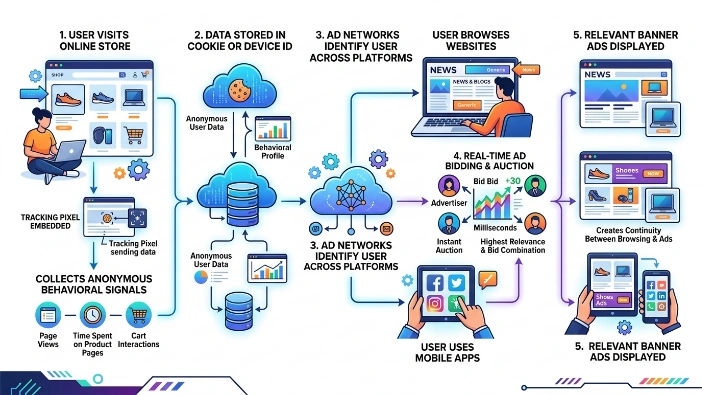
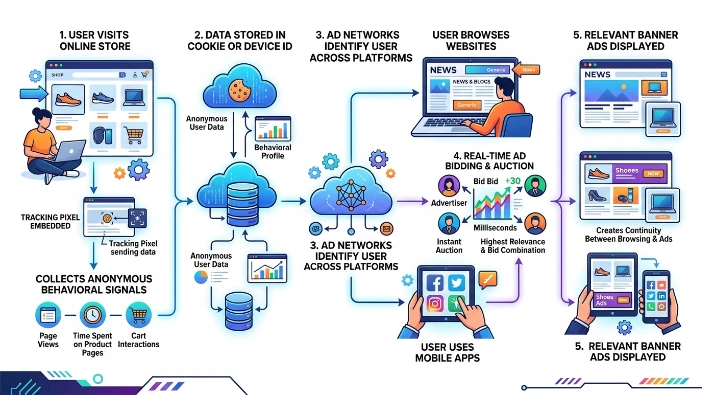
Retargeting banner ads work by using tracking technologies that record user activity on an e-commerce site and then match that activity with ad networks, which display relevant banners across other websites and mobile apps visited by the same user.
The process begins when a user visits an online store. A tracking pixel embedded in the website collects anonymous behavioral signals such as page views, time spent on product pages, and cart interactions. This information is stored in a cookie or device identifier.
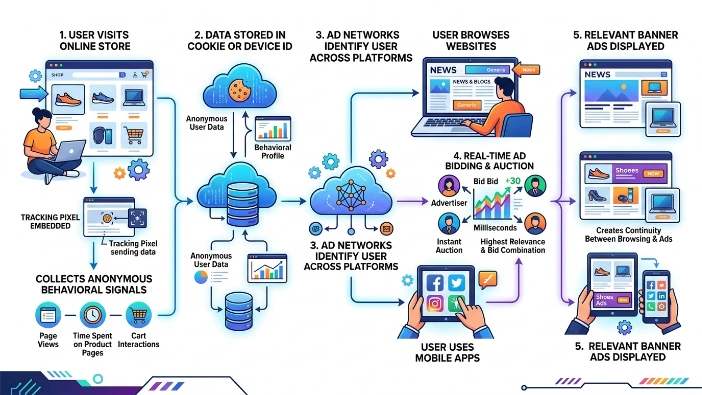
Ad networks then use this data to identify the same user across their partner sites. When the user visits another platform, the system triggers relevant banner ads based on past interactions. This creates continuity between browsing and advertising environments.
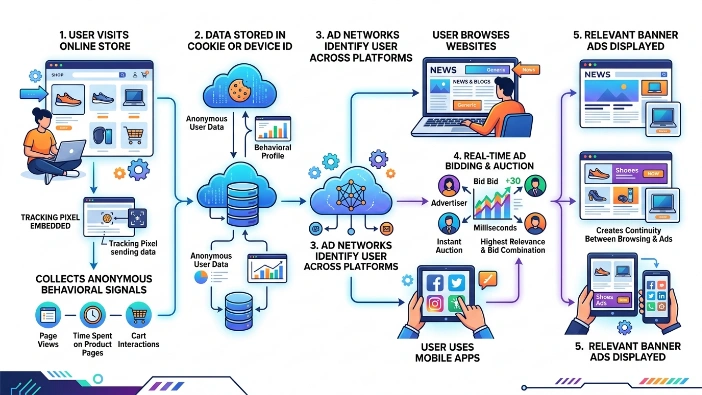
The system operates in real time. Ad exchanges automatically bid for banner placements when a matched user appears on a webpage. The highest relevance and bid combination determines which ad is shown.
Explore:
How Online Stores Nurture Shoppers Using Product-Focused Banner Campaigns
This mechanism ensures repeated exposure to previously viewed products without requiring users to revisit the original store. It maintains visibility across multiple digital touchpoints in daily browsing activity.
Why do e-commerce stores use retargeting banner ads to increase sales?
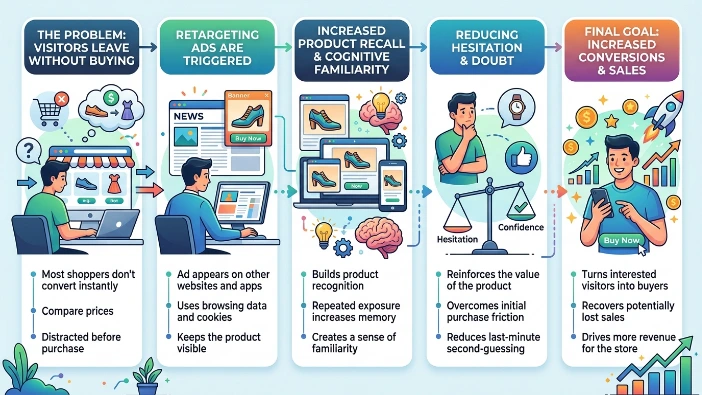
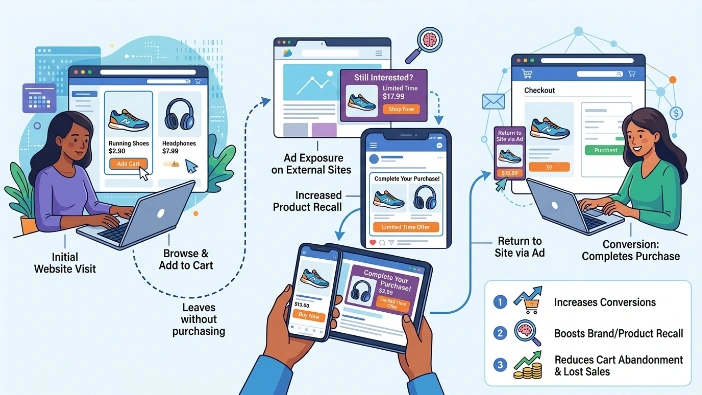
E-commerce stores use retargeting banner ads to recover lost traffic, increase product recall, and convert interested visitors into buyers by repeatedly showing relevant products after users leave the website without purchasing.
Most online shoppers do not purchase during their first visit. Many users compare prices, explore alternatives, or abandon carts due to distraction. Retargeting banner ads address this behavior by reintroducing the same products during later browsing sessions.
Repeated exposure increases recognition. When users see the same product multiple times across different websites, cognitive familiarity increases. This familiarity reduces hesitation and improves the likelihood of returning to complete the purchase.
Retargeting also reduces acquisition costs. Instead of targeting new audiences, stores focus on users who already interacted with their catalogue. This improves efficiency of advertising spend because the audience already shows intent signals.
In structured e-commerce systems, retargeting is often used alongside cart recovery strategies. Users who abandon checkout forms receive banner reminders that highlight the same items they left behind.
What data is used to show retargeting banner ads to shoppers?
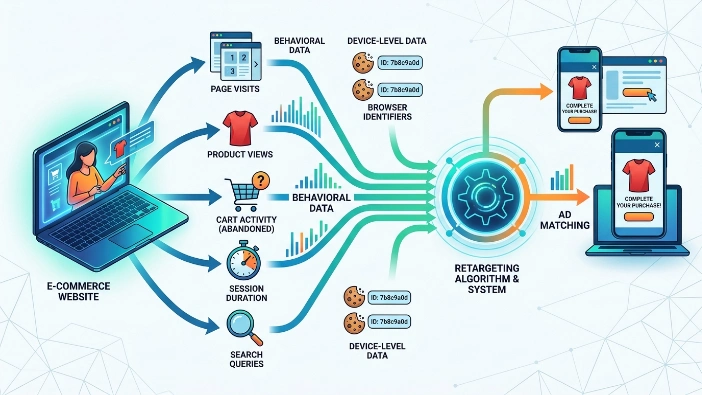
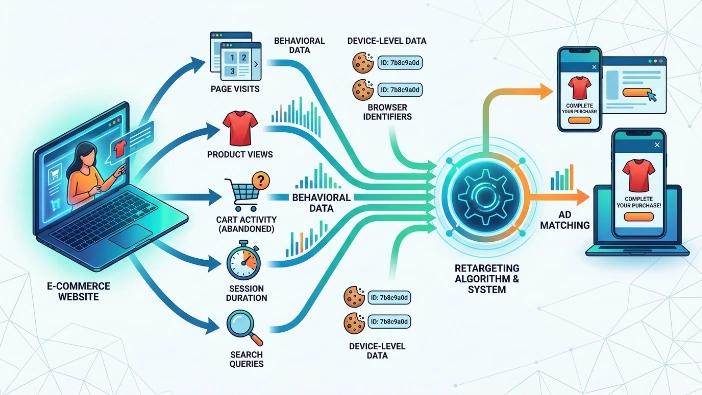
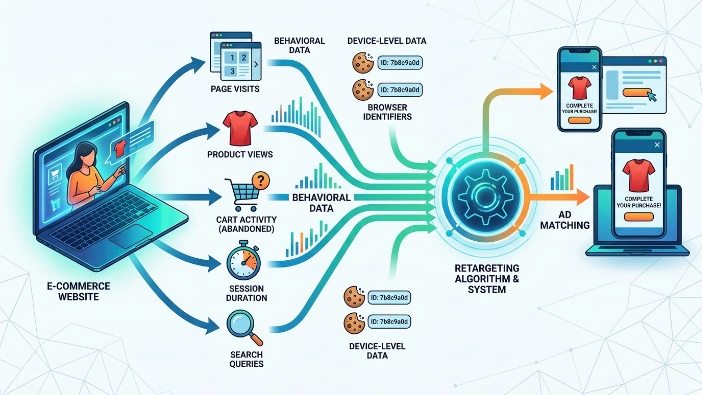
Retargeting banner ads use behavioral, contextual, and device-level data such as page visits, product views, cart activity, session duration, and browser identifiers to match users with relevant advertisements across different platforms.
Behavioral data includes all interactions a user performs on an e-commerce website. This includes viewing product details, scrolling depth, search queries, and clicks on categories. Each action signals interest level.
Cart data is highly important. When a user adds items to a shopping cart but does not complete checkout, this behavior becomes a strong indicator of purchase intent. Retargeting systems prioritize these users for ad delivery.
Device data helps maintain continuity. Browsers store cookies or use device IDs to track users anonymously across websites. This ensures that ads follow the same user across different online environments.
Contextual data also contributes. It includes the type of website the user is currently visiting. Ads are matched to relevant placements to maintain relevance and reduce disruption.
Together, these data types form a targeting framework that ensures banner ads reach users with proven engagement history rather than random audiences.
How do dynamic retargeting banner ads personalise product visibility?
Dynamic retargeting banner ads personalise product visibility by automatically generating ad creatives that display exact products a user viewed, including images, prices, and descriptions, based on real-time browsing history and product catalog data.
Dynamic systems connect product databases with ad platforms. When a user interacts with specific items, the system stores product identifiers. These identifiers are later used to generate personalized banners.
Each banner is assembled in real time. It includes product images, updated pricing, and availability status. If a user viewed multiple items, the system selects the most relevant ones based on engagement signals such as time spent or repeated views.
This method differs from static advertising because it does not rely on pre-designed creatives. Instead, it pulls live product data directly from the e-commerce catalogue.
Dynamic retargeting also adjusts messaging based on user behavior. For example, frequently viewed products appear more prominently in the banner layout, while less relevant items are excluded automatically.
How Online Stores Turn Product Viewers Into Checkout Customers Using Dynamic Banner Ads
This level of personalization increases relevance across display networks, ensuring that each user sees tailored product combinations instead of generic advertisements.
What role do customer journey stages play in retargeting banner ads?
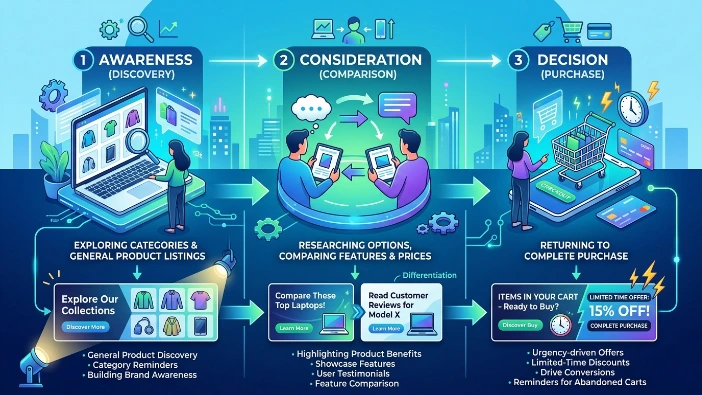
Customer journey stages define how retargeting banner ads are structured, ensuring different messages are shown to users depending on whether they are discovering products, comparing options, or returning to complete a purchase.
The customer journey includes multiple stages such as awareness, consideration, and decision. Each stage represents a different level of purchase readiness.
In early stages, users explore categories and browse general product listings. Retargeting ads in this phase highlight product discovery and category reminders. They focus on visibility rather than urgency.
During the consideration stage, users compare specific products. Ads at this level show product comparisons, variations, and feature highlights. The goal is reinforcement of interest.
In the decision stage, users are close to purchasing. Retargeting ads emphasize previously viewed items and remind users of incomplete actions such as abandoned carts.
By aligning ad content with journey stages, e-commerce systems ensure that messaging remains relevant to user intent and browsing behavior.
Explore More Expert Insights:
How Banner Ads Increase E-commerce Sales and Conversions Fast
What Are Animated Banner Ads in News Media?
What are the key components of an effective retargeting banner strategy?
An effective retargeting banner strategy includes audience segmentation, tracking setup, creative variation, frequency control, and performance measurement to ensure ads reach the right users at the right time without excessive repetition.
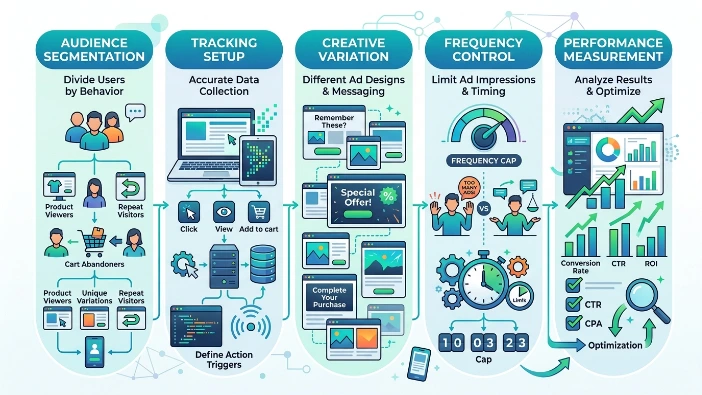
Audience segmentation divides users based on behavior. Groups include product viewers, cart abandoners, and repeat visitors. Each group receives different ad variations aligned with their interaction level.
Tracking setup ensures accurate data collection. Proper pixel integration and event tracking define which actions trigger retargeting campaigns. Without accurate tracking, audience targeting becomes inconsistent.
Creative variation prevents ad fatigue. Multiple banner designs rotate across campaigns to maintain engagement and avoid repeated identical visuals.
Frequency control limits how often users see the same ad. Excess exposure reduces effectiveness and can lead to negative user experience.
Performance measurement evaluates click-through rates, return visits, and conversion outcomes. This data helps refine targeting rules and improve future campaign accuracy.
How do retargeting banner ads influence purchase decisions?
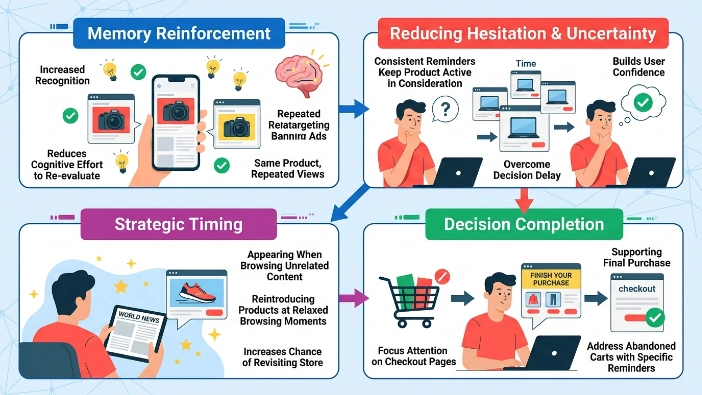
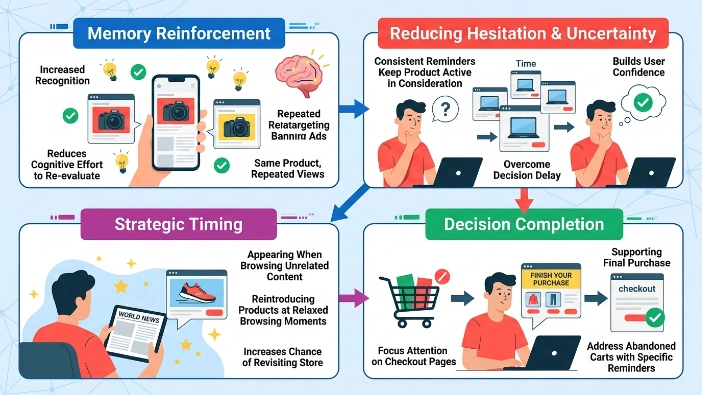
Retargeting banner ads influence purchase decisions by reinforcing product memory, reducing hesitation through repeated exposure, and guiding users back to previously viewed items at critical decision points in the buying process.
Memory reinforcement is a key mechanism. When users repeatedly see the same product, recognition increases, which reduces the cognitive effort required to re-evaluate the purchase.
These ads also reduce uncertainty. Users who are unsure about a product often delay decisions. Retargeting provides consistent reminders that keep the product active in their consideration set.
Timing plays an important role. Ads appear when users browse unrelated content, reintroducing products during relaxed browsing moments. This increases the chance of revisiting the store.
Retargeting also supports decision completion. Users who abandoned carts receive reminders that highlight unfinished actions, bringing attention back to checkout pages.
Over time, repeated exposure shifts user behavior from passive interest to active purchase intent, completing the conversion cycle in e-commerce environments.