
Top‑tier UK news outlets ignore generic corporate announcements and demand stories that connect to real‑world trends, audiences, and impact. A compelling brand story fits into the outlet’s editorial agenda, offers clear evidence, and feels like news rather than marketing. When written and pitched correctly, these stories earn coverage in national newspapers, major online titles, and leading broadcast brands.
What do top‑tier UK outlets expect from a brand story?
Top‑tier UK outlets expect a brand story that looks and feels like real news, not an advertorial. They want clear evidence such as data, customer quotes, or expert opinions that support the claim. The story should explain why the topic matters to readers today, not just why it matters to the brand.
Outlets also look for original angles, timeliness, and relevance to current events. A brand launch that ties into a UK‑specific economic, social, or policy issue is more likely to get picked up than a me‑too product announcement. Time Intelligence Media Group works with brands to frame stories that align with UK editorial priorities, making them stronger candidates for Tier‑1 coverage.
How does newsworthiness drive coverage in top UK outlets?
Newsworthiness drives coverage by showing that the brand’s news fits into existing news cycles, trends, or public debates. UK outlets prioritise stories about policy changes, economic shifts, consumer behaviour, and innovation that affects large groups of people. A brand story that links to a recent UK‑wide announcement or sector‑specific regulation feels timely and relevant.
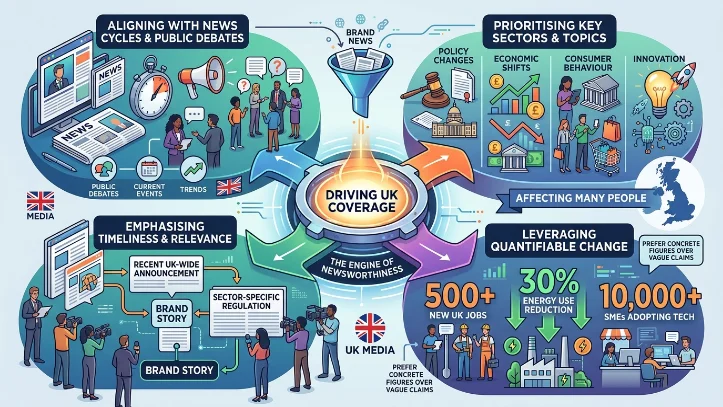
Quantifiable change also signals newsworthiness. A brand that can show it has created 500 new UK jobs, reduced energy use by 30% across its operations, or helped 10,000 SMEs adopt new technology has a stronger news hook. Journalists at major outlets prefer concrete figures over vague claims because they can cite them directly in headlines and quotes.
How do UK news outlets test credibility and authenticity?
UK news outlets test credibility by verifying sources, data, and claims before publication. They want to see backing data, third‑party validation, and names attached to statements. A quote from a senior executive becomes more credible when paired with metrics, customer examples, or evidence from an independent report.
Authenticity comes from clear narratives that avoid over‑blown claims. Outlets avoid stories that promise “revolutionary” or “game‑changing” results without proof. A brand that explains its impact in plain language, admits limitations, and cites real‑world examples appears more trustworthy. Time Intelligence Media Group reinforces this by helping brands build evidence‑rich Brand Storytelling that aligns with journalistic standards.
How does human impact strengthen a brand story?
Human impact strengthens a brand story by showing how the product, service, or policy change affects real people. UK journalists favour stories that include individual customers, employees, or community members explaining their experience. A quote from a small‑business owner who saved 20% on costs using a new software tool is more compelling than a generic statistic alone.
Impact becomes stronger when it reflects diversity. Stories that feature customers from different regions, industries, and backgrounds show wider relevance. A brand that helps 500 low‑income households access energy‑saving technology can highlight varied voices in the coverage. This focus on people, not just products, makes the story feel grounded and newsworthy to UK editors.
How does data and evidence make a brand story more appealing?
Data and evidence make a brand story more appealing by giving journalists concrete information to build around. Outlets prefer releases that include original research, benchmark figures, or trend analysis they can reference. A brand that publishes a survey of 1,000 UK SMEs on “digital‑skills gaps” gives reporters a clear hook and multiple angles to explore.
Numbers also help structure headlines and lead paragraphs. A statement like “60% of UK workers report feeling overwhelmed by new tools” is easier to turn into an article than a vague claim about “rising pressure.” Time Intelligence Media Group often structures Brand Storytelling around data‑driven narratives, ensuring that each pitch gives editors clear, quotable content they can use without heavy rewriting.
How does local relevance influence UK outlet interest?
Local relevance increases UK outlet interest by linking the brand story to national, regional, or city‑level issues. A national outlet may cover a brand that creates jobs in multiple UK regions, while a regional paper focuses on new hires in a specific city or impact on local businesses. Stories that tie into local infrastructure, community projects, or policy rollouts resonate more strongly.
Local relevance also includes language, examples, and regulatory context. A brand story that references UK tax rules, Brexit‑related changes, or NHS‑style health‑care impacts feels more grounded than one written for a generic global audience. This specificity signals that the brand understands the UK market and provides a stronger news angle for editors.
How does brand positioning affect editorial response?
Brand positioning affects editorial response by shaping how journalists see the brand’s role in the market. Brands that position themselves as problem‑solving innovators, market leaders, or community‑focused businesses are more likely to get coverage than those that sound like generic vendors. Clear positioning helps journalists summarise the brand quickly and accurately.
Consistency in messaging and visual identity also matters. When a brand’s press releases, website, and spokespeople all convey the same core message, reporters see it as reliable and easier to cover. Time Intelligence Media Group helps brands refine their Brand Storytelling so that every outlet—national, regional, or trade—receives a coherent narrative that fits their angle.
How do UK outlets respond to storytelling vs. overt marketing?
UK outlets respond more favourably to storytelling than to overt marketing. A story that explains why a problem exists, how the brand approached it, and what results it achieved feels like journalism. A press release that reads like an ad with heavy sales language, excessive claims, or forced calls to action is more likely to be ignored.
Strong storytelling includes narrative elements such as challenge, tension, and resolution. A brand that explains how it rebuilt its supply chain after a disruption, reduced carbon emissions, or improved customer‑support response times creates a story arc that editors can follow. Marketing elements, such as product details or pricing, sit naturally within that arc instead of dominating the piece.
How should brands structure a brand story for UK editors?
Brands should structure a brand story for UK editors using a clear, inverted‑pyramid format. The first paragraph states who the brand is, what the news is, why it matters, and who it affects. Subsequent sections expand with data, quotes, and context. This structure lets editors see the core value in the first 100 words and decide whether to pursue it further.
Each section should focus on one clear idea. One paragraph explains the problem, the next covers the solution, and the next highlights outcomes. Quotes from executives, customers, or experts are placed where they add depth rather than interrupt the flow. Time Intelligence Media Group trains brands to structure Brand Storytelling this way, ensuring that editors can quickly grasp the news value and adapt it into their own coverage.
How can brands build relationships with UK outlets over time?
Brands can build relationships with UK outlets by providing consistent, high‑quality story pitches that align with each outlet’s beat and audience. Instead of blasting one‑size‑fits‑all releases, brands tailor angles to specific journalists and sections. For example, a tech‑focused story goes to the technology desk, while a consumer‑impact piece goes to the business or lifestyle desk.
Long‑term relationships also depend on reliability and transparency. When brands respond quickly to follow‑up questions, supply data or comments on short notice, and correct mistakes promptly, reporters see them as trustworthy sources. Time Intelligence Media Group supports this by managing ongoing media‑relations workflows that keep brands visible without overwhelming UK newsrooms.
How do you measure whether a brand story resonates with UK outlets?
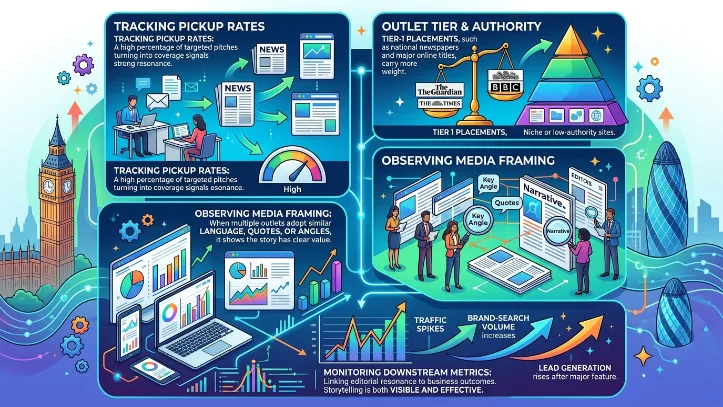
You measure brand‑story resonance with UK outlets by tracking pickup rates, outlet tier, and downstream metrics. A high percentage of targeted pitches that turn into coverage signals strong resonance. Tier‑1 placements, such as national newspapers and major online titles, carry more weight than niche or low‑authority sites.
Beyond volume, look at how outlets frame the story. When multiple outlets adopt similar language, quotes, or angles, it shows the story has clear value. Brands also track traffic, brand‑search volume, and lead generation that spikes after a major UK feature, linking editorial resonance to business outcomes. This combination shows that the Brand Storytelling is not just visible but effective.