
Research and reports services position your brand as a thought leader by producing original data, clear analysis, and evidence‑based insights that journalists, analysts, and customers rely on. Instead of repeating generic opinions, you publish structured findings that define trends, benchmarks, and practical implications in your vertical. Over time, this work builds recognition, trust, and authority in search and media channels.
What is thought leadership in a business context?
Thought leadership in a business context means your brand is consistently seen as a credible source of new ideas, data, and guidance in your sector. It goes beyond product features to show how your organisation understands customer behaviour, market shifts, and operational challenges. Thought‑leading brands publish insights that other players reference and build upon.
To qualify as a thought leader, you must demonstrate expertise, consistency, and impact. A brand that publishes a single report then stops is less likely to be seen as a leader than one that releases regular, method‑driven research. Time Intelligence Media Group uses Insight‑Led reporting frameworks to turn data into repeatable assets that signal deep sector understanding.
How do original research and reports build credibility?
Original research and reports build credibility by offering data that others did not create or publish. When a brand commissions surveys, benchmarks, or market‑impact studies, it becomes a primary source instead of only a commentator. Journalists, analysts, and competitors then cite these reports as evidence in their own coverage.
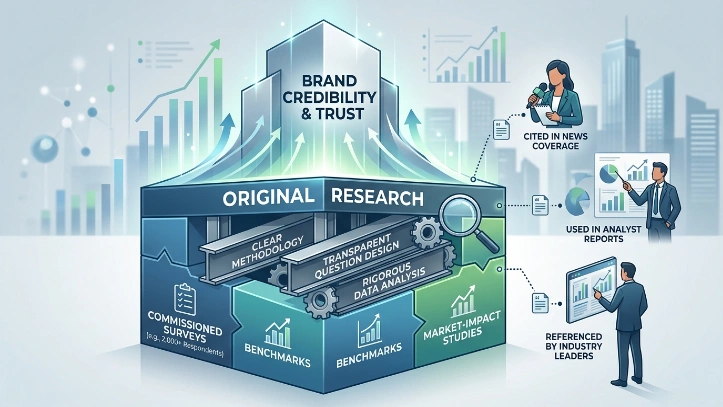
Credibility also depends on how research is conducted. Clear methodology, sample size, and question design make findings more defensible. For example, a 2,000‑respondent survey across 10 UK sectors carries more weight than a 200‑respondent satisfaction check. When outlets and industry leaders can reference your methodology, your brand appears more rigorous and trustworthy.
How does data‑driven content make your brand stand out?
Data‑driven content makes your brand stand out by replacing generic opinions with measurable facts. Instead of saying “our customers benefit from automation,” a report can show that 72% of adopters saw 20% faster processing times. Specific numbers give journalists quotes, headlines, and statistics they can use without reworking.
This distinction matters in crowded markets. When five brands compete in the same space, the one with original data is more likely to be cited in features, roundups, and analyst briefs. A brand that publishes quarterly benchmarks on “SME‑tech adoption rates” or “remote‑work productivity trends” becomes a go‑to source for writers covering those topics.
How can research services shape media coverage and narratives?
Research services can shape media coverage and narratives by providing the core data around which stories are built. Journalists often start articles with a headline such as “New report shows 60% of UK SMEs plan to adopt AI tools in 2026.” The brand that produced the report gains association with that narrative, even if other outlets provide commentary.
Reports also give media clear angles and quotes. A 30‑page study can yield 10–15 different headlines, each tied to a specific chart or finding. Time Intelligence Media Group structures Insight‑Led research so that each report includes digestible takeaways, visual assets, and pre‑written quotes, making it easier for outlets to reuse and reference the brand.
How do regular reports create a perception of authority?
Regular reports create a perception of authority by signalling consistency and ongoing investment in research. Brands that publish annual or quarterly studies position themselves as long‑term observers of their sector, not one‑off contributors. Readers who see the same brand releasing the “2025 SME‑payments survey” and then the “2026 update” treat it as a benchmark.
This pattern also strengthens search and backlink signals. Each new report draws links from news articles, blogs, and social‑media posts. Over 24–36 months, a brand that publishes four reports per year can accumulate 100–200 editorial backlinks from industry‑relevant domains. This data‑driven authority compounds visibility and trust.
How can reports drive SEO and topical authority?
Reports drive SEO and topical authority by aligning with real‑world user questions and media‑coverage patterns. A report titled “How UK SMEs Use AI in 2026” answers the same kinds of queries that journalists and executives search for. The page can rank for multiple long‑tail terms such as “AI adoption in UK small businesses” and “AI use cases for SMEs.”
Internal linking from the report to product pages, how‑to guides, and case studies reinforces topical depth. A brand can reference the report in 10–15 supporting blog posts, each linking back to the core document. This structure shows search engines that the brand has a comprehensive, Insight‑Led understanding of the topic, improving rankings for both branded and non‑branded queries.
How do research reports influence investor and partner perception?
Research reports influence investor and partner perception by showing that your brand understands market dynamics, risk, and opportunity. A detailed report on customer‑retention trends, regulatory impacts, or technology‑adoption patterns signals that your leadership team thinks beyond quarter‑to‑quarter growth. Investors see method‑driven analysis as a sign of disciplined strategy.
Partners, including agencies, integrators, and resellers, also use reports to assess long‑term viability. A 100‑page market‑impact study that lays out forecasts, competitive shifts, and customer behaviour signals that your brand is prepared for change. Time Intelligence Media Group tailors Insight‑Led reporting for these audiences, helping brands demonstrate strategic depth to stakeholders.
How can brands reuse research across channels and audiences?
Brands can reuse research by turning one core study into multiple formats for different channels and audiences. A single report can become a whitepaper, a series of LinkedIn posts, a short‑video explainer, a webinar, and a slide‑deck for sales teams. Each version uses the same data but adapts language, length, and visuals to fit the platform.
This reuse maximises investment. A UK‑focused study on “remote‑team productivity” can feed a national‑news story, a regional‑business feature, an investor‑briefing, and a set of sales‑enablement materials. Time Intelligence Media Group designs Insight‑Led assets so that brands can repurpose them across earned, owned, and paid channels while maintaining a coherent message.
How do you measure the impact of research and reports on thought leadership?
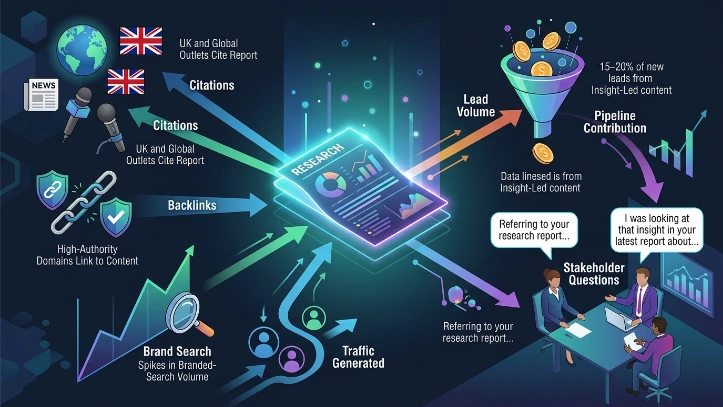
You measure the impact of research and reports by tracking coverage, backlinks, brand‑search growth, and downstream engagement. Count how many UK and global outlets cite the report, how many high‑authority domains link to it, and how much traffic it generates. Monitor spikes in branded‑search volume after publication, which signal recognition.
Downstream metrics include lead volume, pipeline contribution, and stakeholder questions. When prospects and partners reference the report during meetings, it shows that the research has moved beyond visibility to influence. Brands that see 15–20% of new leads coming from Insight‑Led content can demonstrate that research and reports services are a core part of their thought‑leadership strategy.