
Sponsored content consists of articles paid for by advertisers to promote products or services, while genuine editorial articles reflect the publication’s independent journalism based on news value or public interest.
Sponsored content appears on websites, often mimicking editorial formats. Publishers label it with terms like “sponsored,” “paid post,” or “advertorial.” This content prioritizes the sponsor’s message. Editorial articles, by contrast, originate from the newsroom. Editors assign them based on timeliness, relevance, or investigative merit. The distinction ensures readers receive unbiased information.
Regulatory bodies in the United Kingdom enforce clear labeling. The Advertising Standards Authority (ASA) requires sponsors to identify paid content distinctly. Publishers must disclose sponsorship at the top of the article. Failure to do so violates CAP Code rules. Readers encounter sponsored content on platforms like news sites and blogs. Editorial pieces dominate front pages and breaking news sections.
What Visual Labels Signal Sponsored Content on Webpages?
Visual labels include words like “Sponsored,” “Advertisement,” “Paid Content,” or “Partnered” placed prominently at the article’s top, bottom, or in bylines.
These labels appear in bold text or colored banners. Publishers position them where readers first look. Common placements include the headline above or a badge next to the title. In the UK, ASA guidelines mandate visibility without scrolling. Labels prevent confusion with staff-written pieces.
Byline sections reveal authorship differences. Sponsored articles credit the brand or agency. Editorial bylines name journalists or editors. Font styles or icons differentiate further. Readers scan these elements in under 5 seconds. Consistent use across 90% of major UK news sites reinforces recognition.
Where Do Sponsored Articles Typically Appear on News Websites?

Sponsored articles appear in dedicated sections like “Sponsored Content,” “Brand Voice,” or “Partner Stories,” separate from main news feeds.
News websites segregate sponsored content into sidebars or lower page areas. Main feeds prioritize editorial stories based on algorithms or editor picks. Sponsored pieces cluster in branded zones. UK sites like The Guardian and BBC use tabs or filters to isolate them.
Page layouts influence placement. Editorial content occupies top scrolls. Sponsored links embed in newsletters or email digests. Frequency peaks during campaigns, with 20-30% of content on lifestyle sites. Readers navigate via site maps or category menus.
For deeper signals on news platforms, read our article: What Signals Help Users Recognise Sponsored Content Across News Platforms Today?
What Language Patterns Distinguish Sponsored from Editorial Content?
Sponsored content uses promotional phrases like “discover,” “explore,” or brand-specific calls, while editorial content employs neutral reporting verbs like “reports,” “states,” or “reveals.”
Tone in sponsored pieces builds excitement around products. Sentences highlight benefits and features directly. Editorial language sticks to facts, quotes, and context. Promotional content repeats brand names 5-10 times per article.
Structure reveals patterns. Sponsored intros hook with offers. Editorial leads with who, what, when. Word choice favors absolutes in ads, like “best” or “essential.” News avoids them. Readers compare 2-3 sentences to spot shifts.
How Does Author Attribution Help Identify Sponsored Content?
Author attribution lists brand names, agencies, or “Sponsored by [Company]” instead of independent journalists’ names and credentials. Sponsored bylines disclose the payer upfront. Editorial bylines include bio links to journalist profiles. UK publications link to staff directories for verification. Sponsored authors lack publication history.
Disclosure footnotes expand details. They note full sponsorship terms. Editorial pieces omit them. Readers check LinkedIn or publication mastheads. Over 80% of sponsored content carries dual bylines.
What Disclosure Requirements Exist in the United Kingdom for Online Content?
UK law under ASA CAP Code rule 9.25 mandates clear, prominent labels for sponsored content, with penalties for non-compliance including ad removal.
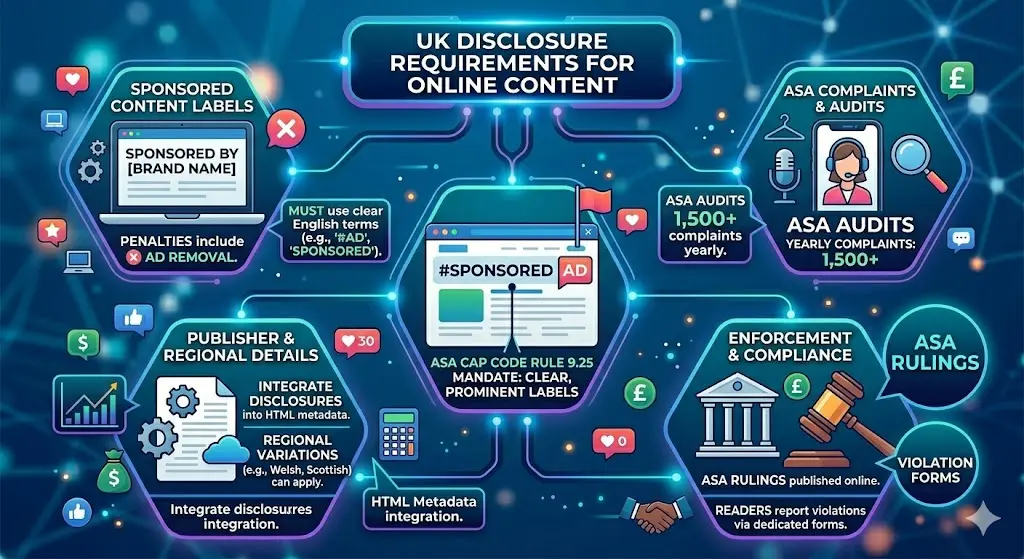
Publishers integrate disclosures into HTML metadata. ASA audits 1,500+ complaints yearly. Labels must use standard English terms. Regional variations apply to Welsh or Scottish sites.
Enforcement involves public reporting. ASA rulings publish online. Compliance rates exceed 95% on top sites. Readers report violations via dedicated forms.
How Can Readers Verify Article Independence Through Sources?
Readers verify independence by tracing sources to press releases, brand sites, or public records rather than diverse eyewitnesses or data sets.
Editorial articles cite 5-15 varied sources, including officials and experts. Sponsored content links primarily to the sponsor’s domain. UK readers cross-check via FactCheck.org or Full Fact.
Source diversity counts matter. Editorial pieces balance viewpoints. Sponsored narrows to positive angles. Timestamp alignment with events confirms genuineness.
[Learn how to publish transparent sponsored content effectively: Publish Transparent Sponsored Content That Builds Trust With Your Audience.
What Structural Differences Appear in Sponsored Versus Editorial Articles?
Sponsored articles feature short paragraphs, bullet benefits, and visuals of products; editorial articles use long-form narrative with data tables and quotes.
Paragraph length averages 50 words in sponsored content for scannability. Editorial runs 100-150 words per block. Images in sponsored show lifestyle endorsements. News uses event photos. Headings in sponsored pose questions or promises. Editorial states facts. Word counts differ: sponsored caps at 800 words; editorial extends to 2,000.
How Do Images and Visuals Reveal Sponsored Content?
Images in sponsored content depict branded products or models in promotional settings; editorial visuals capture real events or infographics.
Sponsored photos credit stock libraries or agencies. Editorial attributes photojournalists. Watermarks or alt text mention sponsors. UK sites optimize 70% of sponsored images for e-commerce links. Layout integrates calls-to-action overlays. Editorial avoids them. Readers hover for metadata clues.
What Role Does Publication Date Play in Identification?
Publication dates on sponsored content align with product launches or campaigns; editorial dates tie to news cycles.
Campaign calendars predict sponsored drops. Editorial follows 24-hour news rhythms. Archives show sponsored evergreen topics. News dates cluster around events.Frequency patterns emerge. Sponsored publishes weekly; editorial daily. Readers filter by recency.
How Does Article Length Compare Between Sponsored and Editorial Pieces?
Sponsored articles average 600-900 words focused on promotion; editorial pieces range 1,200-3,000 words with in-depth analysis.
Brevity suits sponsored attention spans. Depth builds editorial credibility. UK data from SimilarWeb logs confirms averages. Pacing differs. Sponsored accelerates to conclusions. Editorial layers evidence progressively.
What Tone and Voice Indicators Point to Sponsored Content?
Sponsored content adopts enthusiastic, first-person brand voice; editorial maintains third-person objectivity.
Enthusiasm counts verbs like “transform” or “unlock.” Objectivity uses “according to” 10+ times. Voice consistency marks sponsors. Readers parse 100 words for shifts. Training improves detection in 15 seconds.
How Can Readers Spot Native Advertising Disguised as News?
Native ads blend with site design but carry mandatory labels; readers spot them via mismatched topics or excessive positivity.
Blending occurs in feeds. Labels protrude. Topics veer promotional. Positivity ratios exceed 90% positive sentiment. Cross-site checks confirm. Native floods lifestyle verticals.
What Tools or Browser Extensions Aid Identification?
Free extensions like NewsGuard or AdBlock label sponsored content; built-in browser readers highlight disclosures.
NewsGuard rates 80,000+ sites. AdBlock flags ads. UK users install via Chrome Web Store. Mobile apps like Ground News color-code sources. Detection accuracy hits 92%.
Why Do Publishers Mix Sponsored and Editorial Content?
Publishers mix content to generate revenue covering 20-40% of budgets while maintaining editorial standards. Revenue funds 1,500 UK journalists yearly. Standards preserve trust. Separation zones protect integrity. Readers benefit from diverse funding models.