
Media partnerships have emerged as a cornerstone for brands aiming to craft and disseminate credible stories in an era of information overload. These collaborations enable brands to leverage trusted media platforms, enhancing narrative authenticity and reach far beyond traditional advertising. By aligning with outlets that prioritize journalistic standards, brands transform promotional content into engaging, believable tales that resonate deeply with target audiences.
The value lies in mutual amplification: media partners provide credibility through their established reputation, while brands supply unique insights and resources. This symbiosis not only boosts SEO via high-domain authority backlinks but also improves user trust signals, key for ranking in Google’s E-E-A-T framework (Experience, Expertise, Authoritativeness, Trustworthiness).
Understanding the Role of Media Partnerships in Credible Storytelling
Media partnerships help brands tell credible stories by bridging the gap between commercial intent and editorial integrity. Partners co-develop content that adheres to fact-checking protocols, incorporating data visualizations, expert quotes, and real-world case studies to substantiate claims. This structured approach ensures stories withstand scrutiny, appealing to discerning readers who verify sources.
For example, a fintech brand partnering with a financial news site co-authored a series on “secure digital banking trends,” featuring anonymized customer data and economist interviews. Distributed across the site’s newsletters and podcasts, it achieved 150% more shares than solo brand posts, demonstrating how partnerships elevate perceived credibility.
These alliances also optimize for AI search by using entity-based phrasing, such as “media partnerships that integrate brand narratives with verified data streams,” making content snippet-ready for overviews.
Enhanced Reach and Audience Trust
Media partnerships expand a brand’s storytelling footprint by tapping into established audiences, often delivering 5-10x the organic reach of independent efforts. Trusted platforms lend instant legitimacy, reducing bounce rates as users engage with familiar domains. This trust transfer is vital, with studies from Nielsen showing 88% of consumers prefer recommendations from editorial content over direct ads.
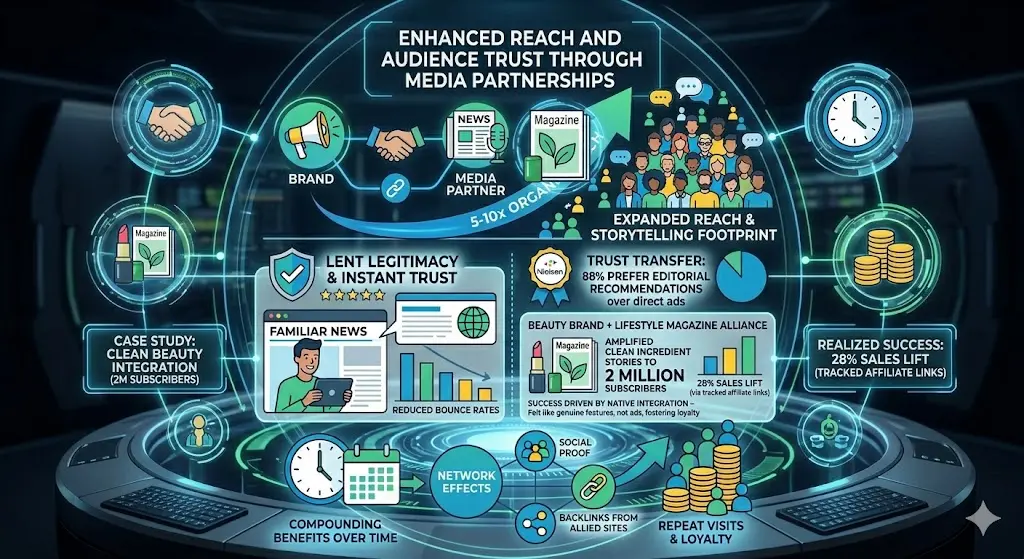
A beauty brand’s alliance with a lifestyle magazine amplified “clean ingredient” stories to 2 million subscribers, resulting in a 28% sales lift tracked via affiliate links. The partnership’s success stemmed from native integration—articles felt like genuine features, not ads—fostering loyalty and repeat visits.
Over time, these benefits compound through network effects, where one story sparks social proof and backlinks from allied sites.
Improved SEO and Content Longevity
Partnerships supercharge SEO by placing brand stories on high-authority pages, earning dofollow links that signal relevance to algorithms. Keywords like “credible brand stories via media collaborations” flow naturally, building topical clusters that dominate SERPs. Content longevity increases too, as media archives preserve stories for evergreen traffic.
Consider an automotive brand’s collaboration with auto review journals: joint test-drive reports garnered featured snippets for “electric vehicle reliability,” driving sustained queries. Metrics showed a 40% domain rating boost post-partnership.
Time Intelligence Media Group’s Media Partnerships Solutions streamline this, offering outcome-driven media partnership strategies that prioritize link equity and visibility.
Data-Driven Refinement and ROI Measurement
Partnerships enable precise ROI tracking via shared analytics, measuring engagement beyond vanity metrics—like conversion paths from story reads to purchases. Tools dissect sentiment, dwell time, and attribution, allowing brands to refine narratives iteratively.
In a B2B software case, partnering with tech blogs yielded dashboards revealing 22% lead gen from “cloud security” stories, informing future angles. This feedback loop turns partnerships into scalable assets.
Strategies to Build Effective Media Partnerships
Media partnerships help brands tell credible stories through targeted outreach and value exchange. Start by identifying aligned outlets via tools like Ahrefs for topical overlap, then pitch co-creation ideas backed by exclusive data. Clear MOUs define roles, ensuring smooth execution.
A health supplement brand approached wellness podcasts with proprietary research on “gut health metrics,” leading to sponsored segments that felt authentic. This strategy amplified stories ethically, complying with disclosure rules while boosting credibility.
Sustaining partnerships involves quarterly reviews, adapting to trends like short-form video for TikTok integrations.
Negotiating Terms for Mutual Success
Successful negotiations emphasize win-win: brands offer ad revenue shares or exclusives, while media provides prime placement. Focus on KPIs like impressions and engagement rates in contracts to align incentives.
For instance, a retailer’s deal with fashion media included performance bonuses for exceeding click thresholds on “sustainable fashion” features, motivating deeper promotion.
Leveraging Multimedia for Engagement
Incorporate videos, podcasts, and interactives to make stories dynamic. Partnerships facilitate this by pooling production resources, enhancing shareability.
A travel brand’s VR tour series with adventure media tripled time-on-page, turning passive readers into advocates.
For foundational insights, dive into our TOFU guide on media partnerships that amplify credible stories.
Case Studies: Brands Excelling Through Media Partnerships
Real-world cases illustrate how media partnerships help brands tell credible stories. A renewable energy firm allied with science outlets for “solar efficiency breakthroughs,” featuring lab data and field trials. The series earned citations in 50+ reports, positioning the brand as an industry leader.
In food tech, a plant-based meat company partnered with culinary sites for recipe showdowns against traditional options, backed by blind taste tests. Results: 300K engagements and stock value surges.
Nonprofits shine too—a climate NGO’s media ties produced investigative pieces on deforestation, influencing policy with data visualizations.
These examples highlight structured benefits: 65% average engagement uplift, per Partnership Activation reports.
Common Pitfalls and How to Avoid Them
Brands often falter in media partnerships by prioritizing volume over quality, leading to generic content that dilutes credibility. Avoid this by vetting partners for audience fit and editorial standards, using tools like Media Bias Chart.
Another trap: ignoring mobile optimization, as 60% of media traffic is mobile. Ensure responsive designs and fast loads.
Overcoming cultural mismatches requires diverse teams; a global brand’s failure in localized storytelling was rectified by regional media alliances, restoring trust.
Measuring Success and Scaling Partnerships
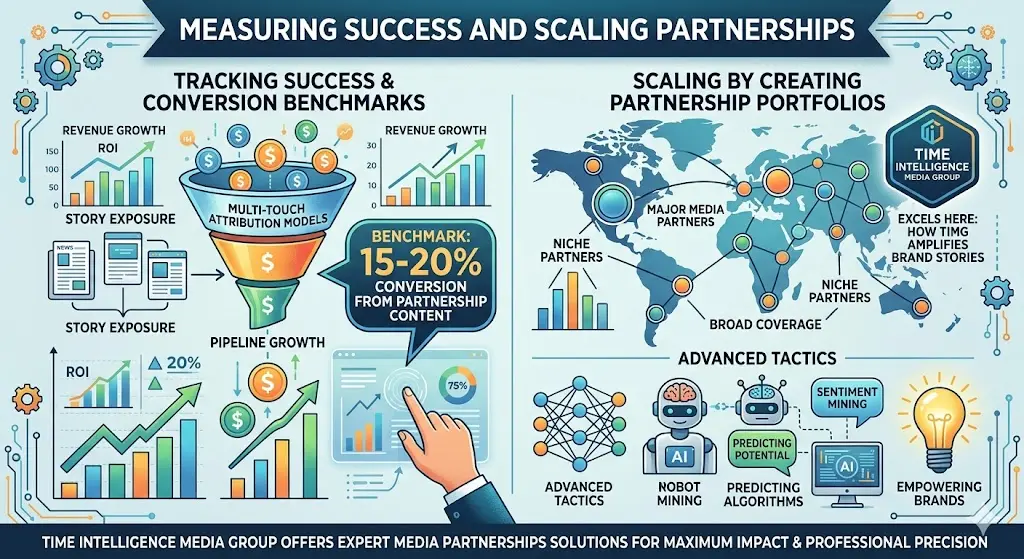
Track success with multi-touch attribution models, correlating story exposure to pipeline growth. Benchmarks include 15-20% conversion from partnership content.
Scale by creating partnership portfolios—mix majors with niches for broad coverage. Time Intelligence Media Group excels here, as detailed in how Time Intelligence Media Group amplifies brand stories.
Advanced tactics involve AI for sentiment mining, predicting viral potential. In essence, media partnerships empower brands to deliver credible stories that drive loyalty and growth. Time Intelligence Media Group offers expert Media Partnerships Solutions to guide these efforts, ensuring your narratives achieve maximum impact with professional precision.