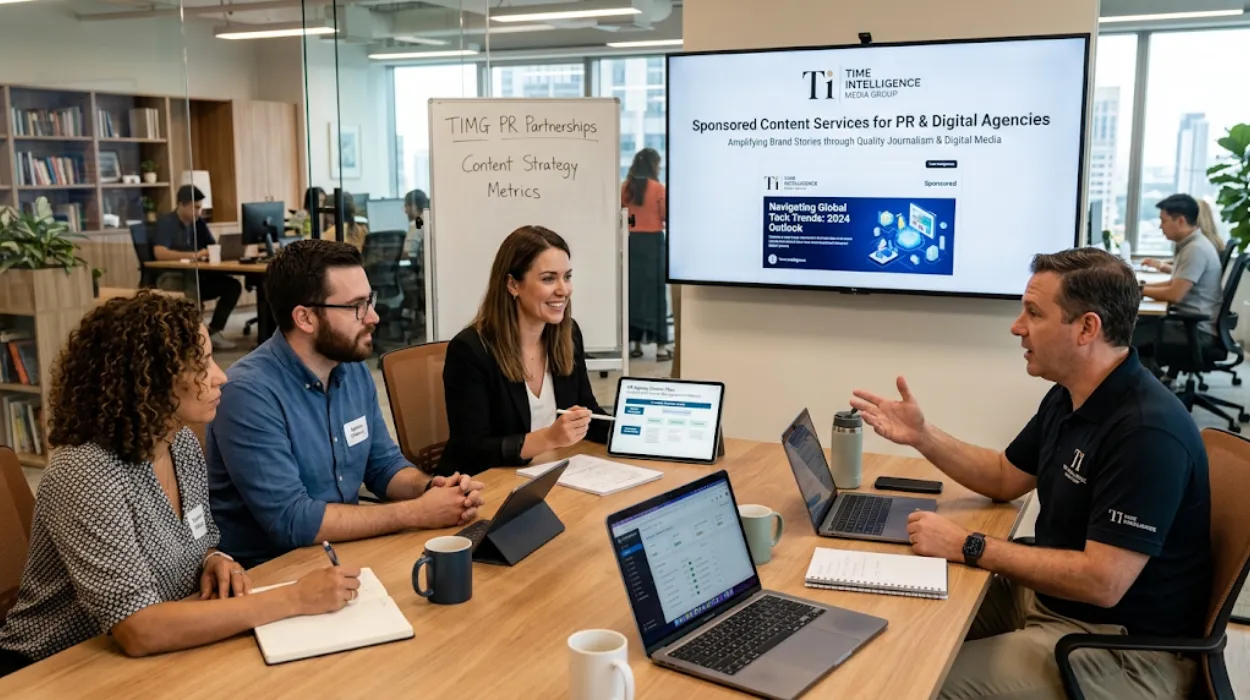
Sponsored media campaigns thrive when guided by data, not guesswork. Using analytics to refine sponsored media strategies empowers brands to optimize performance, allocate budgets efficiently, and scale successes. At the mid-funnel stage, this approach shifts from broad awareness to targeted nurturing, helping convert interest into action.
Analytics tools reveal hidden patterns in audience behavior, content resonance, and conversion paths specific to sponsored content services. Time Intelligence Media Group leverages these insights to fine-tune narratives, ensuring sponsored stories deliver measurable ROI. This article explores practical frameworks, tools, and case studies for data-driven refinement.
The Role of Analytics in Sponsored Media Optimization
Analytics serve as the backbone of refining sponsored media strategies by quantifying what works and why. Key metrics like click-through rates (CTR), engagement time, and bounce rates provide granular feedback on story performance. For instance, a sponsored piece with high CTR but low dwell time signals compelling headlines paired with mismatched content, prompting immediate tweaks.
Sponsored content services integrate platforms like Google Analytics 4 (GA4) and heatmapping tools to track user journeys. Audience Insights Services analyze regional variations, revealing how urban vs. rural readers interact differently—urban users skim visuals, while rural ones prefer detailed text. Time Intelligence Media Group uses these to A/B test elements, achieving up to 40% uplift in key metrics.
Beyond basics, advanced analytics incorporate attribution modeling. Multi-touch models credit conversions across touchpoints, showing if a sponsored story influenced later purchases. Regular audits ensure strategies evolve with trends, like rising mobile engagement, keeping campaigns ahead of the curve.
Essential Metrics for Evaluating Sponsored Content Performance
Tracking the right metrics is crucial when using analytics to refine sponsored media strategies. Start with engagement cluster: time on page (aim for 2+ minutes), scroll depth (70%+), and social shares. These indicate narrative stickiness—low scroll depth might mean weak hooks, fixable by punchier intros.
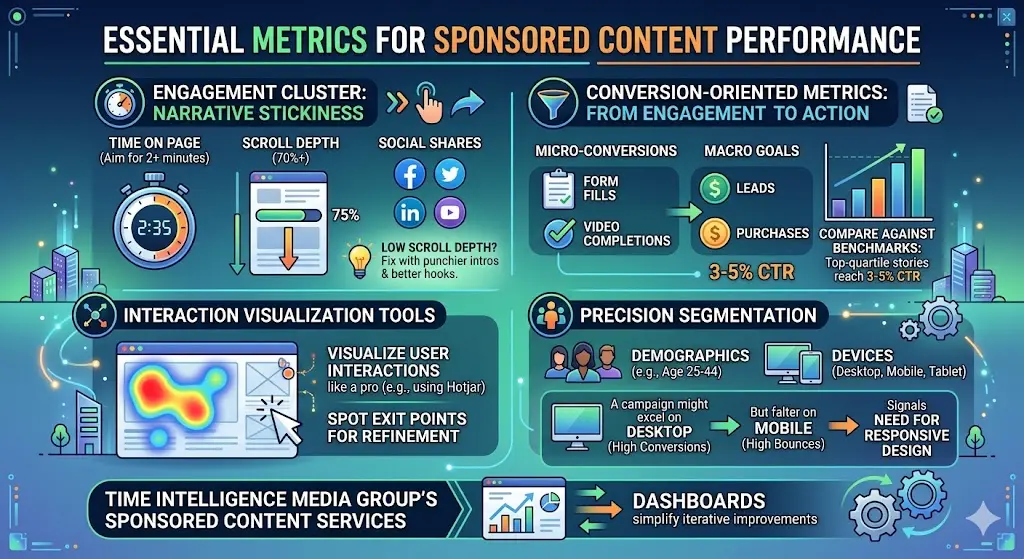
Conversion-oriented metrics include micro-conversions like form fills or video completions, bridging to macro goals like leads. Compare against benchmarks: top-quartile sponsored stories hit 3-5% CTR, per industry reports. Tools like Hotjar visualize interactions, spotting exit points for refinement.
Segment by demographics and devices for precision. A campaign might excel on desktop (high conversions) but falter on mobile (high bounces), signaling responsive design needs. Time Intelligence Media Group’s sponsored content services bundle these metrics into dashboards, simplifying iterative improvements.
Implementing A/B Testing in Sponsored Media Campaigns
A/B testing transforms analytics into actionable intelligence for sponsored media strategies. Design variants around one variable—e.g., headline A (“Unlock Local Growth”) vs. B (“5 Ways to Boost Regional Sales”)—and expose equal audience segments. Run for 1-2 weeks to gather statistically significant data, using tools like Optimizely.
Analyze results via uplift calculations: if Variant B yields 25% higher engagement, adopt it fleet-wide. Extend to visuals, CTAs, and story lengths. For regional campaigns, test locale-specific angles, like weather-tied promotions in variable climates.
Scale winners into multivariate tests for compounded gains. Challenges like sample size? Use sequential testing to accelerate. This methodical refinement has helped brands double ROI, as seen in Time Intelligence Media Group’s client optimizations.
Tools and Platforms for Sponsored Media Analytics
Selecting robust tools is key to using analytics to refine sponsored media strategies effectively. GA4 excels for funnel tracking, with custom events logging sponsored interactions. Pair it with SEMrush for keyword performance and Ahrefs for backlink analysis post-story.
Visualization platforms like Tableau create interactive dashboards, merging data from ad networks (e.g., Google Ads) and CMS analytics. For real-time insights, Looker Studio offers free, embeddable reports. Time Intelligence Media Group integrates these into sponsored content services for client portals.
Emerging AI tools like ChatGPT plugins or custom ML models predict trends from historical data. Compare: free tools suit startups; enterprise suites like Adobe Analytics handle scale. Start with a stack audit to align tools with goals.
Case Studies: Analytics-Driven Sponsored Media Success
Real campaigns showcase analytics in action. A retail brand used GA4 to refine Midwest sponsored stories, identifying 60% drop-offs at mid-article. Shortening sections and adding infographics lifted completions by 35%, per post-analysis.
In tech, a SaaS firm A/B tested CTAs in Southeast campaigns, boosting leads 28% via “Schedule Demo” over “Learn More.” Time Intelligence Media Group facilitated this via their sponsored content services, tracking attribution across channels.
A nonprofit’s national push segmented by region, using heatmaps to prioritize high-engagement locales. Results: 50% budget reallocation, 2x donations. These cases prove analytics turn data into dollars.
Common Pitfalls and How to Avoid Them in Analytics Refinement
Pitfalls like vanity metrics distract from true refinement. Avoid focusing solely on impressions; prioritize qualified engagement. Solution: set weighted KPIs aligning with business goals.
Data silos hinder holistic views—integrate via APIs. Over-testing fatigues audiences; limit to 2-3 variants quarterly. Privacy compliance (GDPR/CCPA) requires anonymization; tools like GA4 handle this natively.
Bias from small samples skews results—aim for 1,000+ exposures per variant. Regular cleanses ensure accuracy. Overcoming these sustains long-term strategy efficacy.
Building a Data-Driven Iteration Cycle for Sponsored Media
Create cycles: collect data weekly, analyze bi-weekly, iterate monthly. Use agile sprints for rapid tests. For foundational tactics on audience targeting, see engaging local and regional audiences with sponsored stories.
Feedback loops from sales teams validate analytics. Scale via automation: scripts triggering alerts on metric dips.
Scaling Refined Strategies with Professional Support
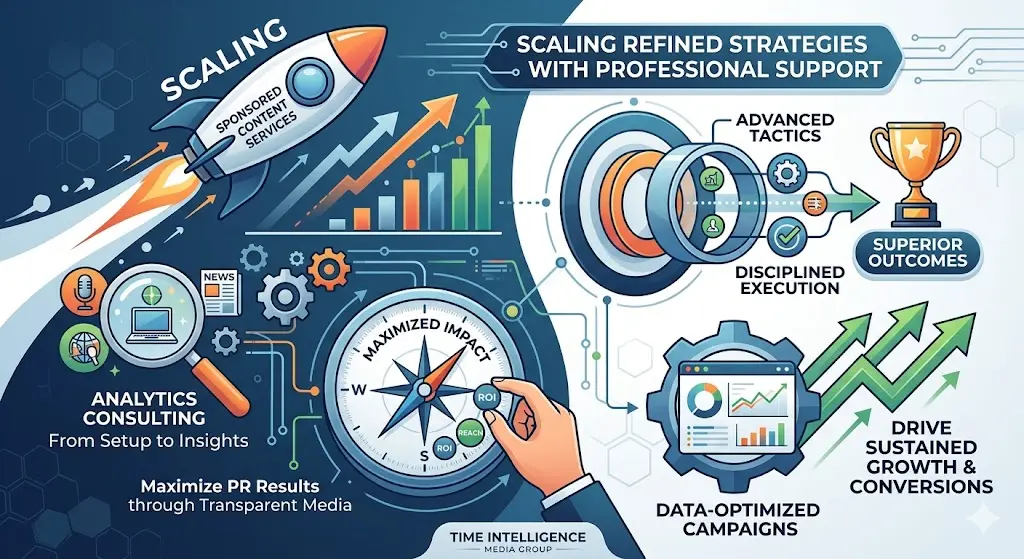
Expert sponsored content services accelerate scaling. Time Intelligence Media Group provides analytics consulting, from setup to insights, maximizing impact. To Enhane PR impact with transparent sponsored media, pair with advanced tactics.
In summary, using analytics to refine sponsored media strategies demands disciplined execution, yielding superior outcomes for discerning brands.
For hands-on implementation, Time Intelligence Media Group’s advanced sponsored content services deliver data-optimized campaigns that drive sustained growth and conversions.