

Despite the rise of social media and video ads, brands continue to rely on banner advertising for its unmatched reach, versatility, and proven track record in digital marketing. Banner ads, those familiar rectangular displays on websites and apps, remain a staple because they deliver scalable visibility to millions without the high production costs of other formats. In 2026, with global digital ad spend projected to hit $740 billion per eMarketer, understanding why brands still use banner advertising helps marketers grasp its enduring role in top-of-funnel awareness.
This TOFU-focused exploration dives into the strategic, technical, and performance-driven reasons behind banner advertising’s persistence. From contextual relevance to programmatic efficiency, we’ll unpack how these ads evolve to meet modern demands.
Proven Reach and Visibility Across Digital Ecosystems
Banner advertising offers brands unparalleled scale, serving billions of impressions daily through networks like Google Display Network and OpenX. Why brands still use banner advertising starts with this: it blankets the web, appearing on news sites, blogs, and e-commerce platforms where users spend 90% of their online time, according to SimilarWeb data.
Professionals craft these ads in standard sizes like 468×60 skyscrapers or 300×600 half-pages, ensuring compatibility across desktops, mobiles, and connected TVs. This ubiquity drives brand recall—studies from Nielsen show display ads lift purchase intent by 18% through repeated exposure.
In Pakistan’s growing digital market, local brands leverage banners on high-traffic sites like Dawn.com, reaching urban audiences in cities like Rawalpindi efficiently.
Cost-Effectiveness for Budget-Conscious Campaigns
One core reason why brands still use banner advertising is its low entry barrier and high ROI potential. CPM rates for banners average $2-5 globally, far below video ads at $15+, making it ideal for startups and SMEs testing waters without massive budgets.
Budget Allocation Strategies
Brands allocate 20-30% of display budgets to banners for their predictability. A numbered breakdown of cost benefits includes:
- Quick production: Static banners cost $500-2,000 versus $10,000+ for videos.
- Performance scaling: Programmatic buying auto-adjusts bids for optimal spend.
- Measurable efficiency: Track viewability scores above 70% IAB standard.
Time Intelligence Media Group’s Banner Advertising Services demonstrate this by optimizing campaigns for under $1 CPM in competitive niches.
Long-Tail Impact on Awareness
Over time, these savings compound into sustained visibility, with retargeting extending banner lifespans across user journeys.
Advanced Targeting and Personalization Capabilities
Modern banner advertising thrives on data precision, explaining why brands still use it amid privacy shifts. Contextual targeting matches ads to page content—e.g., travel banners on vacation blogs—bypassing cookies via AI-driven semantics from platforms like The Trade Desk.
Personalization amps effectiveness: dynamic banners swap images based on user data, boosting CTRs by 2-3x per Dynamic Yield research. Brands segment audiences by interests, weather, or purchase history for hyper-relevance.
A media publisher scenario: banners tailored to reader preferences on news sites increased engagement by 35%, proving banners’ adaptability.
Resilience Against Ad Blockers and Fatigue
Why brands still use banner advertising despite 40% ad-blocker penetration? Innovations like server-side ad insertion (SSAI) and canvas rendering evade blockers, maintaining 80-90% delivery rates. Acceptable Ads standards from Eyeo ensure non-intrusive designs that users tolerate.
Anti-Fatigue Techniques
To combat blindness, brands rotate 5-10 creatives weekly, using frequency caps at 3-5 impressions per user. Bullet-point strategies include:
- A/B testing headlines and CTAs for 15% uplift.
- Interactive elements like hover effects, per IAB lifting interaction by 32%.
- Native-inspired aesthetics blending with site design.
These tactics keep banners fresh, sustaining performance over quarters.
Seamless Integration with Omnichannel Strategies
Banner advertising fits perfectly into broader funnels, driving why brands still use it for cohesive campaigns. It upper-funnels traffic to social retargeting or email lists, with cross-device tracking via IDs like Google’s Topics API post-cookies.
In omnichannel setups, banners on apps complement CTV and DOOH, creating unified messaging. For media websites, explore Monetization Models for Media Websites to see how banners fuel revenue streams.
A global brand example: coordinating banners with influencer posts amplified reach by 50%, showcasing synergy.
Data-Rich Insights for Campaign Refinement
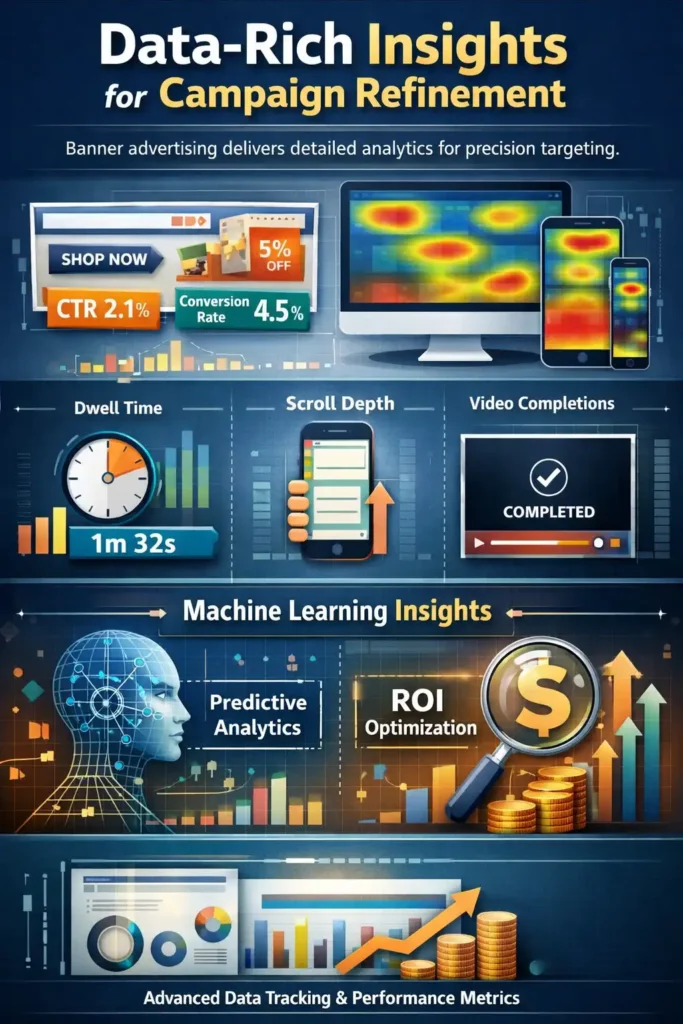
Banner advertising provides granular analytics, a key reason brands persist with it. Platforms track not just clicks but dwell time, scroll depth, and video completions in rich media banners, feeding machine learning models for predictions.
Essential Metrics for Evaluation
Core data points include:
- Viewability: 70%+ threshold for billable impressions.
- Engagement Rate: Hover/expansion rates signaling interest.
- Attribution: Multi-touch models crediting banners in conversions.
These insights enable iterative improvements, like refining geo-targeting for Pakistan’s Punjab region.
Evolving Innovations Keeping Banners Relevant
Why brands still use banner advertising in 2026 boils down to relentless innovation. HTML5 enables responsive, 3D-animated banners playable on any device, while AR integrations preview products interactively.
Programmatic direct deals ensure premium placements, with header bidding maximizing yields. Trends like zero-party data from quizzes personalize further, future-proofing the format.
For proof of impact, review the Case Study: Banner Advertising Campaign Results highlighting real-world wins.
Navigating Challenges with Professional Expertise
Brands overcome banner pitfalls—like low baseline CTRs of 0.05%—through pros handling creative fatigue and fraud detection via tools like Integral Ad Science. Ethical practices ensure compliance with PDPA in Pakistan.
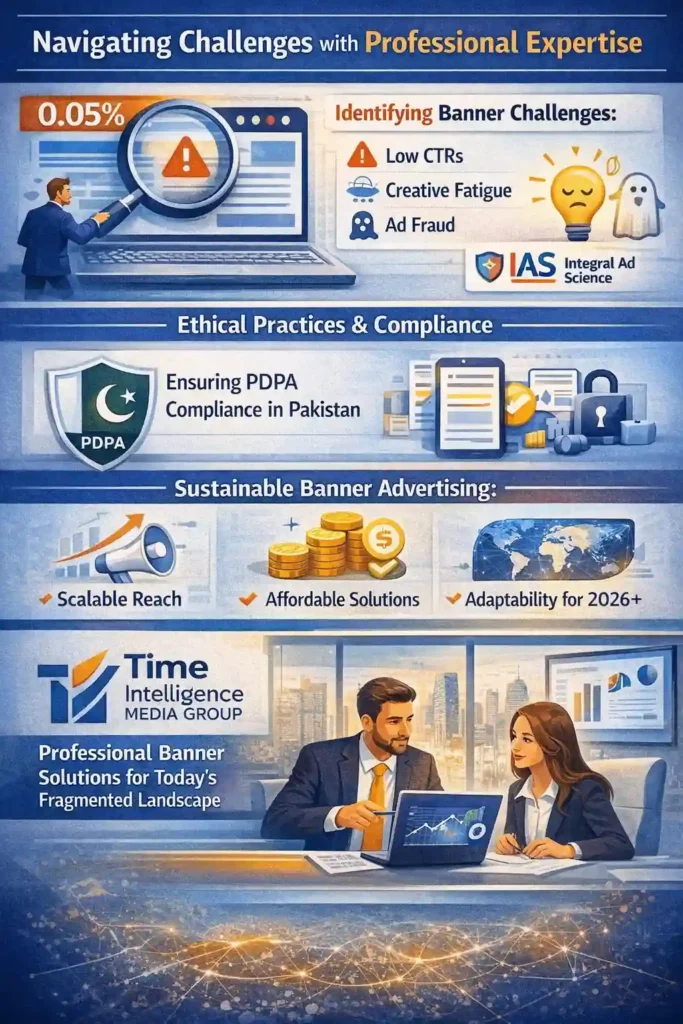
Banner advertising endures because it offers scalable reach, affordability, and adaptability that align with 2026’s digital realities. Time Intelligence Media Group delivers professional banner solutions that harness these strengths, empowering brands to build awareness effectively in a fragmented landscape.



