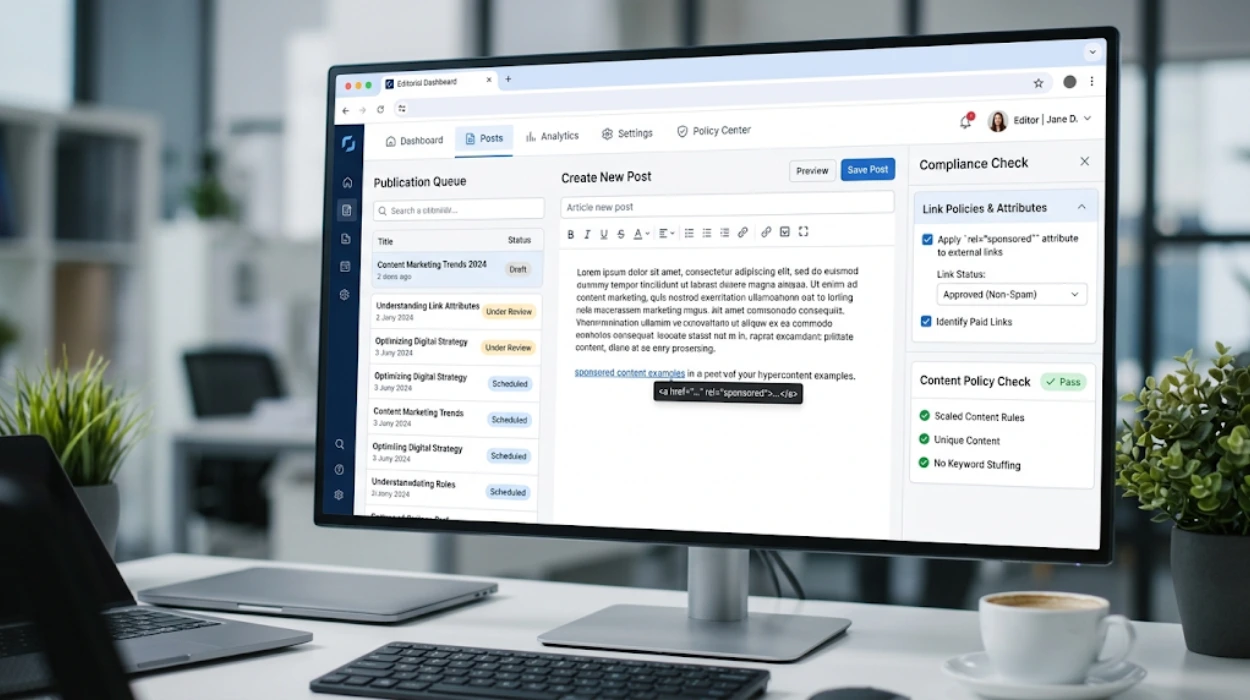
Research and reports services refresh existing publications with current data, verified sources, updated analysis, revised findings, and clearer presentation while preserving the report’s established structure, relevance, citations, rankings, and accumulated digital authority.
A report refresh is a structured research activity rather than a simple editing task. It evaluates the original report, identifies outdated evidence, replaces obsolete statistics, validates existing sources, and integrates new market information.
For organisations with established research assets, refreshing an existing report maintains continuity. The original research framework remains identifiable while factual content becomes relevant to the current market.
Times Intelligence Media Group provides research and report services focused on this type of content development. The service supports organisations that need existing reports updated without treating every publication as a completely new research project.
The process also connects with the earlier decision stage covered in when to update an existing research report, where the distinction between refreshing and publishing new research is established.
When does an existing research report need a professional refresh?
An existing research report needs a professional refresh when its statistics, market conditions, regulatory references, examples, forecasts, sources, or conclusions no longer represent current information, but its research framework remains relevant.
Several indicators establish the need for a refresh.
Outdated statistics
Statistics lose relevance when newer datasets become available. A 2022 market figure used in a 2026 report requires review when 2023, 2024, 2025, or 2026 data exists.
Changed market conditions
Market structures change through new competitors, technologies, regulations, consumer behaviour, and economic conditions. These changes affect research conclusions.
Expired sources
Web pages disappear, datasets change, reports receive new editions, and regulatory documents get replaced. Each affected citation requires verification.
Search visibility requirements
Search performance depends on useful, current content. An established report with backlinks and citations requires controlled updating rather than unnecessary replacement when its core topic remains relevant.
New evidence
New research can strengthen an existing report without changing its central purpose. Examples include updated industry statistics, newly published government datasets, revised regulatory guidance, and current company disclosures.
How does Times Intelligence Media Group refresh an existing research report?
Times Intelligence Media Group refreshes existing reports through content assessment, source verification, data replacement, analytical review, structural editing, factual validation, and final quality control while retaining relevant research continuity.
The service follows a defined workflow.
1. Existing report assessment
The original document is reviewed for:
- Research scope
- Publication date
- Data age
- Source quality
- Citation status
- Market relevance
- Existing conclusions
- Search-focused content
- Sections requiring factual revision
This assessment separates information that remains valid from information requiring replacement.
2. Research source review
Each important factual claim receives source-level review. Priority goes to authoritative sources such as government statistics, regulatory bodies, recognised research institutions, industry datasets, company reports, and established publications.
3. Data refresh
Outdated figures are replaced with current data where equivalent datasets exist. The methodology remains consistent when comparison across reporting periods is necessary.
4. Findings review
Updated evidence is evaluated against the report’s existing findings. A changed statistic does not automatically require a changed conclusion. The relationship between evidence and conclusion is reviewed directly.
5. Editorial revision
The refreshed material is rewritten for clarity and consistency. Revisions address outdated terminology, unclear explanations, duplicate information, unsupported claims, and sections affected by new evidence.
6. Final validation
The completed report receives a final review for factual consistency, source accuracy, terminology, dates, figures, references, and structural continuity.
The detailed preservation process is also addressed in refreshing a published research report, which focuses on maintaining existing rankings, backlinks, and citations during an update.
What components are included in research and reports refresh services?
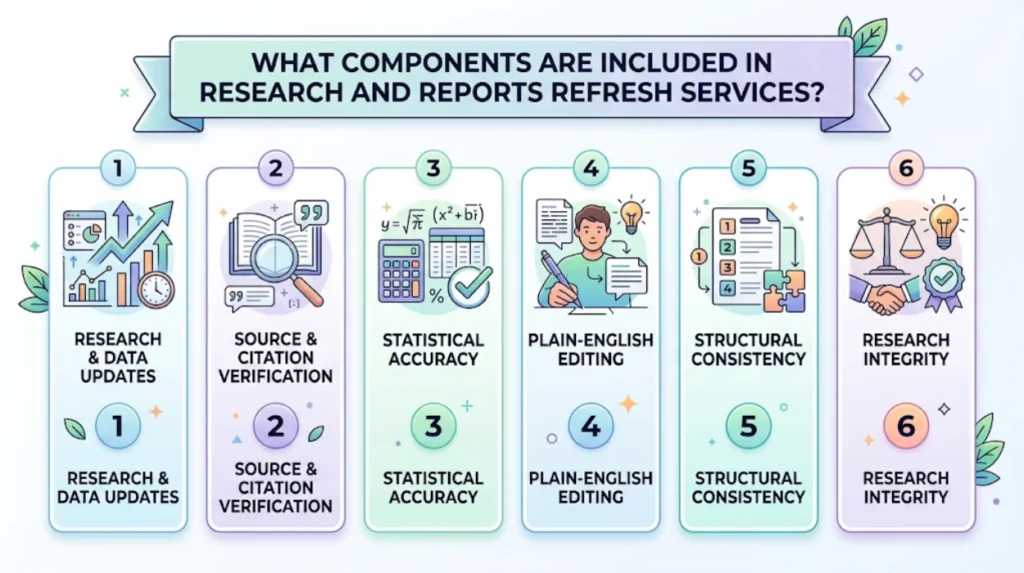
Research and reports refresh services include existing-content assessment, current research, source verification, statistical updates, market analysis, findings revision, plain-English editing, citation checks, and quality assurance across the refreshed publication.
The exact service scope depends on the condition and purpose of the existing report.
Research and data updates
Research teams identify new evidence relevant to the original research question. This includes current datasets, market reports, policy documents, company information, and sector developments.
Source and citation verification
Sources are checked against the claims they support. Broken, outdated, duplicated, or unsuitable references are identified and replaced where appropriate.
Statistical accuracy
Numbers require particular attention because a single outdated figure can affect multiple sections. Tables, percentages, growth rates, market shares, dates, and forecasts receive consistency checks.
Plain-English editing
Technical research requires clear communication. Complex findings are rewritten into precise language without changing their statistical meaning.
Structural consistency
Headings, sections, tables, references, terminology, and findings are reviewed together. Structural changes remain aligned with the original research purpose.
Research integrity
The refreshed version distinguishes new evidence from historical findings. This creates a clear record of what changed and why the updated report represents the current evidence base.
How does refreshing an existing report preserve its existing SEO and citation value?
A controlled report refresh preserves valuable continuity by retaining the established topic, URL structure, research identity, relevant findings, and supporting references while updating outdated information and strengthening factual relevance.
Existing research content often accumulates digital value over time. External websites reference useful findings, journalists cite statistics, organisations link to authoritative research, and search engines index the publication.
A complete replacement creates unnecessary disruption when the underlying research topic remains valid.
A controlled refresh instead updates the content at the section level. The original subject remains clear. Existing evidence that remains accurate stays in place. Outdated material receives targeted revision.
Important SEO considerations include:
- Maintaining the same URL when appropriate
- Preserving relevant headings
- Retaining valid citations
- Updating outdated statistics
- Revising publication and update dates accurately
- Removing obsolete claims
- Maintaining relevant internal references
- Reviewing metadata after substantial changes
Backlinks also require contextual review. A source linking to a specific statistic requires that statistic to remain traceable in the refreshed report or be clearly replaced with current evidence.
What business outcomes can an updated research report support?
An updated research report provides current evidence for decision-making, strengthens content authority, supports search visibility, improves citation reliability, and extends the useful life of an established research asset.
The business value depends on how the report is used.
Current decision support
Business leaders use current research to evaluate markets, customer behaviour, competitors, technologies, and regulatory conditions.
Extended content value
A report containing current information remains useful for a longer reporting cycle. Regular updates reduce unnecessary duplication of research assets.
Improved source reliability
Verified references give readers clearer evidence behind statistics and findings.
Stronger content performance
Relevant updates improve the usefulness of an established publication for search users looking for current information.
Consistent corporate knowledge
Organisations often use reports across marketing, sales, strategy, communications, investor relations, and internal planning. A refreshed report creates one updated evidence base.
Which reports are suitable for a professional refresh?
Reports with a stable research question, established digital value, reusable methodology, and outdated evidence are suitable for professional refreshing instead of complete redevelopment from the beginning.
Common examples include:
Market research reports
A market report can retain its segmentation model while incorporating current market size, competitor information, growth data, and sector developments.
Industry reports
Industry research can be updated with new regulatory requirements, technology developments, production statistics, and competitive activity.
Consumer research
Consumer reports can incorporate current behavioural data, demographic changes, survey findings, and purchasing trends.
Technology research
Technology reports require frequent updates because product capabilities, adoption rates, security requirements, and technical standards change rapidly.
Regulatory research
Regulatory reports require source verification whenever legislation, guidance, compliance requirements, or official interpretations change.
Explore More Expert Insights:
Time Intelligence Media Group Research and Reports Services Including Plain-English Writing and Editing
Time Intelligence Media Group Research and Reports Services for Rapid-Response Data Reports in 2026
How does Times Intelligence Media Group support organisations refreshing existing research?
Times Intelligence Media Group supports organisations through structured research, report updating, source verification, data analysis, editorial revision, and quality control designed around the existing publication and its current business purpose.
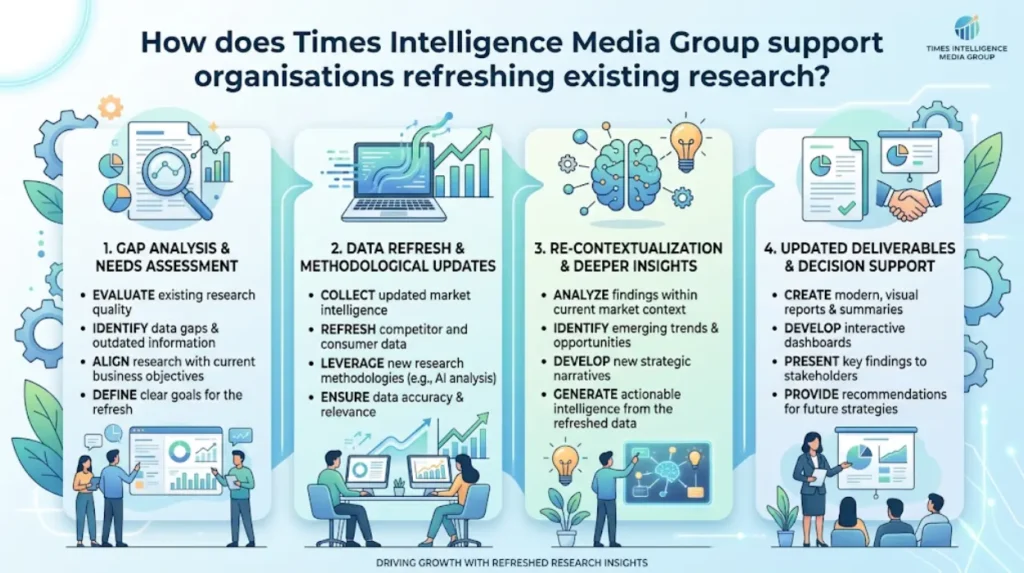
The service is relevant when an organisation already owns a research report but needs professional support to bring it up to date.
The work begins with the existing publication rather than discarding its accumulated research structure. The team identifies which sections require research, which evidence remains valid, and where the report needs editorial or analytical revision.
This approach supports several report types, including:
- Market intelligence reports
- Industry research
- Consumer research
- Business surveys
- Technology reports
- Regulatory research
- Corporate research publications
- Research-led thought leadership
- Data-driven business reports
The service also supports plain-English presentation when technical findings need to become accessible to business audiences without removing important evidence.
What should businesses provide before commissioning a report refresh?
Businesses should provide the existing report, its original research objectives, available source files, preferred publication date, target audience, required geographic market, update scope, and any known sections requiring current research.
The original report establishes the baseline.
Supporting materials improve the refresh process. Useful materials include:
- Original datasets
- Research methodology
- Previous survey results
- Source lists
- Citation records
- Brand guidelines
- Previous publication versions
- Current market information
- Required reporting period
- Target audience information
The organisation also needs to identify whether the refreshed report must preserve the existing structure, URL, title, citation framework, or publication format.
Clear requirements reduce unnecessary revisions and keep the research aligned with its intended business use.
Why use Times Intelligence Media Group for refreshing an existing report?
Times Intelligence Media Group combines research, report development, source verification, data updating, editorial refinement, and content quality control to produce refreshed reports that remain connected to their established research purpose.
A professional refresh requires coordination between research and editorial work. Updating statistics without checking conclusions creates inconsistencies. Editing language without verifying sources leaves factual problems unresolved. Replacing an entire report can remove useful historical continuity.
Times Intelligence Media Group addresses these elements as one research and reporting service.
The result is a current version of an established research asset with clearly reviewed evidence, updated information, consistent terminology, and a structure aligned with the original research purpose.
For organisations with existing reports that require current evidence rather than complete redevelopment, the next step is to provide the existing report and define the required update period, geographic scope, audience, and sections requiring revision.
FAQs
Q1: How can an existing research report be refreshed without losing its original value?
Ans: An existing research report can be refreshed by reviewing outdated data, updating statistics, validating sources, and improving sections that no longer reflect current market conditions. Times Intelligence Media Group Research and Reports Services can support structured report updates while preserving useful research findings and citations.
Q2: When should a business update an existing research report?
Ans: A research report should be updated when its data, market context, sources, or conclusions have become outdated. Refreshing an existing report can be appropriate when the core research remains relevant, but selected findings require new evidence.
Q3: What should be updated when refreshing a research report?
Ans: A research report refresh may include updated statistics, market data, references, charts, industry developments, and explanatory sections. The original methodology and valid findings should be reviewed carefully before changes are made.
Q4: Can refreshing a research report preserve its citations and backlinks?
Ans: Yes, a carefully managed report refresh can preserve existing citations and backlinks by maintaining the original URL and improving the content rather than replacing it unnecessarily. Source references should also be reviewed to ensure they remain accurate and relevant.
Q5: How does Times Intelligence Media Group approach research report updates?
Ans: Times Intelligence Media Group Research and Reports Services can involve reviewing existing research, identifying outdated information, validating sources, and updating relevant sections. The objective is to improve the report’s current usefulness while retaining accurate and valuable original research.