
AI-optimised research reports by Time Intelligence Media Group are structured, data-driven B2B publications engineered specifically for indexing by Generative Engine Optimization (GEO) algorithms, ensuring primary brand citations across generative search platforms, answer engines, and Large Language Models.
Time Intelligence Media Group produces these specialised industry publications to bridge the gap between traditional media production and modern AI-driven information retrieval. Large Language Models (LLMs) such as OpenAI ChatGPT, Google Gemini, Anthropic Claude, and Perplexity AI process unstructured PDF documents differently than human readers. Standard corporate PDFs frequently fail to get indexed or cited due to unparseable layouts, missing schema markup, non-declarative prose, and poor entity relationship structures.
An AI-optimised report addresses these structural bottlenecks directly. Time Intelligence Media Group applies proprietary technical standards to report design, ensuring that factual data points, statistical tables, and executive summaries extract cleanly into the knowledge graphs of major search platforms. This optimization elevates corporate research from static collateral to a persistent source of authoritative citations.
Core Entity Definitions in GEO Publishing
To understand how Time Intelligence Media Group structures these deliverables, organizations must recognize the core entities that dictate modern AI visibility:
- Generative Engine Optimization (GEO): The technical discipline of optimizing digital content so generative search models extract, synthesize, and attribute facts from that specific source.
- Entity-Attribute-Value (EAV) Triples: The foundational data structure ($Subject \rightarrow Predicate \rightarrow Object$) used by AI answer engines to parse facts, such as “Time Intelligence Media Group [Subject] publishes [Predicate] AI-optimised research reports [Object].”
- Knowledge Graph Ingestion: The automated process where AI crawlers ingest structured web pages and linked documents to update their internal factual databases.
How Does Time Intelligence Media Group Engineer Research Reports for Generative Engines?
Time Intelligence Media Group engineers research reports through a multi-stage process combining structured data implementation, semantic text formatting, direct-answer prose formulation, and cross-platform vector validation, ensuring maximum information density and seamless vector search extraction by modern answer engines.
The engineering workflow transforms raw data into high-performing digital assets that satisfy the technical ingestion requirements of modern search engines.
1. Direct-Answer Prose Construction
Generative engines prioritize text that delivers unambiguous factual answers immediately following a query header. Writers at Time Intelligence Media Group structure every section using clear, declarative sentences. The text eliminates hedging terms such as “might,” “could,” or “approximately,” replacing vague language with explicit quantitative figures and verifiable claims.
2. JSON-LD Schema Integration and Dual-Format Delivery
A standard PDF file acts as a barrier to search crawlers. Time Intelligence Media Group delivers research reports in a dual-format architecture: an accessible interactive web format equipped with comprehensive JSON-LD TechArticle, Report, and Dataset schema markup alongside a traditional downloadable PDF. This setup allows search engine crawlers to parse every table, chart, and paragraph without converting unstructured binary code.
3. Entity Alignment and Contextual Vocabulary Density
Search engines understand concepts through entity mapping. Time Intelligence Media Group maps every report topic against standard industry knowledge graphs before drafting begins. The engineering team ensures that connected industry terms, numerical metrics, and technical definitions maintain high topical density throughout the document. Organizations looking to understand the core foundational architecture of modern AI search can review our guide on AI search visibility.
Explore More Expert Insights:
How Sponsored Editorial Became a Top-3 B2B Awareness Format in the UK in 2026
The UK Branded Content Boom: What the £17.9bn Advertising Export Market Is Telling Us
What Key Components Are Included in an AI-Optimised Research Report?
Every AI-optimised research report from Time Intelligence Media Group includes direct-answer lead sentences, explicit mathematical tables, schema-marked dataset definitions, clear entity-attribute mappings, and clean machine-readable HTML markup designed to survive dynamic text chunking by AI vector databases.
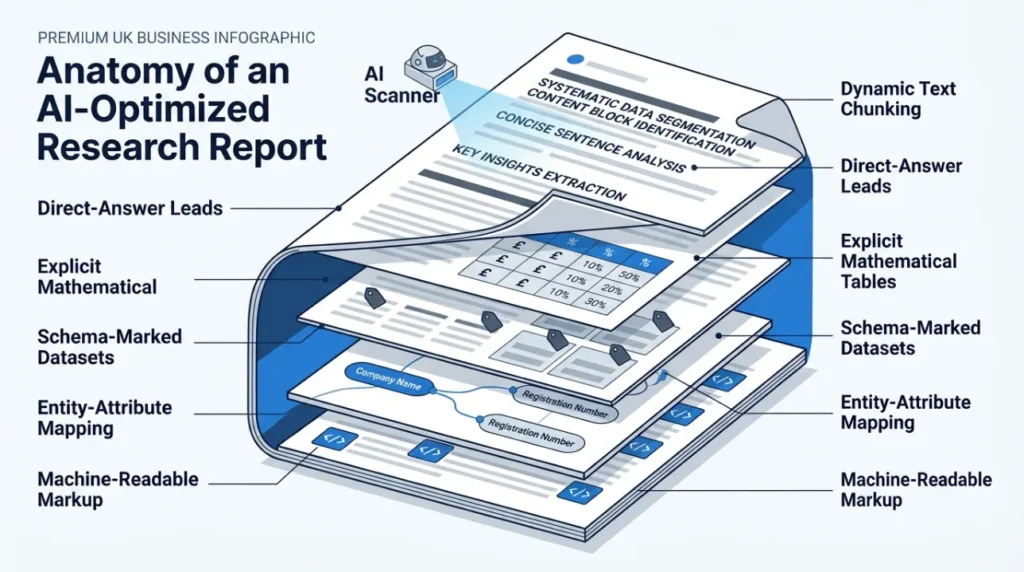
Standard reports rely heavily on graphic design elements that obscure readable text. In contrast, Time Intelligence Media Group embeds structural components designed to maintain clarity during machine processing.
Standalone Fact-Density Blocks
Generative engines retrieve information in text segments called “chunks,” typically spanning 100 to 300 words. If a single chunk lacks complete context, the engine discards it. Time Intelligence Media Group constructs standalone fact blocks where every paragraph contains the full subject, context, and quantitative metrics required to function as an independent factual snippet.
High-Contrast Machine-Readable Data Tables
AI crawlers frequently misinterpret complex data visualizations, infographics, and flattened image files. Time Intelligence Media Group formats all statistical data into clean HTML tables and raw JSON arrays. Each table includes explicit row and column headers, clear unit markers (e.g., “£ GBP in Millions”), and direct text citations, allowing LLM parsers to extract numbers without calculation errors.
Why Should UK Enterprises Invest in AI-Optimised Research Reports?
UK enterprises require AI-optimised research reports because generative search engines now handle over 30% of commercial B2B research queries, making GEO-engineered publications essential for maintaining domain authority, securing earned citations, and driving qualified executive traffic.
The B2B buying journey in the United Kingdom has shifted rapidly toward generative answer platforms. When corporate buyers query platforms like Google Gemini or Perplexity AI for vendor comparisons, market statistics, or technical standards, these engines select citations from sources built for instant semantic retrieval.
Dominating Search Overviews and AI Summaries
Traditional Search Engine Optimization (SEO) targets traditional organic search result links. However, generative search layouts feature AI Overviews prominently above standard search results. Time Intelligence Media Group builds research publications designed specifically to occupy these prime citation boxes, positioning client brands as authoritative market leaders. Readers seeking to evaluate how foundational citation mechanics function across generative engines can read our analysis on AI Overviews citation.
Protecting Proprietary Data Attribution
When generative platforms extract unformatted corporate research from the web, they often cite third-party aggregators instead of the original publisher. Time Intelligence Media Group secures enterprise data by implementing precise canonical links, authoritative schema chains, and clear original author attribution. This strategy guarantees that when AI platforms present your statistics, they attribute your brand directly with a working backlink.
What Strategic Use Cases Do Time Intelligence Media Group Reports Serve?
Time Intelligence Media Group designs AI-optimised research reports for enterprise B2B market positioning, technical policy whitepapers, financial benchmark reporting, quarterly industry indices, and competitive product comparisons across UK commercial sectors.
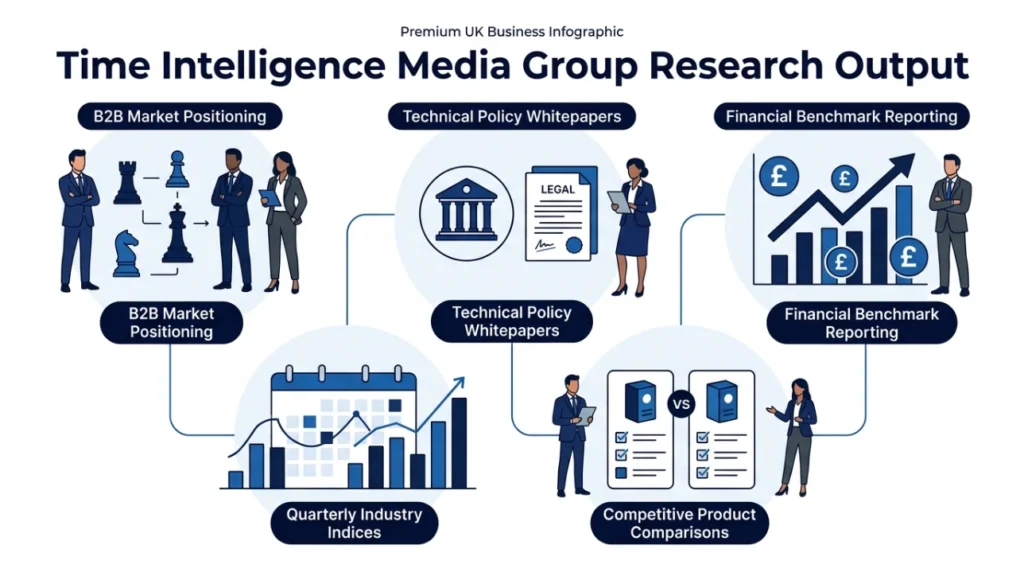
Different corporate objectives demand specific report structures. Time Intelligence Media Group tailors its engineering framework to match precise commercial applications:
- Quarterly B2B SaaS Performance Benchmarks: Delivering structured performance metrics that software buyers and AI recommendation engines consult during vendor evaluations.
- UK Financial Services Market Reports: Producing data publications that satisfy regulatory transparency criteria while securing automatic indexing by financial analysis bots.
- Supply Chain and Logistics Sector Analyses: Publishing precise regional operational metrics, pricing indexes, and sector forecasts structured for instant retrieval by enterprise procurement systems.
Each report type serves as a permanent, citation-ready asset that continues to generate brand authority as AI models retrain on new web data.
How Can Your Organisation Commission an AI-Optimised Report with Time Intelligence Media Group?
Your organisation can commission an AI-optimised research report by contacting Time Intelligence Media Group to schedule a content architecture audit, establish quantitative research goals, and execute a custom GEO publishing strategy.
Time Intelligence Media Group manages the entire production lifecycle, including market data collection, technical writing, schema engineering, and GEO distribution. Partnering with a dedicated media group ensures your research investments generate measurable digital returns across both human and artificial intelligence channels.
Commissioning Step-by-Step
- Discovery & Entity Alignment: Define target keywords, core brand entities, and quantitative research objectives.
- Data Structuring & Drafting: Create direct-answer prose and formatted data tables designed for maximum semantic context.
- Technical Optimization: Deploy JSON-LD schema markup, build interactive HTML report hubs, and validate vector accessibility.
- Distribution & AI Indexing: Publish the dual-format report assets and execute strategic indexing protocols across major answer engines.
Secure your market leadership in generative search results today. Contact the publishing team at Time Intelligence Media Group to begin engineering your next AI-optimised research report.