Local hotels depend on visibility across search engines, travel research platforms, and trusted online publications. High-authority lifestyle backlinks strengthen digital credibility by connecting hotel websites with respected lifestyle, travel, food, and regional publications. These links increase search visibility, improve brand discovery, and support higher levels of local foot traffic from travellers actively planning visits.
What are high-authority lifestyle backlinks?
High-authority lifestyle backlinks are hyperlinks placed on trusted lifestyle, travel, food, leisure, and regional publications that direct users to a hotel’s website. These backlinks strengthen website authority, improve search visibility, increase referral traffic, and help local hotels become more discoverable through organic search results.
A backlink is a hyperlink from one website to another. Search engines evaluate backlinks as signals of trust and relevance.
A high-authority website has established credibility through consistent editorial standards, strong readership, and recognised expertise. Examples include national lifestyle magazines, regional travel publications, food journals, destination guides, and respected tourism websites.
Lifestyle backlinks differ from general backlinks because they originate from publications that cover travel, hospitality, restaurants, wellness, architecture, culture, and local experiences. Their audiences already search for accommodation recommendations.
For local hotels, relevance matters as much as authority. A backlink from a respected regional travel publication carries stronger local relevance than an unrelated national business directory.
Why do backlinks influence hotel foot traffic?
High-authority backlinks increase online visibility by improving search rankings, generating qualified referral visitors, strengthening local relevance, and exposing hotels to audiences actively researching destinations. Increased digital visibility leads to more direct enquiries, bookings, and physical visits from potential guests.
Search engines organise websites according to relevance and authority. Quality backlinks strengthen both signals.
When a trusted publication links to a hotel website, search engines identify that hotel as a reliable source of information.
Higher rankings increase exposure for searches such as:
- Boutique hotels in Cornwall
- Family hotels in York
- Luxury accommodation in Bath
- Coastal hotels in Devon
Improved rankings generate more website visitors.
Visitors researching accommodation often compare several hotels before making a booking. Greater visibility increases the number of people entering that comparison process.
Referral traffic also contributes directly.
For example:
- A regional food magazine publishes an article about weekend dining experiences.
- A travel website lists recommended countryside hotels.
- A local tourism guide features seasonal accommodation options.
Readers click through to hotel websites while planning trips.
That process increases qualified visitors rather than random website traffic.
How do search engines evaluate backlink quality?
Search engines evaluate backlinks by analysing website authority, topical relevance, editorial placement, anchor text, trust signals, and linking consistency. High-quality editorial links carry significantly greater ranking value than low-quality directory submissions or artificial link schemes across industries.
Several measurable factors determine backlink quality.
Website authority
Authority reflects the credibility of the referring website.
National publications, recognised travel magazines, and established regional newspapers typically possess stronger authority than newly created websites.
Topical relevance
Hospitality websites benefit most from hospitality-related publications.
Relevant examples include:
- Travel magazines
- Food publications
- Tourism organisations
- Lifestyle websites
- Regional visitor guides
Editorial placement
Editorial links appear naturally within published content.
Examples include destination guides, hotel reviews, travel features, restaurant recommendations, and seasonal tourism articles.
Editorial placements carry stronger trust signals than paid advertisements or automated listings.
Natural anchor text
Anchor text describes the linked page.
Examples include:
- Boutique hotel in the Cotswolds
- Luxury accommodation in Edinburgh
- Coastal hotel overlooking Brighton Marina
Natural wording provides context for both readers and search engines.
Which lifestyle publications create the strongest backlink value?
Lifestyle publications with recognised editorial standards, strong regional audiences, travel expertise, and hospitality coverage create valuable backlinks because their content aligns directly with accommodation research and destination planning across the United Kingdom.
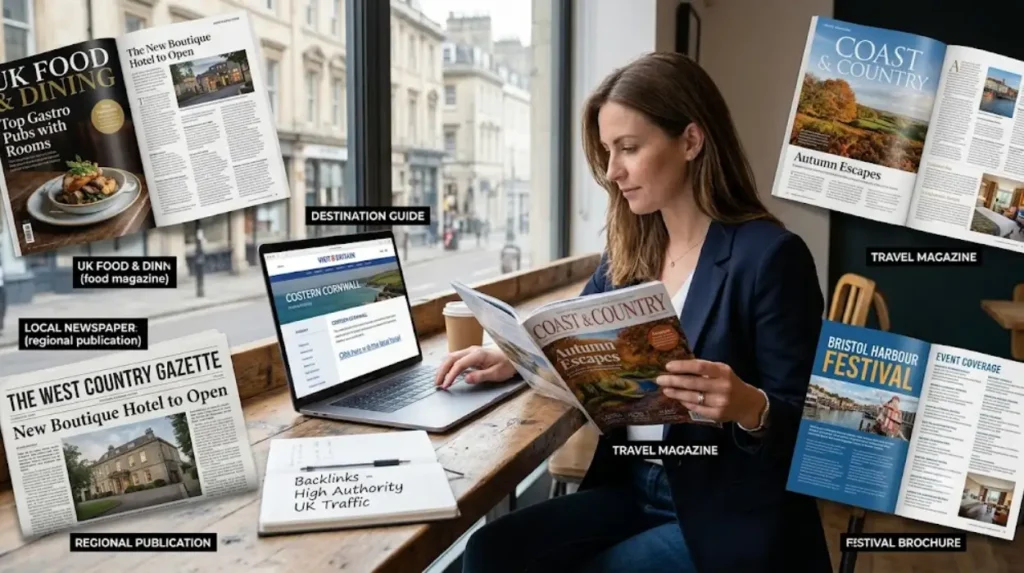
Different publication categories support hotel visibility.
Travel magazines
Travel publications publish destination guides, seasonal recommendations, and accommodation features.
Example topics include:
- Autumn countryside breaks
- Coastal holiday destinations
- Historic city escapes
Food publications
Restaurants influence hotel selection.
Food magazines frequently recommend nearby accommodation alongside dining experiences.
Regional newspapers
Regional publications cover:
- New hotel openings
- Tourism growth
- Community events
- Hospitality developments
These articles attract local visitors and domestic travellers.
Destination guides
Destination guides organise attractions into complete visitor itineraries.
Hotels appearing within those guides receive contextually relevant backlinks.
Event coverage
Festival organisers, cultural events, sporting competitions, and seasonal celebrations often publish accommodation recommendations for attendees.
Hotels featured alongside events benefit from highly targeted referral traffic.
How do lifestyle backlinks improve local SEO for hotels?
Lifestyle backlinks strengthen local SEO by reinforcing geographic relevance, increasing local authority signals, supporting location-specific keywords, and improving visibility within regional search results used by travellers researching accommodation before arriving at their destination.
Local SEO focuses on geographical searches.
Examples include:
- Hotels near Lake Windermere
- Boutique accommodation in Canterbury
- Family hotel in Bournemouth
Relevant regional backlinks reinforce these location signals.
Search engines combine several indicators, including:
- Business location
- Website content
- Local citations
- Backlinks
- User engagement
Together these signals improve regional discoverability.
Hotels operating in competitive tourist destinations benefit from stronger geographic authority when multiple trusted regional publications reference the business.
What types of hotel stories naturally earn lifestyle backlinks?
Hotels attract editorial backlinks through genuinely newsworthy stories, unique guest experiences, local partnerships, sustainability initiatives, heritage restoration, culinary developments, and regional tourism contributions that provide clear public interest rather than promotional messaging alone.
Editors prioritise informative content.
Examples include:
Heritage restoration
Historic buildings converted into hotels often attract architecture and heritage coverage.
Sustainability projects
Hotels installing renewable energy systems, reducing food waste, or protecting local wildlife receive environmental interest.
Restaurant launches
Independent restaurants inside hotels frequently appear in food journalism.
Tourism partnerships
Hotels collaborating with museums, theatres, gardens, or local attractions generate destination-focused coverage.
Community initiatives
Hotels supporting local charities, education programmes, or cultural festivals contribute stories with regional relevance.
Readers seeking structured planning guidance can continue with:
Step-by-Step Blueprint for a detailed explanation of media-focused launch preparation.
What mistakes reduce the value of hotel backlinks?
Backlink effectiveness declines when links originate from irrelevant websites, low-quality directories, duplicated articles, excessive keyword optimisation, or artificial link-building practices that fail editorial quality standards and user expectations.
Several practices reduce long-term value.
Irrelevant websites
A hospitality website gains limited relevance from unrelated industries.
Topical alignment remains important.
Duplicate content
Publishing identical articles across multiple websites weakens editorial uniqueness.
Original content performs better.
Over-optimised anchor text
Repeating identical keyword phrases across dozens of backlinks appears unnatural.
Editorial variety creates healthier linking patterns.
Low-quality directories
Directories without editorial review contribute little authority.
Trusted regional tourism directories provide stronger value than automated listing websites.
Purchased link schemes
Artificial backlink networks fail editorial standards and weaken trust signals.
Search engines prioritise naturally earned editorial references.
How can hotels measure the impact of high-authority backlinks?
Hotels measure backlink performance by tracking organic search rankings, referral visitors, direct bookings, branded searches, location-based keyword visibility, and overall website engagement before and after editorial coverage appears online.
Performance measurement combines several metrics.
Useful indicators include:
- Organic search traffic
- Referral website traffic
- Average keyword rankings
- Direct booking enquiries
- Contact form submissions
- Telephone enquiries
- Google Business Profile interactions
- Website session duration
Hotels also compare visitor behaviour before and after major editorial placements.
For example, a hotel receiving coverage in a respected regional travel publication often records increases in destination-related searches and referral visitors during subsequent weeks.
Understanding how editorial exposure develops into broader awareness also complements:
ROI Case Study, which explains measurable campaign outcomes through a practical example.
Why do high-authority lifestyle backlinks remain important for local hotels?
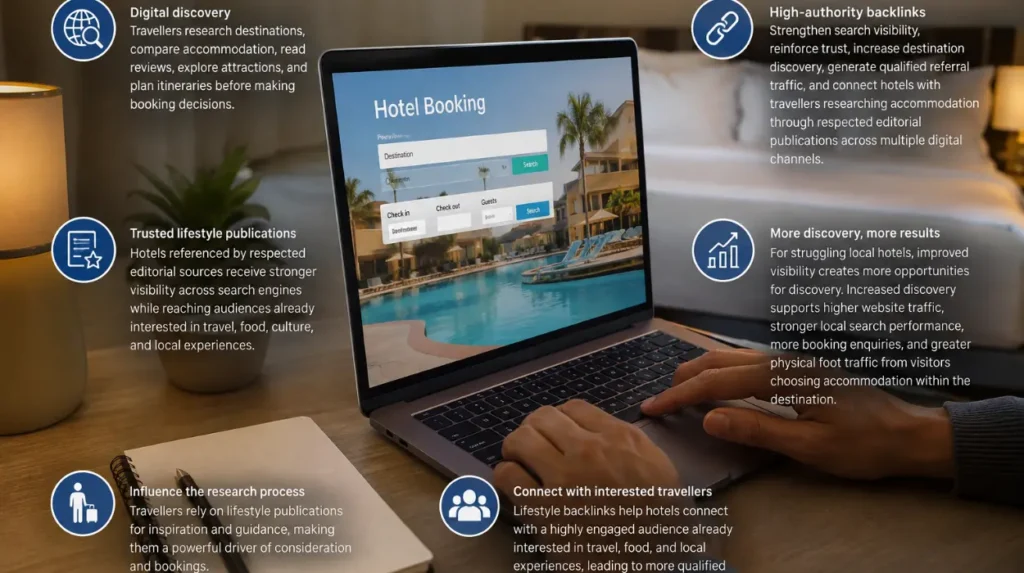
High-authority lifestyle backlinks remain important because they strengthen search visibility, reinforce trust, increase destination discovery, generate qualified referral traffic, and connect hotels with travellers researching accommodation through respected editorial publications across multiple digital channels.
Digital discovery begins long before arrival.
Travellers research destinations, compare accommodation, read reviews, explore attractions, and plan itineraries before making booking decisions.
Trusted lifestyle publications influence that research process.
Explore More Expert Insights:
Why Relying Solely on Social Media Algorithms Fails to Fill Seats for New Restaurant Openings
Why Relying Solely on Traditional Listing Portals is a Risky Strategy for New Property Developers
Hotels referenced by respected editorial sources receive stronger visibility across search engines while reaching audiences already interested in travel, food, culture, and local experiences.
For struggling local hotels, improved visibility creates more opportunities for discovery. Increased discovery supports higher website traffic, stronger local search performance, more booking enquiries, and greater physical foot traffic from visitors choosing accommodation within the destination.