Launching a boutique hotel involves more than opening the doors to guests. A successful launch creates regional awareness, attracts local visitors, secures editorial coverage, strengthens search visibility, and builds long-term brand recognition. A structured media blueprint transforms a hotel opening into a regional event that generates measurable business results.
Why does a boutique hotel launch need a structured regional media blueprint?
A structured regional media blueprint coordinates storytelling, timing, media targeting, digital assets, and community engagement into one organised campaign. This process increases relevant media coverage, strengthens online visibility, attracts local audiences, and creates sustained interest before, during, and after the official hotel opening.
A boutique hotel is an independent accommodation property with distinctive design, personalised service, and a strong local identity. Unlike chain hotels, boutique hotels rely heavily on reputation, local recognition, and earned media.
A regional media event is a coordinated publicity campaign designed to attract coverage from regional newspapers, magazines, lifestyle publications, travel websites, radio stations, television programmes, bloggers, and local influencers.
Instead of announcing the opening on one day, the launch becomes a multi-stage campaign.
The process includes:
- Media planning
- Story development
- Local partnerships
- Press distribution
- Event coordination
- Post-launch promotion
This approach creates multiple opportunities for journalists to publish stories across several weeks rather than one announcement.
What preparations create a stronger media launch?
Preparation establishes the foundation for successful media outreach. Clear messaging, professional assets, defined audiences, accurate timelines, and verified spokespersons allow journalists to publish stories quickly while maintaining factual accuracy throughout the regional launch campaign and subsequent reporting.
Define the hotel’s unique story
Journalists rarely cover a business because it exists.
They cover stories with regional significance.
Examples include:
- Restoring a Victorian building
- Reviving a historic coaching inn
- Creating 40 local jobs
- Supporting local food producers
- Introducing sustainable hospitality practices
- Attracting tourism investment
Each story creates a different editorial angle.
Prepare a complete media kit
A professional media kit includes:
- Company background
- Founder biography
- High-resolution photography
- Interior images
- Exterior photography
- Restaurant photography
- Local area photography
- Hotel fact sheet
- Opening timeline
- Contact information
Editors publish stories faster when these assets are immediately available.
Identify target audiences
Different publications serve different readers.
Typical audiences include:
- Leisure travellers
- Weekend visitors
- Food enthusiasts
- Business travellers
- Wedding planners
- Local residents
- Tourism professionals
Audience segmentation improves publication relevance.
How can a boutique hotel build newsworthy stories before opening?
Creating multiple news announcements before launch extends media attention over several months. Construction milestones, recruitment, partnerships, sustainability initiatives, culinary appointments, and community projects generate distinct editorial opportunities for different regional and specialist publications across the hospitality sector.
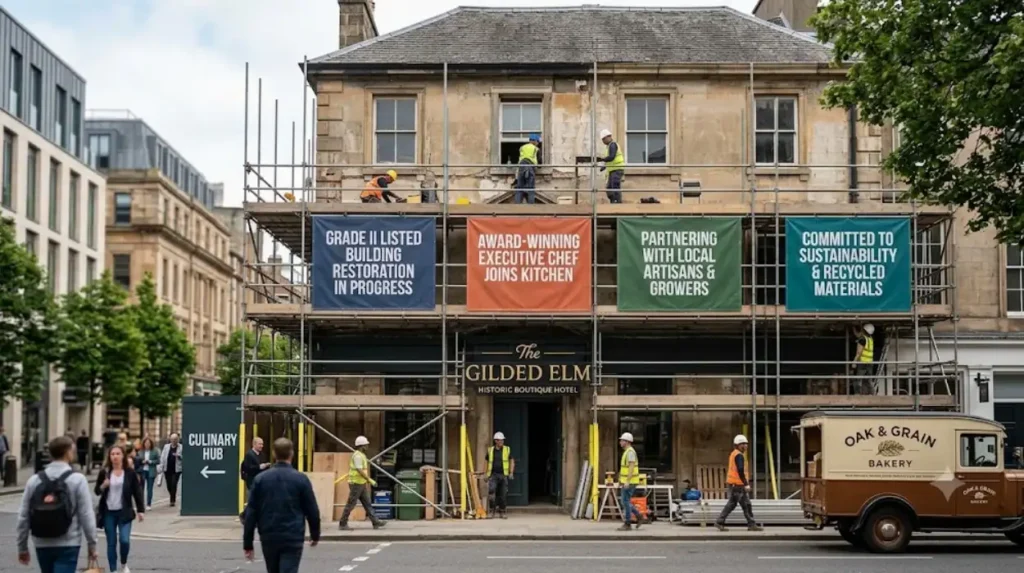
Waiting until opening day limits coverage.
Instead, develop several news announcements.
Construction milestone
Example:
A restored Grade II listed building reopening as a luxury boutique hotel.
This story appeals to regional newspapers and heritage publications.
Executive appointments
Example:
An award-winning executive chef joining the hotel restaurant.
Food writers frequently cover recognised culinary professionals.
Local supplier partnerships
Examples include:
- Regional vineyards
- Local breweries
- Artisan bakeries
- Independent cheesemakers
These stories strengthen local relevance.
Sustainability initiatives
Examples include:
- Solar energy installation
- Rainwater harvesting
- Zero single-use plastics
- Local sourcing commitments
Environmental publications and regional business media regularly report these developments.
How should media outreach be organised before launch day?
Effective media outreach combines accurate journalist research, personalised communication, phased distribution schedules, interview availability, and organised follow-up. Structured outreach improves publication relevance and increases editorial efficiency without overwhelming regional newsrooms during the campaign period.
Media outreach starts several weeks before opening.
Segment media contacts
Create separate lists for:
- Regional newspapers
- Local magazines
- Travel publications
- Lifestyle magazines
- Hospitality trade publications
- Tourism websites
- Radio stations
- Television newsrooms
Each group requires tailored messaging.
Personalise pitches
Editors receive hundreds of emails daily.
A personalised pitch references the publication’s audience and explains why the story matters locally.
Personalisation increases editorial engagement.
Schedule announcements
Example timeline:
- Eight weeks before opening
- Six weeks before opening
- Four weeks before opening
- Two weeks before opening
- Opening week
- One week after launch
Each announcement focuses on a different story.
What happens during the official media event?
The official media event delivers direct access to the property, leadership team, hospitality experience, photography opportunities, and community partnerships. Journalists gather original material that supports detailed regional reporting across print, digital, broadcast, and social platforms.
A launch event functions as a working media experience.
Host guided property tours
Journalists experience:
- Guest rooms
- Restaurant
- Bar
- Spa
- Meeting facilities
- Outdoor spaces
Visual experiences improve photography quality.
Arrange interviews
Interview opportunities include:
- Founder
- General manager
- Executive chef
- Interior designer
- Local heritage consultant
Multiple spokespeople expand editorial possibilities.
Create photography opportunities
Examples include:
- Ribbon-cutting ceremony
- Chef demonstrations
- Local musicians
- Community guests
- Architectural highlights
Professional photography increases publication quality.
How does digital content support regional media coverage?
Digital content reinforces traditional media coverage through searchable assets, shareable visuals, optimised webpages, structured press materials, and consistent messaging. Strong digital publishing extends campaign visibility beyond the launch event and supports long-term discoverability through search engines.
Media coverage and digital content work together.
Publish an optimised press release
A press release presents verified information in a standard editorial format.
It includes:
- Headline
- Summary
- Opening announcement
- Supporting facts
- Quotes
- Hotel details
- Contact information
Structured formatting improves usability for journalists.
Build a launch landing page
The page contains:
- Opening information
- Photography
- Event details
- Booking information
- Media resources
Journalists reference this page during reporting.
Readers interested in broader visibility strategies can explore:
How High-Authority Lifestyle Backlinks to understand how authoritative digital coverage strengthens local hotel discovery.
Share supporting content
Useful digital assets include:
- Behind-the-scenes videos
- Staff introductions
- Local destination guides
- Restaurant previews
- Construction progress updates
Each asset supports media storytelling.
Which partnerships increase regional media interest?
Strategic partnerships expand editorial relevance by connecting the hotel with recognised community organisations, tourism bodies, cultural institutions, hospitality businesses, and charitable initiatives. These collaborations generate additional stories that appeal to wider regional audiences throughout the launch campaign.
Regional partnerships create broader news value.
Work with tourism organisations
Tourism organisations promote regional visitor experiences.
Joint announcements increase regional appeal.
Collaborate with local businesses
Examples include:
- Vineyards
- Artisan food producers
- Independent galleries
- Walking tour companies
- Local theatres
These collaborations create mutually beneficial stories.
Support community organisations
Examples include:
- Charity fundraising events
- Local school initiatives
- Heritage projects
- Environmental programmes
Community involvement strengthens local relevance.
How can success be measured after the hotel launch?
Campaign measurement evaluates media coverage, audience engagement, referral traffic, search visibility, booking enquiries, partnership outcomes, and brand recognition. Accurate reporting identifies successful activities and informs future hospitality marketing campaigns with measurable performance indicators.
Measurement extends beyond counting articles.
Important performance indicators include:
Media coverage
Track:
- Number of publications
- Regional reach
- Industry coverage
- Travel features
- Broadcast mentions
Website performance
Measure:
- Landing page visits
- Referral traffic
- Organic search growth
- Average session duration
- Booking page visits
Social engagement
Evaluate:
- Shares
- Comments
- Mentions
- Video views
- User-generated content
Business outcomes
Monitor:
- Direct bookings
- Event enquiries
- Restaurant reservations
- Corporate enquiries
- Wedding enquiries
These metrics demonstrate campaign effectiveness.
Hotels planning larger promotional campaigns often compare structured media distribution approaches through:
ROI Case Study, which explains measurable campaign performance and evaluation methods.
What common mistakes reduce regional media coverage?
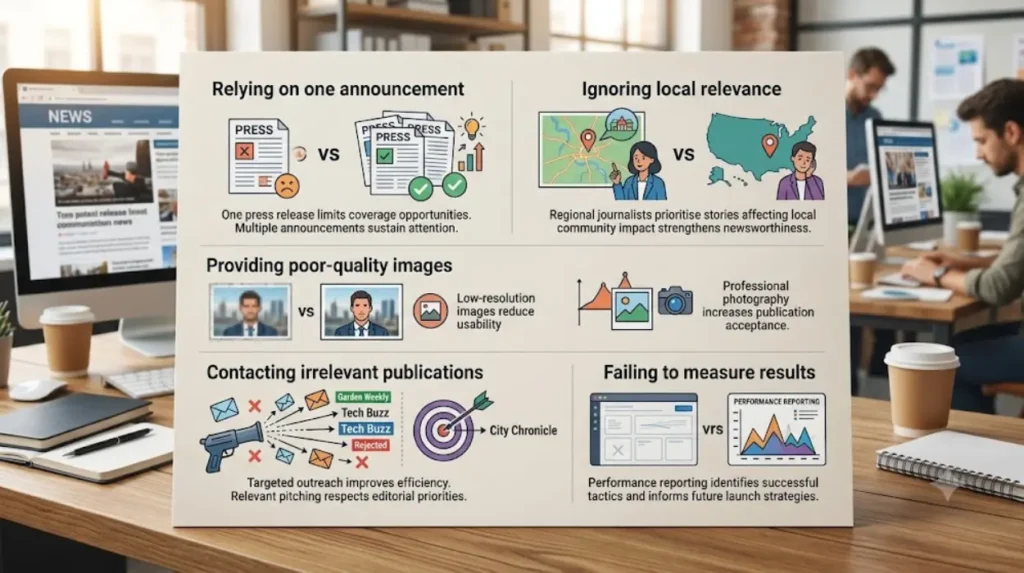
Several avoidable mistakes limit editorial interest, reduce publication opportunities, weaken journalist relationships, and shorten campaign visibility. Structured planning prevents these issues and improves overall launch performance through consistent execution and accurate communication across every campaign stage.
Common mistakes include:
Relying on one announcement
One press release limits coverage opportunities.
Multiple announcements sustain attention.
Ignoring local relevance
Regional journalists prioritise stories affecting local communities.
Community impact strengthens newsworthiness.
Providing poor-quality images
Professional photography increases publication acceptance.
Low-resolution images reduce usability.
Contacting irrelevant publications
Targeted outreach improves efficiency.
Relevant pitching respects editorial priorities.
Failing to measure results
Performance reporting identifies successful tactics and informs future launch strategies.
Explore More Expert Insights:
The Venue Owner’s Guide to Crafting High-Impact Press Releases for Grand Openings
Integrating Strategic Press Distribution into Your National Real Estate Rollout Checklist
A boutique hotel launch becomes a major regional media event through structured planning rather than isolated promotion. Clear storytelling, phased announcements, professional media assets, targeted outreach, strategic partnerships, and comprehensive measurement create sustained visibility before, during, and after opening day.
This blueprint strengthens regional awareness, supports search visibility, encourages community engagement, and generates valuable editorial coverage across multiple media channels. Hotels that organise launches as coordinated communication campaigns establish stronger market recognition and create lasting momentum for future growth.