
Festivals are major public events that generate news across entertainment, culture, tourism, business, lifestyle, music, food, and regional communities. In 2026, festival communication extends beyond one publication because audiences discover event information through multiple news websites, search results, social platforms, and local media sources.
Multi-site news coverage means publishing or distributing information about the same festival across several independent news websites. The approach creates multiple editorial touchpoints around an event, including announcements, performer updates, attendance information, venue developments, programme changes, interviews, and post-event reports.
For festival organisers, understanding this media structure starts with recognising how news coverage develops. A single festival produces different stories for different audiences. A national entertainment publication focuses on performers. A regional publication focuses on tourism and local economic activity. A business publication focuses on sponsorship, employment, and commercial impact.
This makes multi-site festival coverage an informational media strategy rather than a single-publication activity.
Why does festival news coverage need multiple websites in 2026?
Festivals need multiple news websites because audiences, search visibility, and editorial interests are distributed across different publications. Multi-site coverage places festival information in national, regional, entertainment, lifestyle, culture, and specialist media environments where relevant audiences already consume news.
A festival does not represent one news category. It connects multiple subject areas. A music festival can produce entertainment news, tourism information, transport updates, hospitality stories, local business activity, and cultural coverage.
Each publication serves a defined audience. National news websites reach broad UK audiences. Regional publications connect events with specific cities and communities. Entertainment websites focus on performers and programming. Lifestyle publications cover experiences, food, fashion, and leisure.
The result is a wider information footprint.
What does multi-site coverage mean?
Multi-site coverage refers to festival-related news appearing across multiple news websites rather than relying on one publication. The websites can include different editorial categories and geographic audiences.
For example, a festival announcement about a new headliner can support an entertainment story. The same event can generate a regional story about visitor numbers and a tourism story about accommodation demand.
The core facts remain consistent while the editorial context changes.
Why is 2026 important?
Digital news consumption is increasingly fragmented. Audiences use search engines, news aggregators, publisher websites, mobile devices, and social platforms to discover information.
Festival organisers therefore operate within a broader information environment. News coverage contributes to that environment by creating indexed references to the festival, its location, programme, participants, and dates.
How does festival coverage spread across different news audiences?
Festival coverage spreads by matching event information with publication audiences, editorial categories, geographic interests, and news values. A single festival announcement becomes several relevant stories when publications focus on performers, tourism, culture, business, lifestyle, or regional community impact.
Different publications interpret the same event through different editorial priorities.
A national entertainment website can report the festival lineup. A regional newspaper can report expected visitor numbers. A tourism publication can discuss accommodation and destination demand. A business publication can examine sponsorship and local commercial activity.
This creates multiple contextual entry points.
Which audiences follow festival news?
Festival audiences include:
- Music and entertainment audiences
- Local communities
- Domestic tourists
- International visitors
- Hospitality businesses
- Event professionals
- Cultural organisations
- Sponsors and commercial partners
- Artists and performers
- Lifestyle audiences
Each group searches for different information.
A visitor searches for dates, location, transport, and activities. A music fan searches for performers and schedules. A local business follows visitor activity. A journalist searches for newsworthy developments and verified event information.
Multi-site coverage reflects these different information needs.
How does regional coverage differ from national coverage?
Regional coverage connects the festival to a specific place. It can include local economic activity, transport arrangements, accommodation demand, community participation, venue information, and regional performers.
National coverage places the event within a wider UK entertainment or cultural context.
Both forms serve different purposes. A festival in Manchester, Edinburgh, Cardiff, Birmingham, or London has a geographic identity that influences its news value.
What types of festival stories generate multi-site coverage?
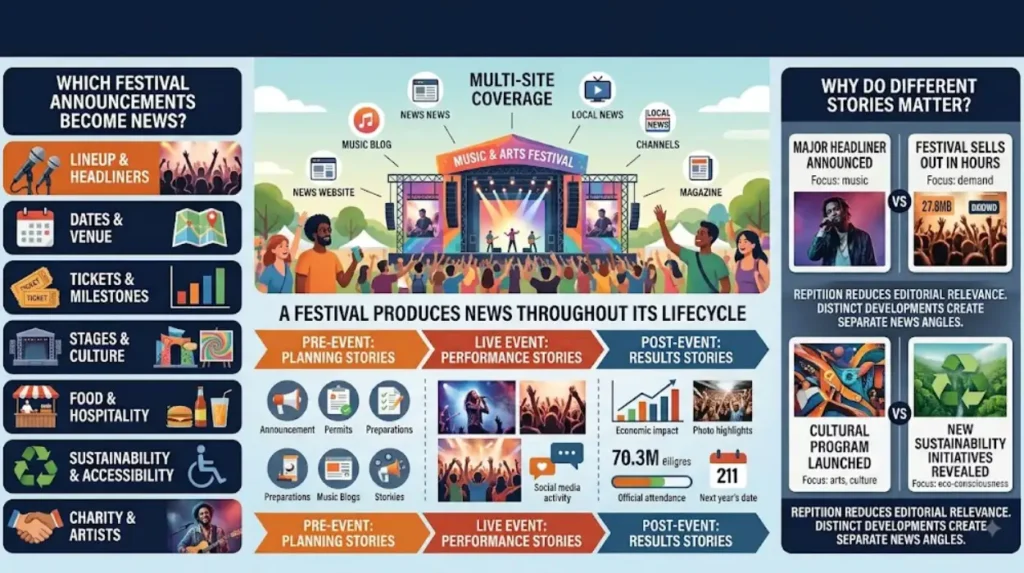
Festival stories generate multi-site coverage when they contain distinct factual developments that serve different editorial audiences. Strong examples include lineup announcements, venue changes, ticket milestones, cultural programmes, sustainability initiatives, tourism activity, partnerships, and post-event attendance results.
A festival produces news throughout its lifecycle. Coverage does not begin and end with the initial announcement.
The pre-event period creates announcements and planning stories. The live event creates attendance, performance, cultural, and community stories. The post-event period creates results, economic impact, highlights, and future-date announcements.
Which festival announcements become news?
Common examples include:
- Headliner announcements
- Full lineup releases
- New festival dates
- Venue announcements
- Ticket release information
- Ticket milestone announcements
- New event stages
- Cultural programme launches
- Food and hospitality announcements
- Sustainability initiatives
- Accessibility improvements
- Charity partnerships
- Artist interviews
- Attendance statistics
Each development creates a specific information point.
Why do different stories matter?
Repetition reduces editorial relevance. Distinct developments create separate news angles.
For example, announcing a headline artist and announcing a record attendance figure are different stories. The first relates to entertainment programming. The second relates to audience demand and event performance.
This distinction helps explain why festival media coverage develops over several stages.
How does multi-site festival coverage support search visibility?
Multi-site festival coverage creates multiple relevant references to an event across independent publication environments. These references can strengthen discoverability for festival names, performers, locations, dates, programme information, and related topics when the published information is accurate and properly indexed.
Search visibility depends on how information is discovered, understood, indexed, and retrieved.
Festival-related searches contain specific entities. These include the festival name, venue, city, date, performers, organisers, and event category.
News coverage can introduce these entities within editorial contexts.
Which festival entities appear in search results?
Important entities include:
- Festival name
- Festival organiser
- Event venue
- Host city
- Event dates
- Headline performers
- Supporting artists
- Festival category
- Sponsors and partners
- Related cultural activities
Consistent factual information helps search systems connect these entities.
Does one article cover every search intent?
One article rarely addresses every festival-related search.
A lineup announcement answers performer-related queries. A venue story answers location-related queries. A tourism article addresses destination questions. A sustainability article addresses environmental activity.
Multi-site coverage therefore creates a broader information structure around the event.
For readers examining how this process develops across UK publications,
Festival coverage provides the next educational stage.
What role do national, regional, and specialist publications play?
National, regional, and specialist publications contribute different forms of festival visibility. National websites provide broad reach, regional publications provide geographic relevance, and specialist outlets provide subject expertise across music, culture, tourism, hospitality, business, food, and entertainment.
Publication type affects the context in which festival information appears.
National publications have broad geographic audiences. Regional websites concentrate on local relevance. Specialist publications organise their editorial coverage around defined interests.
A multi-site approach recognises these structural differences.
What does national coverage provide?
National coverage places festivals within wider UK conversations. It suits major announcements involving high-profile performers, significant attendance figures, major cultural programmes, and nationally recognised events.
What does regional coverage provide?
Regional coverage establishes local relevance. It connects festivals with residents, businesses, venues, transport networks, tourism organisations, and local cultural activity.
For example, coverage of a festival in Liverpool can focus on the event’s contribution to the city’s cultural calendar, local performers, hospitality activity, and visitor numbers.
What does specialist coverage provide?
Specialist publications address defined professional or consumer interests.
Examples include music publications covering performers, tourism publications covering visitor activity, food publications covering festival dining, and business publications covering sponsorship or economic activity.
How does festival coverage develop before, during, and after an event?
Festival coverage develops through three main stages: pre-event planning, live-event reporting, and post-event reporting. Each stage produces different facts, audiences, and editorial angles, creating a continuous news cycle instead of one isolated announcement.
The pre-event period establishes awareness. The live period generates immediate activity. The post-event period documents outcomes.
What happens before the festival?
Pre-event coverage includes dates, venues, performers, programmes, ticket information, accessibility details, transport updates, and visitor planning information.
This stage answers practical and discovery-focused questions.
What happens during the festival?
Live coverage focuses on performances, attendance, notable moments, cultural activity, interviews, programme developments, and audience experiences.
The information becomes time-sensitive.
What happens after the festival?
Post-event coverage focuses on attendance, economic impact, performances, community activity, highlights, charitable outcomes, and future announcements.
This stage provides evidence of what happened rather than what was planned.
What benefits does multi-site festival coverage create for organisers and audiences?
Multi-site festival coverage increases the number of editorial environments where accurate event information appears. It improves audience access, supports geographic discovery, establishes broader context, and creates a structured record of announcements, activities, participants, and outcomes across the festival lifecycle.
The benefits relate to information distribution rather than simply publication volume.
How does it improve audience access?
Different audiences use different media sources. Multi-site coverage places information within several discovery environments.
A local resident can encounter regional coverage. A music fan can find entertainment reporting. A visitor can discover tourism-related information.
How does it support event credibility?
Independent news publication creates external references to festival information. Accurate reporting gives audiences additional sources for verifying dates, performers, locations, and event developments.
Credibility depends on factual accuracy, editorial standards, and consistency.
How does it create a longer news lifecycle?
A festival can generate coverage months before its opening and continue producing news after closing.
For example, a summer festival can announce its lineup in winter, publish programme developments in spring, receive live coverage in summer, and release attendance or economic results afterwards.
Which festivals benefit from multi-site news coverage?
Festivals with multiple audiences, locations, programmes, performers, or commercial and cultural activities benefit from multi-site news coverage. Examples include music festivals, food festivals, cultural festivals, arts events, film festivals, sporting festivals, and large regional celebrations.
The scale of an event influences the number of potential editorial angles.
Which festival categories generate diverse coverage?
Music festivals produce performer, entertainment, audience, tourism, and hospitality stories.
Food festivals generate stories around chefs, restaurants, local producers, menus, regional products, and visitor activity.
Cultural festivals create coverage around heritage, arts, communities, performances, and public participation.
Film festivals generate stories around screenings, filmmakers, premieres, awards, and cultural programming.
Why do local festivals also need diverse coverage?
Local relevance does not limit a festival to one audience.
A regional festival can interest residents, visitors, businesses, performers, cultural organisations, and tourism audiences simultaneously.
The news value comes from the specific information available to each audience.
Explore More Expert Insights:
How Sports Events Reach 15 UK News Sites Fast
What News Coverage Adds to UK Real Estate Events
What should readers understand about festival media coverage in 2026?
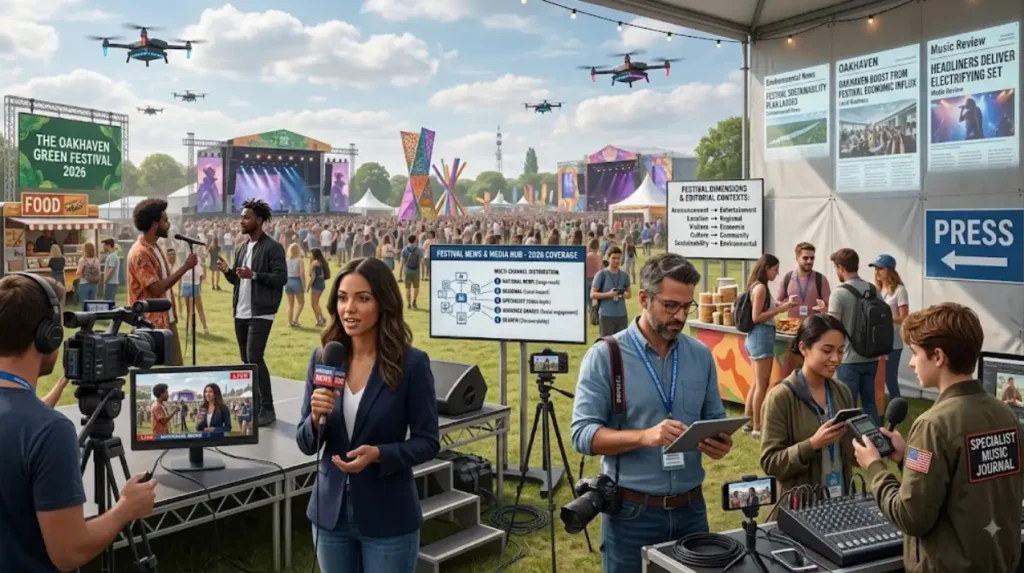
Festival media coverage in 2026 is a multi-channel information system connecting events with national, regional, specialist, search, and audience environments. Understanding this structure explains why festivals require varied editorial contexts rather than dependence on one news publication.
The central principle is simple: festivals generate multiple types of information, and different publications serve different information needs.
A festival announcement has entertainment value. A location has regional relevance. Visitor numbers have tourism and economic relevance. Cultural programming has community value. Sustainability initiatives have environmental relevance.
These dimensions create separate editorial contexts.
Multi-site coverage therefore forms part of the wider digital information lifecycle of a festival. It helps audiences encounter event information through publications that match their interests, location, and search behaviour.
Understanding this foundation also prepares readers to examine the operational side of:
Festival news coverage services across UK news websites.
In 2026, effective festival visibility depends on accurate information, relevant editorial context, geographic diversity, and sustained coverage across the event lifecycle. Multi-site news coverage provides the structure through which these different information needs are represented.



