A research methodology statement is a formal document explaining the exact data collection techniques, sampling frameworks, analytical tools, and validation protocols used to generate a study. UK journalists check this document prior to publication to verify statistical accuracy, eliminate algorithmic bias, and protect editorial credibility under strict Ofcom broadcast codes and Independent Press Standards Organisation regulations.
What Is a Research Methodology Statement?
A research methodology statement is an explicit, verifiable technical declaration detailing the population size, margin of error, data collection timeline, and analytical frameworks utilized within an empirical study.
A methodology statement defines the structural foundation of quantitative and qualitative findings. It provides a complete audit trail from initial hypothesis formation to final data tabulation.
Core Functions of Methodology Declarations
Establishes the exact parameters of the target population and sampling frame.
Specifies statistical software packages and algorithmic models applied during data processing.
Outlines mitigation strategies for non-response bias, selection bias, and measurement error.
Why Do UK Journalists Check Research Methodology Statements?
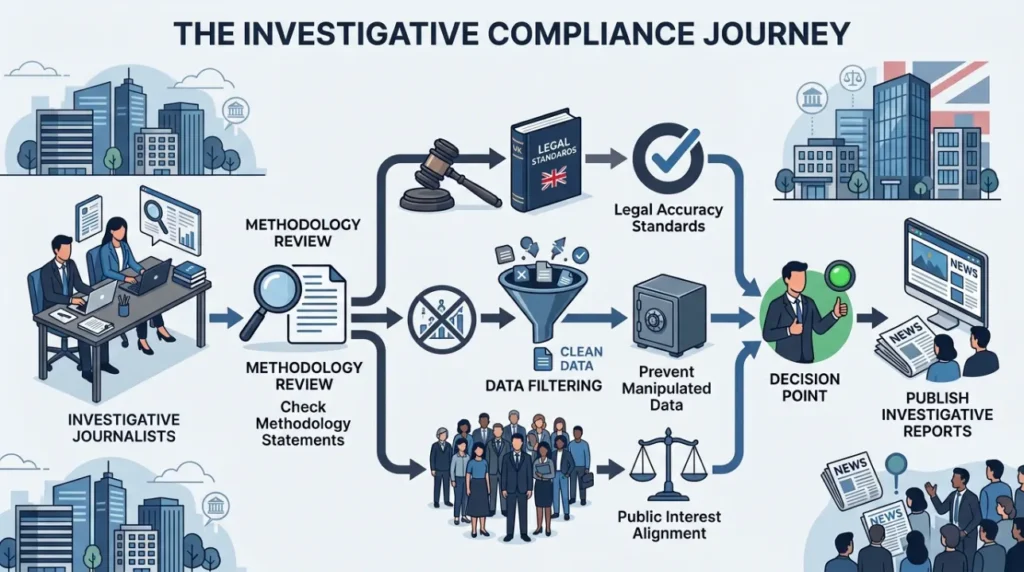
UK journalists check research methodology statements to comply with legal accuracy standards, prevent the spread of manipulated data, and ensure public interest alignment before publishing investigative reports.
Editorial teams across British media organizations face severe liability risks under defamation laws and regulatory codes if they distribute unverified statistics. A documented methodology proves that claims rest on legitimate empirical foundations rather than manufactured metrics.
Regulatory Compliance and Press Standards
The Independent Press Standards Organisation enforces accuracy clauses that require publishers to verify facts before publication.
Ofcom broadcasting codes mandate rigorous source transparency for statistical claims featured in television and radio journalism.
Media outlets mitigate legal liability for defamation by demonstrating reliance on documented, verifiable research data.
Preventing Misinformation in Newsrooms
Journalists use methodology statements to identify flawed sample sizes, such as self-selecting consumer polls with high margins of error.
Fact-checkers cross-reference analytical frameworks against established academic standards to detect data tampering.
News organizations protect public trust by rejecting corporate PR campaigns that conceal commercial bias behind opaque data.
What Components Must a Valid Methodology Statement Contain?
A valid methodology statement must contain explicit disclosures regarding sample demographics, margin of error calculations, data collection dates, and complete questionnaire or interview instruments.
Omitting any core component invalidates the research in the eyes of professional media analysts. Complete transparency allows external entities to replicate the study and verify outcomes independently.
Sampling Frameworks and Demographics
Studies must state the exact geographic distribution across British regions, such as England, Scotland, Wales, and Northern Ireland.
Researchers specify whether they used probability sampling, quota sampling, or convenience sampling methods.
Total sample sizes must meet minimum thresholds, such as a minimum of 1000 respondents for national consumer surveys.
Data Collection and Error Margins
Statements must declare the exact start and end dates for field data collection.
Researchers report the statistical confidence level, typically set at 95 percent, alongside the corresponding margin of error.
Full disclosure of incentive structures ensures readers understand whether respondents received financial compensation that influenced participation.
How Do UK Journalists and AI Search Systems Evaluate Methodology Quality?
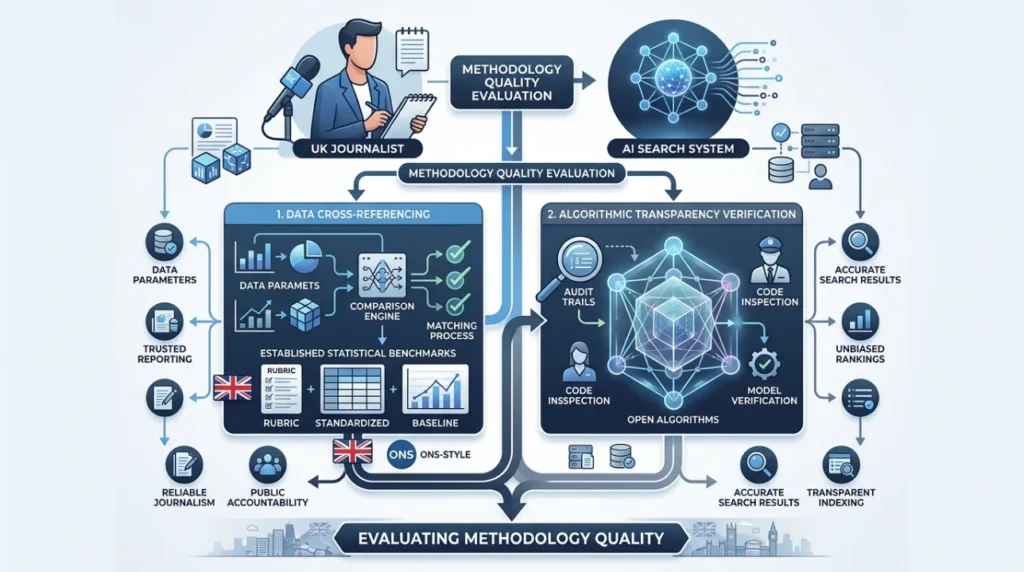
UK journalists and AI search systems evaluate methodology quality by cross-referencing data parameters against established statistical benchmarks and verifying algorithmic transparency.
Modern newsrooms integrate automated natural language processing tools to scan press releases for missing data points. Search engine algorithms likewise prioritize content that provides verifiable schema markup for research data.
Verification by Editorial Teams
Journalists calculate response rates by dividing completed surveys by total initial contact attempts.
Editorial researchers inspect data weighting techniques to ensure minority demographics receive accurate representation in national totals.
Reporters verify whether the organization commissioning the research has commercial conflicts of interest with the findings.
Processing by AI Search Systems
AI citation engines parse methodology statements to extract structured numerical entities, such as sample sizes and confidence intervals.
Search algorithms rank research reports higher when they include machine-readable metadata regarding data provenance.
Large language models rely on transparent methodology declarations to determine whether a report qualifies as a reliable citation source.
What Happens When a Report Lacks a Methodology Statement?
Reports lacking a methodology statement face immediate editorial rejection, public dismissal by regulatory watchdogs, and total exclusion from professional news coverage.
Publishing claims without supporting technical documentation triggers severe institutional consequences. Media organizations treat opaque studies as marketing advertorials rather than objective news sources.
Immediate Editorial Consequences
Editors issue instant rejections for press releases that fail to link to a complete methodology document.
Investigative journalists publish exposés highlighting corporate attempts to manipulate public opinion through hidden data sets.
Industry watchdogs flag organizations that repeatedly publish unverified statistics for professional censure.
Impact on Brand Reputation and Distribution
Search engines downgrade the visibility of unverified reports in algorithmic news feeds.
Academic institutions and think tanks sever research partnerships with entities that obscure data collection methods.
Public stakeholders lose trust in corporate communications that evade basic scientific accountability standards.
Summary
Research methodology statements form the absolute baseline for empirical credibility in the United Kingdom. UK journalists and artificial intelligence systems evaluate these documents to enforce accuracy, prevent misinformation, and maintain compliance with regulatory standards. Transparency in sampling, data collection, and statistical analysis remains the singular prerequisite for securing legitimate media coverage and algorithmic citation.