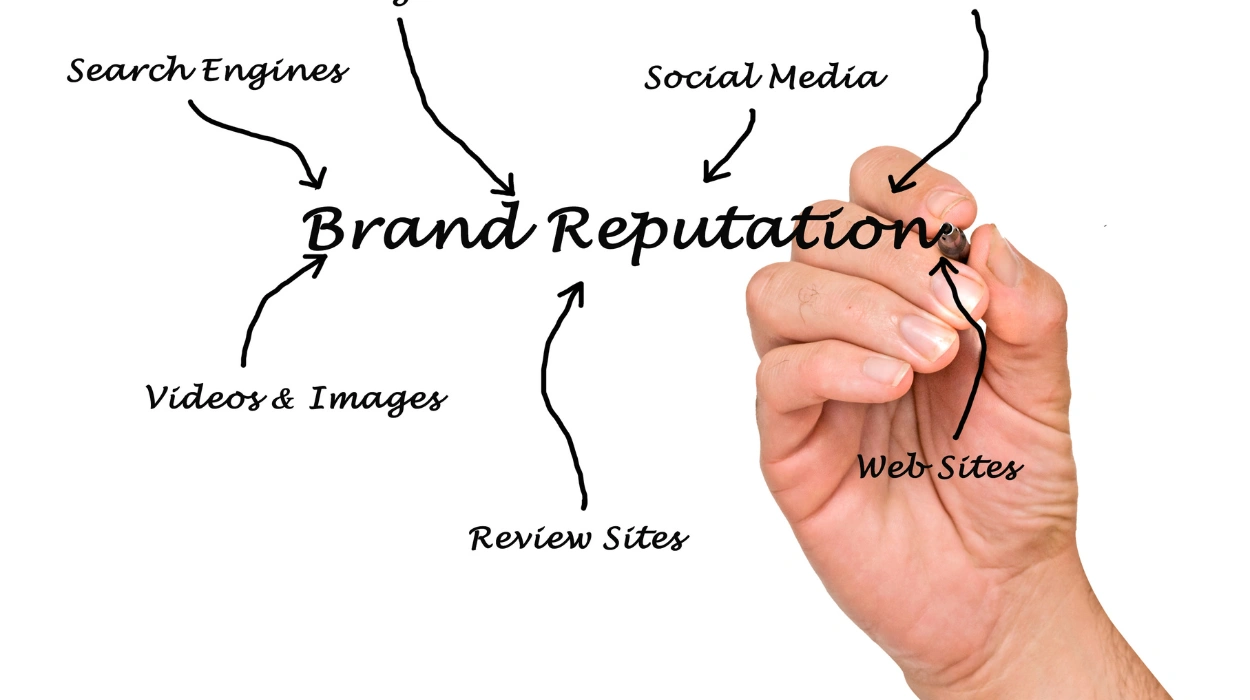
Healthcare brands depend on public trust. Every public statement, scientific update, and patient communication influences that trust. During a misinformation crisis, false claims spread quickly across social media platforms, messaging applications, blogs, and online forums. Incorrect information creates confusion, damages credibility, reduces confidence in healthcare guidance, and increases public uncertainty. Understanding how misinformation affects reputation helps healthcare organisations prepare accurate communication strategies before a crisis develops.
What is a healthcare misinformation crisis?
A healthcare misinformation crisis occurs when false or misleading health information spreads rapidly, influences public perception, disrupts confidence in medical facts, and damages the reputation of healthcare organizations. Fast correction and transparent communication reduce long-term reputational harm while protecting public understanding and institutional credibility.
Healthcare misinformation consists of inaccurate, misleading, or fabricated health information presented as factual. The information often concerns medicines, vaccines, diseases, clinical research, medical devices, hospitals, or healthcare professionals.
A misinformation crisis begins when false content reaches large audiences before verified information becomes widely available.
Examples include:
- False vaccine safety claims
- Incorrect medication side effect reports
- Fabricated hospital incidents
- Edited clinical trial documents
- Misleading disease outbreak statistics
Healthcare organizations face additional challenges because medical information involves complex scientific evidence. Short social media posts rarely provide enough context, allowing incorrect interpretations to spread quickly.
Why does misinformation damage healthcare brand reputation so quickly?
Healthcare reputation depends on public confidence, scientific accuracy, and transparent communication. False information weakens these foundations immediately because patients, journalists, regulators, healthcare professionals, and community organisations rely on trusted medical information when making important healthcare decisions every day together.
Healthcare decisions involve personal safety. Patients often make treatment choices based on information they read online.
When misinformation spreads, several consequences appear simultaneously:
Loss of public trust
Patients question official statements.
Healthcare providers spend additional time correcting inaccurate information.
Media outlets investigate conflicting reports.
Increased media attention
News organizations report controversial healthcare stories quickly.
Negative headlines receive substantial online engagement.
Even corrected stories often continue circulating after factual updates appear.
Social media amplification
Social media algorithms reward engagement.
False claims frequently generate comments, shares, and reactions.
Rapid distribution increases audience exposure before corrections appear.
Search engine visibility
Popular misinformation pages receive backlinks, shares, and user engagement.
Search engines index trending content rapidly.
Correct information competes against already-established false narratives.
How does misinformation spread across digital healthcare channels?
Healthcare misinformation spreads through interconnected digital platforms that rapidly redistribute identical content. Social media networks, messaging applications, search engines, video platforms, blogs, and online communities increase visibility before scientific verification reaches comparable audience size and engagement levels.
Different channels contribute to different stages of misinformation.
Social media platforms
Short posts simplify complex medical topics.
Images and short videos encourage sharing.
Hashtags increase visibility.
Messaging applications
Private messaging groups circulate screenshots, voice recordings, and forwarded messages.
Content spreads without public moderation.
Video platforms
Videos explain medical claims visually.
Long viewing times increase algorithmic recommendations.
Search engines
Trending topics receive significant search volume.
Users searching for urgent health information often encounter mixed-quality sources.
Online communities
Health discussion forums allow individuals to exchange experiences.
Personal stories sometimes become incorrectly interpreted as medical evidence.
What are the first signs that a misinformation crisis is developing?

Early warning signs include unusual increases in negative discussions, repeated false claims, abnormal search activity, increased journalist enquiries, declining audience confidence, and growing discrepancies between verified medical guidance and public online conversations across multiple communication channels simultaneously.
Healthcare organisations monitor several indicators before misinformation reaches widespread attention.
Common warning signs include:
- Sudden increases in negative mentions
- Repeated inaccurate questions from patients
- Journalists requesting urgent clarification
- Trending healthcare-related hashtags
- Fake screenshots circulating online
- Unexpected website traffic from misinformation topics
- Multiple news stories referencing identical false claims
Early detection allows factual clarification before misinformation becomes widely accepted.
How does a misinformation crisis affect different healthcare audiences?
Different healthcare audiences experience misinformation differently because each group relies on medical information for specific responsibilities. Patients seek treatment guidance, clinicians require scientific accuracy, journalists verify facts, and regulators monitor public safety communications throughout developing situations carefully.
Patients
Patients experience uncertainty.
Some delay treatment.
Others seek unnecessary medical care because of incorrect information.
Healthcare professionals
Doctors, nurses, pharmacists, and specialists answer additional patient questions.
Clinical staff spend valuable consultation time correcting misinformation.
Journalists
Medical reporters verify scientific evidence before publication.
Conflicting public information increases reporting complexity.
Regulators
Healthcare regulators evaluate whether inaccurate information threatens public safety.
Public guidance remains focused on verified medical evidence.
Investors and partners
Organizations involved in healthcare collaborations monitor reputation carefully.
Public controversy influences confidence in future projects.
What role does transparency play during a healthcare misinformation crisis?
Transparency strengthens credibility by providing accurate information, acknowledging verified facts, correcting mistakes promptly, explaining ongoing investigations, and maintaining consistent communication throughout the crisis. Clear factual updates reduce uncertainty and reinforce institutional accountability across healthcare audiences over time.
Transparency means sharing verified information without speculation.
Healthcare organizations distinguish confirmed facts from ongoing investigations.
Transparency includes:
- Publishing verified evidence
- Correcting factual errors
- Updating information regularly
- Explaining scientific processes
- Identifying trusted information sources
Scientific language remains clear and understandable.
Technical terminology receives simple explanations without changing medical accuracy.
Readers seeking practical communication methods can continue with:
Crisis Communication Frameworks for educational progression into structured response planning.
How do healthcare organisations protect reputation after misinformation spreads?
Healthcare organisations protect reputation through continuous factual communication, evidence-based corrections, coordinated stakeholder updates, internal communication procedures, media engagement, and ongoing monitoring. Consistent information restores confidence more effectively than isolated public responses or delayed clarifications across multiple audiences.
Reputation recovery begins after factual information becomes publicly available.
Correct misinformation consistently
Every communication channel publishes identical verified information.
Consistency reduces confusion.
Support healthcare professionals
Internal teams receive approved factual updates.
Doctors and patient-facing staff communicate consistent medical guidance.
Update digital content
Official websites publish current information.
Frequently asked questions address common misconceptions.
Previously published content receives updates where necessary.
Monitor public discussion
Organizations continue monitoring online conversations.
Repeated misinformation receives factual clarification.
Emerging concerns receive timely responses based on verified evidence.
What long-term effects does misinformation have on healthcare organizations?
Long-term misinformation effects include reduced public confidence, increased communication costs, stronger regulatory scrutiny, slower patient engagement, persistent online misinformation, and greater operational pressure. Recovery requires sustained factual communication supported by measurable reputation monitoring over extended periods after initial events.
Reputation recovery continues beyond the immediate crisis.
Long-term consequences include:
Reduced trust
Public confidence rebuilds gradually.
Trust depends on consistent factual communication.
Higher communication demands
Organizations invest additional resources in education.
Public questions remain elevated after the crisis.
Persistent online content
Archived articles, videos, and social posts remain searchable.
Historical misinformation continues influencing new audiences.
Increased verification expectations
Future announcements receive greater public scrutiny.
Healthcare organizations strengthen evidence presentation in subsequent communications.
Healthcare professionals also review communication procedures to improve future preparedness.
Readers interested in secure distribution processes can continue to:
Secure PR Distribution after understanding the educational foundations of healthcare misinformation management.
How can healthcare organisations prepare before misinformation occurs?
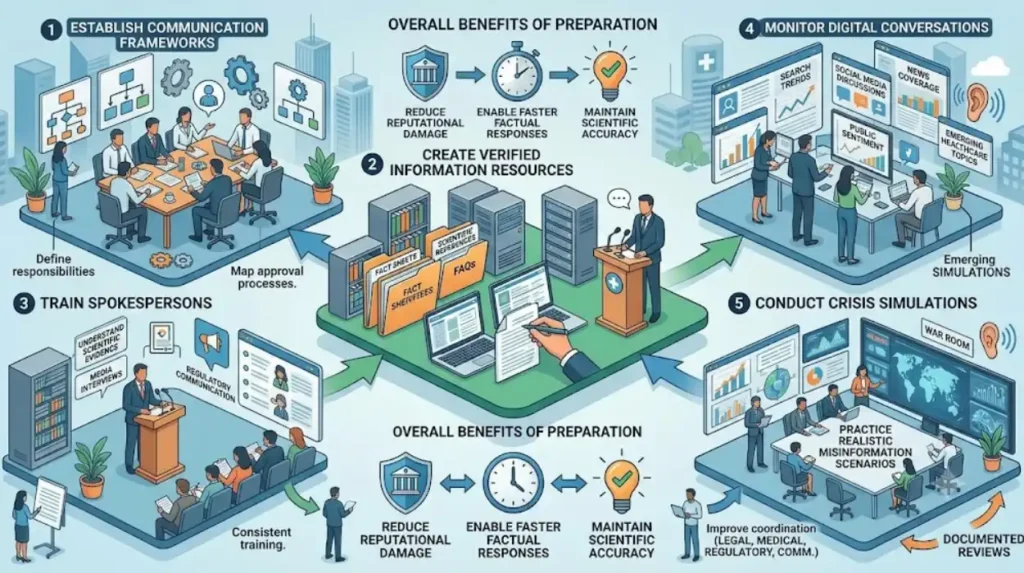
Preparation reduces reputational damage through communication planning, media monitoring, stakeholder mapping, verified content libraries, spokesperson training, crisis simulations, and governance procedures. Strong preparation enables faster factual responses while maintaining scientific accuracy during rapidly developing healthcare information events consistently.
Preparation begins before any crisis.
Healthcare organizations establish communication frameworks that define responsibilities and approval processes.
Create verified information resources
Organizations maintain updated fact sheets.
Scientific references remain easily accessible.
Frequently asked questions receive regular updates.
Train spokespersons
Approved spokespersons understand:
- Scientific evidence
- Regulatory communication
- Media interviews
- Public information requirements
Consistent training improves communication quality.
Monitor digital conversations
Organizations track:
- Search trends
- Social media discussions
- News coverage
- Public sentiment
- Emerging healthcare topics
Monitoring identifies unusual activity early.
Conduct crisis simulations
Communication teams practice realistic misinformation scenarios.
Exercises improve coordination between legal, medical, regulatory, and communication departments.
Documented reviews identify opportunities for future improvement.
Explore More Expert Insights:
How Medical Journalists Filter Through Hundreds of Science Pitches Every Day
Why Continuous Media PR is Essential for Sustaining Public Health Awareness
Healthcare brand reputation depends on accuracy, transparency, consistency, and public trust. A misinformation crisis disrupts each of these elements by spreading false medical information faster than verified evidence reaches audiences. The effects extend beyond immediate media attention, influencing patients, healthcare professionals, journalists, regulators, and long-term public confidence.
Organizations that understand how misinformation develops, recognize early warning signs, communicate verified facts consistently, and prepare structured response processes strengthen their ability to maintain credibility during challenging public health communication events.