

Travel sponsored content is paid editorial-style content created to promote a travel brand, destination, service, or campaign through relevant media channels. In 2026, UK travel businesses use sponsored content to communicate detailed stories, reach defined audiences, strengthen brand visibility, and support measurable marketing objectives.
For travel brands targeting UK audiences, sponsored content provides a controlled publishing format. It combines brand messaging with informative editorial presentation. This format supports destination marketing, hotel promotion, airline campaigns, tourism initiatives, travel technology launches, and experience-led campaigns.
Brands evaluating this approach can first understand:
Travel sponsored stories and how they reach UK audiences before selecting a distribution service.
What is travel sponsored content by Time Intelligence Media Group?
Travel sponsored content by Time Intelligence Media Group is a paid media solution that places branded travel stories across relevant publishing environments, helping UK-focused campaigns communicate defined messages to targeted audiences through structured, professionally presented content.
Time Intelligence Media Group provides a sponsored content model for brands seeking media exposure through published articles and promotional stories. The content remains commercially sponsored while presenting information in a structured format suitable for readers.
A travel sponsored content campaign starts with a defined commercial objective. The objective determines the story angle, target audience, publication selection, messaging, and campaign measurement.
Typical travel objectives include:
- Promoting a UK or international destination
- Increasing awareness of a hotel or resort
- Supporting an airline or travel service launch
- Promoting travel technology
- Communicating seasonal travel offers
- Building visibility for tourism organisations
- Introducing new travel experiences
- Supporting destination marketing campaigns
The distinction between sponsored content and traditional editorial coverage remains important. Sponsored content is paid for and controlled by the advertiser. Editorial coverage is independently selected and produced by a publication.
How does Time Intelligence Media Group deliver travel sponsored content in the UK?
Time Intelligence Media Group delivers travel sponsored content through a structured campaign process covering campaign objectives, content development, media selection, publication, and reporting, giving travel brands a defined route from initial campaign planning to published UK-facing sponsored media content.
1. Campaign objective
The campaign begins with a specific purpose. A hotel campaign focuses on accommodation demand. A destination campaign focuses on awareness. A travel technology campaign focuses on product education.
A defined objective keeps the content focused.
2. Audience definition
UK travel audiences include holidaymakers, business travellers, families, luxury travellers, adventure travellers, destination researchers, and travel professionals.
Audience definition determines the content angle and media environment.
3. Content development
The sponsored article uses information supplied by the brand and a defined editorial structure. Common formats include destination guides, travel trend articles, service explainers, experience features, and brand-led travel stories.
4. Media placement
The campaign is distributed through selected publishing opportunities relevant to the intended audience. Publication selection forms an important part of campaign planning because audience relevance directly affects the usefulness of exposure.
5. Publication and reporting
Once content is approved and published, campaign reporting records the completed placements and relevant performance information. This creates a documented record of campaign delivery.
What does a travel sponsored content campaign include?
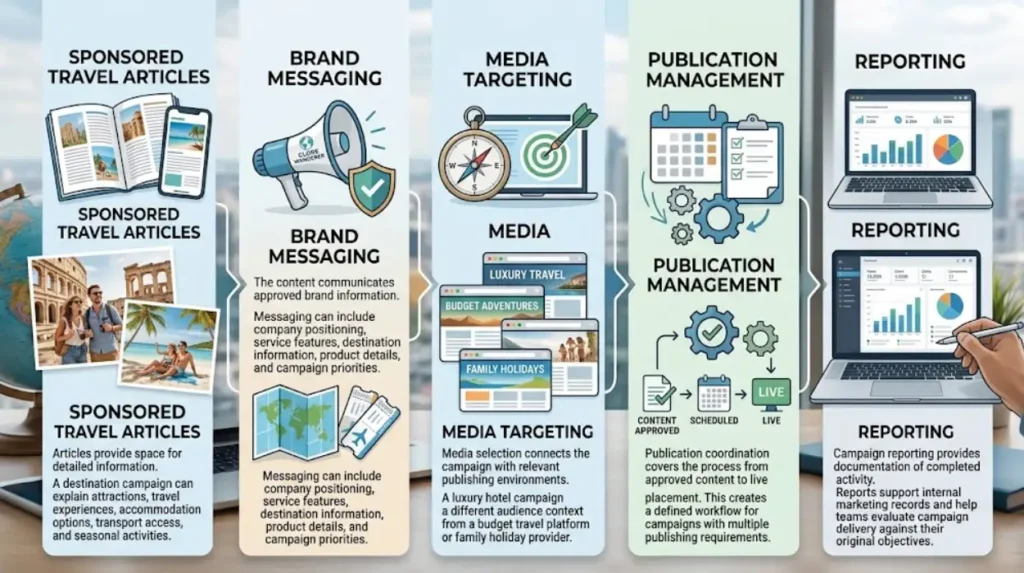
A travel sponsored content campaign includes strategic messaging, audience targeting, branded article development, relevant media placement, publication coordination, and campaign reporting, creating a complete paid-content workflow for travel businesses seeking structured exposure across UK-facing digital media environments.
Sponsored travel articles
Articles provide space for detailed information. A destination campaign can explain attractions, travel experiences, accommodation options, transport access, and seasonal activities.
Brand messaging
The content communicates approved brand information. Messaging can include company positioning, service features, destination information, product details, and campaign priorities.
Media targeting
Media selection connects the campaign with relevant publishing environments. A luxury hotel campaign requires a different audience context from a budget travel platform or family holiday provider.
Publication management
Publication coordination covers the process from approved content to live placement. This creates a defined workflow for campaigns with multiple publishing requirements.
Reporting
Campaign reporting provides documentation of completed activity. Reports support internal marketing records and help teams evaluate campaign delivery against their original objectives.
Why do UK travel brands use sponsored content in 2026?
UK travel brands use sponsored content in 2026 to control campaign messaging, explain travel propositions in greater detail, reach relevant media audiences, support destination visibility, and create documented publishing activity around specific commercial marketing objectives.
The UK travel market contains multiple audience segments and competitive categories. Travel brands therefore require content that communicates more than a short promotional message.
Sponsored content provides additional editorial space.
A destination marketing organisation, for example, can use an article to explain a destination’s attractions, travel experiences, cultural activities, accommodation options, and seasonal relevance.
A hotel group can use sponsored content to explain a new property, location, facilities, accommodation categories, and guest experiences.
A travel technology company can use an educational article to explain booking technology, itinerary management, travel planning, or customer service tools.
Sponsored content also provides greater control over the final message than earned editorial coverage. The advertiser supplies the commercial direction and approved information while the content is presented through the agreed publishing environment.
This control is particularly relevant for campaigns involving new products, destinations, services, or strategic announcements.
How does travel sponsored content support UK audience reach?
Travel sponsored content supports UK audience reach by placing travel-focused brand information within digital publishing environments used by relevant readers, connecting campaign messages with audiences interested in destinations, accommodation, transport, experiences, tourism services, and travel-related products.
Audience relevance begins with campaign targeting.
A campaign targeting UK luxury travellers requires different content and media selection from a campaign targeting families planning summer holidays. Similarly, business travel campaigns require different messaging from adventure tourism campaigns.
Geographic relevance
UK-focused campaigns can prioritise audiences in England, Scotland, Wales, and Northern Ireland. Campaigns can also target specific metropolitan or regional interests when appropriate.
Audience relevance
Travel content becomes more useful when it addresses a defined reader need. Examples include destination planning, hotel selection, travel experiences, flight services, travel insurance, and travel technology.
Topic relevance
The publication context also matters. A travel story placed beside unrelated subject matter has less contextual relevance than a story appearing within an environment aligned with tourism, lifestyle, business travel, destinations, or consumer services.
This is why campaign planning connects the audience, topic, content format, and media placement.
What types of travel brands can use sponsored content?
Travel sponsored content serves hotels, airlines, tourism boards, destination organisations, travel agencies, tour operators, travel technology companies, attractions, cruise businesses, and experience providers that require controlled brand messaging and structured media exposure.
Hotels and resorts
Hotel brands can promote new properties, seasonal campaigns, facilities, locations, accommodation experiences, and destination connections.
Tourism boards
Tourism organisations can use sponsored content to promote destinations and communicate attractions, events, cultural experiences, travel infrastructure, and visitor information.
Airlines and transport providers
Airlines and transport companies can explain new routes, services, destinations, loyalty programmes, and travel-related developments.
Travel agencies and tour operators
Travel businesses can use sponsored articles to communicate holiday packages, specialist travel experiences, destination expertise, and service propositions.
Travel technology companies
Travel technology brands can publish educational content explaining booking platforms, travel management systems, itinerary tools, payment technology, or customer experience solutions.
Attractions and experiences
Museums, theme parks, cruises, adventure providers, and other tourism experiences can use sponsored content to explain their offer and reach relevant travel audiences.
What benefits does Time Intelligence Media Group travel sponsored content provide?
Time Intelligence Media Group travel sponsored content provides controlled brand communication, structured media distribution, detailed storytelling, audience relevance, publication visibility, and campaign documentation for UK travel brands managing specific marketing and media objectives.
Controlled communication
The advertiser controls the commercial message. This creates consistency across campaign content.
Detailed storytelling
Long-form sponsored articles provide more space than short advertisements. Brands can explain products, destinations, services, experiences, and differentiating features.
Relevant media exposure
Media selection focuses on campaign requirements. This connects the story with appropriate publishing environments.
Brand visibility
Published sponsored content creates additional digital visibility for the brand. The content also provides a public reference point for campaign messaging.
Campaign documentation
Publication records support marketing reporting. Teams can retain evidence of where campaign content appeared and what activity was completed.
Search visibility
Sponsored content creates indexed digital pages when the participating publication and its technical setup allow indexing. Search value depends on publication authority, indexing, content quality, links, and search engine treatment.
Brands therefore need to distinguish media exposure from guaranteed organic ranking outcomes.
When is travel sponsored content the right solution for a UK campaign?
Travel sponsored content fits UK campaigns that require controlled messaging, detailed explanations, defined media placement, and documented publication activity, particularly when a brand needs to communicate destinations, services, experiences, launches, or travel propositions to relevant audiences.
Sponsored content is suitable when the campaign requires a specific story to appear publicly rather than relying entirely on independent editorial selection.
It also suits campaigns with clear messaging requirements.
Examples include a new hotel opening in London, a tourism campaign promoting Edinburgh, an airline launching a new route, or a travel technology company introducing a booking platform.
The format also supports seasonal campaigns. Travel businesses can align sponsored content with summer holidays, winter breaks, school holidays, destination events, or specific travel planning periods.
For businesses comparing campaign approaches,
Travel sponsored content provides a direct route into the decision stage.
How can brands choose the right travel sponsored content campaign?

Brands can choose the right travel sponsored content campaign by defining the audience, campaign objective, content topic, geographic focus, publication requirements, delivery timeline, and reporting needs before approving media placement and campaign execution.
Define the campaign objective
Start with one measurable priority. Examples include brand awareness, destination promotion, product education, launch communication, or audience engagement.
Define the audience
Identify who the campaign needs to reach. Specify geography, travel interest, consumer profile, or professional audience.
Define the story
Choose a topic that provides useful information while supporting the commercial objective. A clear story improves content relevance.
Define the media requirement
Identify the type of publication environment required. Consider travel relevance, audience alignment, geographic coverage, and publication format.
Define the delivery requirements
Confirm content requirements, approval processes, publication expectations, timelines, and reporting requirements before campaign launch.
Define measurement
Select campaign metrics that match the objective. Common measures include published placements, referral activity, engagement indicators, brand visibility, and campaign delivery records.
How can UK travel brands get started with Time Intelligence Media Group?
UK travel brands can start by defining their campaign objective, target audience, travel topic, geographic focus, preferred media environment, content requirements, and reporting expectations, then use these criteria to structure a sponsored content campaign with Time Intelligence Media Group.
The first step is campaign definition.
A clear brief identifies the brand, product or destination, target audience, campaign objective, key messages, preferred content format, geographic focus, and desired publishing environment.
The second step is content planning.
The campaign team establishes the article topic and information structure. The content then communicates the approved commercial message through a reader-focused format.
The third step is media planning.
Relevant publishing opportunities are identified according to campaign requirements. The selection process connects the content topic with the intended UK audience.
The final step is publication and reporting.
Explore More Expert Insights:
How Ecommerce Sponsored Content Reaches UK Shoppers
How Thought Leadership Content Gets Published on 15 Sites
Published placements are recorded as part of the campaign delivery process. Reporting provides a documented view of completed activity.
For travel businesses evaluating paid media distribution in 2026, Time Intelligence Media Group provides a defined sponsored content route for destination, hospitality, tourism, transport, travel technology, and experience-led campaigns targeting UK audiences.



